


A senior dog care plan is not a fixed formula. It is a dynamic assessment that has to account for mobility, cognition, medication load, and how much supervision your dog’s nervous system actually needs to stay regulated. Some aging dogs sail through their last years needing little more than a soft bed and a slower walking pace. Others develop a cascade of overlapping conditions that turn daily life into a scheduling and physical endurance test for their owners. Neither outcome is a moral failing on the dog’s part or the owner’s. It is biology, and biology is measurable if you know what to look for.
What Actually Separates High-Maintenance from Low-Maintenance Senior Dogs
When I evaluate an aging dog’s case profile, I am not asking “is this dog difficult.” I am asking three functional questions: what is the mobility score, what is the cognitive dysfunction syndrome (CDS) status, and what is the chronic illness load. These three variables, stacked together, predict daily supervision demand far better than breed or age alone. A 14-year-old dog with intact joints, normal sleep architecture, and no cognitive decline can function on a light-touch senior dog care plan. A 10-year-old dog with early arthritis, disrupted sleep-wake cycling, and a metabolic condition requiring twice-daily medication is already operating in high-maintenance territory, regardless of the calendar age on file.
Mobility scoring is the most objective piece. Veterinary rehabilitation specialists commonly use a scale that tracks sit-to-stand time, gait symmetry, and willingness to navigate stairs or slick flooring. A dog that hesitates at thresholds, slips on hardwood, or takes more than a few seconds to rise from a resting position is signaling reduced proprioceptive confidence, not stubbornness. That distinction matters because owners frequently misread mobility avoidance as laziness, when it is actually a pain-driven antecedent, the dog has learned that certain movements predict discomfort, so the behavior (refusal, hesitation) is the animal’s own risk-management strategy.
Chronic illness load is additive, not just present-or-absent. A dog managing one condition with a single daily medication occupies a very different maintenance tier than a dog juggling three medications on staggered schedules, a therapeutic diet, and regular bloodwork. If your dog’s diagnostic picture includes early kidney or metabolic changes, this is also the point where I recommend owners get familiar with broader disease screening protocols, including the early screening and prevention guide for hemangiosarcoma and other silent-onset conditions, since overlapping diagnoses are what push a senior dog care plan from moderate to intensive.
The Cognitive Dysfunction Data Owners Consistently Underestimate
Cognitive dysfunction syndrome is the variable most owners fail to anticipate, and the epidemiology on this is not subtle. A study published in the Journal of Veterinary Internal Medicine (Landsberg et al.) found that CDS affects approximately 28 percent of dogs aged 11 to 12, and that prevalence climbs to 68 percent by age 15 to 16. That is not a gradual drift. It is a steep curve, and it directly increases daily supervision demand because CDS symptoms, disorientation, disrupted sleep-wake cycles, house soiling, and altered social recognition, all require environmental management rather than simple correction.
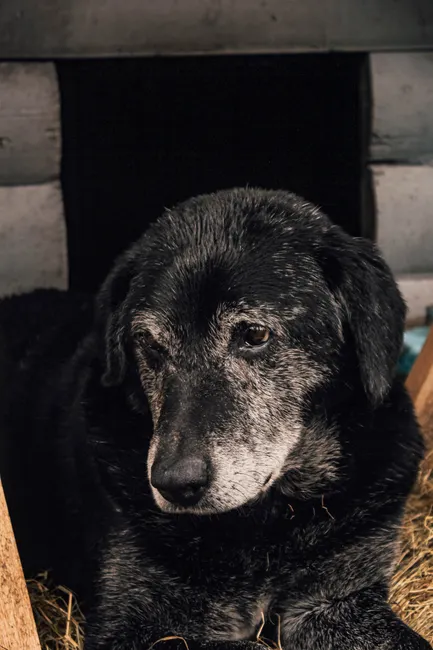
“Cognitive dysfunction is a physiological disease process, not a behavioral choice. Punishing a disoriented dog for house soiling or nighttime vocalization only adds stress hormones to an already compromised neurological system. The intervention has to be environmental and medical first, behavioral second.”
Nighttime restlessness is one of the clearest signals that a low-maintenance profile is shifting toward high-maintenance. Sundowning, the pattern of increased anxiety, pacing, or vocalization in the evening hours, mirrors what is documented in human dementia literature and reflects disrupted circadian regulation in the aging brain. If you are seeing this pattern, it is worth reviewing the fuller symptom checklist in this cognitive decline signs and support guide before assuming it is a training problem you can correct with more exercise or a firmer bedtime routine.
Comparative Breakdown: Low-Maintenance vs High-Maintenance Care Profiles
The table below is the framework I use with clients to place their dog on a functional spectrum rather than guessing. Score each category honestly, based on the last two to three weeks of observed behavior, not an isolated good day or bad day.
| Care Dimension | Low-Maintenance Profile | High-Maintenance Profile |
|---|---|---|
| Exercise Tolerance | Sustains 20-30 minute leisurely walks, recovers within an hour | Limited to 5-10 minute outings, needs extended recovery or shows next-day soreness |
| Medication Frequency | Zero to one daily medication, minimal monitoring | Two or more medications on staggered schedules, requires bloodwork tracking |
| Nighttime Restlessness | Sleeps through the night, stable circadian pattern | Pacing, vocalization, or disorientation after dusk (sundowning pattern) |
| Mobility Assistance | Independent on stairs and flooring, no aids needed | Requires ramps, harness support, or non-slip flooring interventions |
| Supervision Demand | Safe to leave alone for standard workday | Requires check-ins, midday visits, or overnight monitoring |
The Nutritional Layer of a Senior Dog Care Plan
Diet is one of the few variables owners can adjust proactively rather than reactively, and it belongs in every senior dog care plan regardless of maintenance tier. Digestive efficiency declines with age, and a dog whose gut is working overtime to process an inappropriate formula often shows secondary symptoms, low energy, inconsistent stool, appetite fluctuation, that get mistakenly attributed to cognitive or orthopedic decline. Ruling out a dietary contributor first is a low-cost, high-value step before assuming the worst.
For dogs on the lower-maintenance end who still need age-appropriate nutrition, IAMS PROACTIVE HEALTH Mature Adult Dry Dog Food is formulated with adjusted calorie density and joint-supporting nutrients that suit dogs who are still active but beginning to slow down.

- Veterinarians Recommend IAMS: This IAMS Senior Dog Food Recipe is made with real chicken as the #1 ingredient and contai…
- Mental & Visual Sharpness: This IAMS dog food for senior dogs contains DHA Gold to promote mental and visual sharpness i…
- Supports Vital Organs: IAMS Proactive Health Healthy Aging Senior Dog Food supports vital organs with essential nutrient…
For dogs whose senior dog care plan already includes digestive sensitivity, a formula built around gut support matters more than calorie count alone. Purina ONE Plus Digestive Health Dry Dog Food uses a chicken-based recipe designed to ease stool consistency issues that frequently accompany aging digestive systems, making it a reasonable mid-tier option for owners managing a dog with occasional gastrointestinal flare-ups.

- Complete and balanced digestive care dog food with digestive support for adult dogs with sensitive stomachs
- Highly digestible adult dog food formula enriched with probiotics for dog digestive support
- Real chicken is the first ingredient in our high protein dog food, which includes natural glucosamine sources for joint …
Households managing multiple pets, including a cat alongside an aging dog, often overlook that digestive support formulas exist across species lines too. Purina Pro Plan AdvantEDGE Digestive Support Dry Cat Food follows the same functional logic, targeted enzymes and fiber blends for a compromised gut, which is useful context if you are running a multi-pet household where senior care protocols overlap.

- Purina Pro Plan Dry Cat Food: Purina Pro Plan AdvantEDGE Digestive Support Plus delivers Pro Plan’s most advanced nutrit…
- Highly Digestible: Dry food for cats features a highly digestible formula with prebiotics, probiotics, and postbiotics t…
- Exceptional Nutrition: This specialized high protein dry cat food is made with real salmon as the first ingredient and d…
The 7-Day Lifestyle Fit Self-Assessment
Owners rarely have an accurate read on their dog’s actual maintenance tier because daily life normalizes gradual decline. You adjust unconsciously, shorter walks, quieter evenings, without registering that the adjustments have accumulated into a new baseline. This exercise forces objective observation over antecedent management, meaning you are tracking triggers and environmental conditions rather than just outcomes.
- Day 1-2: Baseline mobility log. Time how long it takes your dog to rise from a lying position, three separate times per day. Note flooring type and any hesitation at stairs or thresholds.
- Day 3: Medication and symptom audit. List every medication, supplement, and the exact time given. Cross-reference with any symptom flare within four hours of administration.
- Day 4-5: Nighttime observation. Without intervening, note wake times, pacing episodes, vocalization, and whether the dog appears to recognize your presence when you check in.
- Day 6: Exercise tolerance test. Take a walk at your dog’s preferred pace and stop at the first sign of lagging, heavy panting, or gait change. Record the elapsed time and recovery duration afterward.
- Day 7: Score and compare. Match your notes against the comparative breakdown table above. Count how many categories land in the high-maintenance column. Three or more is your signal to formalize a more intensive senior dog care plan rather than continuing informal adjustments.
This structured version of a senior dog care plan assessment matters because reactive crisis management, waiting until a fall or a medical emergency forces the issue, is measurably worse for both welfare outcomes and owner stress than proactive tier reassessment.

Building a Happiness Plan: Matching Care Intensity to Owner Capacity
A Happiness Plan is a case-profile framework I use to align what the dog needs with what the household can sustainably deliver. It is not about doing the maximum possible intervention. It is about doing the right intervention consistently, because inconsistent high-effort care is often worse for a dog’s stress physiology than a lower-intensity plan applied reliably.
The stakes here are real. According to data from the American Veterinary Medical Association, an estimated 37 percent of senior dog surrenders are linked to caregiver burnout stemming from unanticipated care escalation, not from a single dramatic event, but from maintenance demands that outpaced what the owner had planned for. That statistic should reframe how we think about senior dog care plan design. The goal is not heroic effort during a crisis. It is honest capacity matching before the crisis arrives.
- Assess your actual bandwidth, not your ideal bandwidth. Be specific about work schedule, physical ability to lift or assist a dog, and financial capacity for ongoing veterinary costs.
- Build in redundancy. Identify a backup caregiver, pet sitter, or family member before you need one, not during a medical emergency.
- Schedule reassessment, not just reaction. Reevaluate the maintenance tier every 60 to 90 days using the same 7-day observation method. Aging is not linear, and neither should your plan be.
- Separate mobility support from medical support. A dog with high mobility needs but stable cognition and few medications may only need physical environment changes, ramps, orthopedic bedding, non-slip runners, rather than a full high-maintenance overhaul.
- Give the dog agency where possible. Offer choices between two rest areas, two walk routes, or two feeding locations. Choice reduces learned helplessness and measurably lowers stress-related behaviors in aging dogs whose control over their environment is already diminishing.
If your dog’s high-maintenance status is driven primarily by joint pain rather than cognitive decline, it is also worth reviewing options in the joint supplement guide for dogs with hip dysplasia, since targeted supplementation sometimes shifts a dog from the high-maintenance mobility category back toward moderate with consistent use over several months. Don’t count on supplements or even surgery to work miracles overnight though. The data on joint intervention timelines is clear that meaningful mobility gains take weeks of consistent management, not days.
For broader context on how veterinary professionals classify aging-related behavior change, the ASPCA’s senior pet care resource offers additional grounding in how physical and cognitive decline intersect in aging companion animals.
Frequently Asked Questions
How do I know if my senior dog’s care plan needs to change?
Run the 7-day observation exercise and score your dog against the comparative table categories: exercise tolerance, medication frequency, nighttime restlessness, and mobility assistance. If three or more categories shift toward the high-maintenance column, it is time to formalize a more intensive senior dog care plan rather than continuing informal, reactive adjustments.
Is cognitive dysfunction syndrome the same as normal aging?
No. Cognitive dysfunction syndrome is a distinct neurological disease process, not an inevitable feature of getting older. Research shows prevalence rises sharply with age, affecting around 28 percent of dogs at 11 to 12 years old and climbing to 68 percent by 15 to 16 years old, which means a large share of aging dogs never develop it. Symptoms like disorientation and disrupted sleep should be evaluated medically rather than dismissed as typical old-dog behavior.
Can a low-maintenance senior dog suddenly become high-maintenance?
Yes, and this shift is exactly why periodic reassessment matters more than a one-time evaluation. Chronic conditions often progress in stages, and a dog can move from a stable, low-maintenance profile to a high-maintenance one within a matter of months if arthritis, cognitive decline, or a new diagnosis emerges. Reassessing your senior dog care plan every 60 to 90 days helps catch this shift early.
What is caregiver burnout and how does it relate to senior dog surrenders?
Caregiver burnout happens when care demands escalate faster than an owner’s capacity to meet them, often without warning. AVMA data links roughly 37 percent of senior dog surrenders to this pattern. Building a Happiness Plan with realistic capacity assessment, backup caregivers, and scheduled reassessment reduces the risk of reaching a crisis point that leads to surrender.