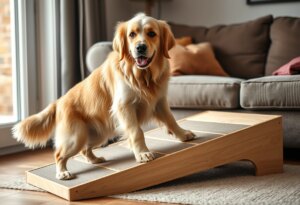
Dog gates for senior dogs aren’t a luxury item on your shopping list. They’re the difference between your old dog getting to enjoy her golden years in peace, or spending them flinching every time a puppy barrels around the corner. I’ve lived this in real time at the sanctuary, watching new fosters bounce in with zero sense of personal space, and watching my old souls brace for impact. It breaks my heart every time. So let’s talk about what actually works.
Why Your Senior Dog Needs a Sacred, Untouchable Space
Bringing a puppy into a home with an aging dog already in residence is one of those decisions that sounds sweet on paper. New energy! A playmate! Someone to “liven the old girl up!” Except that’s not usually how it plays out on the ground floor of real life.
Puppies don’t understand fragile joints. They don’t understand that Grandpa Dog’s hips ache in the morning, or that his eyesight isn’t what it used to be, or that a startle response in a fifteen year old body doesn’t recover the way it did at two. They just see a big, slow-moving dog shaped toy. And they pounce.
This is a sacred trust, this final stretch of a senior dog’s life. If you’re bringing a puppy home, you owe your old dog a space that is completely, unquestionably theirs. No exceptions, no “just this once.” If you’re still deciding whether your household is even ready for this leap, I’d urge you to read Puppy With an Older Dog: Pros, Cons & Health Risks before you bring anyone home. It lays out the real tradeoffs, not just the Pinterest version.
The Science Behind Why Chronic Stress Is So Dangerous for Aging Dogs
Here’s something a lot of well-meaning families don’t know: stress isn’t just an emotional inconvenience for a senior dog. It’s physically corrosive.
A 2020 study published in Frontiers in Veterinary Science found that chronic stress in older dogs can actually accelerate cognitive decline and intensify arthritis-related pain. Think about that for a second. The anxiety of being chased, pounced on, or never getting a quiet moment doesn’t just make your old dog “grumpy.” It can worsen the very conditions you’re already managing with supplements, vet visits, and orthopedic beds.
Every senior dog deserves a place in the house where nothing surprises them. No teeth, no tumbling puppy weight, no noise they didn’t choose. That space is not optional. It’s medicine.
Honestly, who thinks it’s fine to let a bouncing eight-week-old have full run of the house with a dog who has documented joint disease?? Nobody would do that on purpose. But it happens by accident, every single day, in homes that just didn’t plan ahead. That’s exactly why proper dog gates for senior dogs aren’t an accessory. They’re a health intervention.
What to Actually Look for in a Pet Safety Gate
Not all barriers are created equal, and this is where I see the most well-intentioned people get it wrong. A flimsy pressure-mounted gate meant for toddlers is not the same thing as a proper senior dog barrier.
Here’s what actually matters when you’re shopping:
- Freestanding over pressure-mounted. Pressure gates rely on wall tension, which can loosen over time, especially with a determined puppy leaning on it repeatedly. Freestanding gates and playpens don’t damage your walls and can be moved room to room as needs change.
- Height clearance for jumpers. Some puppy breeds are natural launchers. If your gate is only two feet tall, you’re going to be very disappointed by week three.
- Low-step entry for arthritic dogs. This one’s close to my heart. The ASPCA’s senior pet safety guidelines emphasize minimizing physical strain in the home environment, which means if your senior needs to step over a barrier herself, it needs a low threshold, not a hurdle.
- Stability on hard floors. Wood and tile floors mean a lightweight gate can slide during a puppy’s zoomies. Look for weighted feet or wide stabilizing bases.
If you’re building out a nursery zone for socialization time, a playpen configuration tends to work better than a single gate panel because it gives the puppy room to romp without any access to your senior’s resting area at all. The Dog Playpen Indoor, Puppy Playpen, White 23.6″ H, 2 Panels is a solid, budget-friendly option for smaller breeds or households that need a compact setup in a living room corner.

- Versatile: This dog pen is suitable for multiple pets of all shapes and sizes, such as dogs, cats, and rabbits. Pet acce…
- Tool-less assembly: The 23.6 inch hight 8-panel dog play pen makes it easy to assemble and store when not in use. It onl…
- Multi-purpose use:The puppy pen can be used as an indoor pet pen or outdoor kennel. Detachable design, convenient for tr…
Sanctuary-Tested Zoning: How We Do It at Woody’s Place
When we bring a new foster into the sanctuary, especially a young, wiggly one, the first thing we do isn’t introductions. It’s zoning the house. Woody’s old dogs get a room, or a designated wing, that the newcomer simply does not enter unsupervised. Not for a week. Not for a month, sometimes. For as long as it takes.
Here’s the layout that’s worked for us over and over:
- The senior’s retreat. Usually a quiet bedroom or den with their orthopedic bed, water, and zero foot traffic from the puppy. This is non-negotiable.
- The puppy’s playpen zone. A contained area, often in the kitchen or living room, where energy can be burned off safely.
- The neutral supervised zone. A shared space where both dogs are present but always with a human actively watching, and always with an exit route for the senior.
For bigger or more active puppies, a taller playpen matters more than people expect. The EVERFRONT Dog Playpen Indoor, Puppy Playpen, White 30″ H gives you that extra height clearance for pups who like to test their limits, which honestly, most of them do by twelve weeks old.
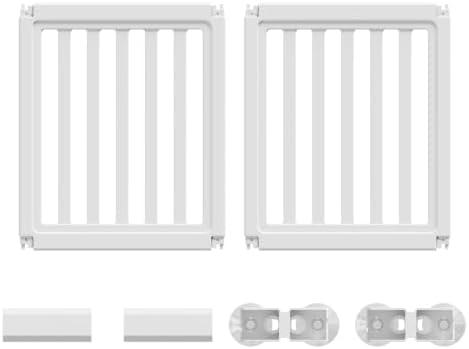
- Ultimate Flexibility with Customizable Shapes – Everfront plastic dog playpen easily transform the playpen into square, …
- Tool-Free, Hassle-Free Setup in Minutes – Panels with secure snap-on connectors eliminate the need for tools. No complic…
- Food-Grade Material & Ultra-Durable Build – Crafted from food-grade, BPA-free plastic and reinforced frames, this plaype…
If you’re still working out whether your household’s temperament and space can actually support this kind of zoning long term, especially with a specific breed in mind, this piece on Is Your Golden Retriever Ready for a Puppy Sibling? walks through the readiness signs most people miss.

Comparing the Best Gate and Playpen Options
I know it’s a lot to weigh, so here’s how these three stack up side by side. None of these listed prices are static dollar figures, by the way. Amazon’s pricing shifts, so I’m giving you a relative Price Tier instead, from budget-friendly ($) to premium investment ($$$$$).
| Product | Best For | Height | Setup Style | Price Tier |
|---|---|---|---|---|
| Dog Playpen Indoor, Puppy Playpen, White 23.6″ H | Small breeds, compact spaces | 23.6 inches | Freestanding, 2-panel | $$ |
| EVERFRONT Dog Playpen Indoor, White 30″ H | Active jumpers, medium breeds | 30 inches | Freestanding, multi-panel | $$$ |
| Portable Pet Playpen 45″ x 45″ x 22″ | Travel, temporary zoning, larger footprint | 22 inches | Portable, foldable frame | $$ |
Every one of these can function as effective dog gates for senior dogs setups when placed thoughtfully, but the right pick really depends on your puppy’s size, your senior’s mobility level, and how much floor space you’re working with.
A Realistic Introduction Schedule (and Gear Checklist)
Slow and steady wins this race. Every single time. Here’s a rhythm that’s served us well with dozens of sanctuary introductions:
- Week 1: Fully separated. Senior and puppy scent-swap through bedding, but no direct contact at all.
- Week 2: Supervised sniffs through the barrier only. Short sessions, five minutes max, always ending on a calm note.
- Week 3-4: Brief leashed introductions in the neutral zone, always with an easy exit for the senior dog.
- Ongoing: The senior always retains an escape route. Always. No cornering, ever.
For your gear checklist, think in layers rather than one single barrier. A Portable Pet Playpen 45″ x 45″ x 22″ works beautifully as a flexible, movable zone you can reposition depending on the day’s activity, whether that’s containing puppy chaos in the kitchen or setting up a safe outdoor spot during yard time.

- 🔵 BEST VALUE FOR MONEY: 1 Large Pet Playpen + Removable Top Zipper + Waterproof Bottom Zipper + Carrying Case + 4 Stainl…
- 🔴 EASY TO SET UP and TAKE DOWN: Pops up in seconds with no need for any assembly. Folds flat when not in use for easy ca…
- 🔵 BOTTOM IS WATERPROOF: Zipper Top and Zipper door for Easy Access.
And please, if your senior dog has diagnosed arthritis, cognitive decline, or any mobility condition, loop your veterinarian in before finalizing your setup. Some dogs also benefit enormously from a session or two with a certified trainer who specializes in multi-dog introductions, especially if your senior has shown any fear or aggression history. There’s no shame in asking for backup. I ask for it constantly.
If you haven’t finalized which barrier fits your floor plan yet, this roundup on Best Puppy Gates and Crates for a New Sibling Dog is worth a look too, particularly if you’re dealing with an open-concept layout.
For more background on age-related behavior and physiology in dogs, the American Kennel Club publishes solid, vet-reviewed guidance worth bookmarking.
Frequently Asked Questions
Are dog gates for senior dogs really necessary if the puppy seems friendly?
Yes, and this is one of the most common mistakes I see. A friendly puppy can still be too rough, too loud, or too persistent for a senior dog’s aging joints and nerves. Dog gates for senior dogs aren’t about assuming the worst of your puppy. They’re about giving your older dog guaranteed recovery time, which every aging body needs regardless of temperament.
What’s the difference between a playpen and a baby gate for this situation?
A gate blocks a single doorway or hallway, while a playpen creates an entire contained zone. For puppy and senior separation, playpens tend to work better because they fully enclose the puppy’s activity area, rather than just restricting one passage the puppy might find a way around.
How tall should a puppy playpen be to prevent jumping?
For most medium to large breed puppies, look for at least 30 inches of height clearance. Smaller or less athletic breeds can often be safely contained with a 24-inch panel, but if your puppy is a natural jumper, size up early rather than replacing gear later.
When should I bring in a professional trainer for introductions?
If your senior dog has any history of fear, resource guarding, or aggression, or if the introductions aren’t calming down after a few weeks of gradual exposure, it’s time to call a certified trainer. There’s real peace of mind in having an experienced set of eyes on the process, and it often prevents small tension from becoming a lasting problem.
Watching an old dog finally relax, fully relax, because they know their space is truly theirs, is one of the quietest, most beautiful things you’ll witness as a pet parent. Give them that gift. They’ve more than earned it.
Tell your pup I said Hi! — Dawn