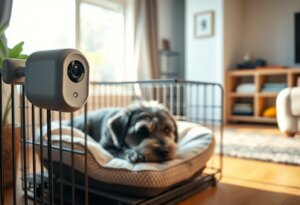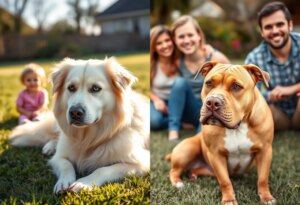
Senior dog jealous behavior is rarely about jealousy at all, at least not in the way we experience it. When your fourteen-year-old Lab shoulders his way between you and your partner mid-hug, barking or pawing until you separate, he’s communicating something specific about his internal state, and it’s our job to figure out what. This isn’t a dominance issue, and it isn’t your dog being “spoiled.” It’s a behavioral response with identifiable triggers, and once you understand the mechanism, you can change it.
The Behavioral Root: What’s Actually Happening When Your Dog Interrupts Affection
The anthropomorphic label “jealousy” gets thrown around a lot in dog training conversations, but it obscures more than it explains. What we’re likely observing is a form of resource guarding, where the “resource” is proximity to you, or an attachment-based protest response triggered by a perceived disruption to the dog’s access to a secure figure. Harris and Prouvost’s 2014 study published in PLOS ONE found that dogs displayed jealous-type behaviors, including pushing, snapping, and getting between the owner and a rival object, in 78% of trials when owners directed affection toward something else, even an inanimate stuffed dog. That’s a striking number, and it tells us this response is common and reproducible, not a personality flaw unique to your dog.
Here’s where it gets more nuanced for older dogs specifically. Senior dog jealous behavior often has layers that don’t exist in a two-year-old dog doing the same thing. Attachment theory in canine behavior research suggests dogs use their owners similarly to how children use caregivers, as a secure base. When that base becomes inaccessible (your partner’s arms are suddenly “occupied”), some dogs experience a mild separation-protest analog. Add in age-related cognitive changes, and you get a dog who’s less able to tolerate ambiguity about where he stands. This is why blanket dog jealousy training advice aimed at younger dogs sometimes falls flat with seniors: the underlying anxiety architecture is different.
Sensory Decline as a Trigger for Senior Dog Jealous Behavior
Before we assign a purely emotional label to this behavior, we have to rule out sensory decline, because it’s an enormous confound in older dogs. An estimated 50% of dogs over age 10 show measurable vision or hearing loss according to veterinary ophthalmology data, and that number climbs further past age 12. A dog with diminished sight can’t visually confirm that you’re safe when your partner pulls you into an embrace. He can’t read your face or your partner’s posture the way he could at age three. What looks like resource guarding dogs might actually be an anxiety response to reduced environmental monitoring capacity.
Think about the mechanics here. A hug involves two large bodies moving closer together, often blocking the dog’s sightline to your face, sometimes accompanied by a shift in vocal tone (soft laughing, murmuring) that an aging dog with high-frequency hearing loss may perceive as muffled or unclear. If your dog can’t process what’s happening acoustically or visually, the ambiguous stimulus itself becomes the trigger, not the affection. This distinction matters enormously for treatment selection, because you’re not treating jealousy, you’re treating uncertainty.
Dogs don’t need us to explain our behavior in words, but they do need predictability. When an aging dog loses the sensory tools to predict what’s coming next, anxiety fills that gap. The barking or shouldering-in behavior we label as “jealous” is frequently the dog’s best attempt at restoring a predictable outcome: physical contact with you.
Comparative Breakdown: Attention-Seeking vs. Anxiety-Driven vs. Pain-Driven Interruption
Not every dog interrupting a hug is doing so for the same reason, and treating all three categories identically is a common mistake in dog jealousy training. Below is a comparative breakdown based on observable markers you can track at home over a few sessions.
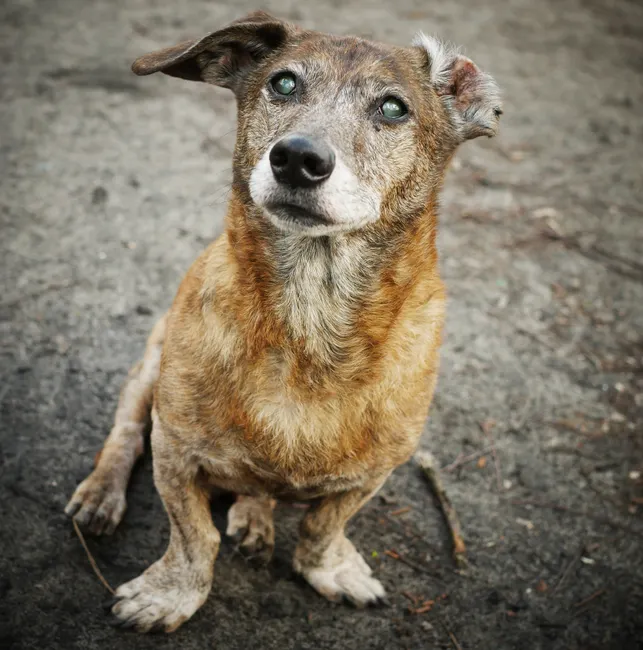
| Interruption Type | Body Posture | Latency (Time to Interrupt) | Vocalization | Likely Driver |
|---|---|---|---|---|
| Attention-Seeking | Loose, wagging tail, soft eyes | Delayed (10-30 seconds) | Single barks, whining | Learned reinforcement history |
| Anxiety-Driven | Stiff, low tail, ears back or forward-scanning | Immediate (0-3 seconds) | Repetitive barking, panting | Sensory decline / attachment disruption |
| Pain-Driven | Guarded posture, reluctance to jump, hesitant approach | Variable, often after repositioning | Yelps, grunts, or silence | Musculoskeletal discomfort |
The latency measurement is the most diagnostic marker in my clinical experience. A dog who waits half a minute before inserting himself is likely responding to a learned pattern (attention gets him access before), whereas a dog who reacts within a second or two of the embrace forming is showing a reflexive anxiety response. Pain-driven cases are trickier because the behavior can look like either of the above, which is why a orthopedic and comfort assessment always comes before a purely behavioral intervention.
The 5 Proven Fixes for Senior Dog Jealous Behavior
Once you’ve identified the likely driver using the table above, you can apply a structured protocol. These five interventions are listed roughly in the order I’d introduce them with a client, starting with antecedent management (changing the setup before the behavior happens) and moving toward direct desensitization.
1. Consent-Based Greeting Stations
Set up a designated mat or bed near, but not inside, your usual hugging spot. Before initiating affection with your partner, cue your dog to that station with a high-value chew or lick mat. This isn’t about banishing the dog. It’s about giving him a predictable job and a comfortable place to be during a moment that previously triggered uncertainty. Consistency matters more than duration here; even 60 seconds of practiced settling counts as a rehearsal.
2. Differential Reinforcement of Alternative Behavior (DRA)
DRA means reinforcing a behavior that’s incompatible with the unwanted one. If your dog is lying down on his mat, he cannot simultaneously be jumping between you and your partner. Reward calm, four-on-the-floor settling generously and immediately, using a marker word paired with a treat. Do not reward barking or pushing in, even with a stern “no,” because for many dogs any attention, including a scolding, still functions as reinforcement.
3. Decompression Zones for Sensory-Impaired Seniors
If sensory decline is a suspected driver, build a low-stimulation retreat area with familiar bedding, away from foot traffic, where your dog can decompress after a triggering event instead of escalating. This is particularly relevant for dogs recovering from any medical procedure, since post-op recovery periods often heighten baseline anxiety. If your dog is wearing an MIDOG Inflatable Dog Cone After Surgery, comfort and mobility in this recovery zone become even more important, since restricted peripheral vision from a cone can independently increase startle responses and clinginess.
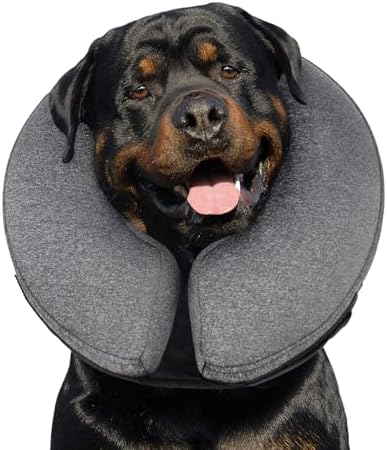
- STRESS-FREE RECOVERY: See, Eat & Sleep in Comfort! Our inflatable donut design provides a full range of vision, allowing…
- EFFECTIVE BARRIER: Designed for post-surgery healing. Creates a protective shield that prevents biting and licking of st…
- WON’T SLIP OFF: Thread your pet’s own collar through the inner loops for a secure fit. Adjustable strap provides a custo…
4. Orthopedic Comfort Stations to Rule Out Pain-Avoidance
Before assuming this is a purely emotional pattern, rule out pain. Arthritic dogs sometimes push between owners not out of protest, but because standing still on hard flooring while waiting is uncomfortable, and inserting themselves generates movement and change of position. A supportive orthopedic bed placed at the greeting station removes this confound. Joint discomfort is also a major contributor to overall irritability in seniors, which is why pairing behavioral work with proper nutrition matters; our breakdown of the 5 best senior dog foods for joint pain and arthritis is a useful next stop if mobility issues are part of the picture.

5. Desensitization Hierarchy for Physical Affection
Build a gradual hierarchy: start with you and your partner standing close but not touching, reward calm behavior, then progress to a brief side-hug, then a full embrace, always rewarding settled behavior at each rung before advancing. Move up only when your dog shows zero anxiety markers (no stiffening, no vocalizing) for three consecutive sessions at the current level. Rushing this step is the single most common reason dog jealousy training protocols fail; owners skip from step one to step five in a single afternoon and then conclude the method doesn’t work.
Case-Profile Happiness Plan: A 2-Week Implementation Tracker
I ask clients to track two metrics daily: interruption frequency (how many times the dog inserted himself during affection) and independent settling duration (how long the dog stayed on his mat unprompted). Here’s a sample structure:
- Days 1-3: Baseline data collection only. No intervention yet, just observation and notes on latency and posture.
- Days 4-7: Introduce the greeting station and DRA. Log every rewarded settling event.
- Days 8-11: Begin the desensitization hierarchy at level one (standing close, no touching).
- Days 12-14: Advance hierarchy as tolerated, review interruption frequency against baseline.
Most of my clients see a measurable drop in interruption frequency by day 10, though full desensitization through a real hug can take four to six weeks for dogs with a strong anxiety component. Don’t count on a single weekend of training to produce a finished result. This is a graded rehabilitation process, not a switch you flip.
Age-related behavior shifts also intersect with breed-specific aging patterns worth understanding, particularly for mixed breeds whose aging timeline can surprise owners; if you’re managing a mixed senior, our guide on Goberian life expectancy and what to expect as your dog ages covers related behavioral and physical milestones.
While you’re building out your dog’s comfort stations and calm zones, some owners find it grounding to document the process, whether that’s journaling training notes or marking milestones in a favorite book with something like these Kaciola Acrylic Bookmark Blanks with Pink Bow, a small way to track the emotional side of caregiving alongside the data.
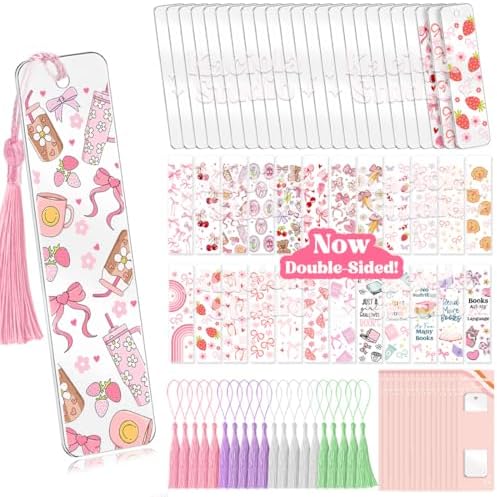
- 【120PCS DIY Bookmark Making Kit】: You will receive 24pcs blank bookmarks with 24pcs tassels,24pcs different patterns uv …
- 【Double Sided Film】: Kaciola acrylic bookmarks are made of high quality acrylic with protective film attached on both si…
- 【UV DTF sticker】: The UV DTF transfer sticker made of UV material with 3D effect. It’s lightweight, durable don’t fall o…
Comparison of Tools Supporting the 5 Fixes
| Tool / Product | Best Fix Pairing | Key Feature | Price Tier |
|---|---|---|---|
| Orthopedic Support Bed (greeting station) | Fix #4: Comfort Station | Pressure-relief foam, joint support | $$$ |
| Inflatable Recovery Collar | Fix #3: Decompression Zone | Soft, low-restriction visibility | $$ |
| Lick Mat / Slow Feeder (station engagement) | Fix #1: Greeting Station | Extends settling duration | $ |
| Training Journal / Bookmarks | Case-Profile Tracking | Simple progress documentation | $ |
Understanding senior dog jealous behavior through this lens, biology and environment first, “jealousy” second, gives you a plan instead of a label. Every one of the five fixes above is designed to reduce ambiguity for your dog while reinforcing the behavior you actually want: calm, independent settling near you rather than anxious insertion between you and the people you love. Senior dog jealous behavior responds well to structure, and structure is something you can build starting today.
Is senior dog jealous behavior actually jealousy, or something else?
Research suggests dogs display jealous-type behaviors resembling protest or resource guarding rather than the complex emotion humans experience. In senior dogs, this behavior is frequently compounded by sensory decline, attachment-based anxiety, or underlying pain, so treating it purely as jealousy oversimplifies the actual behavioral drivers.
Can dog jealousy training work on an older dog with cognitive decline?
Yes, though the pace needs adjusting. Dogs with cognitive changes benefit from shorter, more frequent training sessions and extra patience during the desensitization hierarchy. Consistency and predictability matter even more for these dogs than for younger ones, since cognitive decline reduces flexibility in adapting to change.
How do I tell resource guarding dogs behavior apart from pain-driven interruption?
Watch posture and latency. Resource guarding dogs typically show quick, assertive body blocking with a stiff tail, while pain-driven dogs often hesitate, reposition awkwardly, or vocalize with a yelp rather than a bark. A veterinary exam ruling out arthritis or other musculoskeletal issues should always precede a purely behavioral diagnosis in seniors.
What’s the fastest way to reduce dog attention seeking behavior during hugs?
The fastest sustainable method is differential reinforcement of alternative behavior (DRA), rewarding calm settling on a designated mat while withholding attention for barking or pushing in. Punishing the interruption tends to backfire, since even negative attention can reinforce the behavior in dogs who are primarily seeking contact.