Goberian life expectancy typically falls between 10 and 13 years, though where your particular dog lands on that spectrum depends on a combination of parental genetics, body condition, and the quality of preventive care you provide across her lifetime. As a behaviorist who spends a fair amount of clinical time with mixed-breed dogs and the owners trying to plan for their future, I get asked about this hybrid constantly. People want a number. I understand the impulse, but a single number misses the more useful story, which is what actually drives that number up or down.
What Exactly Is a Goberian, and Why Does Crossbreed Data Get Messy?
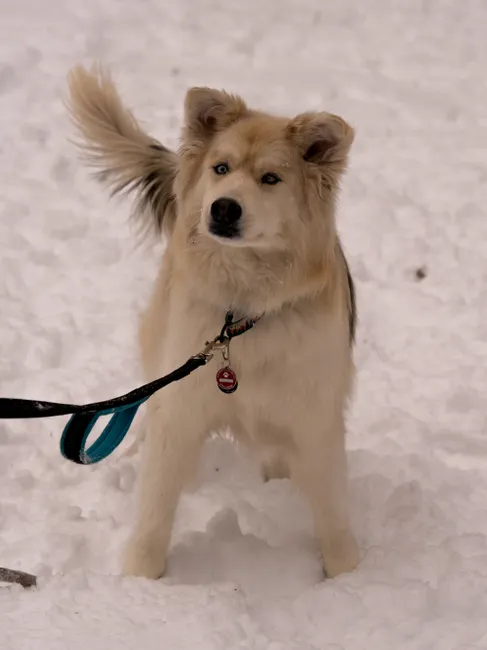
A Goberian is the offspring of a Golden Retriever and a Siberian Husky, two breeds with genuinely different evolutionary jobs. Golden Retrievers were bred for soft-mouthed retrieving work and companionship, and the American Kennel Club lists their average lifespan at 10 to 12 years. Huskies were bred for endurance sled work in harsh climates, and a 2024 Dog Aging Project cohort analysis puts their average closer to 12 to 14 years. When you cross the two, you don’t get a clean average. You get a genetic lottery ticket drawn from two different gene pools, and that’s precisely why goberian life expectancy estimates carry a wider range than either purebred parent alone.
This variability isn’t a flaw in the data, it’s a reflection of biological reality. First-generation crossbreeds inherit a random assortment of alleles from each parent line, so littermates can differ meaningfully in size, coat density, and disease susceptibility. I tell clients to treat published ranges as a planning tool, not a prophecy. The goberian life expectancy you should plan around is the midpoint of the parent breeds, adjusted by what you learn about your own dog’s individual health trajectory as she ages.
Hybrid Vigor Versus Inherited Risk: What the Genetics Actually Say
There’s a popular assumption that mixed-breed dogs automatically live longer because of “hybrid vigor,” the theory that crossing two distinct gene pools dilutes recessive, disease-causing mutations. The data is contradictory. Hybrid vigor is a real phenomenon in some contexts, particularly when it comes to avoiding breed-specific single-gene disorders that require two copies of a recessive allele. A Goberian is less likely to inherit certain single-gene defects fixed in either purebred line simply because the odds of getting two matching recessive alleles from unrelated gene pools drop.
But this protection is not universal. According to the UC Davis Veterinary Genetics Laboratory breed health database, both Golden Retrievers and Siberian Huskies carry elevated risk profiles for specific conditions, and crossing them doesn’t erase those risks so much as it blends them. Golden Retrievers carry a well-documented predisposition toward hemangiosarcoma and lymphoma, cancers that show up disproportionately in necropsy studies of the breed. Huskies, meanwhile, carry higher rates of certain autoimmune and ocular conditions along with hip dysplasia, a polygenic trait influenced by dozens of genes rather than one clean recessive marker. A Goberian can inherit a blend of these polygenic risk factors from both sides, which means orthopedic screening and cancer vigilance both deserve a place on your veterinary checklist, not just one or the other. Don’t count on the crossbreed label alone to protect your dog from either parent breed’s known vulnerabilities.
Age-Stage Milestones: How a Goberian’s Body and Behavior Shift Over Time
Large mixed breeds like the Goberian move through developmental stages on a compressed and somewhat front-loaded timeline compared to small breeds. Understanding these stages helps owners calibrate expectations instead of reacting with alarm to normal aging shifts.
- Puberty (6 to 18 months): Hormonal onset triggers increased reactivity, mounting behaviors, and in some cases a temporary uptick in fear responses during what’s sometimes called a second fear period. This is a neurodevelopmental window, not a training failure.
- Social maturity (18 months to 3 years): Behavioral consolidation occurs here. Impulse control improves as the prefrontal-analogous circuitry finishes maturing, though high-energy Husky-influenced dogs may retain elevated activity thresholds longer than their Golden-leaning littermates.
- Middle-age onset (4 to 6 years): Metabolic rate begins a gradual decline. Owners often miss this window because behavior looks unchanged, but caloric needs typically start dropping, which sets the stage for silent weight gain if feeding amounts aren’t adjusted.
- Senior threshold (7 to 8 years): This is when large mixed breeds statistically enter the senior bracket, notably earlier than small breed dogs. Expect gradual shifts in sleep architecture (more daytime napping), slower rising from rest, and the first subtle signs of joint stiffness after exertion.
Cognitive shifts often track alongside these physical stages. Some owners notice mild changes in house-training reliability or spatial orientation starting around the senior threshold, which is worth flagging to your veterinarian early rather than dismissing as “just getting old.”
Controllable Factors Versus Fixed Genetics: A Comparative Breakdown
Here’s where I want to reframe the conversation, because owners often fixate on genetic risk while underestimating the factors actually within their control. A 2013 Banfield Pet Hospital State of Pet Health report found that obese dogs lose up to 2.5 years of expected lifespan compared to dogs maintained at a healthy body condition score. That’s a striking figure, and it applies directly to goberian life expectancy planning, because this is a breed cross prone to enthusiastic eating and a thick double coat that can mask early weight gain from a casual glance.

| Factor | Type | Impact on Goberian Aging | Price Tier (If Product-Related) |
|---|---|---|---|
| Body Condition Score | Controllable | Maintaining lean body mass can add measurable years; obesity accelerates joint degeneration and metabolic disease | N/A |
| Nutrition Quality | Controllable | Balanced protein and joint-supportive nutrients slow inflammatory decline | $$ to $$$ |
| Omega-3 Supplementation | Controllable | Supports joint comfort and coat/skin health during aging | $$ |
| Exercise Load Pacing | Controllable | Reduces cumulative orthopedic strain in a breed prone to hip dysplasia | N/A |
| Genetic Cancer Predisposition | Fixed | Inherited from Golden Retriever lineage; not modifiable, but early screening improves outcomes | N/A |
| Hip and Joint Genetics | Fixed | Polygenic risk inherited from both parent breeds; management can offset but not eliminate | N/A |
Notice that most of the fixed genetic column has no price tier attached, because you cannot purchase your way out of inherited risk. What you can influence is the controllable column, and that’s where a modest, consistent investment pays dividends. Many owners incorporate a daily Fish Oil for Dogs Supplement into their aging dog’s routine to support joint comfort and reduce inflammatory load, particularly useful given the hip dysplasia risk carried on both sides of this cross.

- Bacon Flavor Dogs Love – Our omega 3 fish oil for dogs comes in bite-sized chewable tablets that taste like bacon treats…
- Fast Itch & Skin Relief – Our dog skin and coat supplement delivers 300mg omega-3 fatty acids (EPA & DHA) per chew for r…
- Healthy Coat & Less Shedding – This omega 3-6-9 for dogs formula helps reduce excessive shedding while promoting a soft,…
“Genetics loads the gun, but environment pulls the trigger. In my clinical experience with aging mixed breeds, the dogs who outperform their predicted lifespan are almost never the ones with the luckiest genetic draw. They’re the ones whose owners paid consistent attention to body condition, joint pacing, and early veterinary screening, year after year, without waiting for a crisis to prompt action.”
The Happiness Plan: An Evidence-Based Checklist for Your Aging Goberian
I use the term Happiness Plan with clients because it centers the dog’s welfare and functional comfort rather than treating aging as a problem to be managed defensively. Here’s the framework I recommend for owners tracking goberian aging milestones:
- Recalibrate exercise intensity, not just duration. Swap high-impact fetch sessions for sustained, moderate-pace walks once your dog crosses the senior threshold. Joint-protective pacing means avoiding repetitive jarring impact on hips and shoulders, a real concern in a breed cross carrying hip dysplasia risk from both lineages.
- Screen proactively, not reactively. Schedule biannual veterinary exams once your dog reaches 7 years old, including bloodwork panels that can flag early organ function changes before clinical symptoms appear. Given the hemangiosarcoma risk inherited from the Golden Retriever side, ask your vet about abdominal ultrasound screening as your dog ages further.
- Build cognitive enrichment into daily routine. Novel scent work, food puzzles, and short training refreshers exercise neural pathways and appear to support cognitive resilience, based on emerging research into canine cognitive dysfunction. Rotating enrichment activities also helps you notice subtle changes in problem-solving speed, an early behavioral marker worth flagging.
- Monitor body condition monthly, not annually. Run your hands along the ribs and waistline once a month. Thick double coats on Goberians can visually hide early weight gain, so touch-based assessment matters more than a glance.
- Maintain consistent joint supplementation once signs of stiffness appear. Omega-3 fatty acids and glucosamine-chondroitin combinations have reasonable supporting evidence for reducing inflammatory joint discomfort in aging large breed dogs.
- Protect predictability in the home environment. Senior dogs, especially those developing early cognitive changes, benefit from consistent furniture placement, lighting, and routines. Reducing environmental unpredictability lowers baseline stress physiology, which has downstream effects on immune function and overall resilience.
If your household includes other pets or a multi-dog dynamic, aging can sometimes surface tension that wasn’t previously an issue, particularly if a senior dog becomes less tolerant of pushy younger housemates. If you’re noticing new reactivity or guarding behavior emerge as your dog ages, working with a qualified trainer to address jealousy-driven barking early tends to produce better outcomes than waiting for the pattern to entrench.
A Lighter Note on Living With (and Loving) an Aging Goberian
Clinical rigor aside, I always encourage clients to hold space for humor while caregiving for an aging dog. It’s genuinely protective against caregiver burnout, which is a real and under-discussed phenomenon among owners of senior pets. Some clients enjoy a bit of levity around the realities of dog years, whether that’s a laid-back in Dog Years I’m Dead T-Shirt for dog park mornings, or a relaxing evening activity like the Dog Meme Coloring Book series to decompress after a long day of caregiving duties.
There is an issue displaying Amazon products. Please contact the administrator to check that.
Planning Ahead for Housing, Cleanup, and Comfort
As mixed-breed dogs age, especially larger dogs carrying a thick undercoat, house accidents become more common due to weakening bladder control or early cognitive shifts affecting signal recognition. This isn’t a training regression, it’s a physiological change deserving a practical response rather than frustration. If you’re navigating repeated accidents in the same household spot, reviewing enzyme cleaner options built for senior dog cleanup can help you manage the practical side of this transition while your veterinarian addresses the underlying medical picture.
For prospective owners still deciding whether a Goberian, or a similar large mixed breed, is the right fit for their household long-term, it’s also worth thinking ahead about lifetime costs and health planning before bringing a puppy home. If you’re weighing a related decision, our breakdown on choosing between buying or adopting a Golden Retriever mix puppy covers many of the same long-term health and cost considerations that apply here.
Frequently Asked Questions About Goberian Life Expectancy
What is the average goberian life expectancy?
Goberian life expectancy generally falls between 10 and 13 years, reflecting the blended averages of the Golden Retriever (10 to 12 years) and Siberian Husky (12 to 14 years) parent breeds. Individual outcomes vary based on genetics, body condition, and preventive veterinary care.
Do mixed breed dogs really live longer than purebreds?
The data is contradictory. Some mixed-breed dogs benefit from reduced risk of single-gene recessive disorders, but polygenic conditions like hip dysplasia and certain cancers can still be inherited from either parent line. Mixed breed dog lifespan is influenced more heavily by body condition and care quality than by hybrid status alone.
At what age does a Goberian become a senior dog?
Most large mixed breeds, including Goberians, are considered to enter the senior threshold around 7 to 8 years old, earlier than small breed dogs. This is when biannual veterinary screening and joint-protective exercise pacing become especially important for supporting goberian life expectancy.
What health conditions should I watch for as my Goberian ages?
Watch for hip dysplasia, hemangiosarcoma, and early cognitive changes, all of which have documented prevalence in one or both parent breeds. Regular veterinary bloodwork, body condition monitoring, and early behavioral tracking help catch issues before they significantly affect goberian life expectancy.