

The Synovetin OA injection and traditional NSAIDs work through entirely different biological pathways, and that distinction matters more than most owners realize when a senior dog starts slowing down on the stairs. One approach uses a localized radioactive isotope to shut down inflamed joint tissue at the source. The other floods the whole body with a drug that blocks pain signals everywhere, including places you’d rather it didn’t. If you’re weighing which one fits your dog’s aging joints, the answer depends less on brand reputation and more on your dog’s liver values, activity level, and how many joints are actually involved.
I get asked about this comparison constantly in behavior consults, usually framed as “which one is safer.” That’s the wrong first question. The right first question is “which one matches this specific dog’s clinical picture.” Let’s break down the mechanisms, the actual published data, and how to build a monitoring protocol so you’re not just guessing whether treatment is working.
How Synovetin OA Injection and NSAIDs Actually Work
The Synovetin OA injection is a radiosynovectomy procedure. A veterinarian injects tin-117m, a low-energy radioisotope, directly into the affected joint capsule. The isotope targets the synovium (the inflamed lining tissue that produces excess joint fluid and pain-signaling cytokines) and delivers a localized dose of radiation that essentially calms down that overactive tissue. The radiation travels only a few millimeters, so it stays within the joint and doesn’t meaningfully circulate through the bloodstream. This is a mechanistic approach borrowed from human radiosynovectomy protocols used for rheumatoid arthritis, adapted for canine osteoarthritis.
NSAIDs (nonsteroidal anti-inflammatory drugs) work completely differently. They inhibit cyclooxygenase enzymes, COX-1 and COX-2, which are responsible for producing prostaglandins. Prostaglandins drive inflammation and pain, but they also protect the stomach lining and maintain kidney blood flow. That’s the tradeoff built into the drug class itself: you can’t turn off the inflammatory prostaglandins without also dampening the protective ones, at least not perfectly. This is why NSAIDs act systemically, reaching every organ that processes blood, rather than staying confined to one joint.
From a behavioral biology standpoint, this matters because the dog’s nervous system doesn’t distinguish between “pain relief from a localized injection” and “pain relief from a systemic pill.” What the dog experiences is reduced nociceptive input, full stop. But the collateral effects on the rest of the body differ substantially, and that’s where the real decision-making happens.
Comparing Efficacy Data: What the Studies Actually Show
A 2019 study published in Veterinary Radiology & Ultrasound (Lattimer et al.) tracked dogs receiving the Synovetin OA injection for elbow osteoarthritis and reported measurable lameness improvement in approximately 75% of treated dogs within three months, with effects reported to last up to a year in many cases. That’s a respectable number, though it’s worth being honest that this was a manufacturer-associated dataset with a relatively contained sample, not a decade of independent multi-center trials.
NSAID response rates are murkier, and I say that as someone who reads a lot of these papers. The 2012 AAHA pain management guidelines cite response rates in the 60 to 70% range across long-term canine osteoarthritis cohorts, but “response” in these studies often relies on owner-reported comfort scales, which are notoriously subjective. Owners tend to underreport their dog’s pain, partly because dogs mask discomfort behaviorally (an evolutionary holdover from being prey-adjacent animals that can’t afford to look vulnerable), and partly because chronic pain in a slowly aging dog is easy to misattribute to “just getting old.”
The data is contradictory in one specific way that owners should know: some dogs respond beautifully to NSAIDs for the first year, then plateau or lose responsiveness as arthritis progresses structurally. The Synovetin OA injection doesn’t have that same fade pattern reported yet, largely because it’s newer and the long-term data set is smaller. Neither treatment reverses joint damage. Don’t count on either one to work miracles on a joint that’s already bone-on-bone; at that stage, you’re managing comfort, not restoring cartilage.
For dogs with more advanced disease or multiple affected joints, it’s worth comparing this option against other biologic treatments too. Our breakdown of the 5 best arthritis injections for senior dogs covers how Synovetin stacks up against monoclonal antibody options and corticosteroid injections specifically.
Safety and Organ-Load Considerations in Geriatric Dogs
This is where the comparison gets clinically serious. NSAIDs carry documented hepatic and renal risk, and geriatric dogs are exactly the population most vulnerable to that risk. An aging kidney has already lost some nephron function through normal wear, and an aging liver processes drugs more slowly. Add an NSAID on top of that reduced reserve capacity, and you get a higher chance of drug accumulation, even at label-appropriate doses. This is precisely why any veterinarian prescribing long-term NSAID therapy in a senior dog should be running baseline bloodwork before starting, then rechecking liver and kidney values every three to six months. Skipping that bloodwork isn’t a shortcut, it’s a gamble.
The Synovetin OA injection sidesteps most of that systemic organ load because the radiation dose is localized to the joint capsule and the isotope has a short half-life. There’s no daily pill, no cumulative dosing to track, no interaction risk with other medications your senior dog might already be on for heart disease or cognitive decline. That said, it’s not risk-free. It requires sedation for the injection procedure itself, which carries its own considerations for dogs with cardiac or respiratory comorbidities, and it’s only approved for specific joints (currently elbows, hips, knees, and shoulders in most clinical protocols).
If you’re specifically weighing Synovetin against another injectable option that’s generated significant veterinary debate, our detailed comparison of whether Librela is safe for dogs addresses a different injectable mechanism entirely and is worth reading before committing to either.
Behavioral and Quality-of-Life Markers to Track Post-Treatment
Owner-reported comfort is a soft measure, and I’d rather you use something more objective. Regardless of which treatment path you choose, track these four markers weekly for the first two months, then monthly after that:
- Gait symmetry: Watch your dog walk on a flat, non-slip surface from behind. Asymmetric weight-bearing (favoring one side) is one of the most reliable early indicators of unresolved joint pain, more reliable than vocalization, which many dogs never display at all.
- Willingness to rise: Time how long it takes your dog to stand up from a fully resting position after a nap. A shortening latency over successive weeks is a good proxy for reduced stiffness and pain.
- Sit-to-stand latency: Ask for a sit, then a stand, and time the transition. This is a functional measure that correlates closely with hip and stifle comfort specifically.
- Activity-seeking behavior: Does your dog initiate play, follow you to another room, or ask to go outside more than before? Increased self-initiated movement is a strong behavioral signal that pain has genuinely decreased, not just that the dog has been sedated into stillness.
Write these down. A dog’s improvement is often gradual enough that memory alone will trick you into thinking nothing changed, when in fact the data shows real progress.
Supportive bracing can help you track and improve mobility markers simultaneously. For dogs recovering from joint injections who still show hind limb instability, a Dog Rear Foot Splint Helps Brace Lower Back Limbs can provide external support to the lower limb while the joint capsule settles post-treatment, making gait symmetry easier to observe and improve.
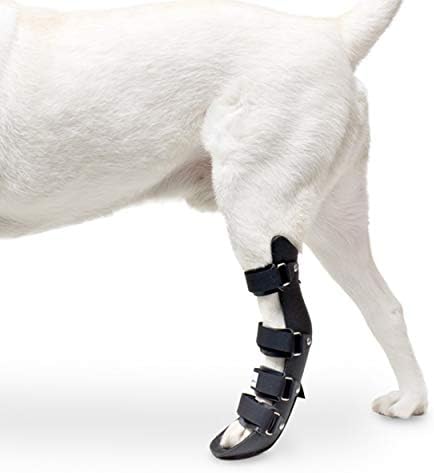
Pain in aging dogs is rarely announced. It’s revealed through small behavioral edits: a shortened stride, a pause before jumping onto the couch, a reluctance to greet you at the door with the usual enthusiasm. Treating canine osteoarthritis effectively means learning to read those edits before the dog is limping outright.
NSAIDs for Dogs: When Systemic Treatment Still Makes Sense
None of this means NSAIDs for dogs are obsolete or a lesser choice. For dogs with mild to moderate polyarthritis affecting multiple joints simultaneously, a daily NSAID often makes more practical sense than injecting each individual joint separately. The Synovetin OA injection is approved joint-by-joint, so a dog with arthritis in both hips and both elbows would need four separate procedures, which increases cumulative sedation exposure and cost.
NSAIDs also remain the more accessible entry point for many households, particularly for owners managing a senior dog with a fixed veterinary budget. The key is respecting the monitoring protocol: baseline bloodwork, scheduled rechecks, and immediate veterinary contact if you notice vomiting, dark stools, lethargy, or reduced appetite, which are early warning signs of gastrointestinal or renal complications.
Dogs with front-limb arthritis specifically, whether treated with NSAIDs or Synovetin, often benefit from external joint support during the treatment adjustment period. A Labra Dog Front Leg Brace Compression Wrap provides gentle compression and proprioceptive feedback to an arthritic elbow or carpus, which can reduce compensatory strain while the primary treatment takes effect.
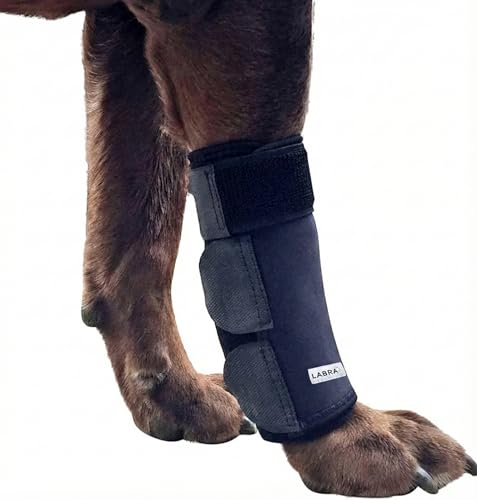
- Protects Against Hot Spots, Lick Granulomas, and Pressure Sores: Provides targeted relief for painful hot spots, lick gr…
- Premium Materials – Made from 3mm neoprene, our brace wrap is breathable, elastic, and enjoyable, ensuring your dog’s co…
- Joint Health – Our brace provides extra support on your dog’s front legs, allowing them to stay healthy and support thei…
Comparing Synovetin OA Injection and NSAIDs Side by Side
The table below lays out the practical differences veterinarians and owners typically weigh when choosing between canine osteoarthritis therapy options. Price tiers reflect relative cost, not fixed dollar amounts, since procedure and prescription costs vary by clinic and region.
| Factor | Synovetin OA Injection | NSAIDs (Oral) |
|---|---|---|
| Mechanism | Localized radiosynovectomy (tin-117m) | Systemic COX-1/COX-2 enzyme inhibition |
| Onset Time | 2 to 4 weeks | 24 to 72 hours |
| Duration of Relief | Up to 12 months per injection | Requires daily dosing, continuous |
| Invasiveness | Requires sedation, single joint injection | Non-invasive, oral tablet |
| Organ Load | Minimal systemic absorption | Hepatic and renal clearance required |
| Contraindications | Cardiac/respiratory risk with sedation, joint infection | Kidney disease, liver disease, GI ulcers |
| Best For | 1 to 2 isolated arthritic joints | Multi-joint or generalized osteoarthritis |
| Price Tier | $$$$ | $$ |
A Happiness Plan Framework for Choosing Your Dog’s Protocol
I use case-profile evaluations, what I call Happiness Plans, to structure these decisions rather than relying on a gut feeling. Here’s a simplified version you can walk through with your veterinarian:
- Map the affected joints. Is this isolated to one or two joints (a strong candidate for Synovetin), or is it generalized across the spine, hips, and elbows (leaning toward NSAIDs or combination therapy)?
- Review recent bloodwork. Elevated liver enzymes or creatinine narrows your NSAID safety margin significantly and shifts the scale toward localized treatment.
- Assess sedation risk. Dogs with significant cardiac disease may tolerate daily oral medication better than a sedated injection procedure.
- Establish the monitoring baseline. Record gait symmetry, rise latency, and sit-to-stand time before starting any treatment, so you have a true before-and-after comparison.
- Set a re-evaluation date. Three months is the standard checkpoint for the Synovetin OA injection data, and it’s a reasonable timeline for reassessing NSAID response too.
For dogs recovering from stifle-related arthritis specifically, whether pursuing injections or oral treatment, added joint support can reduce compensatory strain on the opposite limb. A Professional Knee Support Brace for Dogs with Adjustable Straps stabilizes a weakened stifle joint during the recovery window, which is particularly useful in the weeks following a Synovetin procedure when full mobility hasn’t yet returned.
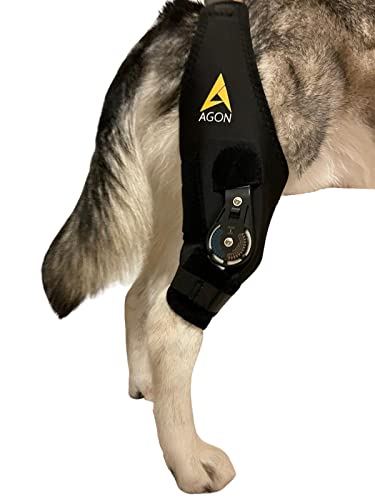
- The Right Choice: If your dog is struggling with a post-knee surgery process, ease its pain and discomfort with the Agon…
- Adjustable Hinge Stabilizer: The Agon neoprene knee brace stands out with an innovative design equipped with an adjustab…
- Highest Quality Materials: Our knee brace for dogs is made with premium quality neoprene, which is extremely durable, st…
According to the American Veterinary Medical Association, osteoarthritis affects roughly one in five adult dogs in the United States, with prevalence climbing substantially in dogs over age seven. That statistic alone should reframe how owners think about early intervention. Waiting until your dog is visibly limping means you’ve already missed months of manageable, lower-grade discomfort.
Choosing between the Synovetin OA injection and NSAIDs isn’t really a competition between a winner and a loser. It’s a matching exercise between the treatment’s mechanism and your dog’s specific joint involvement, organ function, and lifestyle demands. Dogs with isolated joint disease and healthy kidneys tend to do well with Synovetin. Dogs with widespread arthritis and stable bloodwork often do just as well on a properly monitored NSAID protocol. The dogs who struggle are usually the ones where nobody set up a monitoring baseline at all, regardless of which treatment they received.
Frequently Asked Questions
How long does a Synovetin OA injection last in senior dogs?
Most published data and clinical reports suggest the effects of a single Synovetin OA injection last up to 12 months, though some dogs experience shorter relief windows depending on the severity of joint degeneration and whether multiple joints are involved.
Can NSAIDs and Synovetin OA injection be used together?
Yes, many veterinarians combine both approaches, using Synovetin for the most severely affected joint while maintaining a lower-dose NSAID for generalized discomfort in other joints. This combination should always be managed under direct veterinary supervision with routine bloodwork.
Is the Synovetin OA injection safe for dogs with kidney disease?
Because the Synovetin OA injection has minimal systemic absorption, it’s often considered a safer option for dogs with existing kidney disease compared to long-term NSAID use, which relies heavily on renal clearance. Your veterinarian should still evaluate sedation risk before the procedure.
What are early warning signs that NSAIDs are causing organ stress in a senior dog?
Watch for vomiting, dark or tarry stools, reduced appetite, increased thirst or urination, and lethargy. Any of these signs warrant an immediate call to your veterinarian and typically require bloodwork to assess liver and kidney function before continuing the medication.