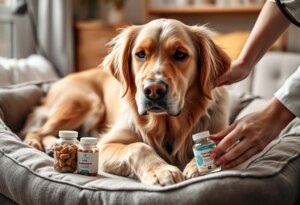
Anti-inflammatory medicine for dogs is not something you should be pulling off a pharmacy shelf between the ibuprofen and the allergy pills, and if your senior dog is stiff getting up from the couch, the honest answer is more complicated than a quick trip to CVS. As a behaviorist who spends most of my clinical hours watching how aging dogs move, rest, and signal discomfort, I can tell you that the question “what can I buy over the counter” is usually the wrong question. The better question is whether the behavior you’re seeing is even being correctly identified as pain in the first place.
Behavioral Signs of Inflammatory Pain in Senior Dogs
Owners tend to catch pain late because dogs are extraordinarily good at masking it. This is not stoicism in any moral sense. It’s an evolved survival strategy: in a natural environment, an animal that visibly limps advertises vulnerability to predators and rivals for resources. Domestication hasn’t erased that wiring. So instead of overt limping, what you’ll actually observe first is a change in behavioral frequency and initiation patterns, not intensity.
Watch for these specific markers over a period of weeks, not days:
- Reduced play initiation. The dog still engages if you start a game, but stops offering the toy or nudging for interaction the way they used to. This is often the earliest and most reliable sign, and it’s the one owners dismiss fastest as “he’s just getting older and calmer.”
- Reluctance on stairs or during transitions. Look specifically at hesitation before movement, a pause at the top or bottom step, or a changed gait pattern (bunny-hopping on stairs, favoring one side on turns).
- Altered sleep architecture. Dogs in chronic discomfort shift position more frequently at night, struggle to settle into deep rest, and sometimes vocalize softly during position changes. If you’re a light sleeper yourself, you’ll notice this before you notice any daytime symptom.
- Decreased grooming or increased licking at specific joints. Localized licking is a self-soothing behavior tied to peripheral inflammation, not just boredom.
The reason owners misread these signals as “normal aging” is a categorization error, not a lack of attentiveness. Aging and osteoarthritis correlate heavily but they are not synonyms. A 12-year-old dog with well-managed joint inflammation can move with confidence; a 12-year-old dog with untreated inflammatory pain becomes progressively withdrawn. Treating the behavioral slowdown as an inevitable feature of age rather than a treatable symptom is the single most common mistake I see in senior dog households.
The Over-the-Counter Myth: Why Human NSAIDs Are Not a Safe Substitute
Here is where I need to be direct, because this misconception causes real harm every year. Ibuprofen, naproxen, and aspirin are not appropriate anti-inflammatory medicine for dogs, regardless of how commonly they sit in a home medicine cabinet. Dogs metabolize these compounds far more slowly than humans do, and their gastric mucosa is more vulnerable to the COX-1 inhibition these drugs cause. The ASPCA Animal Poison Control Center consistently logs human NSAID ingestion among its top reported canine poisoning categories every year, and the clinical picture is not subtle: gastrointestinal ulceration, GI bleeding, and acute renal injury are the primary risks, sometimes appearing within 24 to 48 hours of a single inappropriate dose.
The dosing math genuinely doesn’t scale the way people assume. A dose that’s mild for a 150-pound adult human can be toxic for a 15-pound senior terrier, and there is no reliable at-home conversion that makes this safe. If you’re tempted to reach for a children’s formulation because it “seems gentler,” the same caution applies. Products like Children’s Tylenol Dye-Free Oral Suspension contain acetaminophen, which is not an NSAID at all and carries its own separate toxicity profile in dogs, particularly related to liver metabolism and red blood cell damage in cats and, at high enough doses, in dogs too. This is not a product to give without direct veterinary instruction on dose and frequency for a specific dog’s weight and health status.

- Children’s Tylenol dye-free: Gentle on children’s tummies; dye-free formulation is also alcohol free, aspirin free; cont…
- Pediatric liquid: Children’s Tylenol dye-free oral suspension contains acetaminophen, a pain reliever and fever reducer;…
- Quick relief: Tylenol starts to reduce fevers in as little as 15 minutes; an effective pain reliever; useful for minor a…
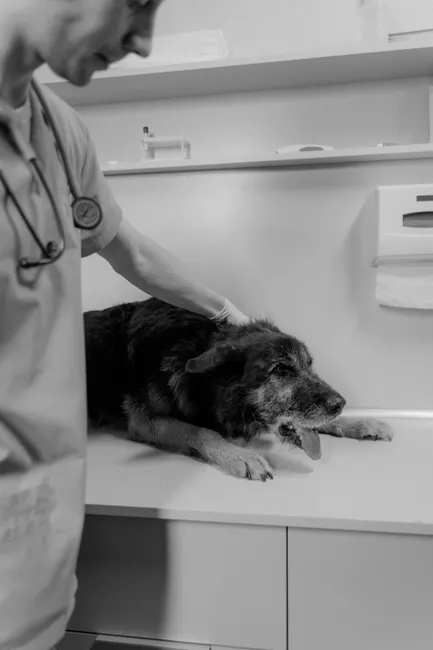
If your dog is showing the behavioral signs described above, the appropriate first move is a veterinary exam, not a home remedy borrowed from your own medicine cabinet.
What Is Actually Available Without a Prescription
This is the part owners actually want to know, and the honest answer is: legitimate, veterinary-formulated joint supplements exist and do have data behind them, even though they work through a different mechanism than pharmaceutical NSAIDs. Glucosamine and chondroitin support cartilage matrix maintenance and have reasonable safety margins, though their effect sizes in clinical trials are modest and variable dog to dog.
Omega-3 fatty acids have a stronger and more consistent evidence base. A 2020 study published in the Journal of Veterinary Internal Medicine found that omega-3 fatty acid supplementation produced measurable improvement in weight-bearing distribution and mobility scores in dogs diagnosed with osteoarthritis, using objective force-plate gait analysis rather than owner-reported impressions alone. That distinction matters clinically: force-plate data removes the placebo effect that plagues a lot of subjective supplement research. Omega-3s work in part by shifting the eicosanoid balance toward less inflammatory prostaglandin production, which is a genuinely different biological pathway than the COX inhibition NSAIDs rely on.
If you’re considering adding a fatty acid supplement, something like Fish Oil for Dogs Supplement 120 Bacon Chews is a reasonable, budget-friendly starting point for daily supplementation, though you should still confirm dosing with your veterinarian, particularly if your dog is on any other medication, since fish oil can affect clotting at high doses.

- Bacon Flavor Dogs Love – Our omega 3 fish oil for dogs comes in bite-sized chewable tablets that taste like bacon treats…
- Fast Itch & Skin Relief – Our dog skin and coat supplement delivers 300mg omega-3 fatty acids (EPA & DHA) per chew for r…
- Healthy Coat & Less Shedding – This omega 3-6-9 for dogs formula helps reduce excessive shedding while promoting a soft,…
For owners looking at supplement stacking more broadly, our breakdown of the best anti-aging supplements for senior dogs covers how these compounds interact and which combinations have overlapping versus redundant mechanisms.
The Contradictory Data on CBD and Turmeric as Natural Anti-Inflammatories
I want to address the “natural equals safe” assumption directly, because it drives a lot of well-intentioned but poorly informed purchasing decisions. CBD products marketed for canine joint pain have a genuinely mixed research record. Some small trials show improvement in owner-reported comfort scores; others show no significant difference from placebo on objective measures. The variability isn’t necessarily because CBD doesn’t work biologically, it’s because the supplement market is functionally unregulated, meaning actual cannabidiol concentration can differ substantially from label claims, batch to batch, brand to brand.

Turmeric and curcumin face a related but distinct problem: bioavailability. Curcumin is poorly absorbed in its raw form, and unless a product uses a bioavailability-enhanced formulation (liposomal delivery, or combination with piperine), most of what your dog ingests may pass through largely unmetabolized. This doesn’t mean turmeric is useless. It means dosing inconsistency across unregulated products makes it genuinely hard to know if you’re giving a therapeutic amount or a token gesture. If you’re drawn to home preparation of herbal supplements, a resource like The Ultimate Guide to Easily Dry Herbs at Home can help you understand proper preservation methods, but understand that drying technique alone doesn’t solve the underlying bioavailability problem inherent to curcumin.

The data is contradictory enough on both categories that I recommend treating them as adjunctive, not primary, interventions. They can be reasonable additions to a broader pain management plan, but they should not delay a veterinary diagnosis if your dog’s behavioral signs are worsening.
Comparing OTC-Available Options for Dog Pain Relief
Here’s a side-by-side look at what’s realistically available without a prescription, and how each category stacks up on evidence strength, safety margin, and cost tier.
| Option | Evidence Strength | Best For | Key Caution | Price Tier |
|---|---|---|---|---|
| Omega-3 Fatty Acid Chews | Strong (force-plate gait studies) | Daily mobility support, mild-moderate osteoarthritis | Monitor clotting if on other meds | $$ |
| Glucosamine/Chondroitin | Moderate, variable by dog | Long-term cartilage maintenance | Modest effect size alone | $$ |
| CBD Joint Products | Mixed / inconsistent | Adjunctive comfort support | Label concentration unreliable | $$$ |
| Turmeric/Curcumin Blends | Weak without bioavailability enhancers | Low-risk supplementation trial | Poor raw absorption | $ |
| Vet-Prescribed NSAIDs (carprofen, meloxicam) | Strong (clinical gold standard) | Diagnosed osteoarthritis, post-op pain | Requires bloodwork monitoring | $$$ |
A Practical Decision Protocol: Tracking, Antecedent Management, and When to Escalate
Rather than guessing whether your dog needs anti-inflammatory medicine for dogs at all, I recommend a structured seven-day observational exercise before any pharmacological decision. This is the same kind of functional behavioral tracking I use in clinical case profiles.
- Day 1-7 Mobility Log: Each morning and evening, record on a simple 1-5 scale: willingness to climb stairs, latency to stand after resting, play initiation frequency, and any vocalization during movement.
- Environmental audit: Note flooring type, bed firmness, and access to ramps for elevated surfaces (car, bed, couch).
- Pattern analysis: Look for consistency, not single bad days. A dog scoring low three or more days in a week has a pattern worth escalating, not a fluke.
Don’t count on supplements or ramps to work miracles if the underlying inflammatory process is already advanced. Antecedent management changes the environment around the pain; it doesn’t treat the joint pathology itself.
Antecedent management should come first for mild, early-stage cases: orthopedic bedding, ramps to replace jumping, and weight optimization all reduce mechanical load on joints before you introduce any drug. But there are clear criteria where this becomes insufficient and prescription-strength intervention becomes necessary rather than optional:
- Mobility log scores remain low despite two full weeks of environmental changes and supplementation
- Your dog shows guarding behavior (avoiding touch on a specific limb or the spine)
- Sleep disruption persists or worsens
- Play initiation continues declining rather than stabilizing
At that point, veterinary-prescribed NSAIDs like carprofen or meloxicam are the clinically appropriate next step, and they require baseline bloodwork plus periodic monitoring, since they carry their own gastrointestinal and hepatic risk profile that has to be weighed against the dog’s quality of life. For a full breakdown of dosing protocols and safety monitoring, our guide to the best arthritis medicine for dogs over the counter versus prescription options walks through this decision tree in more depth. If oral medication alone isn’t providing adequate relief, it’s also worth discussing injectable options with your vet, covered in our arthritis injection for senior dogs buyer’s guide.
Key Takeaways
- Human NSAIDs are never a safe substitute; toxicity risk is well-documented and dose conversion isn’t reliable.
- Omega-3 supplementation has the strongest objective evidence among OTC options for mobility improvement.
- CBD and turmeric have real but inconsistent evidence, largely due to unregulated dosing and bioavailability issues.
- A seven-day mobility log gives you objective data before deciding on intervention.
- Prescription NSAIDs remain the clinical gold standard once behavioral signs persist past environmental and supplement changes.
Frequently Asked Questions
Is there any anti-inflammatory medicine for dogs that’s truly safe over the counter?
Veterinary-formulated joint supplements like omega-3 fatty acids and glucosamine/chondroitin are available without a prescription and carry reasonable safety margins, but they work through gentler biological pathways than pharmaceutical anti-inflammatory medicine for dogs. They’re appropriate for mild cases or as an adjunct to prescribed treatment, not as a replacement for veterinary-strength NSAIDs in moderate to severe osteoarthritis.
Why can’t I just give my dog ibuprofen if it’s what I have at home?
Dogs metabolize ibuprofen and other human NSAIDs far more slowly than people do, which means doses that seem mild for a human can cause gastrointestinal ulceration and kidney injury in a dog. There is no reliable at-home dose conversion that makes this safe, which is why it remains one of the top reported categories in canine poisoning data.
How do I know if my senior dog’s slowdown is pain versus normal aging?
Track specific behaviors rather than relying on impression alone: reduced play initiation, hesitation on stairs, disrupted sleep, and localized licking are all more indicative of treatable inflammatory pain than of aging itself. A seven-day mobility log turns a vague feeling into a pattern you and your veterinarian can act on.
Do CBD and turmeric products actually reduce inflammation in dogs?
The data is contradictory. Some dogs show improved comfort scores on CBD, others show no measurable difference from placebo, largely because product concentration varies widely across unregulated brands. Turmeric faces a separate bioavailability problem, since raw curcumin is poorly absorbed unless the formulation includes an enhancer. Neither should be assumed automatically safe or effective just because they’re labeled natural.