
An arthritis injection for dogs only helps if you can first recognize that your senior dog is actually in pain, and that’s a harder task than most owners assume. Dogs are not wired to advertise joint discomfort the way we might expect. Through a process of conditioned compensatory gait patterns, an arthritic dog gradually shifts weight off a sore limb, slows its own pace, and recalibrates what “normal” movement looks like to itself, all without a single yelp. Owners watching this slow drift often miss it entirely, because there’s no dramatic limp to flag as alarming. Cornell University College of Veterinary Medicine estimates osteoarthritis affects roughly 40% of dogs over age 7, and that number climbs to nearly 80% in dogs over age 8. Most of those dogs are not limping in any obvious way. They’re just quietly doing less.
This masking behavior has a functional explanation rooted in survival biology. In the wild, visible lameness signals vulnerability to predators and lowers social rank in a group. Dogs, even the pampered domestic kind sleeping on your couch, still carry that ancestral wiring. So instead of limping conspicuously, an arthritic senior dog will take shorter strides, avoid full weight-bearing on the affected joint, and reduce voluntary movement, particularly jumping, stair climbing, or play bouts that require rapid direction changes. The behavioral signature of joint pain is subtraction, not addition. You’re not looking for a new behavior. You’re looking for an absence of behaviors that used to be routine.
Why Owners Miss the Signs (and Why That Matters for Treatment Timing)
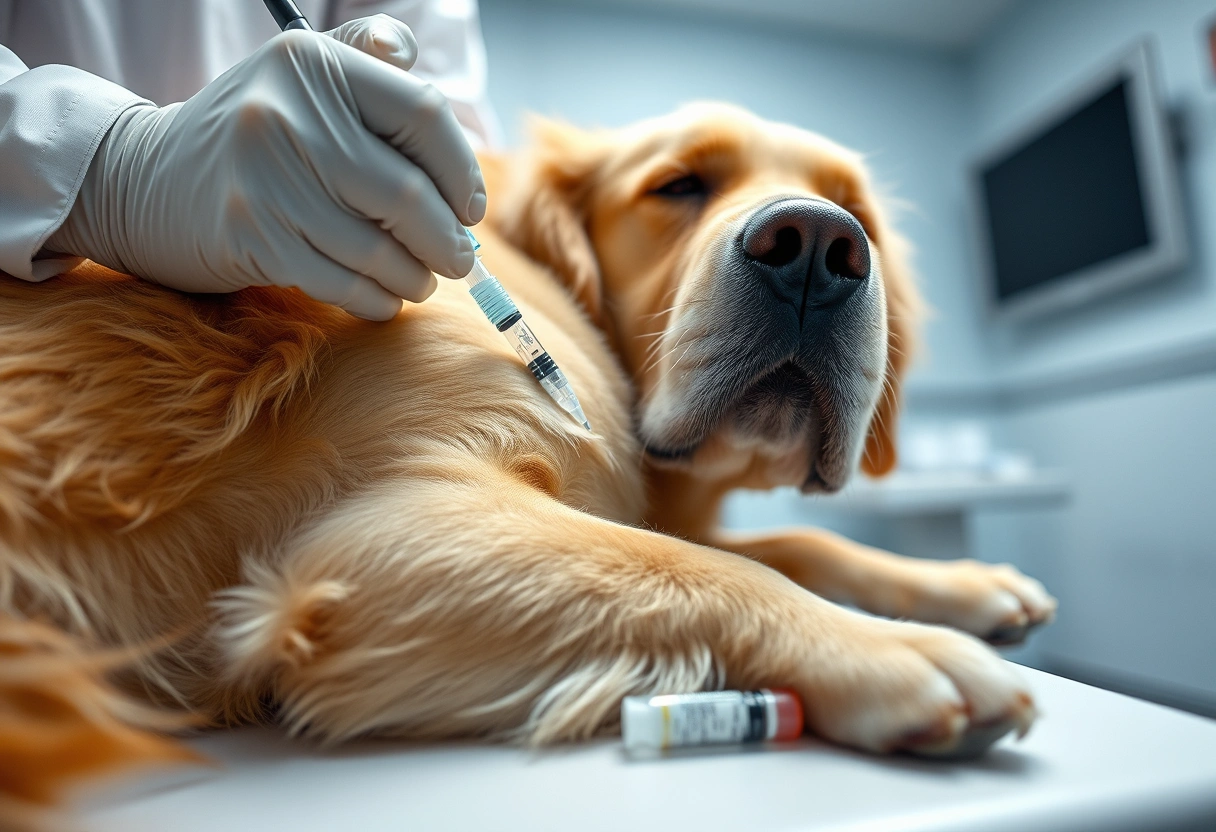
Once an owner does notice something is off, the conversation with a veterinarian usually turns toward pain management options, and increasingly that includes an arthritis injection for dogs rather than, or alongside, oral medication. There are three injectable classes currently used in veterinary orthopedic practice, and they work through genuinely different mechanisms. Understanding those mechanisms matters, because “injection” is doing a lot of heavy lifting as an umbrella term for three very different biological interventions.
Cartrophen (pentosan polysulfate sodium) is classified as a disease-modifying osteoarthritis agent. It’s administered as a series of subcutaneous injections, typically following a loading protocol of one injection weekly for four weeks, then tapering to monthly maintenance dosing. The proposed mechanism involves improving blood flow to the joint capsule and modestly influencing cartilage matrix turnover, though the degree of true structural modification versus symptomatic anti-inflammatory effect remains debated in the veterinary literature.
Adequan (polysulfated glycosaminoglycan, or PSGAG) has a longer and more complicated regulatory history in the United States. It was used off-label in dogs for years before receiving FDA approval specifically for canine intra-articular and intramuscular use. Adequan is thought to support joint fluid viscosity and may inhibit some of the enzymatic processes that break down cartilage. The loading protocol is similar in spirit to Cartrophen: biweekly injections initially, tapering to a maintenance schedule based on clinical response.
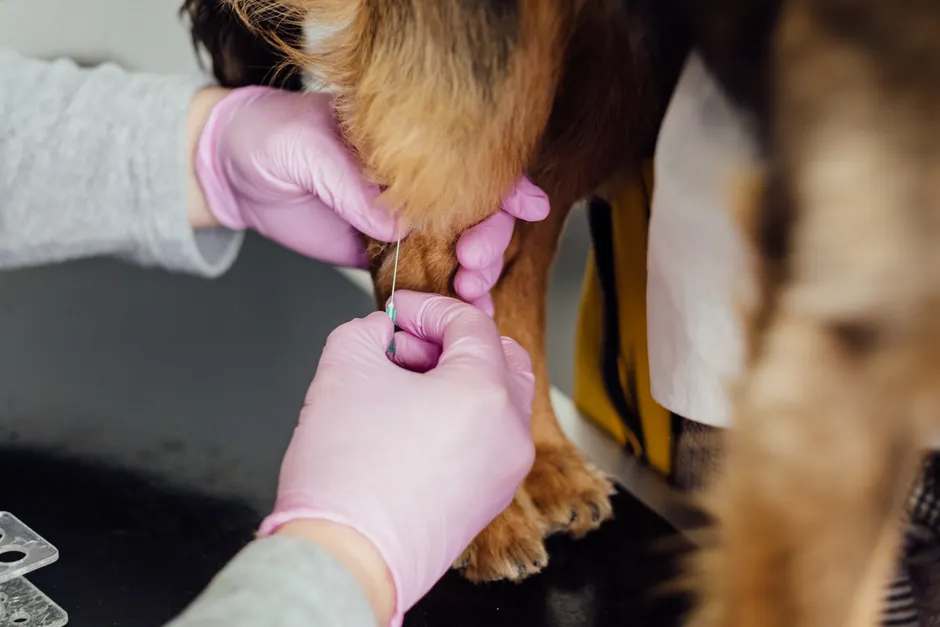
Synovetin OA represents a fundamentally different approach called radiosynoviorthesis. It uses tin-117m, a low-energy radioisotope, injected directly into the affected joint in a single procedure. The isotope is absorbed by synovial macrophages, the inflammatory cells driving much of the joint lining inflammation in osteoarthritis, and delivers localized radiation that reduces that inflammatory activity without meaningfully irradiating surrounding tissue. It’s a one-time injection per joint rather than an ongoing series, which changes both the cost structure and the compliance burden for owners.
Comparing the Three Arthritis Injection for Dogs Options
| Injection | Mechanism | Dosing Schedule | Best Fit For | Price Tier |
|---|---|---|---|---|
| Cartrophen | Pentosan polysulfate; disease-modifying, improves joint blood flow | Weekly loading x4, then monthly maintenance | Early to moderate osteoarthritis, dogs needing ongoing management | $$ |
| Adequan | Polysulfated glycosaminoglycan; supports joint fluid, may slow cartilage breakdown | Biweekly loading, then monthly or bimonthly maintenance | Moderate osteoarthritis, dogs already on multimodal pain plans | $$ |
| Synovetin OA | Tin-117m isotope targets synovial macrophages; radiosynoviorthesis | Single injection per joint (repeatable if needed) | Dogs with one or two dominant painful joints, owners wanting fewer vet visits | $$$$ |
Cost tiers are relative and will vary by clinic, region, and how many joints require treatment. Synovetin OA sits at a premium price point because it requires a facility licensed to handle radioactive isotopes and typically involves a brief hospital stay for radiation safety monitoring, whereas Cartrophen and Adequan can usually be administered during a standard outpatient visit.
What the Clinical Data Actually Shows
The efficacy data across these three options is not uniform, and pet owners deserve the unvarnished version rather than marketing language. Zoetis-sponsored clinical trials on Synovetin OA reported improvement in more than 80% of treated joints at the six-month mark, measured using force-plate gait analysis and veterinary orthopedic scoring rather than owner impression alone. That’s a strong result, and it’s one reason Synovetin OA has gained traction quickly since its introduction, particularly for dogs with a clearly localized problem joint, like a single arthritic elbow or stifle.
Adequan’s evidence base is older and, frankly, more contradictory. Some studies support a genuine chondroprotective effect, meaning the drug does something beyond masking pain. Other research suggests the clinical improvement owners report is largely symptomatic, driven by anti-inflammatory action rather than true cartilage preservation. The data is contradictory, and any veterinarian being straightforward with you will say so rather than promising structural repair. Cartrophen occupies a similar evidentiary position: reasonable symptomatic benefit, weaker and less consistent evidence for genuine disease modification.
Don’t count on any injectable to reverse structural joint degeneration. These treatments manage inflammation, modulate pain signaling, and in some cases slow further deterioration. None of them regrow cartilage or undo years of joint wear. Setting that expectation correctly at the start prevents a lot of owner disappointment three months down the road.
If you’re weighing injections against other approaches, it helps to see the full spectrum of options side by side, including how newer injectable therapies stack up against traditional pharmaceuticals. Our detailed comparison of Synovetin OA versus NSAIDs for dog arthritis breaks down the tradeoffs between isotope-based joint treatment and daily oral anti-inflammatory medication in more depth.

Tracking Outcomes Like a Behaviorist, Not Just a Worried Owner
Once a dog starts any arthritis injection for dogs protocol, the temptation is to evaluate success through vague global impressions: “he seems better.” That’s not measurable, and it’s prone to observer bias, especially when you badly want the treatment to work. A more rigorous approach borrows from functional behavioral analysis, tracking specific, observable, repeatable metrics before and after treatment.
- Sit-to-stand latency: Time how long it takes your dog to transition from a lying position to standing, three times, at the same time of day, before starting treatment. Repeat weekly post-injection. A shortening latency is one of the more reliable objective indicators of reduced joint pain.
- Stair willingness: Note whether your dog approaches stairs voluntarily or hesitates, circles, or waits for encouragement. Track this as a simple yes/no rather than a subjective feeling.
- Activity budget: Log minutes spent in active behaviors (walking, exploring, play-soliciting) versus resting behaviors across a typical day. A modest increase in the active proportion is a meaningful behavioral outcome measure.
- Cold-morning reluctance: Arthritic dogs often show antecedent-triggered stiffness, meaning environmental cold or overnight rest amplifies morning discomfort. Track whether that specific trigger response softens over the treatment course.
These four data points give you and your veterinarian something concrete to discuss at follow-up appointments, rather than relying on memory and general impression. It also respects the dog’s own communication, since willingness to engage in an activity is one of the clearest ways a dog expresses its actual comfort level, a concept sometimes called canine agency in behavioral literature.
A Practical Decision Framework to Bring to Your Vet
Think of this as a mini happiness plan, a structured case profile you build before the appointment so the conversation is efficient and specific rather than open-ended.
- Identify the affected joint(s). Is this a single localized joint (a good candidate profile for Synovetin OA) or diffuse, multi-joint arthritis (often better suited to Cartrophen or Adequan combined with an oral protocol)?
- Review bloodwork for contraindications. Dogs with clotting disorders should generally avoid Cartrophen and Adequan, since both can influence coagulation pathways. Dogs with significant renal disease need careful dosing review, as some of these agents are renally cleared.
- Clarify the goal. Are you managing symptoms for comfort, or hoping to slow progression? Be honest with yourself here, because it shapes which option makes sense financially and logistically.
- Set a realistic timeline. Cartrophen and Adequan typically require several weeks of loading before you can fairly judge effect. Synovetin OA’s benefit window is generally assessed around the six-month mark based on trial data.
- Plan the tracking protocol. Bring your sit-to-stand latency numbers and activity log to the follow-up visit rather than a vague verbal update.
None of these injectable options exist in isolation. Weight management, appropriate low-impact exercise, orthopedic bedding, and joint-support supplementation all contribute to the same underlying goal of reducing inflammatory load on the joint. If you’d rather start with non-injectable, at-home strategies before escalating to a clinical procedure, our guide on home remedies for dog arthritis that actually work covers evidence-supported options you can implement immediately. According to the American Veterinary Medical Association, multimodal management consistently outperforms any single intervention used alone, which is a useful framing regardless of which injection class you and your vet ultimately choose.
Choosing the right arthritis injection for dogs is not about finding the single best product on the market. It’s a matching exercise between your dog’s specific joint involvement, your vet’s clinical judgment, your budget, and how much monitoring and follow-up you’re realistically able to commit to. A dog with one bad elbow and an owner who can manage a single clinic visit is a very different case profile than a dog with diffuse multi-joint arthritis needing ongoing symptomatic support. Both are legitimate paths. What matters is that the decision is made with clear eyes about what the injection can and cannot do.
Frequently Asked Questions
How do I know if my senior dog actually needs an arthritis injection for dogs rather than oral medication?
This decision depends on how localized the arthritis is, how your dog has responded to oral NSAIDs so far, and whether there are contraindications like kidney or liver concerns that limit long-term oral medication use. A single dominant joint often responds well to Synovetin OA, while diffuse arthritis across multiple joints may be better served by a combination approach. Your veterinarian will typically base this on physical exam findings, radiographs, and your dog’s response history rather than a one-size-fits-all rule.
Is Synovetin OA treatment painful or risky for older dogs?
The Synovetin OA treatment procedure itself involves a joint injection under sedation, similar in discomfort level to other intra-articular injections. Because it uses a radioactive isotope, dogs typically need to stay at the treating facility for a short monitoring period afterward for radiation safety purposes. Clinical trial data has shown a favorable safety profile in appropriately selected patients, though it’s not recommended for dogs with certain joint instabilities or active joint infections.
Does Adequan for dogs actually slow arthritis progression, or just mask pain?
The evidence here is genuinely mixed. Some research supports a chondroprotective effect from Adequan for dogs, meaning it may help preserve cartilage health over time, while other studies attribute the clinical improvement mainly to anti-inflammatory action rather than true structural change. Owners should treat Adequan as a strong symptomatic management tool with possible but unconfirmed disease-modifying benefit, rather than a guaranteed cure for joint degeneration.
Can I combine an arthritis injection for dogs with joint supplements or NSAIDs?
Yes, and multimodal management is generally considered the most effective long-term strategy for canine osteoarthritis. Many dogs receiving Cartrophen or Adequan continue on a joint supplement and low-dose NSAID protocol as well, under veterinary supervision to avoid drug interactions. Synovetin OA is also frequently paired with weight management and physical rehabilitation for the best functional outcome.