

If your senior Golden’s coat has that greasy, musty smell no amount of scrubbing seems to fix, you’re not imagining it. An anti-odor shampoo made for aging skin can make a real difference, but only if it’s formulated to address what’s actually happening underneath that beautiful golden coat: overworked sebaceous glands, yeast overgrowth, and a skin barrier that’s not as resilient as it was in puppyhood. I’ve bathed a lot of old dogs at the sanctuary over the years, and I promise you, the right shampoo matters more than most people realize.
Let’s talk about why this happens, what to actually look for on that ingredient label, and when a shampoo just isn’t going to be enough.
Why Senior Golden Retrievers Develop That Chronic “Doggy” Smell
Golden Retrievers are already prone to skin issues. It’s kind of their thing, unfortunately, along with those soulful eyes and velcro personalities. As they age, their sebaceous glands, the ones producing the natural oils that keep skin and coat healthy, often go into overdrive or start malfunctioning. That excess oil creates the perfect warm, damp environment for yeast (specifically Malassezia) to multiply.
Add in slower metabolisms, thicker undercoats that trap moisture, and skin folds that don’t get as much airflow as they used to, and you’ve got a recipe for that heavy, almost sour odor a lot of us senior dog parents know all too well.
Old dogs aren’t dirty. Their bodies are just working differently now, and that smell is information, not an inconvenience. Listen to what it’s telling you.
I say this to every new sanctuary volunteer: that smell isn’t your dog being “gross.” It’s a message from a body that’s aging and needs a little more support than it used to. Honestly, who assumes an old dog just smells bad on purpose and ignores it?? That’s not how this works. Something is happening on a cellular level, and it deserves attention, not just a scented spray to cover it up.
Key Ingredients to Look For in an Anti-Odor Shampoo
This is where I get a little particular, because not all shampoos labeled “anti-odor” are actually treating the cause. A lot of them just mask the smell with fragrance, which honestly can make sensitive senior skin worse. Here’s what I look for when I’m choosing an anti-odor shampoo for one of our old souls:

- Chlorhexidine: A gentle antiseptic that targets bacteria and yeast without being overly harsh. Often found in vet-recommended medicated shampoos.
- Ketoconazole: An antifungal ingredient specifically effective against Malassezia yeast, which is usually the real culprit behind that musty odor.
- Colloidal oatmeal: Soothes inflamed, itchy skin while the shampoo does its work. This ingredient is a gift for dogs with sensitive senior skin.
- Aloe vera: Calming and hydrating, helps counteract the drying effect of medicated ingredients.
Research published in the Journal of Veterinary Dermatology has shown that medicated shampoos containing antifungal and antiseptic agents can significantly reduce Malassezia yeast counts after consistent use over two to four weeks. That’s not an overnight fix, friends. This is a “stick with it” kind of routine, not a one-bath miracle.
For dogs with milder gland-related odor and no active yeast infection, something gentler like the Amazonia Aloe Vera Dog & Cat Shampoo can be a good starting point. It leans on aloe and natural cleansing agents rather than harsh medicated compounds, which makes it a reasonable choice for dogs whose skin just needs gentle, regular maintenance rather than an antifungal intervention.

- Amazonia Pet Care Aloe Vera Dog and Cat shampoo regenerates and provides natural itch relief
- Tearless
- Paraben & Dye Free
Ingredients and Fragrances to Avoid for Sensitive Senior Skin
Just as important as what to look for is what to run from. Old skin is thinner, drier, and far less forgiving than it used to be. A shampoo that your Golden tolerated fine at age four might cause real irritation at age eleven.
Steer clear of:
- Sulfates (SLS/SLES): These are harsh detergents that strip natural oils, which sounds helpful for an oily coat but usually backfires by triggering even more oil production to compensate.
- Artificial dyes: Purely cosmetic, no functional benefit, and a common trigger for contact irritation.
- Heavy synthetic fragrances: These mask odor temporarily but can irritate already inflamed skin and sometimes worsen the underlying yeast issue.
- Alcohol-based ingredients: Drying and uncomfortable, especially on skin that’s already compromised.
If you flip a bottle over and can’t pronounce half the ingredient list, or the label is more focused on smelling like a candle shop than actually addressing skin health, put it back on the shelf. A well-formulated anti-odor shampoo should read like it was made by someone who understands dog dermatology, not a perfume counter.
Bathing Frequency Guidance for Older Dogs
Here’s something that surprises a lot of well-meaning pet parents: bathing too often can actually make the odor worse. The American Kennel Club notes that over-bathing senior dogs strips natural protective oils and can damage an already fragile skin barrier, which ironically leads to more oil production and, yes, more odor.
For most senior Goldens, bathing every two to four weeks with a targeted medicated dog shampoo is a reasonable rhythm, adjusted based on your individual dog’s skin condition and your vet’s recommendation. In between baths, a gentle wipe-down with a damp cloth on the paws, belly, and skin folds can help manage odor without over-processing the skin.

I also like using shampoo formats that make consistent application easier for households managing multiple dogs or frequent baths. Something like the PETHROOM Bubble Shampoo for Dogs has a foaming application that distributes evenly through a thick double coat without requiring you to over-scrub, which matters a lot when you’re trying to be gentle with older, thinning skin.
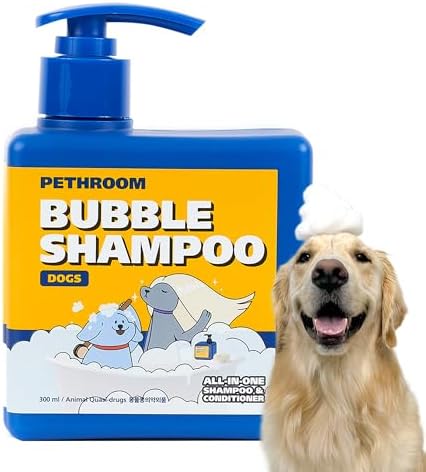
- PREMIUM NATURAL INGREDIENTS: Infused with 55% milk protein extract, this shampoo provides intensive protein care for you…
- HYPOALLERGENIC DOG SHAMPOO: Made with EWG green-grade ingredients, this bubble shampoo is perfect for dogs with sensitiv…
- DEEP CLEANSING FOAM: The rich foam effectively removes dirt and impurities from your dog’s fur while maintaining natural…
If you’re diluting medicated shampoo or splitting a bottle between multiple dogs at home, keeping things organized and properly labeled matters more than people think, especially if you’re rotating between a regular formula and something medicated for a flare-up. A set like these Refillable Shampoo Lotion Bottles makes it simple to pre-measure diluted medicated shampoo for easier, more controlled application, which is genuinely useful when you’re trying to be precise about contact time on sensitive skin.
Anti-Odor Shampoo Comparison
| Product | Best For | Key Ingredients | Price Tier |
|---|---|---|---|
| Amazonia Aloe Vera Dog & Cat Shampoo | Gentle daily/regular maintenance, mild gland-related odor | Aloe vera, natural cleansers | $$ |
| PETHROOM Bubble Shampoo | Even application on thick double coats, sensitive senior skin | Foaming gentle surfactants | $$ |
| Refillable Shampoo Lotion Bottles (6-Pack) | Pre-measuring and diluting medicated shampoo for controlled use | N/A (storage/application tool) | $ |
None of these replace a true medicated, prescription-strength gland issues shampoo if your vet has diagnosed an active yeast or bacterial infection. Think of these as supportive tools for maintenance and gentle care between medicated treatments, not a replacement for veterinary-grade antifungal formulas when they’re truly needed.
When Odor Signals Something Deeper Than Skin
Here’s the part I need you to really sit with. Sometimes the smell isn’t about the skin or coat at all. Sometimes it’s coming from somewhere else entirely, and no shampoo, no matter how good, is going to touch it.
Watch for these signs that point to something beyond a skin issue:
- A fishy or metallic odor, often pointing to anal gland disease that needs manual expression or veterinary treatment
- A foul smell specifically from the ears, which usually means a yeast or bacterial ear infection, not a whole-body skin problem
- Bad breath paired with visible tartar or bleeding gums, suggesting dental decay that’s contributing to the overall odor
- Odor that returns almost immediately after bathing, even with a strong medicated shampoo
If you’re bathing consistently with a quality anti-odor shampoo and the smell keeps coming back within a day or two, that’s your dog telling you the source isn’t external. That’s a vet visit, not a different bottle of shampoo. I’ve seen too many families cycle through five different shampoos when the real issue was an infected ear or impacted anal glands the whole time. Please don’t let that be you.
This matters even more for dogs already dealing with joint pain or mobility limitations, since chronic discomfort from an untreated gland or ear issue adds unnecessary suffering on top of what aging already asks of their bodies. This is a sacred trust we hold with these animals, to notice the small changes and act on them before they become bigger problems.
Frequently Asked Questions About Anti-Odor Shampoo for Senior Goldens
How often should I use an anti-odor shampoo on my senior Golden Retriever?
Most senior Goldens do well with an anti-odor shampoo every two to four weeks. Bathing more frequently can strip natural oils and worsen the skin barrier issues that caused the odor in the first place, so consistency matters more than frequency.
Can I use human dandruff shampoo with ketoconazole on my dog?
This should only be done under direct veterinary guidance. Human formulas have different pH balances and concentrations than a proper medicated dog skin shampoo, and using the wrong strength can irritate or damage sensitive senior skin.
Why does my Golden Retriever smell bad again just a day after a bath?
Quick-returning odor often means the source isn’t the skin at all. Anal gland issues, ear infections, or dental disease can all cause a smell that no anti-odor shampoo will resolve. A veterinary exam can pinpoint the actual cause.
Are medicated shampoos safe for long-term use on older dogs?
Many medicated shampoos are safe for ongoing maintenance use, but it’s best to follow your veterinarian’s specific guidance on frequency. Some formulas are meant for short-term flare-up treatment, while others, like a gentle gland issues shampoo, are formulated for regular long-term use.
Your old dog’s body is doing its best, even when it smells a little different than it used to. Choosing the right anti-odor shampoo, watching for what the smell is really telling you, and knowing when to call the vet instead of reaching for another bottle, that’s how you show up for them in this stage of life. And if joint pain is part of the picture too, it might be worth looking into options discussed in our guide on dog arthritis medication comparisons to keep your senior comfortable from every angle.
Give that good old face a scratch behind the ears for me. Tell your pup I said Hi! — Dawn