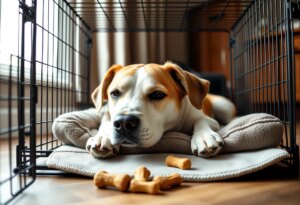
Calming aids for dogs can genuinely quiet nighttime barking in senior dogs, but only when the underlying cause is understood first. If your aging dog has started vocalizing after dark, the fix isn’t a single product off a shelf. It’s a layered protocol built on an accurate read of the behavior’s origin, paired with the right supportive tool at the right dose. Let’s get into what the data actually says before you spend money on the wrong solution.
Why Senior Dogs Vocalize After Dark: Sundowning and Canine Cognitive Dysfunction
Nighttime barking in older dogs frequently traces back to canine cognitive dysfunction (CCD), a neurodegenerative condition that shares meaningful pathology with human Alzheimer’s disease, including beta-amyloid plaque accumulation in the brain. Landsberg and colleagues (2012) found CCD affects roughly 28% of dogs aged 11 to 12, and that figure climbs sharply to 68% in dogs aged 15 to 16. This isn’t a rare quirk of extreme old age. It’s a common, progressive condition that most dogs will encounter if they live long enough.
The “sundowning” pattern specifically refers to a worsening of disorientation and distress as daylight fades, a phenomenon well documented in human dementia patients and increasingly recognized in aging dogs. The mechanism is tied to disrupted melatonin regulation and a breakdown in the circadian rhythm that normally governs the sleep-wake cycle. As the suprachiasmatic nucleus (the brain’s internal clock) degrades, dogs lose the neurological cues that once told them nighttime meant rest. The result is restlessness, pacing, disorientation, and vocalization at hours when the household is trying to sleep.
Dogs experiencing cognitive decline aren’t barking to be difficult. They’re often responding to genuine confusion, a kind of internal static where the environmental cues that used to make sense no longer register the same way. Treating the vocalization as defiance rather than distress is one of the most common owner misconceptions I see in clinical consults.
Differential Diagnosis First: Don’t Assume It’s “Just Aging”
Before reaching for any calming aids for dogs, a proper behavioral workup rules out other, more treatable causes. Nocturnal barking almost always has an identifiable antecedent, and lumping every case under “senior dog stuff” does a disservice to dogs whose barking has a fixable root cause.
- Pain assessment: Osteoarthritis is extremely common in aging dogs and often peaks in discomfort overnight when the dog has been still for hours. If your dog struggles with hind leg stiffness or has trouble settling into a comfortable position, review our breakdown of the 5 Best Dog Arthritis Treatments for Hind Leg Pain before assuming the barking is purely cognitive.
- Sensory decline: Hearing loss and vision loss change how a dog perceives the environment. A dog that can no longer see clearly in low light may bark out of disorientation rather than distress about a specific stimulus.
- Separation-related anxiety: Some dogs develop or intensify attachment-related anxiety with age, particularly if mobility limitations mean they can no longer follow their owner room to room during the day.
- Medical comorbidities: Bladder changes, gastrointestinal discomfort, and even early kidney disease can all present as nighttime restlessness and vocalization.
A veterinary exam that includes bloodwork and an orthopedic assessment should precede any behavioral intervention. If those come back clean, or if pain is addressed but barking persists, cognitive decline becomes the more likely driver, and that’s when calming aids for dogs earn their place in the protocol.

Comparative Breakdown: 5 Best Calming Aids for Nighttime Barking
Each of these five categories works through a different mechanism, and none of them are interchangeable substitutes for one another. Some calm the nervous system directly, some support neurological function over weeks of use, and others create a physical sensation of security. The table below breaks down mechanism of action, onset time, and how strong the supporting evidence actually is, since owners deserve to know which claims are backed by data and which are still speculative.
| Calming Aid | Mechanism of Action | Onset Time | Evidence Quality | Price Tier |
|---|---|---|---|---|
| Pheromone Diffusers (DAP) | Mimics maternal appeasing pheromone, signals safety to the amygdala | Days to 2 weeks | Moderate, multiple peer-reviewed trials | $$ |
| L-theanine / Alpha-casozepine Supplements | Supports GABA activity, reduces cortisol reactivity | 1 to 4 weeks (cumulative) | Moderate to strong, published clinical trial data | $$ |
| CBD Formulations | Interacts with endocannabinoid receptors, may reduce anxiety signaling | 30 to 90 minutes (acute); variable long-term | Preliminary, dosing not standardized | $$$ |
| Melatonin | Directly supplements the hormone governing sleep-wake regulation | 30 to 60 minutes | Moderate, well-studied in sleep disorders | $ |
| Anxiety Wraps / Compression Garments | Deep pressure therapy, thought to dampen sympathetic nervous system arousal | Immediate to 15 minutes | Limited controlled data, strong anecdotal support | $$ |
What the Research Actually Shows About Calming Aids for Dogs
The strongest published data on this topic comes from a 2017 study in the Journal of Veterinary Behavior, which found that alpha-casozepine, a milk-derived peptide, meaningfully reduced stress-related vocalization in aging dogs over a multi-week trial period. That’s a real, measurable finding, not marketing language. It suggests that for dogs whose barking is anxiety-driven rather than purely disorientation-driven, a casein-based supplement can produce a genuine behavioral shift.
CBD is a different story. The AKC Canine Health Foundation has funded ongoing research into cannabinoid use in dogs, but as of now, evidence remains preliminary and dosing protocols are not standardized across products. The data is contradictory across small trials, some show mild anxiolytic effects, others show no meaningful difference from placebo. Don’t count on CBD to work miracles, and be cautious of any product making sweeping claims about “curing” nighttime anxiety. If you choose to try it, treat it as one variable in a larger plan, not a stand-alone fix.
Melatonin has a more established track record specifically for circadian rhythm disruption, which makes it a logical first-line choice for sundowning-pattern barking rather than anxiety-pattern barking. The distinction matters clinically: a dog barking because it’s confused about what time it is responds differently than a dog barking because it’s fearful of being alone.
Supporting the Sensory and Oral Comfort Pathway
Nighttime settling behavior in dogs is closely tied to oral and sensory self-soothing, a pattern rooted in the same neurochemical pathways that drive chewing behavior in puppies and stressed adult dogs alike. Providing a low-calorie, long-lasting chew before the bedtime routine can serve as a behavioral bridge, giving the dog something to focus on that isn’t vigilance toward household sounds. Dogsee Mint Flavor Himalayan Yak Chews work well for this purpose since they’re slow to consume and don’t carry the caloric load of traditional biscuits, which matters for senior dogs with reduced activity levels.

- FIGHT BAD BREATH: Mint present in these Himalayan Yak Chews helps freshen your dog’s breath, making close cuddles more p…
- AID DIGESTION: Mint is known for its soothing properties, which can help support your dog’s digestive health.
- NATURAL INGREDIENTS: These Mint-flavored Yak cheese chews are hand-crafted in the Himalayas using only natural ingredien…

Interestingly, some owners have found that calming lickable treats designed for pets more broadly can slot into a bedtime routine as a low-stress ritual cue rather than a targeted pharmacological fix. Products like Cat Calming Lickable Treats for Anxiety Relief use a licking action that itself has a mild self-soothing effect, similar to the repetitive licking behavior dogs display when self-regulating stress. This isn’t a replacement for a dog-formulated supplement, but the ritual of a predictable, enjoyable pre-bed activity supports the antecedent management piece of the plan.

- CREATURE COMFORTS: Even the coolest cat can experience stress. That’s why our Cat Squeezables Calming Support is specifi…
- THE INSIDE STORY: We’ve got other calming lickables licked, because ours are made with clean ingredients that help sooth…
- FILLER-FREE: Unlike other pet purees that contain by-products and fillers like cellulose, corn, soy, wheat and palm oil,…
Building a Happiness Plan: Pairing Calming Aids With Antecedent Management
Calming aids for dogs work best as one piece of a structured behavioral plan, not as an isolated fix. A Happiness Plan approach means identifying the specific antecedents that precede barking and modifying the environment before the behavior starts, rather than only reacting once it occurs.
- Light therapy: Introduce a dim, warm nightlight in the dog’s sleeping area. This reduces the visual disorientation that worsens sundowning symptoms in low light.
- Consistent bedtime routine: Feed, walk, and settle the dog at the same times every evening. Predictability reduces the cognitive load required to anticipate what happens next, which is especially valuable for a dog with declining executive function.
- Enrichment timing: Provide mentally engaging activity earlier in the evening, not right before bed, so the dog is winding down rather than stimulated when the lights go out.
- Daytime exposure to natural light: Sunlight exposure during the day helps reinforce a healthy circadian rhythm, which supports the same melatonin regulation pathway that nighttime supplementation targets.
- Track the pattern: Keep a simple log of when barking occurs, what preceded it, and how long it lasts. This data helps your veterinarian and behaviorist adjust the plan based on actual trends rather than guesswork.
Owners managing their own stress during this process shouldn’t be overlooked either. Caring for a dog with disrupted sleep is genuinely exhausting, and a regulated caregiver is better equipped to stay consistent with a behavior plan. Simple tactile stress-relief tools, like a 6 Set Squishy Sensory Stress Squeezing Balls, can help owners manage their own frustration during late-night episodes, which indirectly benefits the dog since anxious human energy is something dogs pick up on readily.

- ✔️ 6 UNIQUE STRESS BALLS: Includes 6 sensory squeeze balls with different colors, textures, and sensory fillings, includ…
- ✔️ RELIEVE STRESS & IMPROVE FOCUS: Soft sensory stress balls help reduce everyday stress, nervous energy, and restlessne…
- ✔️ SOFT, DURABLE & SAFE: Made from high-quality thermoplastic rubber, these sensory squeeze balls are soft, flexible, an…
If barking is layered with separation distress during the day as well, it’s worth reviewing broader options in our guide to the Best Calming Aids for Dogs Who Bark When You Hug, since overlapping anxiety triggers often respond to the same core supplements discussed here. For a more detailed breakdown of nighttime-specific protocols, our dedicated piece on how to Stop Senior Dog Barking at Night walks through five proven fixes step by step.
According to the ASPCA, regular veterinary checkups become increasingly important as dogs age precisely because so many behavioral changes have a treatable medical origin. That guidance lines up with everything covered here: rule out the physical first, then layer in calming aids for dogs as a supportive, evidence-informed second step.
Key Takeaways
- Nighttime barking in senior dogs is frequently linked to canine cognitive dysfunction and disrupted melatonin regulation, not defiance.
- Pain, sensory decline, and separation anxiety must be ruled out before labeling barking as purely age-related.
- Alpha-casozepine has the strongest published evidence among supplement options for reducing stress-related vocalization.
- CBD evidence remains preliminary, and dosing is not yet standardized across products.
- Calming aids for dogs work best paired with antecedent management like light therapy, routine, and daytime enrichment.
Frequently Asked Questions
What are the most effective calming aids for dogs experiencing nighttime barking?
The calming aids for dogs with the strongest supporting research are alpha-casozepine supplements and melatonin, since both address distinct mechanisms behind nighttime distress. Alpha-casozepine reduces stress reactivity over several weeks of consistent use, while melatonin directly supports the circadian sleep-wake cycle. Pheromone diffusers and anxiety wraps also show moderate benefit, particularly when combined with a consistent bedtime routine.
How long does it take for calming supplements to reduce nighttime vocalization?
Melatonin and CBD tend to act within thirty to ninety minutes, making them useful for acute episodes. Alpha-casozepine and pheromone diffusers work cumulatively, often requiring one to four weeks of consistent daily use before owners notice a meaningful reduction in barking. Patience matters here, since stopping a supplement too early is one of the most common reasons owners conclude it “didn’t work.”
Could my senior dog’s nighttime barking be pain rather than cognitive decline?
Yes, and this should be ruled out before assuming cognitive causes. Osteoarthritis pain often intensifies overnight after hours of stillness, and dogs frequently vocalize when trying to reposition themselves. A veterinary exam focused on joint health and mobility should precede any behavioral intervention, since pain-driven barking will not respond to calming aids for dogs alone.
Are calming aids for dogs safe to combine with each other?
Many owners combine a pheromone diffuser with a supplement like melatonin or alpha-casozepine since they work through different, non-conflicting mechanisms. However, combining multiple oral supplements, particularly CBD with melatonin, should be discussed with a veterinarian first, since interactions and appropriate dosing for senior dogs with existing health conditions haven’t been thoroughly studied.