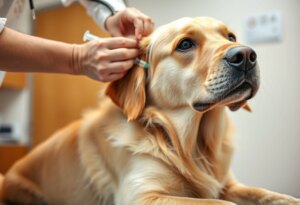
Dog arthritis treatment isn’t a single product you buy once and forget about. It’s a layered protocol, and the dogs who do best are the ones whose owners treat hind leg pain as a functional problem to be measured, not just a feeling to be guessed at. As a behaviorist, I spend a lot of time watching how pain reshapes behavior long before an owner notices a limp. The good news is that between pharmacology, joint support, and structured rehab, there’s a lot we can do to restore comfort and confidence in an aging dog’s gait.
Reading the Early Behavioral Signs of Hind Leg Pain
Osteoarthritis rarely announces itself with a dramatic limp. It shows up first as behavior change, and that’s where owner observation actually outperforms a five-minute clinic exam. Reluctance to rise from a resting position, hesitation before jumping into a car, or a delayed “gait latency” (the pause between being asked to move and actually moving) are all documented markers on validated pain scales, including the Colorado State University Canine Brief Pain Inventory. Guarding behaviors matter too: a dog that shifts weight off a hind limb while standing, or snaps when a hip is touched during grooming, is communicating something specific about location and severity.
I ask owners to track three things weekly: time to rise from lying down, willingness to climb stairs, and any avoidance of previously normal activities like greeting at the door. These aren’t subjective impressions, they’re functional data points, and they’re the same categories used in formal pain inventories. If you’re also weighing whether joint disease might progress to something requiring imaging or specialist referral, our buyer’s guide to arthritis relief options breaks down what typically escalates a case from home management to veterinary intervention.
NSAID and Adjunct Pharmacological Protocols for Dog Arthritis Treatment
Medication is usually the fastest lever for reducing inflammation, and the data backs this up more convincingly than most supplement claims. A 2020 study published in the Journal of Veterinary Internal Medicine found that carprofen and grapiprant reduced pain scores in roughly 60 to 70 percent of osteoarthritic dogs within four weeks of starting treatment. That’s a meaningful response rate, but it also means 30 to 40 percent of dogs don’t respond adequately to a single agent, which is why veterinarians frequently combine NSAIDs with adjunct analgesics like gabapentin or amantadine for dogs with chronic, centrally sensitized pain.
The practical challenge for owners is medication compliance, especially with dogs who are food-selective due to age-related appetite changes or nausea from other conditions. A tool like the 2025 New Portable Pill Taker Household Gadgets can reduce the stress of daily dosing for dogs who’ve become pill-averse, which matters more than it sounds. Missed or inconsistent NSAID dosing is one of the most common reasons owners report “the medication isn’t working” when the real issue is adherence.

- EASY TO USE: Simple one-handed operation makes removing pills from blister packs effortless and safe for elderly and dis…
- PORTABLE DESIGN: Compact and lightweight construction allows you to carry this medication aid wherever you need it
- VERSATILE APPLICATION: Works with most standard blister pack medications and helps reduce hand strain during pill extrac…
If long-term NSAID use raises cost concerns for your household, it’s worth reviewing how pet insurance for an older dog handles chronic condition coverage, since arthritis management is rarely a short-term expense.
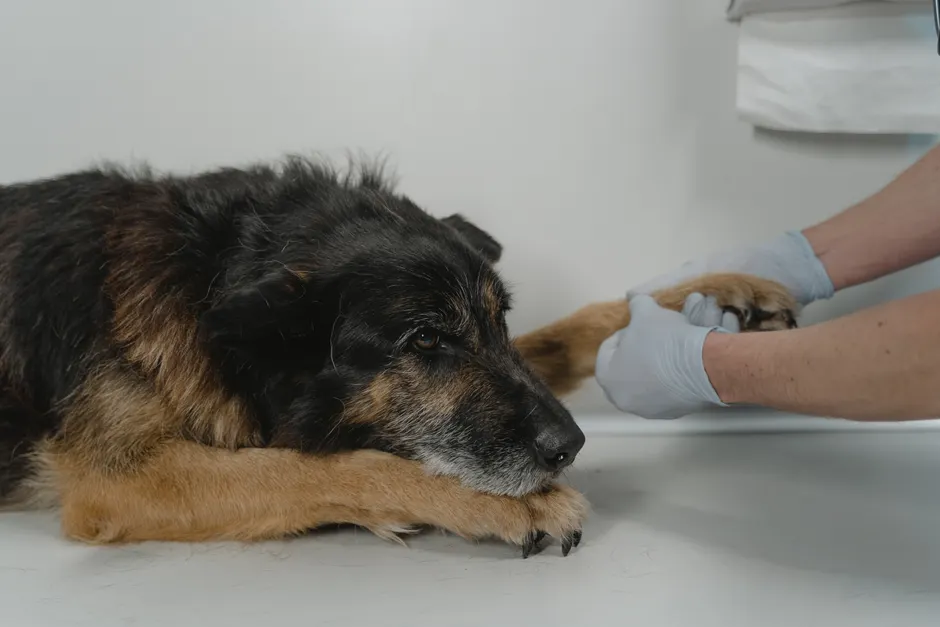
Pain that isn’t managed pharmacologically doesn’t just cause discomfort. It teaches the dog to avoid movement altogether, and that avoidance pattern can outlast the original injury by months if left unaddressed.
Joint Supplements: What the Evidence Actually Shows
Owners often ask me whether joint supplements are worth adding alongside a dog arthritis treatment plan, and the honest answer is: modestly, yes, but expectations need calibrating. A 2017 meta-analysis in Frontiers in Veterinary Science reviewed omega-3 fatty acids and glucosamine-chondroitin formulations and found measurable, if modest, improvement in weight-bearing metrics among osteoarthritic dogs. These aren’t dramatic reversals. They’re incremental gains in load distribution across an affected limb, typically observed over eight to twelve weeks of consistent supplementation.
Omega-3s in particular have reasonably consistent anti-inflammatory data behind them, largely through reducing pro-inflammatory eicosanoid production. Glucosamine-chondroitin evidence is more mixed. Some trials show improved comfort scores, others show no statistically significant difference from placebo. My guidance to owners is to treat supplements as an adjunct to, not a replacement for, pharmacological and rehabilitative care, and to give any product a full 8 to 12 week trial before judging efficacy. If you’re comparing formulations, our dog arthritis relief buyer’s guide covers dosing ranges and ingredient sourcing in more depth.
Physical Rehabilitation and Bracing for Hind Leg Pain
This is where behavioral science and orthopedics overlap most directly. Chronic joint pain generates a fear-avoidance loop: the dog experiences pain during movement, learns to associate that movement with discomfort, and begins avoiding it even after inflammation is partially controlled. This is functionally similar to learned helplessness patterns documented in other pain research, and it’s why rehab needs to be structured, not incidental.
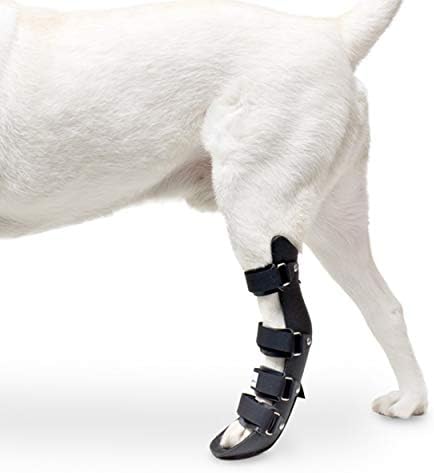
Structured hydrotherapy sessions are one of the better-supported interventions here because water buoyancy reduces joint loading while still allowing active range of motion, which helps rebuild the dog’s confidence in using the limb. Traction flooring and ramps serve a similar antecedent-management function: they remove the environmental triggers (slippery floors, high steps) that a dog has learned to associate with pain or falling. For dogs with hind limb weakness or instability, a support brace can also reduce guarding behavior by providing joint stability during the gait cycle. The Dog Rear Foot Splint Helps Brace Lower Back Limbs is a commonly used option for dogs showing knuckling or weakness in the rear limbs, particularly during rehab from a mobility setback.
Front limb compensation is a real and underdiscussed issue in dogs with primary hind leg pain. When a dog shifts weight forward to protect a painful rear joint, the front legs absorb disproportionate load over time, sometimes leading to secondary strain. A wrap-style option like the Labra Dog Front Leg Brace Compression Wrap can provide added support in these compensating limbs while the primary hind leg pain is being addressed through the full treatment protocol.
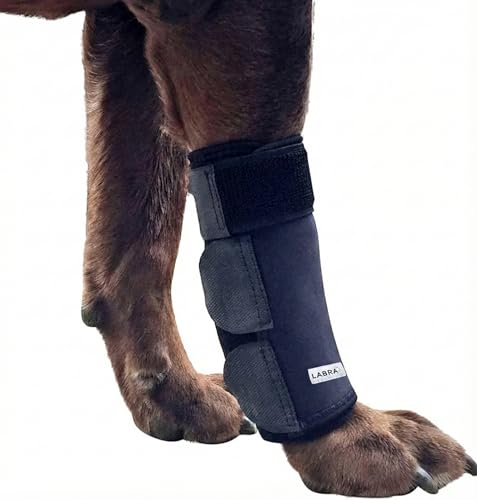
- Protects Against Hot Spots, Lick Granulomas, and Pressure Sores: Provides targeted relief for painful hot spots, lick gr…
- Premium Materials – Made from 3mm neoprene, our brace wrap is breathable, elastic, and enjoyable, ensuring your dog’s co…
- Joint Health – Our brace provides extra support on your dog’s front legs, allowing them to stay healthy and support thei…
Comparing the 5 Best Dog Arthritis Treatment Options
Here’s a side-by-side breakdown of the core categories that make up a well-rounded dog arthritis treatment plan for hind leg pain. Price Tier reflects relative investment level, not a fixed dollar figure, since actual costs vary by dosage, prescription requirements, and retailer.

| Treatment Type | Primary Function | Typical Onset | Best Suited For | Price Tier |
|---|---|---|---|---|
| NSAIDs (carprofen, grapiprant) | Reduces joint inflammation and pain signaling | 1 to 4 weeks | Moderate to severe osteoarthritis flare-ups | $$ |
| Omega-3 / glucosamine-chondroitin supplements | Modest anti-inflammatory and cartilage support | 8 to 12 weeks | Long-term maintenance, mild cases | $$ |
| Hydrotherapy and structured rehab | Rebuilds weight-bearing confidence, reduces fear-avoidance | 4 to 8 weeks | Post-flare recovery, muscle atrophy | $$$ |
| Rear leg splints/braces | Mechanical joint stabilization, reduces knuckling | Immediate | Hind limb weakness or instability | $$ |
| Surgical intervention (e.g., TPLO) | Corrects specific structural joint instability | 8 to 16 weeks recovery | Confirmed structural ligament damage | $$$$$ |
Why Surgery Isn’t a Guaranteed Fix for Degenerative Joint Disease
Owners frequently ask whether procedures like tibial plateau leveling osteotomy (TPLO) will simply resolve their dog’s arthritis. It’s a reasonable question, but the answer requires some nuance. TPLO addresses a specific structural instability, typically a torn cranial cruciate ligament, and it can be highly effective for that isolated problem. What it does not do is reverse existing degenerative joint disease in the same joint or prevent progression of arthritis that’s already present. Don’t count on surgery to work miracles for a dog whose primary issue is diffuse osteoarthritic change rather than a single mechanical defect.
This is why I push owners toward standardized mobility checklists rather than relying on subjective impressions like “he seems better.” Track specific functional markers: number of steps climbed without hesitation, time to lie down versus collapse, willingness to initiate play. According to the American Kennel Club, consistent monitoring of functional mobility markers is one of the more reliable ways to gauge whether a dog arthritis treatment plan is actually working versus producing a placebo effect in the owner’s perception. If your dog also struggles with nighttime restlessness related to chronic pain, our comparison of melatonin versus calming chews for dogs that bark at night may help identify whether pain or anxiety is driving the disruption.
Key Takeaways
- Behavioral changes like delayed rising and gait hesitation often precede visible limping in dogs with hind leg pain.
- NSAIDs and adjunct medications show real efficacy data, but response rates are not universal, and adherence matters as much as the drug itself.
- Joint supplements offer modest, evidence-supported improvement in weight-bearing metrics, not dramatic reversal.
- Structured rehab and bracing address the fear-avoidance loop that chronic pain creates, which pills alone can’t fix.
- Surgery corrects specific structural problems, not the broader progression of degenerative joint disease.
Building a Realistic Dog Arthritis Treatment Timeline
Most successful dog arthritis treatment plans combine at least three of the categories above rather than relying on one. A typical sequence looks like this:
- Weeks 1 to 4: Pharmacological control (NSAID or adjunct analgesic) to reduce acute inflammation and pain signaling.
- Weeks 2 to 12: Begin joint supplementation concurrently, since onset is slower and benefits compound with consistent use.
- Weeks 4 to 8: Introduce structured hydrotherapy or land-based rehab once acute pain is controlled enough for active movement.
- Ongoing: Environmental antecedent management, ramps, traction rugs, orthopedic bedding, to reduce daily joint stress and reinforce confident movement patterns.
The dogs who show the most durable improvement are the ones whose owners treat this as a layered, monitored process rather than a single intervention. That’s consistent with how chronic pain behaves across species: multimodal management outperforms any single modality, and the goal of dog arthritis treatment should be functional restoration, not just symptom suppression.
What is the most effective dog arthritis treatment for hind leg pain?
There isn’t a single most effective option. The strongest outcomes come from combining a prescribed NSAID or adjunct analgesic with structured rehabilitation and joint support supplements. Dogs with mechanical instability may also need surgical evaluation, but medication and rehab remain the foundation of most dog arthritis treatment plans.
How can I tell if my dog’s hind leg pain is arthritis and not an injury?
Arthritis typically presents gradually, with stiffness that’s worse after rest and improves slightly with gentle movement, whereas acute injuries usually cause sudden, sharp lameness. A veterinary orthopedic exam and imaging can distinguish degenerative joint disease from ligament tears or fractures.
Do joint supplements actually help with canine mobility support?
Research shows modest but measurable improvement in weight-bearing metrics with omega-3 fatty acids and glucosamine-chondroitin, particularly when used consistently over eight to twelve weeks. They work best as a supporting element in a broader dog arthritis treatment plan rather than a standalone solution.
Is surgery necessary for a dog with severe hind leg pain from arthritis?
Not always. Surgery is generally reserved for specific structural issues, like ligament tears, rather than general degenerative joint disease. Many dogs manage well long-term with medication, joint supplements, weight management, and structured rehab as their primary dog arthritis treatment approach.