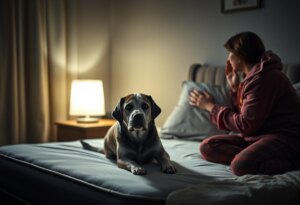


If your old boy suddenly starts howling the second you grab your keys, something changed, and it’s rarely “just anxiety.” Calming aids for senior dogs can absolutely help take the edge off a shaky nervous system, but they work best when you’ve also asked the harder question: why now? A Golden who was rock solid at the door for eight years and is suddenly falling apart is telling you something. Sometimes it’s grief. Sometimes it’s failing eyesight. Sometimes it’s pain he can’t tell you about in words. My job here, and yours, is to listen to what’s underneath the panic before we just reach for a fix.
I’ve sat on the floor of my sanctuary with enough frightened old dogs to know that sudden behavior changes deserve real attention, not a shrug and a spray bottle of lavender. So let’s talk about what’s actually happening in your senior Golden’s brain and body, and which tools genuinely help.
Why This Anxiety Showed Up “Out of Nowhere” (It Didn’t)
Here’s what veterinary behaviorists want you to understand: sudden-onset separation anxiety in an older dog is almost never sudden. It’s usually the visible tip of something that’s been building quietly for months. Vision starts to fog. Hearing dulls. Joints ache in ways that make the world feel less safe and less predictable. And for a lot of seniors, there’s early cognitive dysfunction syndrome (the canine version of dementia) chipping away at their sense of security.
Think about it from his side. If your hearing is going, you can’t track where I am in the house anymore just by sound. If your hips hurt, following me room to room isn’t comforting, it’s exhausting. If your brain is starting to misfire the way aging brains do, being alone doesn’t feel like “mom went to the store,” it feels like being lost forever.
That’s not a behavioral problem. That’s a scared, aging body trying to make sense of a world that’s gotten confusing.
So before you label it pure separation anxiety, ask yourself:
- Has he bumped into furniture lately, or hesitated at steps he used to take easily?
- Does he seem startled when you approach from behind?
- Is he pacing or panting even when you’re home?
- Has his sleep-wake schedule flipped, with more nighttime wandering?
Any “yes” there means this conversation includes your veterinarian, not just a calming chew.
The Actual Science Behind Calming Aids for Senior Dogs
I’m not a chemist, but I’ve used enough of these products over the years, on enough anxious old dogs, to trust the research behind the ones that actually work.
Pheromone diffusers (the Adaptil-style products) release a synthetic version of the appeasing pheromone a mother dog produces for her nursing puppies. It signals safety at a primal level, no thinking required. This matters a lot for a senior dog whose cognitive processing has slowed down, because it doesn’t rely on him “figuring out” he’s safe. His nervous system just responds.
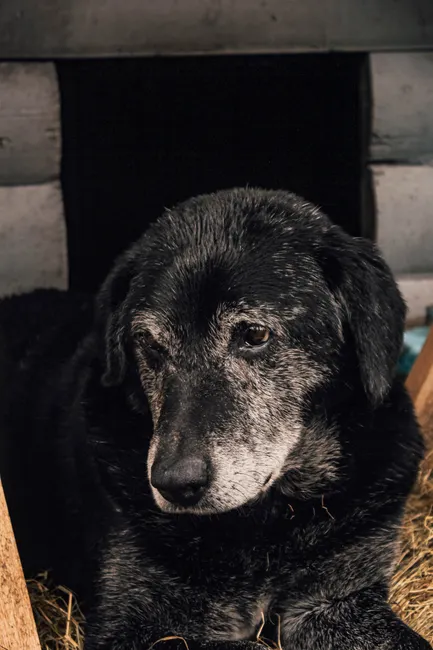
L-theanine, an amino acid also found in green tea, increases calming brain chemicals like GABA and serotonin without sedating the dog into a stupor. That’s important for seniors, who don’t need one more thing making them groggy or unsteady on their feet.
Alpha-casozepine, derived from milk protein, has real data behind it. A 2017 study published in the Journal of Veterinary Behavior found that dogs given alpha-casozepine showed measurably reduced anxiety-related behaviors within a few weeks of consistent use. That’s not folk wisdom, that’s a peer-reviewed result, and it’s part of why so many vet-formulated calming chews lean on this ingredient.
None of these are magic. They’re support tools. They lower the baseline hum of anxiety so your dog has room to actually learn that being alone is survivable again.
The 5 Best Calming Aids for Seniors With Separation Anxiety
1. Pheromone Diffusers and Collars
These are often my first recommendation because they’re passive. You plug it in or clip it on, and it works in the background all day. A Dog Calming Collar, Pheromone Collar for Dogs is a good option for seniors who spend time in multiple rooms or go outside, since the effect travels with them instead of staying tied to one diffuser plugged into a wall.

- 【Advanced Herbal Bead Slow-Release Technology】Unlike ordinary calming collars that lose effectiveness quickly under sunl…
- 【Up to 180 Days Long-Lasting Calming Support】Each calming bead provides up to 60 days of effectiveness, and every box in…
- 【Helps Reduce Anxiety, Barking & Stress Behaviors】Designed to help dogs stay calm during stressful situations including …
It’s a budget-friendly place to start, and honestly, for dogs with mild to moderate anxiety, it can be enough on its own.
2. Calming Chews With Melatonin and Valerian
Chews are the easiest entry point for most pet parents, and they work well for situational anxiety, like the panic that spikes right before you leave the house. Rocco & Roxie Calming Chews for Dogs, Melatonin & Valerian combine two ingredients with a long track record in calming formulas. Melatonin supports natural sleep-wake rhythms (helpful for seniors whose internal clocks have drifted), while valerian root has a mild sedative effect without knocking your dog flat.

- Unparalleled Support: Our delicious duck-flavored soft chews keep your dog cool, calm, and relaxed. Every bite promotes …
- Better Ingredients,Better Results: Our formula includes Ashwagandha and GABA, which work to block stress signals in the …
- Veterinarian Recommended: Our Calming health supplement is a vet-recommended, daily formula to keep your dog calm and re…
Give chews about 30 to 45 minutes before you plan to leave, not the second you’re walking out the door. Timing matters more than people realize.
3. Anxiety Wraps (ThunderShirt-Style Compression)
Gentle, constant pressure mimics being held, and a lot of anxious dogs genuinely settle when they’re wearing one. For seniors, I like these especially during thunderstorms, fireworks, or the first few weeks of a new routine, since it’s drug-free and can be layered with other calming aids for senior dogs without any interaction concerns.
4. Emotional Support Blankets and Scent-Anchored Bedding
Never underestimate the power of a blanket that smells like you. Scent is one of the strongest anchors to safety a dog has, and it doesn’t fade the way visual or auditory cues do as senior sensory systems decline. A PERFEMET Emotional Support Blanket, Waterproof Dog Blanket is a smart pick for older dogs, since it’s built to handle accidents (which happen more as dogs age) while still giving that soft, weighted comfort of a familiar bed.

- High-Visibility Calming Blanket: Designed in a color dogs can clearly see, this emotional support blanket, provides a co…
- WaterProof and Leakproof Blanket: Adopts high-density waterproof membrane in the middle layer that effectively blocks wa…
- Suit for Multi-Scene: This waterproof pet blanket effectively protect sofas, couches, beds and home furniture from pet h…
Sleep with it for a night before you introduce it. It sounds small. It isn’t.
5. Prescription Medications (Trazodone, Fluoxetine)
Sometimes natural support isn’t enough, and that’s not a failure on your part. According to AVMA guidance, roughly 20 to 40 percent of dogs over age eight show signs of cognitive dysfunction, and those changes can mimic or intensify anxiety well beyond what supplements can manage. Trazodone is often used situationally (before a vet visit, grooming, or a known trigger), while fluoxetine is a daily medication for dogs with more persistent, generalized anxiety. Both require a prescription and real veterinary oversight, especially in seniors who may have other health conditions or medications to consider.
Sudden fear in an old dog is a message, not a malfunction. Our job isn’t to silence it. It’s to figure out what he’s trying to tell us, and then answer with patience.
Comparing the Top Calming Aids for Senior Dogs
| Calming Aid | Best For | Onset Time | Price Tier |
|---|---|---|---|
| Pheromone Collar/Diffuser | Ongoing, background anxiety support | Days to weeks | $$ |
| Melatonin/Valerian Chews | Situational triggers (departures, storms) | 30 to 45 minutes | $$ |
| Anxiety Wrap | Acute panic episodes, drug-free comfort | Immediate | $$$ |
| Emotional Support Blanket | Scent-based comfort, senior incontinence needs | Immediate | $$ |
| Prescription (Trazodone/Fluoxetine) | Moderate to severe anxiety, cognitive dysfunction overlap | 30 to 90 minutes (trazodone); weeks (fluoxetine) | $$$$ |
Sanctuary-Style Ways to Ease Anxiety at Home
Products help, but they’re not the whole story. Some of the most meaningful shifts I’ve seen in anxious seniors came from small, boring, consistent changes at home.

- Keep departures low-key. No dramatic goodbyes. Grab your keys, say a calm word, and go. Big emotional exits teach your dog that your leaving is a big emotional event.
- Practice short absences on purpose. Step outside for thirty seconds. Come back in like it’s nothing. Build up slowly. This is gentle counterconditioning, and it works.
- Leave scent-soaked bedding nearby. A worn t-shirt, a blanket from your bed, anything that smells like you and hasn’t been washed in a few days.
- Keep the routine boring and predictable. Aging dogs, especially those with early cognitive changes, find enormous comfort in sameness.
And here’s the part that matters most: learn to tell the difference between fear-panting and pain-panting. A dog pacing and panting from anxiety usually has a specific trigger you can identify. A dog pacing and panting from arthritis pain or discomfort often does it regardless of whether you’re home, and it tends to get worse at night. If you’re not sure which you’re seeing, a good comparison read is Calming Bed vs Orthopedic Bed: Best Pick for Seniors, since the right bed setup can quietly resolve pain-driven restlessness that looks a lot like separation anxiety but isn’t.
When It’s Time to Call the Vet
I’ll say this as gently and as firmly as I can: don’t assume. Get your senior Golden checked before you settle on “he just has separation anxiety” as the full answer.
Your vet should rule out:
- Cognitive dysfunction syndrome (disorientation, altered sleep cycles, house soiling, staring blankly)
- Pain from arthritis, dental disease, or other age-related conditions
- Vision or hearing loss that’s changed how he perceives your comings and goings
- Underlying illness (thyroid issues and certain organ conditions can present as anxiety-like symptoms)
If you’re weighing calming chews against something like a pheromone diffuser and aren’t sure which fits your dog’s specific pattern, our breakdown on Calming Chews vs Pheromone Diffusers for Senior Dogs walks through it in more depth. And for general behavioral and wellness benchmarks in aging dogs, the American Kennel Club has solid, vet-reviewed guidance worth reading alongside anything your own vet tells you.
Once medical causes are ruled out or managed, calming aids for senior dogs become so much more effective, because you’re no longer fighting an untreated physical issue underneath the behavior. This is where a layered approach, pheromones plus routine plus the right bedding, really earns its keep. And this is exactly the kind of case where calming aids for senior dogs shine brightest: not as a cover-up, but as genuine support once the real picture is clear.
Dignity Doesn’t Disappear With Age. It Just Needs More of Us.
Watching a dog who’s always been steady suddenly come undone at the door is heartbreaking. I’ve felt it. You feel helpless, like you’re failing him somehow. You’re not. He’s aging, and aging is disorienting, for him and for you.
What he needs isn’t perfection. He needs patience, a predictable world, and someone willing to slow down and actually look at what’s changed. Senior dog anxiety is real, it’s valid, and it deserves your full attention, not a quick fix and a shrug.
Give him the calm. Give him the routine. Give him you, steady and unhurried. That’s the whole thing, really.
Frequently Asked Questions
Why did my senior Golden Retriever suddenly develop separation anxiety after years of being fine alone?
Sudden separation anxiety in an older dog usually points to an underlying shift rather than a random behavioral change. Vision or hearing loss, early cognitive dysfunction syndrome, and undiagnosed pain are the most common culprits. A veterinary exam is the best first step before assuming it’s purely behavioral.
Are natural calming aids for senior dogs actually effective, or just marketing?
Some have real science behind them. Alpha-casozepine, L-theanine, and synthetic pheromones have documented calming effects on the canine nervous system, including a 2017 study in the Journal of Veterinary Behavior showing reduced anxiety behaviors with alpha-casozepine. They work best as consistent, ongoing support rather than a one-time fix.
Can calming chews be combined with a pheromone collar or diffuser?
Yes, and many pet parents find layering these approaches works better than relying on just one. Pheromones provide steady background support, while chews target situational spikes like departures or thunderstorms. Always check with your vet if your senior dog takes other medications.
How do I know if my senior dog’s panting and pacing is anxiety or pain?
Anxiety-driven panting typically has a clear trigger, like your departure or a loud noise, and eases once the trigger passes. Pain-driven panting often continues regardless of whether you’re home and tends to worsen at night or after activity. When in doubt, a veterinary checkup can rule out arthritis or other physical causes.
Tell your pup I said Hi! — Dawn