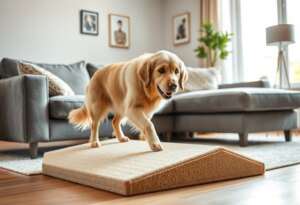


Husky vs golden retriever shedding is one of the first questions I get from clients over 65 who are choosing a second or third dog for their golden years, and the honest answer is that neither breed is “easy” in the way a Poodle mix is easy. Both are double-coated, both shed enough to require a real grooming commitment, and both can strain an aging body if you don’t plan for it. What differs is the shape of the workload: a Siberian Husky delivers shedding in concentrated, overwhelming bursts, while a Golden Retriever spreads the mess out in a slower, steadier drip. For a senior owner managing arthritis, reduced grip strength, or limited bending tolerance, that distinction matters more than most breed guides admit.
Shedding Biology 101: Why These Coats Behave So Differently
Every dog with a double coat runs on the same basic follicle cycle, but the timing differs by breed and by climate adaptation. Hair follicles move through anagen (active growth), catagen (transition), and telogen (resting) phases, and when a large percentage of follicles hit telogen simultaneously, you get a visible “blow.” Huskies were bred for Siberian winters, and their undercoat follicles are synchronized by photoperiod (day length) far more tightly than a Golden’s. That synchronization is why huskies “blow coat” twice a year in dramatic, weeks-long events rather than losing hair steadily.
Golden Retrievers, by contrast, were developed in temperate British climates for retrieving work in water and field, and their follicle cycling is far less seasonally synchronized. Their telogen phases stagger across the population of follicles rather than firing in unison, which produces the low-grade, near-constant fur loss most Golden owners describe. Neither pattern is inherently worse. They simply demand different labor scheduling, which is the real variable senior owners need to plan around.
Husky vs Golden Retriever Shedding: The Comparative Data Breakdown
Breed-standard grooming literature referenced by the American Kennel Club and echoed across working-dog physiology studies indicates that Siberian Huskies carry undercoat density roughly double that of Golden Retrievers per square inch of skin. That density difference explains why a husky’s biannual shed produces such a visually alarming volume of fur (owners often describe “losing a second dog’s worth of hair” in a week) while a Golden’s daily loss looks unremarkable in isolation but accumulates steadily across furniture, floors, and clothing.
Here is how the two breeds compare on the metrics that matter most for a senior owner’s daily routine.

| Factor | Siberian Husky | Golden Retriever |
|---|---|---|
| Shedding Pattern | Concentrated biannual “blow” (2-4 weeks, twice yearly) | Continuous, moderate year-round loss |
| Undercoat Density | High (roughly 2x Golden average) | Moderate |
| Daily Grooming Time (off-season) | 5-10 minutes | 10-15 minutes |
| Grooming Time (peak shed) | 20-30 minutes daily for 2-4 weeks | 15-20 minutes daily, ongoing |
| Dander/Allergen Load | High during blow, low otherwise | Steady, moderate |
| Best Tool Type | Undercoat rake, high-velocity dryer | Slicker brush, deshedding comb |
| Recommended Grooming Tool Price Tier | $$ | $$ |
Neither column in that husky vs golden retriever shedding comparison is a clear winner across the board. A Husky’s off-season maintenance is genuinely lighter, but the blow-coat weeks are physically demanding in a way a Golden’s routine never is.
Functional Impact on Senior Owners: Grip, Bending, and Breathing
This is where the biology stops being academic and starts affecting real bodies. Grooming a double-coated dog properly requires sustained grip strength (to pull a rake through dense undercoat without dropping it), repeated shoulder and wrist rotation, and often kneeling or bending to reach the dog’s flank and legs. Owners with osteoarthritis in the hands or lower back frequently underestimate how physically taxing a thorough husky de-shed session is until they’re mid-session and their forearms are cramping.
Respiratory sensitivity is the second variable I ask about in every consultation. Dander, not fur itself, is the primary allergen carrier, and dander release spikes dramatically during a Husky’s seasonal blow. Golden Retrievers release dander more evenly across the year, which some sensitive owners actually tolerate better because their airways aren’t hit with a concentrated seasonal surge. The data here is genuinely contradictory. Some allergy studies show total annual allergen load is similar between the two breeds; others show symptomatic owners react more strongly to burst exposure than to steady low-grade exposure. I don’t think there’s a universal answer, which is why I always recommend a trial grooming session with a friend’s dog of each breed before committing.
“The dog that sheds less on paper isn’t automatically the dog that’s easier to live with. What matters clinically is whether the grooming demand matches the owner’s actual physical capacity on a given week, not the breed average.” — Dr. Mindy Waite
Practical Management Protocol for Aging Hands and Joints
Whichever breed you’re managing, a structured brushing schedule reduces both the workload and the joint strain, because a little consistent effort prevents the marathon sessions that hurt the most. For Huskies, I recommend an undercoat rake three times weekly during off-season and daily during blow-coat windows, always brushing in short five-minute intervals rather than one long session that fatigues the hands. For Goldens, a slicker brush used every other day, paired with a metal comb weekly to catch mats behind the ears and on the tail, keeps shedding manageable without requiring marathon grooming blocks.

A quality dual-density comb makes a measurable difference for owners with limited grip strength, since the wider teeth handle the topcoat while the finer teeth pull loose undercoat without requiring extra pressure from your hand. The Oitabi Professional Pet Grooming Comb is built with that dual-density design, which reduces the number of strokes needed per session and is worth considering if wrist fatigue is limiting how long you can groom in one sitting.
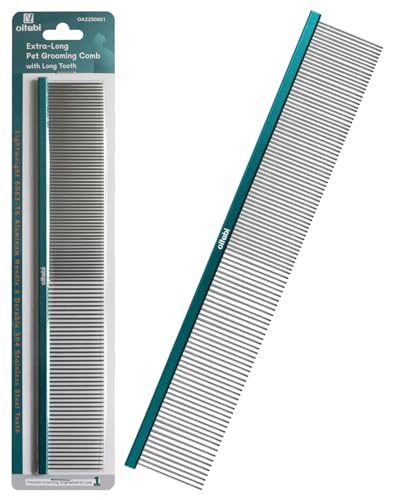
- Round-Tipped Long Teeth for Deep Penetration – Extended stainless steel teeth with rounded tips reach the undercoat easi…
- High-Efficiency Dual-Density Design – Combination of wide and fine teeth: wide teeth remove tangles, fine teeth smooth t…
- Daily Anti-Matting Care – Regular grooming prevents knots and matting, reduces shedding and tangles. Keeps the coat fluf…
Environmental management matters just as much as grooming technique. A washable, low-pile mat placed at entryways and near feeding stations catches loose fur before it migrates across hardwood or carpet, which cuts down on the vacuuming burden between grooming sessions. Something like the Erosebridal Indoor Floor Mat works well as a shed-catching zone near a dog bed or door, giving you one concentrated area to clean rather than chasing tufts across the whole house.

- Size: Actual Dimension 3 feet 3 inches width by 5 feet length.39W x 59L inches, 100cm x 150cm.
- Material: Polypropylene Fabric, a rubber backing. Rubber backing comprises thousands of plastic silicone points, Non Sli…
- Easy to Clean: You can choose vacuum cleaner or soft brush,machine wash, water wash or spot clean with gentle carpet cle…
One overlooked management lever, especially relevant if you’re weighing coat type against other breed traits, is understanding the broader spectrum of high-shedding versus low-shedding dogs before you commit to either breed. It reframes the husky vs golden retriever shedding question inside a wider decision about what your body and your home can realistically sustain long term.
Cold Weather Adds a Third Variable: Coat Maintenance in Winter
Senior dogs of both breeds, especially Goldens who carry less natural insulation than a Husky’s Arctic-bred coat, often need supplemental warmth during winter walks, and that added layer changes your grooming routine too. A coat traps loose fur against the body between brushing sessions, which some owners find actually reduces the amount of fur shed onto furniture during cold months. If your Golden is aging and losing body condition, a well-fitted layer like the ROZKITCH Full Body Dog Winter Coat can help conserve body heat while also containing shedding during outdoor time, which is a small but genuinely practical bonus for senior owners managing both a geriatric dog and their own cold-sensitive joints.
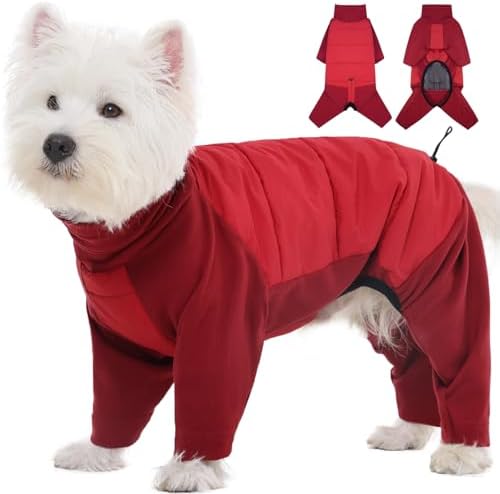
- Full Body Dog Fleece Jumpsuit: The padded and water-resistant body section combined with soft, stretchy fleece legs, off…
- Warm & Fleecy Dog Jacket with Legs: Fits snugly, although not tight, the dog feels comfortable on the inside. The warm d…
- Leash Hole & Turtleneck: The neck is a long pull through style that offers warmth and protection from mud. The dog fleec…
Case-Profile Evaluation: Scoring Your Own Capacity Honestly
Rather than asking “which breed sheds less,” I encourage clients to run a short self-assessment, similar to the Happiness Plan framework I use when evaluating whether a home environment fits a dog’s behavioral needs. Score yourself honestly on each item below, on a scale of 1 (low capacity) to 3 (high capacity):
- Grip and hand endurance: Can you hold and pull a rake or slicker brush for 15 continuous minutes without pain?
- Bending and kneeling tolerance: Can you reach a dog’s belly, legs, and tail without needing to sit on the floor?
- Respiratory sensitivity: Do you react more to sudden allergen bursts (Husky-style) or steady low exposure (Golden-style)?
- Time availability in short bursts: Can you commit to 20-30 minute sessions during a 2-4 week blow-coat window, or do you need predictable, shorter daily tasks instead?
- Home surfaces: Do you have mostly hard flooring (easier fur pickup) or carpet (fur embeds more, favoring lower-shed breeds)?
A total score leaning toward the low end across grip, bending, and burst-time availability suggests a Golden’s steadier, lower-intensity pattern fits your physical reality better. A high score on burst tolerance but lower patience for daily maintenance often favors the Husky’s concentrated, cyclical demand instead. A 2019 study published in the Journal of Veterinary Behavior found that mismatches between an owner’s actual routine capacity and a dog’s care demands measurably increased relinquishment risk, particularly in owner populations over 60. That finding is precisely why I ask clients to score their capacity honestly before falling for a breed’s appearance or reputation alone.
This same mismatch logic applies broadly across breed selection, not just coat type. If you’re also comparing energy levels and temperament alongside shedding, a resource like our Goberian vs Shepsky comparison walks through similar functional tradeoffs for mixed-breed alternatives that shed less intensely than a purebred Husky while retaining some of that same working-dog temperament.
Frequently Asked Questions
Which sheds more overall, a Husky or a Golden Retriever?
Total annual fur volume is roughly comparable between the two breeds, but the distribution differs sharply. Huskies concentrate most of their shedding into two intense multi-week blow-coat periods per year, while Golden Retrievers shed at a steadier, lower-intensity rate across all twelve months. When people ask about husky vs golden retriever shedding, the real difference is timing and intensity, not total volume.
Is a Golden Retriever actually easier for a senior with arthritis to groom?
Generally, yes, because the workload is spread into shorter, more predictable daily sessions rather than demanding intense multi-week grooming marathons. That said, owners with severe grip limitations may still struggle with a Golden’s feathering and mat-prone areas behind the ears and legs, so a lightweight slicker brush and a seated grooming position are still recommended.
Do Huskies really shed twice a year, or is that a myth?
It’s accurate, not a myth. Huskies experience two distinct seasonal “blow coat” events, typically in spring and fall, driven by photoperiod-triggered follicle synchronization. Outside those windows, their shedding is comparatively minimal, which is part of why the husky vs golden retriever shedding comparison often confuses new owners expecting constant, even fur loss.
What’s the single best tool for a senior owner managing either breed?
A dual-density comb or rake that combines wide and fine teeth in one tool tends to reduce the number of grooming passes needed, which lowers strain on aging wrists and shoulders. Pairing that tool with short, frequent sessions rather than occasional long ones is more important than the specific brand chosen.
There is no universally “easier” breed in the husky vs golden retriever shedding debate. What determines ease is whether the shedding rhythm, concentrated bursts versus steady drip, matches your actual physical capacity, your home’s flooring, and your respiratory tolerance. Score yourself honestly using the framework above, choose the grooming tools that reduce strain rather than add to it, and you’ll find that either breed can fit comfortably into a senior household when the routine is built around your body’s real limits rather than around the breed’s reputation.