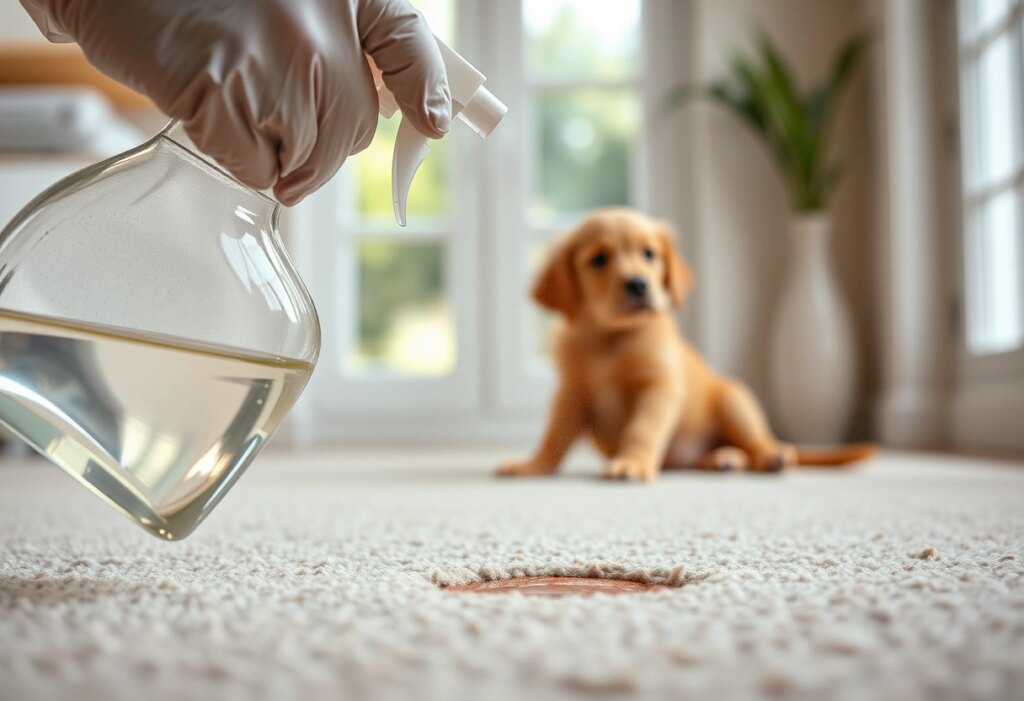

An enzyme cleaner works by breaking down the uric acid crystals your Golden Retriever leaves behind, which is the actual chemical trigger that pulls a young dog back to the same spot to eliminate again. If you’ve been mopping up accidents with whatever is under the sink and wondering why your puppy keeps returning to the same corner of the living room, the answer isn’t stubbornness or a training failure on your part. It’s chemistry, and it’s olfactory biology that most owners were never taught to consider.
The Ethology of Elimination: Why Golden Retrievers Return to the Scene
Golden Retrievers are gundogs bred for scent work, which means their olfactory processing hardware is, functionally, more sophisticated than that of many other breeds. This matters enormously during house-training. When a puppy eliminates indoors, uric acid crystals bond to fibers in carpet, grout, and subflooring. These crystals aren’t just a stain problem, they’re a chemical signal. In canine ethology, this is treated as a form of site-marking reinforcement: the residual scent acts as an antecedent stimulus that increases the probability of the same elimination behavior occurring in the same location again. Standard household cleaning, even when the carpet looks and smells clean to a human, frequently leaves these compounds structurally intact. The dog isn’t disobeying a rule. The dog is responding to an olfactory cue that we, with our comparatively primitive noses, cannot detect. An enzyme cleaner is designed specifically to interrupt this cycle at the molecular level rather than simply masking it with fragrance.
The data is fairly consistent on this point: house-training relapse is rarely a training deficit. It’s usually a failure to remove the antecedent stimulus that’s still sitting in the carpet fibers, invisible to us, blaring to the dog.
Enzyme Cleaner vs. Standard Cleaner: A Comparative Breakdown
Owners often assume vinegar, bleach, or ammonia-based sprays are functionally equivalent to a bio-enzymatic formula. They are not, and the distinction matters clinically. Bleach and ammonia can neutralize surface bacteria and odor as perceived by humans, but they do little to break the molecular bonds of uric acid crystals, and ammonia in particular carries an odor profile that some behaviorists suspect may actually mimic urine-adjacent scent markers to a dog’s nose, which is counterproductive. Vinegar is mildly acidic and can help with fresh, wet stains, but it does not contain the biological agents needed to fully digest set-in protein and uric acid residue. A 2021 review published in the Journal of Veterinary Behavior identified scent-triggered elimination relapse as one of the top three behavior complaints reported in dogs under 12 months old, which tells us this isn’t an edge case. It’s one of the most common breakdowns in early house-training, and it’s largely preventable with the right cleaning protocol.
True enzyme cleaners use bacterial cultures that produce enzymes (typically proteases and amylases) which metabolize the organic waste compounds into non-detectable byproducts. This is a genuine chemical digestion process, not a masking agent. It’s worth pointing out here that general household disinfectants, even strong hospital-grade ones like Oxivir Diversey 4963314 Five 16 One-Step Hospital Disinfectant, are formulated to kill pathogens on hard surfaces, not to break down uric acid crystals embedded in carpet fiber. It has an important role in a sanitation routine, but it is not a substitute for enzymatic digestion of pet waste residue.
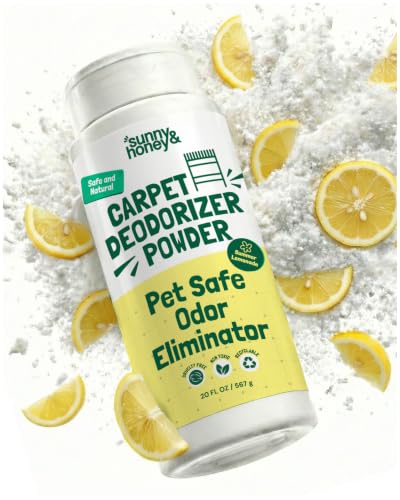
- Eliminate Tough Odors: Our carpet powder for vacuuming uses salt and corn cob fractions to absorb odors from rugs and fu…
- Fresh Citrus Scent: This carpet odor eliminator powder has a light lemon scent, great for families who hate harsh chemic…
- Residue-Free Rug Deodorizer: Unlike baking soda carpet refresher powders, our odor counteractants neutralize all lingeri…
What to Look For in an Enzyme Cleaner: The Checklist
Not every product labeled “enzymatic” performs the same function, and reading labels analytically here pays off. When you’re evaluating an enzyme cleaner for potty training a Golden Retriever puppy, run through this checklist before buying:

- Live bacterial/enzyme culture count: Look for products that list active bacterial strains (not just “enzymes”) on the label. The bacteria continue producing enzymes over the soak period, which is what gives these formulas their digestive staying power.
- pH-neutral formulation: Highly acidic or alkaline formulas can set certain stains rather than lift them, and can be harsh on natural fiber carpets or hardwood finishes.
- UV-verified stain testing: Reputable brands test their formula’s efficacy under blacklight, which is the same method you’ll use at home to confirm the treatment worked.
- Uric acid specificity: This is the detail most owners miss. Some enzyme cleaners are formulated only for protein-based stains (blood, food, vomit) and are not optimized for uric acid crystals specifically. Check that the label explicitly references urine or uric acid breakdown, not just general “organic stains.”
- Surface compatibility: Confirm the formula is safe for your specific flooring, whether that’s carpet, grout, or sealed hardwood, since some enzymatic formulas can discolor certain finishes if left too long.
An enzyme cleaner that checks all five of these boxes is doing real biochemical work, not just perfuming the room. This distinction is the difference between a puppy who generalizes “bathroom happens outside” and one who keeps testing the same corner of your dining room for another six months.
Application Protocol: Soak Time, Blacklight Inspection, and Reapplication
Enzymatic digestion takes time, and this is where a lot of owners undermine their own cleaning efforts by rushing the process. Blot up excess liquid first, apply the enzyme cleaner generously enough to saturate the same depth the urine penetrated (this usually means more product than you’d instinctively use), and then leave it undisturbed for the manufacturer’s recommended dwell time, typically 10 to 15 minutes minimum, though set-in stains on porous subflooring may require an hour or more.
After the product dries, do a blacklight inspection at night with the room lights off. Uric acid fluoresces under UV light even when invisible to the naked eye in daylight, so this step tells you definitively whether you need a second application. Porous surfaces like unsealed carpet padding or wood subfloor often need two to three treatment cycles because urine can wick down through multiple layers, and if only the top layer is treated, the dog can still detect residual scent rising back up through the fibers over the following days.

This isn’t cosmetic diligence. The ASPCA notes that a dog’s sense of smell is estimated to be anywhere from 10,000 to 100,000 times more sensitive than a human’s, a figure supported by research from Horowitz and Franks (2020) on canine olfactory processing. That means odor a person cannot detect at all, even standing directly over the spot, can remain a clear and specific signal to your puppy for weeks. If you’re dealing with a persistent household odor problem beyond the carpet, such as urine that has worked its way into bathroom plumbing after repeated indoor accidents near a toilet or drain, a product like Liquid Drain Pipe Opener can help clear organic buildup contributing to lingering bathroom odor, though it addresses a different mechanism than enzymatic digestion of carpet fibers and should be used according to label safety instructions.

- Illuminates Invisible Dry Cat/Dog/Rodent/Pet Urine Stains – Pinpoint Your Cleaning To Save You Time & Money!
- Optimized UV Wavelength: 380-385NM Outperforms 395NM Found In Other UV Flashlights – Significantly Less Purple Light For…
- 21 Long life LEDs (100,000+ Hours) – More LEDs For Brighter Stain Glows.
For bathroom-adjacent flooring and fixtures where accidents tend to recur near water sources, keeping the surrounding hard surfaces genuinely sanitized supports the overall protocol too. A reliable option like Lysol Power Toilet Bowl Cleaner handles the hygiene side of a bathroom routine, though again, this is a complementary sanitation step rather than a substitute for enzymatic treatment of fabric and grout where uric acid actually accumulates.
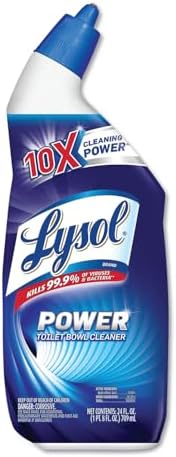
- Removes tough stains on contact
- Thick toilet bowl cleaner formula coats the entire bowl
- Destroys toilet bowl rings
Enzyme Cleaner Comparison Table
| Product Type | Best For | Uric Acid Breakdown | Surface Safety | Price Tier |
|---|---|---|---|---|
| Bio-Enzymatic Pet Stain Remover | Fresh and set-in urine, carpet, grout | Yes, dedicated uric acid formula | Carpet, upholstery, sealed wood | $$ |
| Vinegar/Water Solution | Light surface odor only | Minimal, no enzymatic action | Most hard surfaces | $ |
| Hospital-Grade Disinfectant (e.g. Oxivir) | Pathogen control on hard surfaces | None, not enzymatic | Tile, counters, sealed floors | $$$ |
| Drain/Pipe Treatment | Bathroom plumbing odor buildup | Not applicable to carpet stains | Plumbing only | $$ |
Antecedent Management Integration: Cleaning as Part of a Behavior Protocol
Cleaning alone will not resolve a house-training problem if the rest of the antecedent environment stays unchanged. Behaviorally, an enzyme cleaner is one input in a larger antecedent management strategy, not a standalone fix. The goal is to remove the scent cue while simultaneously restructuring the puppy’s schedule so a competing, reinforced behavior (eliminating outside) becomes the more probable response. Practically, this looks like:
- Treat the site immediately with the enzyme cleaner and confirm removal via blacklight before allowing unsupervised access to that room again.
- Tighten the outdoor schedule to anticipate elimination windows rather than react to accidents, typically every 2 to 3 hours for young puppies plus after meals, naps, and play sessions.
- Reinforce immediately outdoors with high-value reward within 3 seconds of elimination, since delayed reinforcement weakens the association considerably.
- Restrict access to previously soiled areas using baby gates or closed doors until several clean weeks have passed and blacklight checks confirm no residual signal.
- Monitor for relapse patterns, since a sudden reappearance of indoor elimination in a fully house-trained adolescent dog can also signal a medical issue such as a urinary tract infection, which warrants a veterinary visit rather than more cleaning product.
Owners who are also managing mobility changes as their dog matures, or planning ahead for how their Golden Retriever mix will age, might find it useful to review Goberian life expectancy and what to expect as your dog ages, since early-life management habits, including consistent bathroom routines, often carry forward into how well a dog tolerates household changes later in life. Similarly, if you’re setting up a puppy’s environment for long-term safety and joint health, comparing ramps versus stairs for protecting a dog’s joints is a worthwhile parallel read, since early environmental setup decisions tend to matter more than owners initially expect.
For readers who want a more technical grounding in canine scent detection and behavior thresholds generally, the Wikipedia entry on canine olfaction provides a solid overview of the physiological mechanisms underlying this scent-marking behavior.
Frequently Asked Questions
Why doesn’t regular carpet cleaner stop my Golden Retriever from re-marking the same spot?
Regular carpet cleaner typically removes visible staining and surface odor detectable to humans, but it doesn’t chemically break down the uric acid crystals bonded to carpet fibers. An enzyme cleaner uses live bacterial cultures to digest those crystals at a molecular level, which is the only way to fully eliminate the scent cue a dog’s far more sensitive nose is still picking up.
How long should I let an enzyme cleaner sit before rinsing?
Most bio-enzymatic formulas need a minimum dwell time of 10 to 15 minutes to begin working, though set-in stains on porous surfaces like carpet padding or wood subfloor often benefit from an hour or longer. Always saturate the area fully rather than lightly misting it, since the enzyme cleaner needs to reach the same depth the urine originally penetrated.
Can I use a blacklight to check if the enzyme cleaner worked?
Yes, and this is a genuinely reliable at-home method. Uric acid fluoresces under UV light even after visible staining is gone, so a blacklight inspection in a dark room will show you whether a second application of enzyme cleaner is needed before the scent signal is fully removed.
Is an enzyme cleaner enough on its own to fix house-training relapse?
No. An enzyme cleaner removes the scent trigger that encourages a dog to return to a prior elimination site, but it needs to be paired with a consistent outdoor schedule and immediate positive reinforcement for successful outdoor elimination. Cleaning without behavioral management addresses only half the problem.