
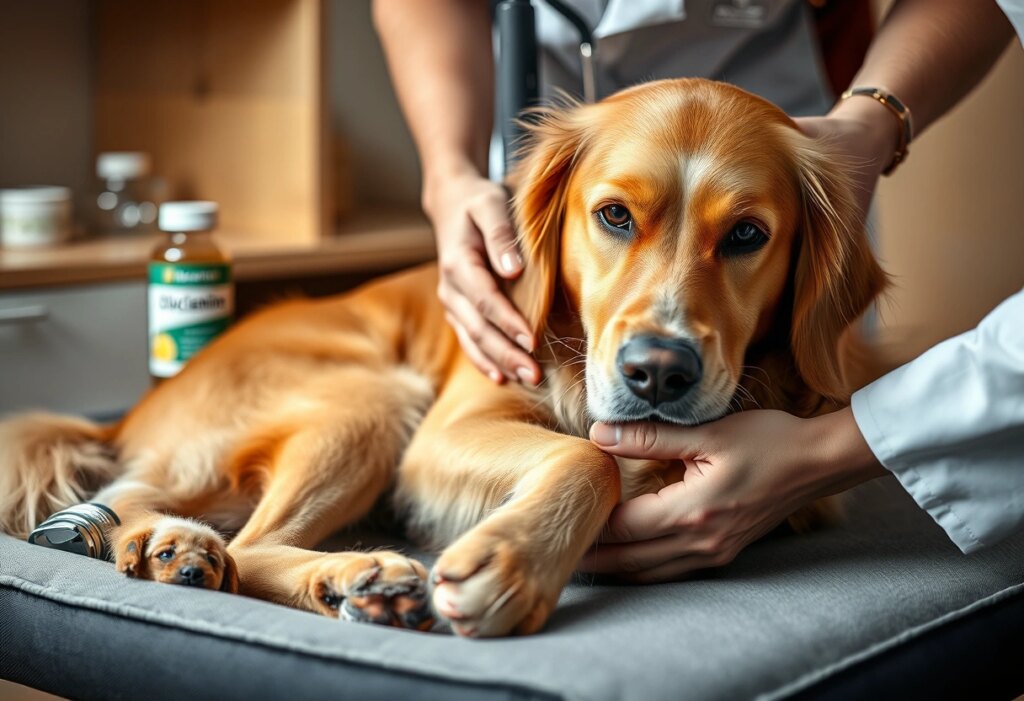

Dog arthritis treatment decisions usually get made in a panic, right after a pet parent notices their dog hesitating at the bottom of the stairs. That hesitation is data. From a behavioral standpoint, chronic osteoarthritic pain doesn’t just slow a dog down physically, it recalibrates the entire activity budget an older dog operates on, and it lowers the threshold at which normal household stimuli trigger irritability or withdrawal. Before we get into which dog arthritis treatment to reach for first, it helps to understand what’s actually happening in the nervous system of a dog living with joint pain every single day.
What Chronic Joint Pain Does to Senior Dog Behavior
An activity budget is simply how a dog allocates its waking hours across behaviors: sniffing, walking, resting, greeting, playing. In healthy adult dogs, that budget is flexible. In dogs with osteoarthritis, the budget contracts. Rest expands to fill the space once occupied by exploration and play, and this isn’t laziness, it’s an adaptive response to nociceptive signaling from inflamed joint tissue. Owners frequently misread this contraction as “slowing down with age” rather than pain, which delays intervention.
There’s a second, less obvious shift: irritability threshold. A dog in chronic pain has less physiological reserve to tolerate unexpected touch, a bumping toddler, or a boisterous younger housemate. This is why sudden snapping or growling in a previously easygoing senior dog often gets flagged as a “temperament change” when it’s actually a pain-related behavioral symptom. If you’re weighing whether to bring a puppy into a household with an arthritic senior, this dynamic is worth reading about in our piece on the pros, cons, and health risks of pairing a puppy with an older dog, since a young dog’s play style can inadvertently escalate a senior’s pain-driven reactivity.
What the Research Actually Shows About Prescription Dog Arthritis Treatment
The clinical evidence for pharmaceutical intervention is not ambiguous. A 2018 study published in the Journal of the American Veterinary Medical Association found that NSAIDs like carprofen produced measurable improvement in canine osteoarthritis mobility scores in over 70 percent of treated dogs within two weeks. That’s a fast, well-documented response curve, and it’s part of why veterinarians frequently start with an NSAID trial when a dog presents with moderate to severe lameness. The data here is fairly clean: NSAIDs reduce inflammatory mediators at the joint level, and the behavioral payoff (increased willingness to move, reduced guarding postures, better sleep continuity) tends to follow within days, not months.
This doesn’t mean NSAIDs are without tradeoffs. Gastrointestinal upset, and less commonly renal or hepatic changes, are real risks that require baseline bloodwork and periodic monitoring. But when a dog’s pain inventory score indicates moderate to severe impairment, the speed and reliability of NSAID response is difficult to match with supplementation alone.
Natural Dog Arthritis Treatment Options: What Holds Up and What Doesn’t
Here’s where I want to be precise, because “natural” gets used as a marketing shorthand rather than a clinical category, and the two most popular natural arthritis remedies do not have equal evidence behind them.
Omega-3 fatty acids (EPA and DHA specifically) have solid peer-reviewed support. A 2010 study in JAVMA showed that dogs fed a high-EPA diet required significantly lower NSAID dosages to achieve comparable pain control, meaning the fatty acids weren’t replacing the drug, they were reducing dependency on it. That’s a meaningful distinction. Omega-3s work through a measurable anti-inflammatory pathway, competing with arachidonic acid metabolism, and the effect size is consistent enough across trials that most veterinary nutritionists now consider EPA/DHA supplementation a legitimate adjunct rather than a fringe remedy.
Glucosamine-chondroitin is a different story. The data is contradictory. Some trials show modest improvement in comfort and mobility, others show no statistically significant difference from placebo. Part of the inconsistency comes from formulation variability and absorption differences between products, and part of it may simply be that the cartilage-protective mechanism proposed for these compounds doesn’t translate cleanly into pain reduction in vivo. I’m not saying discard it. I’m saying don’t treat it as a guaranteed fix, and don’t count on supplements to work miracles if a dog is already showing moderate to severe pain markers. If you want a closer breakdown of which joint supplements have the best supporting data, our vet-reviewed guide to joint supplements for arthritic dogs walks through specific formulations and dosing ranges.
A Decision-Tree Protocol Using the Canine Brief Pain Inventory
Rather than guessing, I recommend owners and veterinarians use a validated tool like the Canine Brief Pain Inventory (CBPI) to quantify severity before choosing a dog arthritis treatment path. Here’s how I structure the decision tree in practice:
- Mild impairment (CBPI pain severity score low, minimal interference with daily activity): Start with omega-3 supplementation, weight management if indicated, and low-impact structured exercise. Reassess in three to four weeks using the same inventory.
- Moderate impairment (noticeable interference with stairs, jumping, or play; intermittent stiffness after rest): This is the threshold where I recommend introducing a veterinarian-prescribed NSAID trial alongside continued omega-3 use, plus supportive gear such as a joint brace during high-load activities. A Professional Knee Support Brace for Dogs with Adjustable straps can reduce joint torque during walks while the pharmaceutical intervention takes effect.
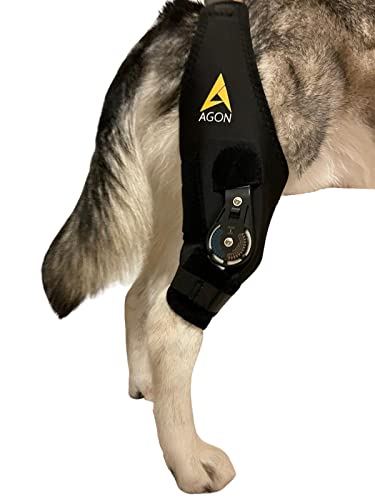
- The Right Choice: If your dog is struggling with a post-knee surgery process, ease its pain and discomfort with the Agon…
- Adjustable Hinge Stabilizer: The Agon neoprene knee brace stands out with an innovative design equipped with an adjustab…
- Highest Quality Materials: Our knee brace for dogs is made with premium quality neoprene, which is extremely durable, st…
- Severe impairment (persistent limping, reluctance to bear weight, vocalization on movement, behavioral withdrawal): This warrants immediate veterinary evaluation and typically a multimodal protocol combining NSAIDs with adjunct medications like gabapentin for neuropathic pain components. Natural remedies at this stage function as supportive care, not primary treatment.
This tiered approach avoids two common errors: over-medicating a dog with mild, manageable stiffness, and under-treating a dog whose pain has already crossed into a range where delayed pharmaceutical intervention prolongs suffering unnecessarily.
The data is contradictory on glucosamine-chondroitin, and pet parents deserve to hear that plainly rather than being sold false certainty. Objective pain scoring, not brand loyalty to a supplement or a drug, should drive the treatment decision.
Supportive Gear as Part of a Multimodal Dog Arthritis Treatment Plan
Bracing and mobility support tools don’t replace medical treatment, but they reduce mechanical stress on already inflamed joints, which functionally lowers the pain load a dog experiences during normal movement. For dogs with hind limb weakness or partial paresis secondary to arthritis, a Dog Rear Foot Splint that helps brace lower back limbs can improve gait stability during recovery periods or flare-ups.
For dogs favoring a front limb due to elbow or shoulder arthritis, a compression option like the Labra Dog Front Leg Brace compression wrap provides gentle joint support and proprioceptive feedback without restricting circulation.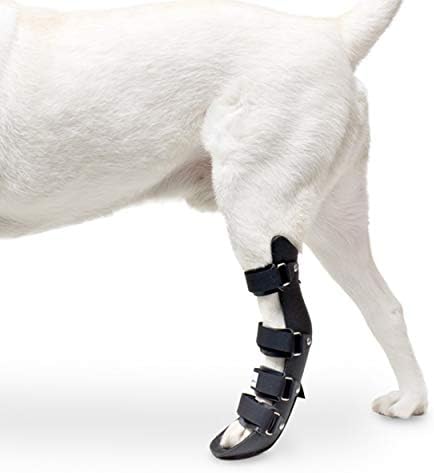
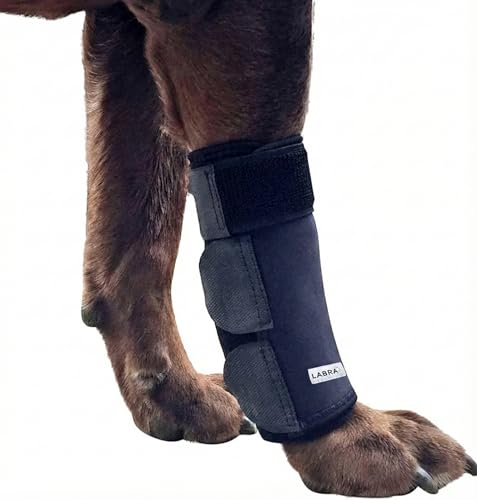
- Protects Against Hot Spots, Lick Granulomas, and Pressure Sores: Provides targeted relief for painful hot spots, lick gr…
- Premium Materials – Made from 3mm neoprene, our brace wrap is breathable, elastic, and enjoyable, ensuring your dog’s co…
- Joint Health – Our brace provides extra support on your dog’s front legs, allowing them to stay healthy and support thei…
Below is a comparative breakdown of these three support options, useful for owners trying to match a brace to their dog’s specific weight-bearing pattern.

| Product | Best For | Key Feature | Price Tier |
|---|---|---|---|
| Dog Rear Foot Splint | Hind limb weakness, knuckling, partial paresis | Rigid brace stabilizes lower back limb joints | $$ |
| Labra Front Leg Brace | Front leg compression, mild elbow instability | Lightweight compression wrap with adjustable closure | $ |
| Professional Knee Support Brace | Moderate to severe knee/stifle arthritis | Adjustable straps for customized joint compression | $$$ |
The Myth That Natural Remedies Carry No Risk
One misconception I encounter constantly in consult rooms is the belief that natural supplements are inherently risk-free simply because they’re not classified as pharmaceuticals. This isn’t accurate, and it’s worth addressing without judgment, because it’s an understandable assumption given how these products are marketed. High-dose fish oil, for instance, can affect platelet function and interact with other medications a senior dog may already be taking for cardiac or kidney conditions. Herbal joint formulas aren’t standardized the way pharmaceuticals are, so dosing consistency between batches can vary substantially.
The safest framework is veterinary-guided multimodal management: combining diet, supplementation, weight control, physical rehabilitation, supportive gear, and pharmaceuticals as needed, all under periodic reassessment. According to the American Veterinary Medical Association, osteoarthritis management works best as an ongoing, adjustable protocol rather than a single fixed treatment choice, and that guidance lines up with what the clinical literature consistently shows across species.
Quality of life monitoring matters just as much as the treatment itself. I recommend owners track sleep quality, willingness to initiate play, appetite, and stair tolerance weekly, not just at vet visits. These behavioral markers often shift before or after a dog arthritis treatment adjustment takes full effect, giving you an early signal of whether the current plan is actually working or needs revisiting.
Building a Practical Starting Protocol
If I’m advising a pet parent starting from scratch, here’s the sequence I recommend:
- Get a baseline CBPI score and a veterinary orthopedic exam, including radiographs if not already done.
- Introduce high-EPA omega-3 supplementation regardless of severity tier, since the evidence supports it as a safe, dose-dependent adjunct.
- If pain scores fall in the mild range, monitor for four weeks before adding anything further.
- If scores are moderate or higher, begin an NSAID trial under veterinary supervision, paired with supportive bracing for high-load activities.
- Reassess CBPI scores every four to six weeks and adjust the multimodal plan based on measurable change, not assumption.
This isn’t a rigid formula so much as a logical sequence that respects both the strength of the pharmaceutical evidence and the legitimate, if narrower, role natural remedies play in a comprehensive dog arthritis treatment plan.
Frequently Asked Questions
Should I try natural remedies before asking my vet about NSAIDs?
For mild pain scores, starting with omega-3 fatty acids is reasonable since the supporting evidence is fairly consistent. For moderate to severe pain, delaying a veterinarian-guided NSAID trial in favor of natural remedies alone often prolongs unnecessary discomfort, since the data on supplements like glucosamine-chondroitin is inconsistent.
How fast does dog arthritis treatment with NSAIDs typically work?
Clinical research shows measurable mobility improvement in the majority of dogs within about two weeks of starting an NSAID like carprofen, though individual response varies and bloodwork monitoring is recommended throughout treatment.
Are joint braces a substitute for medical dog arthritis treatment?
No. Braces and splints reduce mechanical joint stress and support gait stability, but they don’t address the underlying inflammatory process. They work best as part of a broader multimodal plan alongside supplements or prescribed medication.
Is glucosamine-chondroitin worth giving to a senior dog with arthritis?
It may offer modest benefit for some dogs, but trial results are inconsistent, and it shouldn’t be relied on as a standalone dog arthritis treatment for moderate to severe pain. It’s reasonable as a low-risk adjunct alongside other evidence-based approaches.