

Bringing a puppy with older dog already in the home is not automatically a kindness to your senior. That’s the honest answer, and it surprises a lot of well-meaning owners who assume young energy will “cheer up” an aging companion. The research on social buffering in canines is mixed at best, and for dogs already managing joint pain, sensory decline, or cognitive changes, a new puppy can be a genuine physiological stressor rather than a gift. This article walks through the behavioral science, the health risks, and a structured way to test compatibility before you commit to a decision that’s much harder to undo than to plan for.
Why a Puppy Isn’t Automatically Good Company for an Aging Dog
Social buffering theory suggests that the presence of a conspecific, another member of the same species, can lower stress reactivity in a socially bonded animal. This is real, and it’s part of why some senior dogs do perk up around a new dog in the house. But social buffering only works when the relationship is one of security, not intrusion. A puppy is not a calm, predictable presence. Puppies are behaviorally disorganized by design: they invade personal space, mouth inappropriately, misread appeasement signals, and have not yet learned bite inhibition or canine social grammar. For a senior dog, this isn’t companionship, it’s an unpredictable stimulus source. The distinction matters clinically. A stable adult dog can buffer stress in another adult. A puppy, lacking behavioral fluency, often does the opposite, particularly with a geriatric dog whose coping resources are already reduced. Owners considering a puppy with older dog household need to separate the sentimental narrative (“she needs a friend”) from the behavioral reality of what a puppy’s presence actually demands from an aging nervous system.
The Physiological Risk Profile of Introducing a Puppy to a Senior Dog
Aging changes stress physiology in measurable ways. Senior dogs show reduced resilience to novel stimuli, and the data backs this up directly. Bray et al. (2017), published in Applied Animal Behaviour Science, documented elevated cortisol reactivity in aging dogs when exposed to novel social stimuli, compared to younger adult dogs facing the same triggers. In plain terms: the older dog’s hypothalamic-pituitary-adrenal axis doesn’t recover from stress as efficiently as it once did. A puppy underfoot, barking, jumping, or attempting play, is a novel and repeating stimulus for weeks or months. Chronic low-grade cortisol elevation isn’t cosmetic. It’s associated with suppressed immune function, disrupted sleep architecture, and in dogs already navigating cognitive dysfunction, it can accelerate behavioral decline. This is the piece that gets skipped in casual “get a puppy for company” advice. The new puppy senior dog dynamic isn’t neutral. It has a physiological cost that shows up in blood chemistry, not just behavior you can visually observe.
Pros, Cons, and Health Risks: A Comparative Breakdown
No household decision like this is one-directional. There are genuine potential upsides, real behavioral downsides, and distinct medical risks. Laying them out side by side helps owners make a decision based on their specific dog’s profile rather than general sentiment. The table below organizes the most commonly cited factors when evaluating introducing puppy to older dog households.
| Category | Factor | Clinical Notes | Price Tier (if applicable) |
|---|---|---|---|
| Pro | Cognitive stimulation | Novel scent and movement cues can engage a senior dog’s sensory processing, potentially slowing disuse-related decline in mild cases | N/A |
| Pro | Possible mood lift | Anecdotally reported in well-matched pairs; data is contradictory and not consistent across studies | N/A |
| Con | Resource guarding risk | Senior dogs with reduced mobility often guard food, resting spots, or owner proximity more intensely under stress | N/A |
| Con | Sleep disruption | Puppies have irregular sleep-wake cycles; disrupted rest in seniors is linked to worsened cognitive dysfunction symptoms | N/A |
| Con | Joint strain from rough play | Uncoordinated puppy play can trigger acute arthritis flare-ups in dogs with existing joint disease | N/A |
| Health Risk | Infectious disease transmission | Unvaccinated puppies pose real exposure risk (parvovirus, kennel cough) per AVMA puppy vaccination guidelines, especially dangerous for immunocompromised seniors | N/A |
| Health Risk | Arthritis flare-ups | Sudden directional changes or jumping during play are common triggers for acute pain episodes in arthritic dogs | N/A |
| Supportive Gear | Orthopedic decompression bed | Gives the senior dog a defensible, comfortable retreat space away from puppy activity | $$$ |
| Supportive Gear | Pet stairs for furniture access | Reduces jumping-related joint strain when the senior needs to escape puppy interaction by relocating to elevated furniture | $$ |
If you’re weighing supportive equipment as part of a management plan, an orthopedic surface matters more than most owners expect. The Veehoo Orthopedic Memory Foam Dog Bed for Senior Dogs gives an aging dog a physically distinct, pressure-relieving space that can double as a “no puppy access” decompression zone, which is a core piece of the antecedent management strategy discussed further down.

- 7″ Orthopedic Relief for Aching Joints: Give your senior companion or large breed the pain-free rest they deserve. Our t…
- Sprawled-Out Freedom for Large Breeds & Seniors: Our generously sized large dog bed 52″L x 36″W x 7″Th offers ample spac…
- Luxurious Plush Fur for Deep Healing Sleep: Imagine your cherished dog sinking into cloud-like comfort. The ultra-soft f…
“Don’t count on a puppy to fix loneliness, boredom, or behavioral decline in a senior dog. Those are separate clinical problems that require their own diagnosis and treatment plan. A puppy introduces a new variable, it doesn’t erase existing ones.”
A 2-Week Observational Protocol Before You Commit
Before any adoption decision, run a structured trial. This isn’t about “seeing if they get along” in a vague sense, it’s about collecting specific behavioral data points over a defined window. I recommend a two-week parallel walking and separate resting protocol, ideally using a foster arrangement or a friend’s puppy if you don’t already own one.
- Days 1-4: Parallel walks only, dogs on separate leashes with a handler each, maintaining at least 6 feet of distance. No direct interaction. Observe leash tension, ear position, and gait changes in the senior dog.
- Days 5-8: Shortened distance to 3 feet during walks. Introduce brief, supervised sniff greetings of 10 to 15 seconds, then redirect. Track whether the senior dog voluntarily approaches or consistently increases distance.
- Days 9-12: Supervised shared space (same room) with the senior dog on an elevated bed or in a gated zone, puppy at floor level. No forced proximity. Note resting posture and whether the senior dog naps normally or stays hyper-vigilant.
- Days 13-14: Brief off-leash supervised time in a neutral space, sessions capped at 5 minutes. Immediate separation if any go/no-go markers appear.
Go markers: loose body posture, voluntary approach, normal appetite, unchanged sleep patterns, play signals reciprocated calmly.
No-go markers: consistent avoidance or hiding, muscle stiffening when approached, growling that escalates rather than resolves, appetite suppression, or disrupted sleep beyond one or two nights. Any of these warrants pausing the process entirely, not pushing through it. This same structured, low-pressure approach is worth reviewing if you’re separately researching whether your Golden Retriever is ready for a puppy sibling, since the behavioral markers overlap closely regardless of the resident dog’s breed or age.
Managing the Physical Environment: Reducing Joint Strain and Jumping Risk
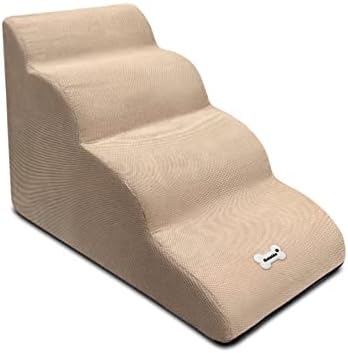
Independent of temperament compatibility, the physical environment needs modification before a puppy arrives. Senior dogs with arthritis or spinal changes are especially vulnerable to injury from sudden jumping, whether that’s jumping up onto furniture to escape a puppy or jumping down awkwardly during a startled reaction. This is a frequently overlooked variable in the dog age gap risks conversation. Installing a set of Dog Stairs, Removable and Washable Pet Stairs near couches or beds gives the senior dog a controlled, low-impact way to access elevated resting spots without a jarring leap, which matters most in exactly the scenario where a puppy might be chasing or startling them toward furniture.
Vaccination timelines also matter more than most owners realize. Per AVMA puppy vaccination guidelines, puppies aren’t considered fully protected against core infectious diseases like parvovirus until several weeks after their final booster series, typically around 16 weeks of age. A senior dog with any degree of immune suppression, which is common in dogs managing chronic illness or on long-term medication, faces real exposure risk during that window. This isn’t a reason to panic, but it is a reason to delay full integration and shared water bowls, toys, and bedding until the puppy’s vaccination series is complete and confirmed by your veterinarian.

Building a Happiness Plan: Matching Energy and Protecting Agency
Once you’ve gathered behavioral data from the trial period and addressed the physical environment, the next step is building what I call a Happiness Plan, a structured profile that matches puppy energy level to the specific senior dog’s temperament and physical capacity, rather than assuming compatibility based on breed alone.
- Assess baseline temperament. Is your senior dog historically tolerant of young dogs, or has she always preferred adult company? Past behavior with other dogs is the single best predictor here, better than breed generalizations.
- Match energy realistically. A low-energy senior with significant mobility limits is a poor match for a high-drive working breed puppy, regardless of how “sweet” that puppy is described as being.
- Establish separate feeding stations. Resource guarding around food is one of the most predictable friction points. Feed in separate rooms or with a barrier, permanently, not just during an adjustment phase.
- Create a decompression zone. The senior dog needs a space the puppy cannot access, ever, without invitation. This protects what behaviorists call canine agency, the ability to choose engagement or retreat rather than being forced into constant proximity.
- Structure introductions, don’t force them. Every interaction should be short, supervised, and endable by the senior dog at will. If the senior dog walks away, that’s the interaction ending, full stop, not a cue to encourage the puppy to follow.
If a puppy does join the household, expect an adjustment period of several weeks minimum, and expect it to be uneven, with some days looking promising and others regressing. That’s normal and doesn’t necessarily predict failure. Owners setting up a household boundary system between a resident senior and a new puppy may also want to review the best puppy gates and crates for a new sibling dog to formalize those decompression zones physically rather than relying on verbal management alone, which tends to break down under real-world distraction.
When the Answer Is Genuinely “Not Right Now”
Sometimes the honest, clinically sound answer to a puppy with older dog household is to wait, or to reconsider entirely. If your senior dog shows advanced cognitive dysfunction, significant pain-related mobility loss, or a documented history of poor tolerance for young dogs, pushing forward anyway isn’t optimism, it’s a welfare risk for both animals. There’s no shame in deciding a puppy isn’t compatible with your current dog’s needs. Age gap households can absolutely work well, but only when the decision is based on actual behavioral evidence from your specific dog, not on the general belief that companionship automatically improves quality of life in aging animals.
FAQ: Puppy With Older Dog Questions Answered
Is it a bad idea to get a puppy with an older dog?
It depends entirely on the individual senior dog’s temperament, health status, and tolerance history. A puppy with older dog pairings can work well when the senior is healthy, historically tolerant of young dogs, and given proper decompression space. It becomes a poor idea when the senior has significant joint disease, cognitive decline, or a documented history of stress around younger dogs.
How long does it take for an older dog to adjust to a new puppy?
Most new puppy senior dog households need at least four to eight weeks before behavior stabilizes, and adjustment is rarely linear. Expect good days and setbacks. If avoidance, appetite loss, or stiffening persists beyond that window without improvement, consult your veterinarian or a certified behaviorist.
Can a puppy cause stress-related health problems in an older dog?
Yes. Elevated cortisol from chronic stress exposure, as documented in aging dogs exposed to novel social stimuli, can suppress immune function, disrupt sleep, and worsen existing cognitive dysfunction symptoms. This is one of the central dog age gap risks owners often underestimate.
What’s the safest way to introduce a puppy to a senior dog?
Use a structured, gradual protocol: parallel walks at a distance, brief supervised greetings, separate feeding stations, and a dedicated decompression zone the senior dog can retreat to freely. Introducing puppy to older dog households safely means letting the senior dog control the pace of engagement rather than forcing proximity.