

Dog food for shedding won’t stop the biological process of hair loss entirely, but the right nutritional profile can measurably reduce the volume of loose fur your Labrador or Golden Retriever deposits on your couch each week. As a behaviorist who spends a fair amount of clinical time explaining coat physiology to frustrated owners, I want to be upfront: shedding is not a malfunction. It’s a hormonally regulated, photoperiod-driven event. What we’re actually trying to influence with diet is follicle health and the speed of hair regrowth, not the shedding trigger itself. Let’s look at what the data actually supports.
Why Labs and Goldens Shed the Way They Do: The Follicle Cycle Explained
Both breeds carry a double coat: a coarse, weather-resistant outer layer and a soft, insulating undercoat. Each hair follicle cycles through growth (anagen), a brief transitional phase (catagen), and rest (telogen) before the hair sheds and a new one begins the cycle. In double-coated breeds, this cycling is heavily influenced by photoperiod, the amount of daylight exposure the dog receives. As daylight hours shift in spring and fall, a hormonal cascade signals large numbers of follicles to enter telogen simultaneously, producing the dramatic “coat blow” owners describe with a mix of dread and disbelief.
This is where I see the most common misconception in my consultations: owners interpret heavy seasonal shedding as evidence that something is nutritionally wrong. Usually, nothing is wrong at all. The dog is doing exactly what millions of years of climate adaptation wired it to do. What diet can influence is the baseline rate of shedding outside these peak windows, the condition of the hair shaft itself, and how quickly the skin barrier recovers between cycles. A dog food for shedding that’s formulated well won’t eliminate the seasonal blow, but it can reduce the day-to-day background shedding that makes year-round living with these breeds feel manageable or miserable.
What the Research Actually Shows About Omega-3s and Coat Quality
The strongest evidence in this space comes from a 2012 study published in the Journal of Nutritional Science, which tracked dogs supplemented with EPA and DHA, the two primary omega-3 fatty acids found in fish oil. Within 60 days, researchers documented measurable improvements in coat quality scores along with reduced transepidermal water loss, a marker of skin barrier integrity. When the skin barrier holds moisture better, hair shafts are less brittle and less prone to premature breakage, which owners perceive as “less shedding” even though the underlying follicle cycle hasn’t changed.
This matters clinically because brittle, dry hair breaks mid-shaft rather than shedding cleanly from the root, and broken hair fragments look like a heavier shedding load than what’s biologically occurring. A diet that supports the lipid layer of the skin reduces this breakage. If you’re evaluating a dog food for shedding for your own dog, check the guaranteed analysis for EPA and DHA levels specifically, not just “fish meal” or “omega-3 fatty acids” as a vague catch-all, since the ratio and concentration of these specific compounds is what the research actually measured.

One formula that fits this profile is NUTRO NATURAL CHOICE Adult Dry Dog Food, Farm-Raised, which includes farm-raised protein alongside added fish oil for omega-3 content. For senior Labs and Goldens whose skin barrier function naturally declines with age, consistent omega-3 intake through the daily kibble is a lower-effort compliance strategy than separate oil supplementation, which owners frequently forget to administer.

- Supports Whole-Body Health: NUTRO NATURAL CHOICE Adult Dry Dog Food is made with essential nutrients and antioxidants to…
- Made With Real Lamb: Real lamb is the #1 ingredient in this protein-rich recipe
- Supports Healthy Skin & Coat: Made with high-quality protein, this delicious dry dog food also contains Omega 3 & 6 fatt…
Comparing Food Categories: Fortified Kibble vs. Fresh Diets vs. Targeted Supplements
Owners frequently ask me which delivery method works best: a fortified kibble, a fresh or raw diet, or adding a standalone supplement to whatever the dog already eats. Each has tradeoffs in cost, compliance, and consistency of dosing. I break it down for clients this way:
- Fish-oil-fortified kibble: Consistent daily dosing built into the food, minimal owner effort, but the fat content can degrade with heat and time if the bag isn’t stored properly or used within a reasonable window after opening.
- Fresh or raw diets with added fish: Often higher palatability and can deliver excellent omega-3 levels if formulated correctly, but require more label literacy from the owner and carry higher cost and storage demands.
- Targeted supplements (salmon oil, flaxseed): Allow precise dose adjustment independent of the base diet, useful for dogs with inconsistent appetite, but compliance drops significantly once owners are asked to add a separate step to a daily routine. In my case files, missed supplement doses are one of the most common reasons a nutrition plan fails to show measurable coat improvement at the 60-day mark.
If your dog is already managing joint issues common to aging Labs and Goldens, it’s worth reading our vet-backed guide to senior dog joint supplements, since several joint formulas also carry omega-3 content that can contribute to the same coat health goal without adding a second product to the routine.
Below is a comparative breakdown of the three approaches discussed above:
| Approach | Omega-3 Consistency | Owner Compliance Burden | Best For | Price Tier |
|---|---|---|---|---|
| Fortified Kibble (e.g., fish-oil-enriched formulas) | High, dosed with every meal | Low, no extra steps | Busy households, multi-dog homes | $$ |
| Fresh/Raw Diet with Added Fish | Variable, depends on recipe accuracy | High, requires prep and storage discipline | Owners with time for meal formulation | $$$$ |
| Standalone Salmon or Flaxseed Oil Supplement | High if administered daily, but easy to forget | Medium, one extra daily step | Dogs needing precise dose titration | $$ |
| Multivitamin with Omega and Skin Support | Moderate, dose fixed per tablet | Low to medium | Senior dogs needing broader nutrient support | $$ |
The Myth of “Shedding-Proof” Formulas: What Biotin and Zinc Claims Actually Deliver
Marketing copy on pet food packaging loves to promise a shedding cure through added biotin or zinc. Here’s where I have to be the objective voice in the room: the data is contradictory. Biotin and zinc are genuinely essential to keratin production and skin integrity, but if your dog is already eating a diet that meets AAFCO complete and balanced standards, they are very likely not deficient in these nutrients to begin with. Adding more biotin to an already-sufficient diet does not produce a proportional improvement in coat quality, because the biological ceiling for benefit has already been reached by the baseline formula.
Don’t count on a “shedding-proof” label to work miracles on a dog whose diet is already nutritionally complete. Where these added nutrients do make a measurable difference is in dogs with a diagnosed deficiency, a poor-quality prior diet, or an underlying dermatologic condition that increases nutrient turnover. For everyone else, the honest clinical answer is that a targeted omega-3 boost, not a biotin claim on the bag, is the variable most likely to produce a visible change in shedding volume over an 8-week window.

Owners often want a single product to solve shedding entirely. In practice, coat quality responds to consistency of nutrient delivery over weeks, not to any single ingredient claim on a bag. Track the trend, not the marketing copy.
Grooming Tools Matter Too: Removing Loose Undercoat Between Meals
Nutrition addresses hair shaft quality, but it does nothing to physically remove the loose undercoat that’s already detached and trapped near the skin. This is a mechanical problem, not a dietary one, and it requires a mechanical solution. Regular brushing with a tool designed to reach the undercoat, not just the topcoat, prevents mats and reduces the amount of fur that ends up airborne in your home. The PWOD Dog & Cat Brush, Self Cleaning Slicker is a practical option for weekly undercoat maintenance in double-coated breeds, and the self-cleaning function lowers the friction of the task enough that owners are more likely to actually stick with a regular brushing schedule, which matters more for shedding control than most people assume.
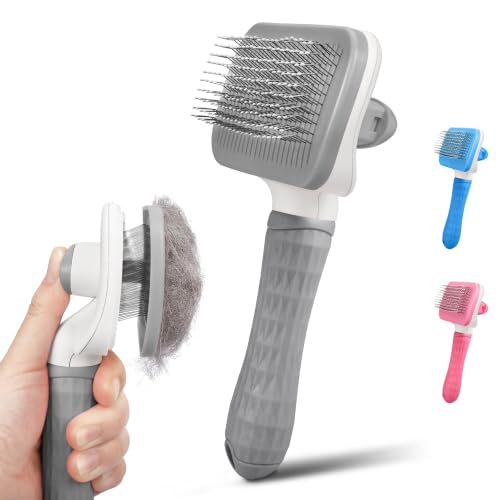
- 🐶Painless Trim Pet Brush — With massage particles, massage for pets when grooming, promote blood circulation and keep y…
- 🐶Efficient Hair Removal Effect — Pet grooming brushes removes loose hair by up 96%, can effectively remove loose hair, …
- 🐶High Quality and Comfortable — PWOD Dog & Cat Brush Grooming Brush has High-quality stainless steel needles, which wil…
Senior Dogs and Coat Decline: Why Aging Changes the Equation
As Labs and Goldens move into their senior years, coat quality often declines independent of diet due to reduced skin cell turnover, slower peripheral circulation, and age-related shifts in hormone levels. This is a separate mechanism from the seasonal shedding discussed earlier, and it means an older dog may need broader nutritional support, not just an omega-3 boost, to maintain coat condition. A daily multivitamin formulated for aging dogs, such as Vita-Tabs Silver for Senior Dogs, can help address the broader nutrient gaps that accumulate with age and that a coat-focused diet alone won’t fully cover.

- Comprehensive Nutrition: Vita-Tabs provide a balanced blend of essential vitamins and minerals to support your dog’s ove…
- Immune System Support: Packed with antioxidants, these tabs help strengthen your dog’s immune system, promoting a robust…
- Healthy Coat and Skin: The inclusion of Omega-3 fatty acids contributes to a lustrous coat and healthy skin, ensuring yo…
According to the American Kennel Club, a dog’s coat is often the first visible indicator of underlying nutritional or health status, which is why persistent excessive shedding that doesn’t respond to dietary adjustment over several weeks warrants a veterinary skin and blood panel rather than another product swap.
The 8-Week Feeding Trial: A Practical Protocol for Tracking Results Objectively
Anecdote is the enemy of good behavioral and nutritional data. Owners tend to notice shedding only when it’s dramatic, which biases perception toward “nothing is working” even when gradual improvement is occurring. I recommend a structured 8-week trial with the following steps:
- Week 0 baseline: Brush your dog with the same tool for two minutes and weigh or photograph the collected fur against a consistent background. Note undercoat density by parting the coat at the shoulder and hip.
- Weeks 1-2: Introduce the new dog food for shedding gradually over 7 to 10 days, mixing with the old diet to avoid gastrointestinal upset. Continue the same brushing and photo routine weekly.
- Weeks 3-4: Look for early skin barrier changes, such as reduced flaking and softer hair texture at the base of the coat, which typically precede visible shedding reduction.
- Weeks 5-6: Repeat the undercoat density check at the same body sites as baseline. Compare brushing yield photos side by side rather than relying on memory.
- Weeks 7-8: Final comparison against baseline. A genuine response typically shows a visible reduction in loose undercoat volume and improved coat sheen, consistent with the skin barrier improvements documented in the 60-day research window.
If no measurable change appears by week 8, the issue is more likely to be seasonal photoperiod shedding, a skin condition, or an unrelated medical issue rather than a diet that simply needs more time. At that point, a veterinary dermatology consult is the appropriate next step rather than continuing to cycle through different dog food for shedding products.
Coat and skin issues sometimes correlate with breed-specific health patterns worth understanding in advance. If you’re still deciding whether a Golden Retriever fits your household, our breakdown of the costly truths vets know about Golden Retrievers covers several breed-related health tradeoffs, including skin and coat maintenance demands, that factor into long-term care planning.
Frequently Asked Questions
Can dog food for shedding completely stop seasonal coat blow in Labs and Goldens?
No. Seasonal coat blow is driven by photoperiod and hormonal signaling to the hair follicle, not by nutrition. A well-formulated dog food for shedding can reduce background daily shedding and improve hair shaft strength, but it will not override the biological trigger behind the twice-yearly heavy shed.
How long before I see results from switching to an omega-3 fortified diet?
Peer-reviewed research measured meaningful improvements in coat quality and skin barrier function at the 60-day mark. Plan on an 8-week trial with consistent brushing and observation before drawing conclusions about whether a dog food for shedding is working for your dog.
Is a grain-free diet better for reducing shedding?
Grain-free status has no direct evidence link to shedding reduction. What matters is the omega-3 fatty acid content and overall nutritional completeness of the diet, not whether it contains grain. Focus label review on EPA and DHA levels rather than grain-free marketing claims.
Should senior Labs and Goldens get additional supplements beyond diet for shedding?
Often yes. Age-related declines in skin cell turnover and circulation mean senior dogs may benefit from a broader multivitamin alongside a coat-focused diet. This addresses nutrient gaps that a shedding-specific formula alone does not cover.