
Dog old age symptoms before dying rarely announce themselves with a bang. They show up quiet, almost polite, like your old dog is trying not to worry you. A softer appetite. A longer pause before standing up. A look in the eyes that’s somehow further away than it used to be. I’ve sat on the floor of my sanctuary more times than I can count, watching these whispers turn into something we couldn’t ignore anymore, and I can tell you this: the body almost always tells the truth before we’re ready to hear it.
This isn’t a piece meant to scare you. It’s meant to help you *listen*. Because when you know what dog old age symptoms before dying actually look like, you stop panicking every time your senior pup has an off day, and you start recognizing the real shifts that matter. That’s the whole difference between fear and preparedness.
Why the Body Whispers Before It Shouts
Old dogs are stoic. It’s almost unfair how well they hide discomfort. In the wild, showing weakness makes you a target, and that instinct doesn’t just disappear because your dog sleeps on a memory foam bed instead of a den floor. So the early dog old age symptoms before dying tend to be subtle. A little less enthusiasm at the food bowl. A little more time spent staring at the wall.
I always tell the families I work with: don’t wait for the dramatic sign. Watch for the *quiet* ones. That’s where the real information lives. And honestly, tuning into those small shifts is one of the most loving things you can do for a dog who’s spent their whole life loving you without conditions.
Physical Decline Markers: Breathing, Appetite, and Circulation
As a senior dog’s body starts winding down, a few physical patterns show up again and again. These are some of the most common dog old age symptoms before dying that hospice-focused vets and caregivers watch closely:
- Labored or irregular breathing. Panting at rest, shallow breaths, or breathing that seems to pause and restart.
- Appetite loss and weight changes. Skipping meals, disinterest in favorite treats, or sudden weight drop.
- Circulation changes. Cool paws or ears, pale or bluish gums, and a weaker pulse.
- Reduced mobility. Trouble rising, dragging paws, or reluctance to walk even short distances.
- Incontinence. Loss of bladder or bowel control that wasn’t present before.
The American Veterinary Medical Association notes that decreased appetite and progressive weight loss are among the most common indicators seen in geriatric dogs nearing the end of life. That lines up with what I’ve witnessed firsthand. When one of my old souls at the sanctuary starts turning away from food they used to inhale, it’s rarely random. It’s data. Quiet, heartbreaking data, but data nonetheless.
What breaks my heart is when people wait too long to act on these signs, or worse, brush them off as “just old age” without ever mentioning them to a vet. **Any noticeable shift in breathing, eating, or energy in a senior dog deserves a conversation with your veterinarian.** Not because every symptom means the end is near, but because you deserve clarity, and your dog deserves relief if something treatable is going on.
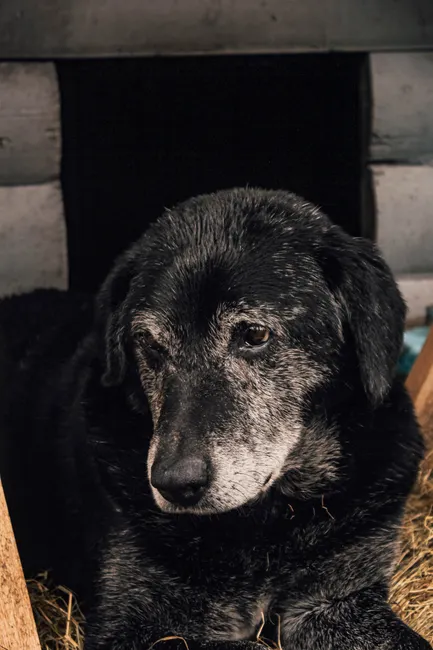
Behavioral and Cognitive Shifts You Shouldn’t Ignore
Physical decline is only half the picture. The other half lives in the mind, and it’s often the part people miss entirely. Increased restlessness, pacing at odd hours, staring into corners, or pulling away from affection they used to crave, these are all signs worth paying attention to.
Research published in the Journal of Veterinary Internal Medicine has found that canine cognitive dysfunction, sometimes called dog dementia, affects up to 68% of dogs over age 15. That number floors me every time I say it out loud. It means the disoriented wandering, the sleep-wake reversal, the sudden vocalizing at 3 a.m., these aren’t behavioral quirks. They’re neurological changes, and they deserve the same compassion you’d give any medical condition.
If your senior dog has started barking or crying during sleep, it’s worth reading through this breakdown of nighttime barking and twitching warning signs to understand what’s typical aging versus what might signal something more. And if the nighttime confusion seems to be getting worse month over month, these seven signs of cognitive decline can help you map out where your dog is on that curve.
Bearing witness to your dog’s decline isn’t giving up on them. It’s one of the most sacred jobs you’ll ever have, and it deserves to be done with your eyes open, not squeezed shut.
The Role of Hospice and Palliative Comfort Care
Once you’ve identified genuine dog old age symptoms before dying, the conversation shifts from “what’s wrong” to “how do we keep them comfortable.” This is where hospice and palliative care come in, and I want to be really clear: choosing comfort care is not choosing to give up. It’s choosing dignity over desperation.
The American Animal Hospital Association recommends structured quality-of-life scoring tools, like the HHHHHMM scale (Hurt, Hunger, Hydration, Hygiene, Happiness, Mobility, and More good days than bad), to track decline in a way that’s less emotional and more objective. I love this approach because grief has a way of clouding our judgment. A scoring system gives you something steady to hold onto when your heart is anything but steady.
Comfort-focused care at this stage usually includes:

- Pain management through vet-prescribed medication, adjusted regularly as needs change.
- Hydration support, including subcutaneous fluids if your dog isn’t drinking enough on their own.
- Orthopedic bedding to relieve pressure points and support achy joints.
- A calm, low-stimulation environment, away from loud noises or chaotic foot traffic.
- Gentle, consistent human presence. Your voice and touch matter more now than ever.
While setting up a peaceful space at home, some families find that having a soft, quiet corner with cozy visual touches helps the whole room feel calmer, for the dog and for the humans keeping watch. Little details like BAOYILONG 3Pcs Halloween Bathroom Canvas Wall Art can add a bit of warmth to a hospice room without overwhelming it, especially if you’re trying to make a clinical-feeling space feel more like home.

- SET OF 3 CANVAS PRINTS: Includes three individual ghost bathroom wall art pieces featuring humorous neon-lit ghost scene…
- WHIMSICAL HALLOWEEN DESIGN: Each canvas showcases adorable animals in ghost costumes, including a black cat with an oran…
- READY TO HAND: Printed on wrapped canvas with visible depth on the sides, ready to hang and display right out of the box…
Comparing Comfort and Quality-of-Life Tools for Senior Dogs
Here’s a simple table comparing tools and approaches that support senior dogs showing dog old age symptoms before dying. Price Tier reflects relative affordability, not exact dollar amounts, since pricing shifts often on Amazon.
| Comfort Tool / Approach | Best For | Key Benefit | Price Tier |
|---|---|---|---|
| HHHHHMM Quality-of-Life Scale | Tracking daily decline objectively | Removes emotional guesswork from big decisions | $ (Free tool) |
| Orthopedic Memory Foam Bed | Dogs with joint pain or limited mobility | Reduces pressure sores and improves rest | $$$ |
| Subcutaneous Fluid Support (vet-guided) | Dogs with reduced appetite or hydration issues | Maintains hydration when drinking slows | $$$$ |
| In-Home Hospice Vet Visits | Families wanting end-of-life care at home | Personalized, low-stress medical support | $$$$$ |
| Calming Home Decor / Soft Ambiance Pieces | Creating a peaceful hospice room | Lowers visual stress for pet and caregiver | $$ |
Preparing Your Heart and Home for the Final Days
There’s no manual that fully prepares you for this stage. But there are things you can do that make the days ahead gentler, both for your dog and for yourself.
Start with the physical space. Lay down extra padding in the spots your dog rests most. Keep water and food close by so they don’t have to travel far. Dim harsh lighting. If your dog has always slept near you, let them keep doing that. Proximity is medicine right now.
Line up a vet-on-call arrangement before you’re in crisis mode. Ask your regular vet if they offer in-home hospice visits, or find a mobile vet in your area who does. Knowing who to call at 2 a.m. removes one massive layer of panic when things shift quickly, and with dog old age symptoms before dying, they often do shift fast in the final stretch.
Some caregivers also find it grounding to have something nearby that keeps them present and unhurried during long bedside hours, whether that’s a favorite audiobook, a journal, or even something as simple as a cozy reading setup. If you’re working from home during this stretch and need to stay near your dog’s side while still managing daily tasks, having a comfortable setup like the Tennessee Titans Brick Wall Wireless USB Keyboard nearby can help you keep working quietly from the same room instead of stepping away.

- Easy plug & play via included USB nano-receiver
- Nano-transmitter for wireless connection
- Low-profile keys for speed and comfort
And if your dog barks or cries in their sleep during this stage but stays quiet while awake, it’s worth understanding what that specific pattern usually means. This guide on sleep barking without daytime symptoms can help you tell the difference between normal dreaming and something that needs attention.
An Act of Love, Not a Failure
I need you to hear this clearly: recognizing dog old age symptoms before dying doesn’t mean you failed your dog. It means you paid attention when it mattered most. So many people I’ve worked with carry guilt they never earned, as if noticing decline somehow caused it. It didn’t. Aging is not a punishment for anything you did or didn’t do. Some evenings at the sanctuary, I’ll sit with one of our elders and just breathe with them. No agenda. No fixing. Just presence. There’s something almost sacred about being the calm in someone’s final chapter, human or dog. If you find yourself there soon, know that showing up, fully and quietly, is enough.
For families who want a bit of gentle, reflective reading during this season, some find comfort in stories that sit with themes of loss and companionship in a soft, meandering way. A Witch, a Ghost, a Dog, and an Old-Growth Forest Paranormal is the kind of book that can offer a quiet mental escape during long bedside evenings.

Key Takeaways
- Dog old age symptoms before dying often start subtly: reduced appetite, labored breathing, and circulation changes.
- Cognitive shifts like disorientation and restlessness are common, affecting a majority of dogs over 15.
- Quality-of-life scoring tools like HHHHHMM help track decline objectively instead of emotionally.
- Hospice and palliative care focus on comfort, not curing, and are acts of love rather than surrender.
- Preparing your home ahead of time reduces panic and helps you stay present during the final days.
What are the earliest dog old age symptoms before dying?
The earliest signs are usually subtle: a smaller appetite, more time spent resting, slower movement, and slight withdrawal from normal routines. These early dog old age symptoms before dying often get mistaken for typical aging, but tracking them over a few weeks can reveal a clearer pattern of decline.
How do I know if my senior dog is in pain versus just old?
Pain often shows up as restlessness, panting at rest, reluctance to lie down comfortably, or vocalizing when touched in certain spots. A vet can help distinguish normal aging stiffness from pain that needs management, and quality-of-life scales like HHHHHMM make this easier to track at home.
Is cognitive decline the same as dying of old age?
Not exactly. Cognitive dysfunction is a separate condition that affects the brain, while dog old age symptoms before dying can involve multiple organ systems at once. A dog can have significant cognitive decline for a long time without being near the end, so it’s worth managing both conditions independently with your vet.
When should I call the vet about my dying senior dog?
Call your vet whenever you notice a sudden change in breathing, a refusal to eat or drink for more than a day, pale or bluish gums, or a sharp drop in energy. These can all be dog old age symptoms before dying that benefit from professional guidance on comfort care and next steps.
Thank you for staying through this with me. Watching an old dog near the end of their road is one of the hardest, most tender parts of loving them, and you don’t have to walk through it perfectly. You just have to walk through it *with* them.
Tell your pup I said Hi! — Dawn