Goberian vs Shepsky comparisons usually start with coat color and eye color, but that’s the wrong entry point if you’re actually trying to figure out which dog fits your household. Both are designer crosses built from high-drive, high-intelligence parent breeds, and both come with a wide behavioral spread that a cute photo simply cannot predict. As a behaviorist, I care less about which mix “wins” on paper and more about which temperament profile matches the daily management routine you’re realistically prepared to run for the next twelve to fourteen years.
Before comparing traits, it helps to understand a finding that reshapes how we should think about designer mixes in general. A large-scale genetic and behavioral study led by Morrill and colleagues, published in Science in 2022, found that breed ancestry explains only about 9% of the variance in individual dog behavior. That means the vast majority of what makes a dog “husky-like” or “retriever-like” in personality comes from individual genetics, early socialization, and learning history, not breed labels. If you’re weighing Goberian vs Shepsky as though you’re picking a factory-standard product, the science says to slow down. Both crosses can and do produce dogs that defy their supposed stereotypes.
Goberian vs Shepsky: What the Behavioral Genetics Actually Tell Us
I bring up the Morrill et al. data early because it changes the entire framework of this comparison. Breed heritage still matters (it shapes things like coat type, drive thresholds, and physical build far more reliably than it shapes personality), but when clients ask me “will my Goberian be food motivated” or “will my Shepsky be reactive,” the honest clinical answer is: probably, based on the parent breeds’ typical drives, but individual variation within the litter can be enormous. Two puppies from the same Goberian litter can land on opposite ends of the sociability spectrum. The same is true for Shepsky litters, sometimes even more so, given how genetically distinct the German Shepherd and Siberian Husky are in working history.
This is why I always tell owners to evaluate the individual puppy or adult dog in front of them rather than banking entirely on breed reputation. Temperament testing, observing behavior in novel environments, and asking breeders or shelters for documented behavioral history will tell you more than any blog comparison chart. That said, group-level tendencies are still useful for setting realistic expectations and building a management plan, so let’s look at what each cross tends to bring to the table.
Goberian Behavioral Profile: Sociability Meets Independence
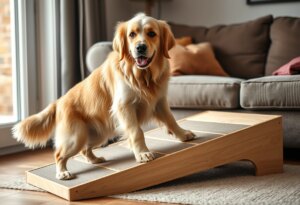
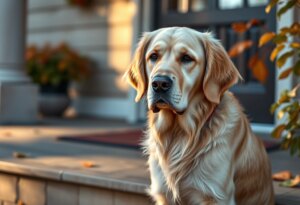
The Goberian dog breed combines the Golden Retriever’s cooperative, human-focused working history with the Siberian Husky’s independent, endurance-driven sled-dog background. Behaviorally, this usually produces a dog that is more biddable than a purebred Husky but carries more stamina and vocal expressiveness than a purebred Golden.
In practice, Goberians tend to show:
- High food motivation, inherited largely from the Golden Retriever line, which makes positive reinforcement training relatively straightforward if you start early
- Strong sociability toward people and, with proper early exposure, other dogs
- Moderate-to-high exercise needs, generally 45 to 60 minutes of structured activity daily, though individual dogs with more Husky influence may need more
- Trainability that responds well to reward-based methods, since food and praise motivation are typically present in useful amounts
The behavioral risk to watch for isn’t aggression, it’s under-stimulation. A Goberian that isn’t given enough physical and cognitive outlets can develop destructive coping behaviors: excessive chewing, digging, or attention-seeking barking. This isn’t defiance, it’s a dog with unmet ethological needs finding its own (usually inconvenient) way to self-regulate arousal.
Shepsky Behavioral Profile: Working Drive and Heightened Alertness
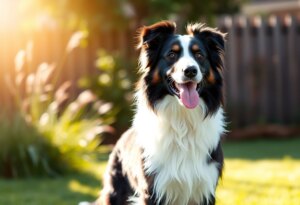
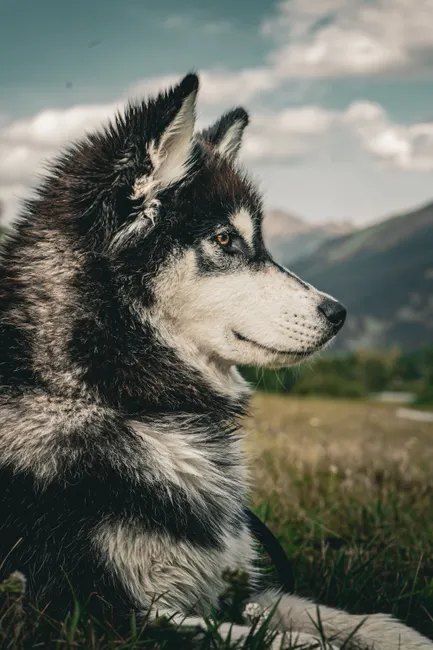
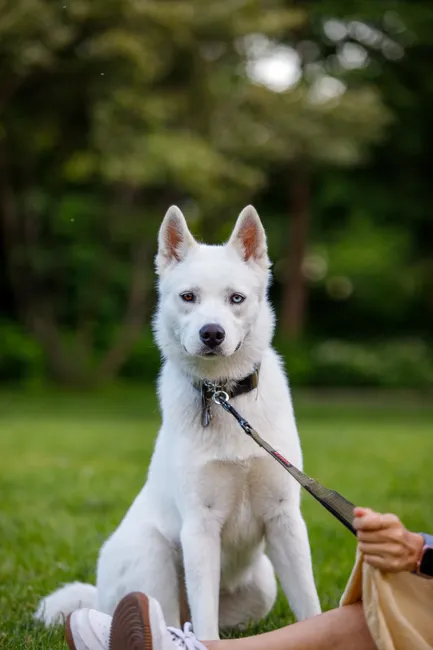
The shepsky mix pairs the German Shepherd’s protective, high-drive working lineage with the Husky’s pack-oriented, prey-driven sled heritage. This combination tends to produce a dog with a lower threshold for environmental triggers and a stronger baseline arousal level than the Goberian.
Common behavioral tendencies in Shepsky dogs include:
- Elevated alertness and environmental scanning, a trait carried over from German Shepherd guarding instincts
- Prey drive inherited from the Husky side, which can manifest as intense interest in small, fast-moving animals
- Reactivity potential toward unfamiliar stimuli if socialization windows are missed during the critical period (roughly 3 to 14 weeks)
- Vocalization tendencies, including howling, “talking,” and alarm barking, both breed lines contribute to this
The UK Kennel Club’s activity guidance for high-drive working and northern breeds recommends 60 or more minutes of vigorous daily exercise, and I’d apply that same benchmark to most Shepskies rather than the lower end of general breed averages. Under-exercised Shepskies are, in my clinical experience, more likely than under-exercised Goberians to redirect that pent-up drive into fence-running, escape attempts, or reactive barking at passersby. This isn’t a character flaw. It’s a predictable outcome of housing a working-line nervous system in a sedentary lifestyle.
For households already managing a senior dog with a heightened startle response or noise sensitivity, a young, vocal, high-drive Shepsky puppy can be genuinely disruptive to the older dog’s stress physiology. If barking management is already a concern in your home, our guide on the best anti-barking devices for senior dogs covers humane, evidence-based tools worth reviewing before you bring home a second dog with strong vocal tendencies.
Side-by-Side Comparison: Goberian vs Shepsky
Here’s a comparative breakdown of the traits that matter most for day-to-day family life. Remember, these are group tendencies, not guarantees, given the individual variability discussed earlier.
| Trait | Goberian | Shepsky |
|---|---|---|
| Trainability | High; strong food/praise motivation from Golden lineage | Moderate-high; intelligent but more independent decision-making |
| Exercise Load | 45-60 min/day, moderate-to-high | 60+ min/day, high intensity recommended |
| Shedding/Grooming | Heavy seasonal shedding; weekly brushing minimum | Heavy seasonal shedding; weekly to daily brushing |
| Howling/Vocalization | Occasional howling; more likely to bark for attention | Frequent howling and “talking”; alarm barking common |
| Kids/Small Pets Compatibility | Generally good with children; moderate prey drive | Good with children if socialized early; higher prey drive around small pets |
| Typical Price Tier | $$$ | $$$ |
Breed stereotypes make for catchy marketing, but they’re a poor substitute for observing the actual dog in front of you. The data on “all husky mixes howl constantly” is genuinely contradictory: some owner surveys report near-daily vocalization, while others describe dogs that rarely howl outside of sirens or specific triggers. Individual learning history and reinforcement patterns around vocalization matter more than breed label alone.
Dispelling the “All Husky Mixes Howl Constantly” Myth
This myth deserves its own section because it drives a lot of poor adoption decisions. Vocalization in husky mix breeds is real and often more pronounced than in non-Husky breeds, but “constantly” overstates the average case. Howling and talking are typically triggered by specific antecedents: separation distress, sirens, excitement, or a learned attention-getting strategy that was accidentally reinforced by an owner’s response.
The practical implication is that vocalization is often modifiable through antecedent management and reinforcement-based training, not something you’re simply stuck with because of breed. If you already anticipate needing tools to manage a vocal dog alongside an aging dog in the household, it’s worth reading what to look for in an anti-bark device for senior dogs so any device you choose is comfortable and appropriate for a dog with age-related sensory or cognitive changes, not just the younger, more vocal newcomer.
The Family Fit Decision Checklist
Rather than asking “which mix is better,” I’d reframe the Goberian vs Shepsky decision as “which management plan can I sustain.” Run through this checklist honestly before committing to either cross:
- Daily exercise capacity: Can you realistically provide 45-60+ minutes of vigorous activity every single day, rain or snow, for over a decade? If your schedule is unpredictable, a Goberian’s slightly lower ceiling may be more forgiving.
- Containment and yard security: Both crosses can inherit Husky-level escape artistry. A six-foot fence with a buried barrier or secured bottom line isn’t optional, it’s baseline infrastructure.
- Experience with independent-minded breeds: First-time owners often underestimate how different reward-based training is with a dog that has some Husky “why should I” reasoning built in. Prior experience with terriers, sled breeds, or working lines is a genuine advantage here.
- Household composition: Homes with cats, rabbits, or small dogs should weigh the Shepsky’s typically higher prey drive carefully, and should never skip structured, supervised introductions regardless of which mix you choose.
- Antecedent management readiness: Are you prepared to set up the environment for success, crate training, baby gates, muzzle-basket conditioning for vet visits, and controlled exposure to triggers, rather than relying on the dog to “just behave”?
Puppies of both crosses benefit enormously from enrichment tools that channel natural investigative and chewing behaviors into appropriate outlets. A soft plush toy sized appropriately for early puppyhood, like the Auswella 18-Inch Plush Beagle Dog, can double as a comfort object during crate training or alone-time conditioning, both of which are critical for preventing separation-related vocalization later in life.

- 18 inch soft plush Beagle. Expertly designed with authentic beagle markings, floppy ears, sweet expressive eyes, and lif…
- Perfect as a cuddle companion, nursery decoration, bedroom décor accent, collectible plush, or comforting emotional supp…
- Lifelike Beagle with a Cute Curved Tail and Tri Colored. Prodominently Black and White on His Body. Modeled after our be…
For food-motivated training sessions, especially with the Goberian’s typically strong food drive, having a dedicated, low-distraction feeding or treat-delivery setup helps keep training clean and predictable. Something like the TONBO Soft Plush Small Cute and Cozy Food Dog Cat bed area gives a puppy a consistent, calming spot to settle after high-arousal exercise sessions, which supports the kind of nervous system regulation both crosses need as they mature.

- The TONBO Cookies and Cream Pet Bed, your favorite snack now turned into your favorite pet bed!
- Fluff and shake upon opening! All of our beds are thoughtfully compressed to decrease our carbon pawprint.
- Plush material with extra cozy center
Aging Considerations for Both Crosses
Since our focus at Senior Tail Waggers is life-stage care, it’s worth noting that both the Goberian and Shepsky carry orthopedic risk from their larger parent breeds. Golden Retrievers and German Shepherds are both predisposed to hip dysplasia, and Huskies contribute a lean, athletic build that can mask early joint changes for years. As either mix ages, expect to watch closely for early mobility changes, since a dog that spent a decade running 60 minutes a day can decline quickly once joint pain sets in. Early orthopedic support (weight management, joint supplements, and low-impact exercise substitution) tends to preserve quality of life longer than waiting for visible lameness. For more information on canine hip and joint health across breeds, the American Kennel Club maintains detailed, veterinarian-reviewed resources on hip dysplasia risk factors and management.
Final Take: Goberian vs Shepsky for Your Family
If I had to summarize the Goberian vs Shepsky decision in one behavioral principle, it’s this: match the dog’s drive threshold to your actual daily capacity, not your aspirational one. The Goberian generally offers a gentler learning curve, stronger baseline trainability, and slightly more forgiving exercise requirements. The Shepsky offers a more alert, working-line temperament that rewards experienced owners willing to commit to rigorous daily exercise and early, deliberate socialization. Neither is objectively “better.” Given the Morrill et al. findings on how little breed alone predicts individual behavior, your best strategy is always to evaluate the specific puppy or adult dog, ask detailed behavioral questions of the breeder or rescue, and build your management plan around the individual animal rather than the label on its adoption paperwork.
Frequently Asked Questions
Is a Goberian or Shepsky better for a first-time dog owner?
Generally, the Goberian is the more forgiving choice for first-time owners because of its stronger food motivation and more cooperative training response inherited from the Golden Retriever line. The Shepsky’s higher drive and alertness can be very rewarding, but it typically requires more experience with independent-minded, working-line breeds to manage effectively.
Do all husky mix breeds howl excessively?
No. While husky mix breeds do have a genetic tendency toward howling and vocalization, owner-reported data is contradictory, with some dogs howling daily and others rarely vocalizing outside specific triggers like sirens or separation distress. Vocalization frequency is heavily influenced by individual temperament and how early behaviors were reinforced, not breed alone.
Which mix has a higher prey drive, the Goberian or the Shepsky?
The Shepsky typically shows a higher prey drive, inheriting this trait from both the German Shepherd’s working instincts and the Husky’s sled-dog and small-game heritage. Households with cats or small pets should plan for structured, supervised introductions and ongoing management regardless of which mix they choose.
How much daily exercise does a Goberian vs Shepsky actually need?
A Goberian typically needs 45 to 60 minutes of structured daily activity, while a Shepsky often requires 60 minutes or more of vigorous exercise, in line with UK Kennel Club guidance for high-drive working and northern breeds. Individual needs vary based on which parent breed’s traits are more dominant in a given dog.