


A Golden Shepherd puppy is, genetically speaking, a coin flip wearing fur, and understanding that variability before you sign a deposit check will save you a great deal of behavioral and financial heartache down the road. As a behaviorist, I get called into homes months after purchase far more often than I get consulted beforehand, and the pattern is consistent: buyers fell for a face without asking about the genetics, the joints, or the temperament testing behind it. This guide walks through exactly what to screen for, using the same functional lens I’d apply to any behavioral case profile.
Breed Origin & Temperament Profile
The Golden Shepherd is a first-generation cross between a Golden Retriever and a German Shepherd Dog, and that “first-generation” detail matters more than most sellers let on. Unlike a purebred line that has been selected for generations toward a predictable behavioral phenotype, an F1 cross pulls randomly from two distinct temperament pools. The American Canine Hybrid Club’s own breed data acknowledges this variability directly, noting that offspring can lean toward the Retriever’s sociable, biddable profile or the Shepherd’s higher-drive, more reserved-with-strangers profile, sometimes within the same litter. I’ve evaluated littermates from the same cross who differed wildly in arousal threshold and stranger tolerance. This is not breeder error. It is basic quantitative genetics.
What this means practically: do not buy a Golden Shepherd puppy based on the temperament of one parent alone, and do not assume “friendly like a Golden” is a guarantee. Ask to observe both parent dogs interacting with unfamiliar people. Their behavior under mild social pressure is your best predictive data point, better than any breed pamphlet.
Health Screening Red Flags Every Golden Shepherd Puppy Buyer Should Know
This is where I get clinical, because sentiment does not protect joints. Hip dysplasia affects up to 19.4% of German Shepherds according to OFA’s 2022 breed statistics database, and since your Golden Shepherd puppy carries half its genetic material from that parent breed, this risk does not disappear in the cross. It gets diluted, not eliminated. A responsible breeder will show you OFA (Orthopedic Foundation for Animals) hip and elbow certifications for both parents, not just verbal reassurance that “our dogs don’t have that.”
Beyond orthopedic screening, ask specifically for:
- Degenerative myelopathy (DM) panel results for the German Shepherd parent line, since DM has a known genetic marker and is disproportionately represented in the breed
- OFA hip and elbow certification numbers, which you can independently verify on OFA’s public database rather than trusting a printed certificate
- Cardiac clearance for the Golden Retriever parent, given known predispositions in the breed toward subvalvular aortic stenosis
- Eye clearance (CERF/OFA Eye) for both lines
If a seller cannot produce documentation, or tells you testing is “not necessary because the puppies look healthy,” treat that as a hard stop. Visible health at eight weeks tells you nothing about joint load capacity at age five. For readers weighing the financial side of a purebred alternative, our Golden Shepherd price guide breaks down how health-tested lines command higher upfront costs, and why that premium is usually the cheaper path long-term.

Behavioral Assessment Protocol for Puppy Visits
Temperament testing at the breeder’s home is useful, but the data I want you to walk in with is a realistic expectation of its limits. The Volhard Puppy Aptitude Test (PAT) has been used for decades as a structured way to observe a litter’s individual variation in social attraction, dominance, retrieval drive, and touch sensitivity. It is a legitimate observational tool. It is not a crystal ball. A 2021 review in Applied Animal Behaviour Science examined the predictive validity of early puppy temperament tests and found weak-to-moderate correlation between puppy test scores and adult behavior, particularly for traits tied to fear and aggression, which are heavily shaped by environment and socialization windows after the test is administered.
So use the PAT-style checklist as a snapshot, not a verdict. During your visit, structure your own brief protocol:
- Social approach: Crouch a few feet away and observe whether the puppy approaches readily, hesitates, or avoids. Repeat with a stranger present if possible.
- Restraint tolerance: Gently roll the puppy onto its back for three to five seconds. Note struggle intensity and recovery speed once released, not just the struggle itself.
- Sound sensitivity: Clap or drop a metal object a few feet away. A brief startle followed by curious investigation is normal. Prolonged freezing or fleeing is a flag worth discussing with the breeder.
- Recovery from novelty: Introduce a new object (an umbrella opening, a rolling ball) and time how quickly the puppy re-engages after an initial startle.
None of these observations should be used to eliminate a puppy outright at eight weeks. What they give you is a baseline you can compare against the breeder’s own notes, and an early sense of which pup’s coping style matches your household’s activity level and tolerance for a sensitive versus a bold dog.
Reputable Breeder vs. Backyard Breeder: A Comparative Breakdown
Documentation habits are one of the clearest behavioral proxies for breeder quality, because a breeder who tracks health testing meticulously is statistically far more likely to also be tracking early socialization meticulously. The two disciplines correlate. Here is how the two profiles typically diverge for a Golden Shepherd puppy specifically:
| Criteria | Reputable Breeder | Backyard Breeder | Price Tier |
|---|---|---|---|
| Health Testing | OFA hip/elbow, DM panel, cardiac and eye clearance for both parents, documents available on request | No testing, or vague verbal claims with no paperwork | $$$$ |
| Socialization Protocol | Structured program (e.g., Puppy Culture) applying the Rule of Sevens by week seven: varied surfaces, sounds, handlers, and mild novelty exposure | Minimal handling, puppies raised in isolated kennel runs | $$$ |
| Parent Visibility | Both parents on-site and available to meet | One or both parents “unavailable” or off-site | $ |
| Contract & Return Policy | Written health guarantee, lifetime take-back clause, spay/neuter agreement | Cash-only, no contract, no return option | $$ |
| Litter Frequency | Limited litters per dam per year, dam retired at appropriate age | Back-to-back breeding with minimal recovery time | $ |
| Post-Sale Support | Ongoing behavioral and health follow-up, breeder reachable for years | No contact after payment clears | $ |
Notice that the Price Tier column is not a proxy for puppy quality alone. It reflects the cumulative cost of testing, veterinary oversight, and structured rearing that a backyard operation simply skips. A higher tier from a documented breeder is, functionally, a health insurance policy paid upfront rather than in emergency vet visits later.

Temperament in a mixed breed is not a fixed trait you purchase. It is a range of probable outcomes shaped by genetics, then substantially rewritten by the first sixteen weeks of environmental exposure. Buyers who treat the breeder visit as their only data collection point are missing where most of the behavioral variance actually gets decided.
Long-Term Cost and Lifestyle Fit Analysis
Purchase price is the smallest line item in a Golden Shepherd puppy’s lifetime budget, and buyers who don’t model the full cost curve tend to be the ones surrendering dogs at eighteen months when reality sets in. Between food, routine veterinary care, pet insurance, grooming, and the joint supplements this cross frequently needs by middle age given its dysplasia risk, expect a premium-tier ongoing investment rather than a budget one. If you’re weighing this cross against a purebred Shepherd for cost planning purposes, our breakdown on Golden Shepherd rarity and where to find reputable breeders is a useful companion read, and pairing either option with a solid insurance plan is worth comparing through our ASPCA vs Nationwide senior dog insurance comparison well before your dog reaches its senior years, since enrolling early avoids pre-existing condition exclusions.
Exercise requirements are the second major fit variable, and this is where I see the most preventable behavior problems. A Golden Shepherd typically needs 60 to 90 minutes of structured physical activity daily, split across sessions rather than delivered in one long bout. This is a high-drive dog on the Shepherd side and a highly food and human-motivated dog on the Retriever side; under-exercised, that combination reliably produces destructive chewing, excessive vocalization, and separation-related anxiety behaviors, not because the dog is “bad,” but because the behavioral budget for arousal has nowhere functional to go.
Antecedent management, meaning structuring the environment before problem behavior occurs rather than correcting after the fact, is your most effective tool here. Concretely:
- Install a predictable daily activity schedule before the puppy arrives, not after anxiety symptoms appear
- Use food puzzles and scent work on lower-activity days to satisfy cognitive drive without physical strain on developing joints
- Introduce alone-time conditioning in short, deliberately boring increments starting the first week home, well before any separation distress has a chance to establish itself
- Budget for a properly fitted AUBELL Reflective Tactical Heavy Duty Dog Leash and Collar set early, since a high-drive adolescent cross benefits from secure, visible equipment during structured walks and recall training

- Reflective and Nylon Material: AUBELL reflective dog collar and leash set are made of 1000D reinforced nylon fabric stro…
- Dog leash and collar with Handle: Heavy-duty dog collar has a special control handle, which can help you control your do…
- Security Dog Collar and Leash for Large Dogs: Buckle dog collar adopts an integrated collar, magic sticker, and quick-re…
For households anticipating the wait between deposit and pickup, plenty of new owners keep a comfort object on hand for the puppy’s first nights away from littermates. Something like the GUND Designer Pups Collection Cocco Labrador Puppy Plush can serve as a low-cost transitional object during that first stressful adjustment period, reducing distress vocalization on the first few nights when a puppy is separated from its litter for the first time.

- CHOCOLATE LAB PLUSH: Cocco is a cute, cuddly chocolate lab puppy ready to find his furever home Breed enthusiasts and ow…
- SOFT & HUGGABLE: This plush toy is made from soft, huggable materials and features surface-washable construction for eas…
- THE PERFECT GIFT: Our plush dolls, teddy bears and stuffed animals make perfect birthday gifts, baby shower gifts, stock…
And for families who already know this breed will be a long-term member of the household, some owners like to mark the milestone with a keepsake such as these Personalized German Shepherd Ornaments for Christmas Tree, a small but meaningful way to commemorate the dog’s arrival, particularly relevant given how much of this cross’s ancestry and appearance draws from the Shepherd line.
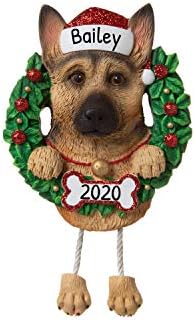
- CELEBRATE YOUR PUP: Bring holiday cheer with dog ornaments for Christmas tree and personalized dog ornaments that captur…
- PERSONALIZED PET KEEPSAKE: Customize your personalized dog ornaments for Christmas tree or personalized pet Christmas or…
- GIFT FOR DOG LOVERS: Suitable for dog Christmas gifts or gifts for dog lovers, these ornaments make thoughtful presents …
According to the American Kennel Club, hip dysplasia risk in large breed dogs is influenced by growth rate as much as genetics, which means controlling puppy growth curves through appropriate large-breed puppy nutrition is a direct, actionable lever any Golden Shepherd puppy owner can pull regardless of parental testing outcomes.
Putting It Together Before You Commit
A Golden Shepherd puppy is a rewarding, high-functioning companion when the genetics behind it have been screened honestly and the first months of life were managed with real socialization structure. It is a source of chronic behavioral problems when either of those pieces was skipped to save money or time. The screening steps above are not excessive caution. They are the same functional assessment I’d run on any case file before recommending a placement, applied here before the placement even happens.
How much does a Golden Shepherd puppy typically cost from a health-tested breeder?
Costs vary widely depending on region and breeder documentation, and pricing should never be quoted in flat dollar figures without checking current listings, but health-tested lines with OFA certification and structured socialization programs sit in a premium tier compared to undocumented litters. The difference typically reflects genetic testing, veterinary oversight, and early enrichment costs the breeder absorbed before sale.
Is the Golden Shepherd breed prone to more health issues than a purebred German Shepherd?
Not necessarily more issues, but overlapping risk from both parent breeds. A Golden Shepherd puppy can inherit hip dysplasia risk from the Shepherd line and cardiac predispositions from the Golden Retriever line, which is exactly why dual-breed health testing on both parents is non-negotiable before purchase.
Can a puppy temperament test really predict adult behavior in this mix?
Only partially. Tools like the Volhard Puppy Aptitude Test provide useful early observational data, but research, including a 2021 review in Applied Animal Behaviour Science, found the predictive correlation to adult temperament is weak to moderate, particularly for fear and aggression-related traits. Environment and socialization after the test matter as much or more than the test result itself.
How much daily exercise does a Golden Shepherd puppy need as an adult?
Plan for 60 to 90 minutes of structured daily activity, split into multiple sessions rather than one long outing. This high-drive mixed breed tends to develop anxiety-driven behaviors like destructive chewing or excessive vocalization when physical and cognitive needs go unmet, so consistent scheduling matters more than occasional long walks.