
Joint supplements for senior dogs can be the difference between a dog who greets you at the door with a wag and a dog who can’t quite make it off the bed some mornings. I’ve watched it happen in real time here at the sanctuary, old hips that seemed frozen shut slowly loosening up again once the right combination of nutrients got into their system. Not magic. Just consistency, patience, and picking supplements that actually do what the label promises.
This isn’t a sponsored roundup dressed up as advice. I’ve fed these to my own dogs, watched them work (or not work), and I’m going to tell you honestly which ones earned a permanent spot in our feeding routine and which ones just took up shelf space.
Why Aging Joints Break Down in the First Place
Cartilage doesn’t regenerate the way skin or fur does. Once it wears thin, it’s largely gone. Every step your dog takes grinds bone closer to bone, and the body responds with inflammation, stiffness, and eventually the kind of pain that makes a dog hesitate before jumping onto the couch he used to clear without thinking.
The numbers on this are honestly staggering. Research cited by the American College of Veterinary Surgeons shows that up to 80% of dogs over age 8 have radiographic evidence of osteoarthritis. Eighty percent. That means the stiff old dog struggling on the stairs isn’t the exception in a senior household, he’s the rule.
I think about that number a lot. Most pet parents don’t even know their dog is in pain until the limp is obvious, but by then the joint has often been quietly deteriorating for years. Slowing down isn’t just “getting old.” It’s usually a body asking for help it hasn’t been given yet.
Dogs don’t complain about pain the way we do. They just do less. Less running, less jumping, less joy in the ordinary moments. That quiet withdrawal is often the loudest signal we get, and it’s easy to miss if we’re not paying close attention.
What to Actually Look for on a Supplement Label
I’ve picked up more bottles at the pet store than I can count, and honestly, most of the marketing is noise. Here’s what actually matters when you’re evaluating joint supplements for senior dogs:
- Glucosamine: A building block for cartilage repair. Glucosamine for dogs is one of the most studied joint compounds in veterinary medicine, and dosage matters more than brand name.
- Chondroitin: Usually paired with glucosamine, it helps cartilage retain water and stay cushioned under weight.
- MSM (methylsulfonylmethane): Supports inflammation reduction without the side effect profile of long-term NSAID use.
- Omega-3 fatty acids (EPA/DHA): These reduce inflammatory markers throughout the whole body, not just the joints.
- Green-lipped mussel: A naturally occurring source of glycosaminoglycans that some dogs respond to even when glucosamine alone hasn’t helped.
Here’s the part nobody tells you: dosage transparency matters more than a pretty label. If a bottle doesn’t list milligram amounts per serving for each active ingredient, put it back on the shelf. A dog under 20 pounds and a dog over 70 pounds should never be getting the same scoop of anything. Dog mobility supplements that hide their dosing behind vague “proprietary blend” language usually aren’t giving your dog enough of the active ingredient to matter clinically.
The 5 Best Joint Supplements for Senior Dogs, Broken Down Honestly
I’m not going to pretend every dog needs the same thing. What works for a 90-pound German Shepherd with hip dysplasia isn’t necessarily right for a 12-pound senior Chihuahua with early arthritis in her front legs. Here’s how I’d sort these joint supplements for senior dogs by what kind of dog and mobility level they actually suit.

1. Multivitamin Support for the Whole-Body Foundation
Joint health doesn’t exist in isolation. A dog whose overall nutrition is falling apart isn’t going to get much benefit from glucosamine alone. Vita-Tabs Silver for Senior Dogs fills in the gaps that a lot of senior diets miss, giving older bodies the vitamin and mineral foundation that supports everything else you’re trying to fix, joints included.

- Comprehensive Nutrition: Vita-Tabs provide a balanced blend of essential vitamins and minerals to support your dog’s ove…
- Immune System Support: Packed with antioxidants, these tabs help strengthen your dog’s immune system, promoting a robust…
- Healthy Coat and Skin: The inclusion of Omega-3 fatty acids contributes to a lustrous coat and healthy skin, ensuring yo…
Best suited for: dogs in the earlier stages of stiffness who need general senior support rather than targeted joint repair. Pros: affordable, easy to dose, covers broad nutritional gaps. Cons: it’s not a dedicated joint formula, so a dog with diagnosed osteoarthritis will likely need something more targeted alongside it.
2. Omega-3 Fish Oil for Systemic Inflammation Relief
If I had to pick one supplement to never run out of, it would be a quality fish oil. The Fish Oil for Dogs Supplement Bacon Chews makes it easy to get consistent omega-3s into dogs who are otherwise picky about pills. Inflammation is the real enemy behind most joint pain, and omega-3s attack it from the inside out.

- Bacon Flavor Dogs Love – Our omega 3 fish oil for dogs comes in bite-sized chewable tablets that taste like bacon treats…
- Fast Itch & Skin Relief – Our dog skin and coat supplement delivers 300mg omega-3 fatty acids (EPA & DHA) per chew for r…
- Healthy Coat & Less Shedding – This omega 3-6-9 for dogs formula helps reduce excessive shedding while promoting a soft,…
Best suited for: dogs with visible stiffness, dry skin, or dull coat alongside joint discomfort, since omega-3s address more than one issue at once. Pros: palatable chew format, budget-friendly, dual benefit for skin and coat. Cons: fish oil alone won’t rebuild cartilage, it needs to be paired with glucosamine or chondroitin for full joint support.
3. Air-Dried Protein Nutrition to Support Lean Muscle Around Weak Joints
This one surprises people, but muscle mass is joint support. A dog with strong muscles around a compromised hip or knee carries less stress through that joint. ZEAL Canada Air-Dried Chicken Recipe for Dogs is a high-protein topper that helps maintain lean muscle in dogs whose activity has dropped off, which happens fast once mobility becomes painful.
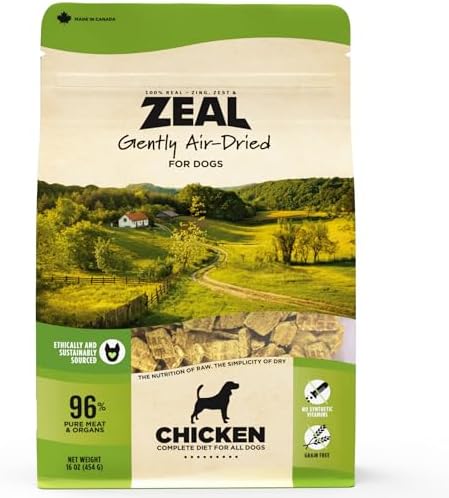
- 96% Free-Range Chicken and Organs for Optimal Health: Made with free-range chicken, liver, gizzard, and heart, providing…
- Natural and Organic Superfoods for Complete Wellness: Enriched with ethically sourced green-lipped mussels for joint sup…
- Air-Dried to Retain Nutrients Naturally: Our gentle air-drying process locks in all the nutrients without synthetic addi…
Best suited for: dogs who’ve lost muscle tone from reduced activity, or dogs who need a nutrient-dense topper to encourage eating during recovery periods. Pros: minimally processed, high protein density, appealing to dogs with reduced appetite. Cons: it’s a food supplement, not a direct joint treatment, so it works best layered under a proper glucosamine and chondroitin regimen.
4. Green-Lipped Mussel Formulas for Dogs Who Didn’t Respond to Standard Glucosamine
Some dogs just don’t respond to plain glucosamine and chondroitin, and I’ve seen that firsthand with a few of our sanctuary shepherds. Green-lipped mussel extract contains a broader spectrum of naturally occurring glycosaminoglycans, and for dogs who’ve plateaued on standard formulas, it’s often the missing piece.
Best suited for: dogs with moderate to advanced arthritis who haven’t shown improvement on basic glucosamine products after a full trial period. Pros: broader nutrient profile, well tolerated by most dogs. Cons: typically pricier, and results can take longer to show than with standard formulas.
5. MSM-Enhanced Chews for Dogs With High Inflammation Flare-Ups
For dogs who have good days and terrible days, weather-sensitive joints, flare-ups after too much activity, MSM-enhanced formulas tend to calm things down faster than glucosamine alone. It won’t rebuild cartilage, but it takes the edge off inflammation quickly.
Best suited for: dogs with noticeable flare-and-fade patterns rather than constant, steady stiffness. Pros: fast-acting relief on bad days. Cons: doesn’t address the underlying cartilage loss, so it works best as an add-on rather than a standalone plan.
Comparing the 5 Best Joint Supplements for Senior Dogs
| Supplement Type | Best For | Key Ingredients | Price Tier |
|---|---|---|---|
| Vita-Tabs Silver Multivitamin | Early-stage stiffness, general senior support | Vitamins, minerals, broad-spectrum senior nutrients | $$ |
| Fish Oil Bacon Chews | Systemic inflammation, dry skin plus joint discomfort | EPA/DHA omega-3 fatty acids | $$ |
| ZEAL Air-Dried Chicken Topper | Muscle preservation around weak joints | High-protein air-dried chicken | $$$ |
| Green-Lipped Mussel Formula | Dogs unresponsive to standard glucosamine | Glycosaminoglycans, natural omega blend | $$$$ |
| MSM-Enhanced Chews | Flare-up management on bad mobility days | MSM, glucosamine, chondroitin | $$$ |
How to Introduce a New Supplement Slowly and Watch for Real Results
Don’t dump a full dose in the bowl on day one and expect a smooth transition. Start at half the recommended amount for the first three to four days, watching stool quality and appetite closely. Some dogs get mild digestive upset when starting fish oil or new joint chews, and easing in prevents that from turning into a bigger issue.

Give it real time. This is the part people rush, and it’s the reason so many supplements get written off as “not working” when they just weren’t given a fair trial. Research published in the Journal of the American Veterinary Medical Association found measurable improvement in weight-bearing scores in dogs given omega-3 fatty acids within seven weeks. Seven weeks. Not seven days.
Track these signs over a full 6-8 week window before deciding if a supplement is working:
- Willingness to go up and down stairs without hesitation
- Faster recovery after lying down for a nap
- Less stiffness first thing in the morning
- More initiation of play or movement, even brief bursts
- Steadier gait on smooth or slippery floors
If you’re not seeing any shift after two full months at a proper dose, it’s time to talk to your vet about whether a different formula, or a prescription-level intervention, makes more sense. Senior dog arthritis relief isn’t one-size-fits-all, and what works beautifully for one dog might do almost nothing for another.
Supplements Are Part of the Plan, Not the Whole Plan
Here’s something I need pet parents to really hear: a bottle of pills was never going to be the whole answer. I’ve seen people treat joint supplements like a magic fix while ignoring everything else that actually determines how a dog moves through their day.
Pair joint supplements for senior dogs with the rest of a real mobility plan:
- Ramps instead of stairs, especially for getting into cars or onto beds
- Orthopedic beds that actually support pressure points instead of flattening out after a month
- Gentle, consistent movement, short frequent walks instead of one long exhausting one
- Weight management, because every extra pound is added pressure on already compromised joints
If you’re managing weight alongside joint issues, our guide on senior dog foods for healthy weight management covers how to build muscle without overloading fragile joints. And if you’ve got a new puppy in the house stirring things up around an arthritic old dog, I wrote specifically about protecting an arthritic senior dog’s joints from a new puppy, because that dynamic can undo months of supplement progress in a matter of days if it’s not managed carefully.
This is a sacred trust, caring for a body that’s given a lifetime of loyalty and now needs us to slow down and pay attention. It’s not about perfection. It’s about showing up consistently, watching closely, and adjusting the plan as your dog tells you what they need.
Frequently Asked Questions
How long does it take for joint supplements for senior dogs to start working?
Most dogs need a consistent 6 to 8 week trial before you can fairly judge whether a supplement is helping. Some ingredients, like omega-3 fatty acids, have shown measurable improvement in weight-bearing scores within about seven weeks in veterinary studies, but cartilage-support ingredients like glucosamine and chondroitin often take even longer to show visible changes in gait and comfort.
Can I give my senior dog glucosamine and fish oil at the same time?
Yes, and honestly it’s one of the smarter combinations you can offer. Glucosamine supports cartilage structure while omega-3 fatty acids from fish oil work on reducing inflammation throughout the body. They address different parts of the same problem, so pairing them is common practice among vets managing canine osteoarthritis.
What are the first signs that a senior dog needs joint support?
Watch for hesitation before jumping onto furniture, slower movement after resting, reluctance on stairs, and a general drop in enthusiasm for walks or play. These subtle changes often show up well before a dog develops an obvious limp, and catching them early gives joint supplements more time to actually make a difference.
Are joint supplements safe for dogs with other health conditions?
Most joint supplements are well tolerated, but dogs with kidney disease, bleeding disorders, or those on certain medications should only start a new supplement under veterinary guidance. Always mention every supplement you’re giving during vet visits, since some ingredients can interact with prescription medications your senior dog may already be taking.
Watching an old dog move a little easier after weeks of patient, consistent care is one of the quiet joys of this work. It doesn’t happen overnight, and it doesn’t happen by accident. It happens because someone paid attention and refused to give up on their comfort. Tell your pup I said Hi! — Dawn