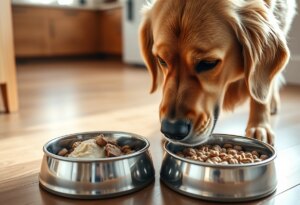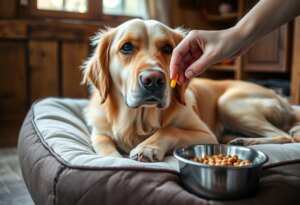


Choosing the right Golden Aussie food is one of the most consequential decisions you’ll make for a dog who inherited the working drive of an Australian Shepherd and the joint vulnerabilities of a Golden Retriever. This hybrid, often called the Golden Aussie or Aussie Retriever mix, needs a feeding plan that respects both parent breeds’ physiology rather than a generic large-breed formula pulled off the shelf. Below, I’ll walk through the nutritional science behind this cross, compare five specific formulas, and give you a feeding protocol you can actually implement this week.
Understanding the Golden Aussie’s Unique Nutritional Needs
The Golden Aussie inherits a dual risk profile. From the Golden Retriever side, you get a documented predisposition to hip and elbow dysplasia, plus a dense double coat that depends heavily on dietary fatty acid intake to stay functional as an insulating and weatherproofing layer. From the Australian Shepherd side, you get a leaner, higher-drive metabolism built for sustained herding work, along with a genetic tendency toward certain eye conditions that researchers have linked to oxidative stress markers. Any credible Golden Aussie food has to account for both of these inherited pressures simultaneously, not just one parent breed’s profile.
This is where I see the most common owner error: people feed for coat and calories (the retriever half) while ignoring joint-supportive compounds, or they feed for lean muscle (the Aussie half) while under-supplying the omega-3 load a heavy coat actually requires. An effective Aussie Retriever mix diet needs to do both jobs at once, which is a formulation problem, not a marketing one.
Caloric and Protein Requirements by Life Stage
The Golden Aussie is a large breed dog food candidate almost across the board, typically landing between 45 and 75 pounds at maturity. According to AAFCO nutrient profiles, adult maintenance formulas for dogs this size should provide a minimum of 18 percent crude protein, though working or highly active individuals frequently do better in the 24 to 28 percent range. Puppies of this cross need large-breed growth formulas specifically, since standard puppy food often runs too calorie-dense and can accelerate skeletal growth past what the developing joints can structurally support.

Growth rate matters more than growth speed for this hybrid. If you want a side-by-side sense of how mixed large breeds track in size and weight across the early months, our Border Collie Golden Retriever mix size guide lays out comparable growth curves for a similarly built hybrid, and the pattern holds reasonably well for Golden Aussies too. As a working baseline:
- Puppy (8 weeks to 12 months): Large-breed puppy formula, 22 to 26 percent protein, controlled calcium and phosphorus ratios
- Adolescent (1 to 2 years): Transition gradually to adult maintenance, monitor waist definition weekly
- Adult (2 to 7 years): Maintenance formula matched to activity level, 18 to 28 percent protein
- Senior (7 years and up): Reduced calorie density, sustained or slightly increased protein, added joint-support compounds
Top 5 Golden Aussie Food Picks Compared
The table below compares five formulas that consistently satisfy the dual joint-and-coat demands of this cross. I’ve included glucosamine content and omega ratios specifically because those two data points predict long-term outcomes better than crude protein percentage alone.
| Food | Primary Protein Source | Glucosamine/Chondroitin | Omega-6 to Omega-3 Ratio | Best For | Price Tier |
|---|---|---|---|---|---|
| NUTRO NATURAL CHOICE Adult Dry Dog Food | Farm-raised chicken | Not added | Approx. 8:1 | Adult maintenance, sensitive stomachs | $$ |
| Purina Pro Plan Sport Performance | Chicken, fish meal | Added | Approx. 6:1 | High-drive, herding-active adults | $$$ |
| Royal Canin Large Breed Adult | Chicken by-product meal | Added | Approx. 7:1 | Breed-specific joint support | $$$$ |
| Diamond Naturals Large Breed Adult | Chicken meal | Added | Approx. 5:1 | Budget-conscious households | $ |
| Hill’s Science Diet Large Breed Adult | Chicken meal | Added | Approx. 6:1 | Vet-recommended maintenance | $$$$ |
Of these, the NUTRO NATURAL CHOICE Adult Dry Dog Food is worth flagging separately because it’s a genuinely solid entry-level Golden Aussie food for owners whose dog does not have diagnosed joint disease yet. It’s built on farm-raised chicken as the first ingredient with no added glucosamine, so if your dog is under five years old and radiographically clear on hips, this is a reasonable maintenance choice that you can pair with a separate joint supplement later if screening results change.

- Supports Whole-Body Health: NUTRO NATURAL CHOICE Adult Dry Dog Food is made with essential nutrients and antioxidants to…
- Made With Real Lamb: Real lamb is the #1 ingredient in this protein-rich recipe
- Supports Healthy Skin & Coat: Made with high-quality protein, this delicious dry dog food also contains Omega 3 & 6 fatt…
Owners frequently ask me which single ingredient matters most for this cross. There isn’t one. The data is contradictory when you isolate protein percentage alone, but it’s remarkably consistent when you look at the combined effect of controlled calorie density, joint-supportive compounds, and appropriate omega ratios tracked over multiple years, not weeks.
Breed-Specific Health Risks to Monitor Through Diet
Hip dysplasia is not a hypothetical concern for this hybrid. Orthopedic Foundation for Animals data indicates the condition affects up to roughly 20 percent of Golden Retrievers, and the Australian Shepherd side does not confer meaningful protection against it. You can review breed-specific dysplasia prevalence data directly through the Orthopedic Foundation for Animals, which maintains the largest public registry of canine radiographic screening results in the country. Feeding a lean-growth puppy formula and maintaining a lifelong body condition score between 4 and 5 out of 9 does more to delay symptomatic dysplasia onset than any single supplement.
Progressive retinal atrophy is the second risk worth screening for, inherited more strongly through the Australian Shepherd line. Diet doesn’t prevent PRA, since it’s a genetic degenerative condition, but antioxidant-rich formulations (vitamin E, beta-carotene, taurine) support general retinal and cellular health while you pursue genetic testing and ophthalmologic screening through your veterinarian.

Here’s a practical seasonal note that catches owners off guard every year. Halloween candy, particularly anything containing xylitol or chocolate, sends more dogs to emergency clinics in late October than almost any other week on the calendar. If you want your Golden Aussie included in the festivities without the ingestion risk, a costume like the Spooky Halloween Night Witch Dog Glowing Pumpkins Canvas photo backdrop setup lets you get the seasonal photos without a single candy bowl anywhere near your dog’s mouth.

As your Golden Aussie ages past seven, the conversation shifts from growth and injury prevention toward maintaining lean mass and joint comfort on a lower calorie budget. If you’re weighing formulas for that transition, our IAMS Healthy Aging dog food review breaks down whether that specific senior line holds up against the joint and cognitive demands of a large mixed breed entering its geriatric years.
Practical Feeding Protocol: Transition, Portions, and Weight Monitoring
Switching formulas without a transition plan is the single most common cause of the gastrointestinal upset I hear about in consultations. Use a seven-day gradual transition:
- Days 1 to 2: 75 percent old food, 25 percent new Golden Aussie food
- Days 3 to 4: 50/50 mix
- Days 5 to 6: 25 percent old food, 75 percent new
- Day 7 onward: 100 percent new formula, monitor stool quality for a full week
For portion control, I use the Waltham Institute body condition scoring system rather than the bag’s feeding chart, since bag charts assume average activity and average metabolism, and this hybrid rarely fits either assumption. On a 9-point scale, you’re aiming for a score of 4 or 5: ribs palpable without excess fat covering, a visible waist when viewed from above, and an abdominal tuck in profile. Score above 6 and it’s time to cut calories by roughly 10 percent; score below 4 and you increase by a similar margin, then reassess in two weeks.
Weigh your dog monthly and log it. A single data point tells you nothing; a trend line across six months tells you everything about whether your current Golden Aussie nutrition plan is actually working. Thanksgiving deserves a specific mention here too, since table scraps around that holiday are a leading cause of acute pancreatitis presentations in emergency veterinary medicine during that week. Give your dog a festive alternative instead, like posing them in something along the lines of the Happy Thanksgiving Dog Turkey Costume Pumpkins Autumn outfit for photos rather than a plate of gravy-soaked turkey skin.

If you’re already managing a household with an aging Golden Retriever and considering whether a younger companion changes the feeding dynamic, our piece on bringing home a second Golden Retriever puppy alongside a senior dog covers the practical resource-guarding and separate-feeding logistics that also apply directly to multi-dog Golden Aussie households.
Frequently Asked Questions
What is the best type of Golden Aussie food for a dog with early hip dysplasia?
Look for a formula with added glucosamine and chondroitin, a controlled calorie density to prevent excess joint loading, and an omega-6 to omega-3 ratio closer to 5:1 or 6:1. Royal Canin Large Breed Adult and Purina Pro Plan Sport Performance both meet these criteria, but any dietary change should be discussed with your veterinarian alongside a formal OFA or PennHIP evaluation.
How much protein does an adult Golden Aussie actually need?
AAFCO sets an 18 percent crude protein minimum for adult maintenance, but active Golden Aussies, especially those still doing herding work or regular structured exercise, generally do better in the 24 to 28 percent range. Sedentary or overweight adults should stay closer to the lower end of that range while calories are being managed.
When should I switch my Golden Aussie to senior food?
Most Golden Aussies benefit from a senior-formulated diet starting between seven and eight years old, though this depends more on body condition and joint status than chronological age alone. Watch for reduced activity tolerance, weight gain despite stable intake, or early stiffness as your cues to transition earlier rather than later.
Can diet alone prevent progressive retinal atrophy in this mix?
No. PRA is a genetically inherited degenerative condition, and no Golden Aussie food or supplement regimen has been shown to prevent or reverse it. Antioxidant-rich diets support general retinal cell health, but genetic testing and regular ophthalmologic screening remain the only reliable tools for early detection and breeding decisions.