
Senior wet vs dry food is not a matter of preference once you understand the mechanics of an aging mouth and an aging gut. If your dog is skipping meals, dropping kibble mid-chew, or taking twice as long to finish a bowl, the answer usually lives in the physiology, not in stubbornness. Dental attrition and periodontal disease affect more than 80 percent of dogs by age three according to veterinary dental researchers, and that damage compounds year over year. By the time a dog reaches its senior years, the mechanical efficiency of chewing kibble has often dropped well below what most owners assume. This article breaks down the functional differences between wet and dry senior formulas, walks through a home observation protocol you can run in a week, and gives you a decision framework based on dental status, appetite, and mobility rather than guesswork.
Why Aging Mouths Struggle With Kibble
Periodontal disease in dogs is progressive and largely silent until it is advanced. Plaque mineralizes into calculus, calculus irritates the gingiva, and chronic inflammation eventually undermines the periodontal ligament and alveolar bone. According to the American Veterinary Medical Association, most dogs show measurable periodontal disease by age three, and the condition rarely reverses without intervention. In geriatric dogs, this is compounded by tooth wear, root exposure, and in some cases outright tooth loss. Kibble requires repetitive shearing and crushing forces from the carnassial teeth. When those teeth are painful, mobile, or missing, a dog does not necessarily stop eating outright. More often, you see compensatory behaviors: gulping kibble whole, dropping pieces after a partial bite, chewing preferentially on one side, or abandoning the bowl after a few minutes despite apparent hunger. Owners frequently misread these as behavioral quirks rather than pain signals, which is a common misconception worth correcting early.
Comparing Blue Buffalo Senior Wet vs Dry: Nutritional Parity Check
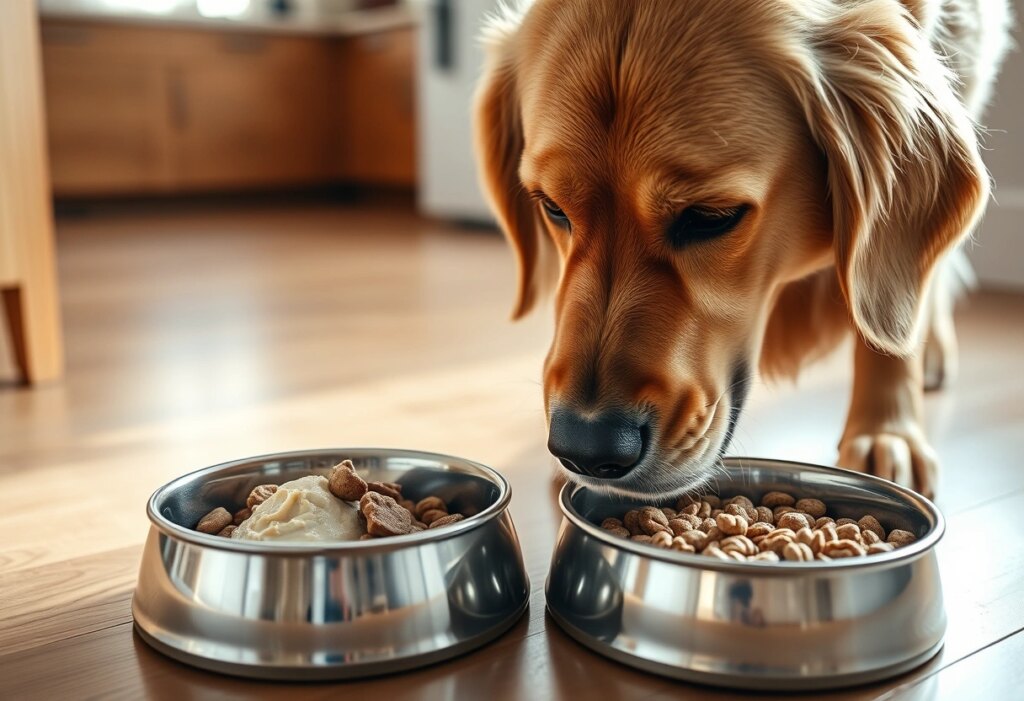
The senior wet vs dry debate often assumes one format is nutritionally inferior, but that is not generally true within a matched product line. Blue Buffalo’s senior formulas, wet and dry, are built around similar functional ingredients: L-carnitine to support fat metabolism in a slowing metabolic rate, glucosamine and chondroitin for joint support, and adjusted mineral levels for aging kidney function. The primary differences are moisture content and caloric density. Dry food runs roughly 10 percent moisture and is calorically dense, meaning smaller volumes deliver more energy. Wet food runs 75 to 80 percent moisture and is calorically dilute, so a dog needs a larger volume to hit the same caloric target. This matters for senior dogs with reduced kidney concentrating ability, since higher moisture intake supports renal function and hydration status without relying on thirst drive alone, which often declines with age. Neither format has an inherent nutritional edge for senior wet vs dry decisions; the deciding factor is almost always mechanical and behavioral, not the nutrient panel.
Appetite Loss Through a Behavioral and Sensory Lens
Appetite in dogs is not a single system, it is the sum of olfactory input, gastric motility, and learned food associations. Olfactory receptor density declines with age in most mammals, and aging dogs show measurably reduced scent detection thresholds compared to younger conspecifics. Since dogs rely heavily on smell to trigger the appetitive phase of feeding (approach, sniffing, prehension), a food with a weaker aromatic signature may simply fail to register as worth pursuing, independent of hunger state. Wet food has a stronger volatile compound release at room temperature and body temperature, which functionally compensates for a blunted sense of smell. Gastric motility also slows in senior dogs, which can produce earlier satiety or a sense of fullness that discourages a full dry-food portion. Warming wet food slightly, which further increases aromatic volatility, is a simple environmental modification I recommend before assuming a dog has lost interest in food altogether. If appetite loss is sudden rather than gradual, that is a medical presentation, not a behavioral one, and warrants a veterinary workup before any diet change.
Don’t count on texture alone to fix an appetite problem. A 2011 study in the Journal of Veterinary Dentistry found that softer diets reduced oral discomfort behaviors in dogs with stage 2 or higher periodontal disease, but the effect was specific to pain reduction during mastication, not a general appetite stimulant. If a dog’s appetite loss is driven by nausea, systemic illness, or cognitive decline rather than oral pain, switching textures alone will not resolve it.
The 7-Day Observational Protocol: Measuring, Not Guessing
Owners consistently underestimate how much they are inferring versus observing when they say a dog “doesn’t like” a food. Anecdote is a poor substitute for structured data, even informal data collected at home. Run this over seven consecutive days at the same feeding times:
- Chewing latency: Time from first bite to swallow, averaged across three bites per meal. An increasing trend suggests worsening mechanical difficulty.
- Food refusal events: Count meals where more than 25 percent of the portion is left after 10 minutes.
- Prehension difficulty: Note dropped kibble, head-tilting while chewing, or one-sided chewing. Score 0 (none), 1 (occasional), or 2 (frequent) per meal.
- Approach latency: Time from bowl placement to first sniff or bite. Rising latency over the week points to declining olfactory drive or anticipated discomfort.
- Water intake near meals: Dogs softening kibble by drinking heavily around meals are often self-compensating for dental pain.
Log these daily in a simple table or notes app. A pattern of rising chewing latency and prehension difficulty scores points toward a dental and mechanical problem best solved with texture change. A pattern of high approach latency with normal chewing once eating starts points more toward an olfactory or motivational issue, which favors a more aromatic wet formula regardless of dental status.

Building a Balanced Bowl: Practical Product Options
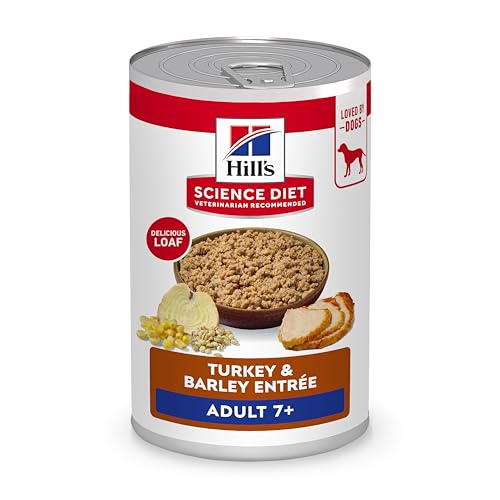
For dogs scoring poorly on chewing latency and prehension in the observational protocol, a fully wet or heavily wet-hybrid diet is the more defensible choice. Hill’s Science Diet Adult 7+ Wet Dog Food is a reasonable option to trial during a transition period, since its soft pate texture requires minimal mastication and its higher moisture content supports hydration in dogs with reduced thirst drive. It also gives you a controlled variable to compare against a dog’s current dry formula using the same seven-day scoring method described above.
If your household also includes an aging cat and you are managing multiple senior pets on adjusted diets, it is worth checking ingredient overlap and caloric targets across species-specific formulas rather than assuming one food fits all animals in the home. Products like Purina Pro Plan AdvantEDGE Senior Support Dry Cat Food illustrate how senior-specific formulation principles, joint support compounds and metabolic adjustments, extend across species even though the mechanical chewing concerns discussed here are dog-specific.

- Purina Pro Plan Dry Cat Food: Purina Pro Plan AdvantEDGE Senior Support Plus delivers Pro Plan’s most advanced nutrition…
- Highly Digestible: Dry cat food for senior cats features a highly digestible formula with probiotics to support digestiv…
- Senior Support: This high protein dry cat food supports immune health with a formula that also supports healthy senior y…
Senior Wet vs Dry: Comparison Table
| Attribute | Blue Buffalo Senior Dry | Blue Buffalo Senior Wet |
|---|---|---|
| Moisture Content | Approx. 10% | Approx. 78% |
| Caloric Density | High (small volume, high energy) | Low (larger volume needed) |
| Mastication Demand | High, requires full dentition | Minimal, near zero chewing needed |
| Aromatic Volatility | Lower at room temperature | Higher, better for reduced olfaction |
| Best Fit For | Intact dentition, normal appetite | Periodontal disease, appetite loss |
| Price Tier | $$ | $$$ |
Decision Matrix: Dental Status, Appetite, and Mobility to the Bowl
The senior wet vs dry decision should be a function of three variables scored independently: dental status, appetite status, and mobility to the bowl. A dog with sound teeth, a robust appetite, and normal mobility has no functional reason to switch off dry food, and the caloric density of dry food can actually help maintain weight in dogs with reduced mobility who need calorie-dense meals in smaller volumes. A dog with stage 2 or higher periodontal disease, documented via your observational log or a veterinary dental exam, should transition toward wet or softened food regardless of appetite, since the goal there is pain reduction, not appetite stimulation. A dog with normal teeth but declining appetite, particularly with rising approach latency in your seven-day log, often responds better to wet food’s aromatic profile even without dental disease present. Mobility matters too: dogs with orthopedic pain that makes standing over a bowl uncomfortable may eat less regardless of format, and that variable should be addressed with a raised bowl or postural support before concluding the food itself is the problem.
For dogs transitioning, hybridizing is usually more successful than an abrupt switch. Mix a spoonful of wet into the dry ration for three to four days, then shift the ratio toward 50/50, then gradually toward wet if the dental exam confirms it is warranted. Abrupt full switches sometimes trigger gastrointestinal upset in a system already working harder to digest efficiently, so gradual transitions of seven to ten days are the safer default. If you are also adjusting kibble type by breed size during this process, our buying guide for senior dog food across small and large breeds covers how kibble size and shape affect mastication load independent of the wet-versus-dry question.
When Dry Food Still Makes Sense
It would be inaccurate to frame dry food as universally worse for seniors. Dogs with healthy teeth benefit from the mild abrasive action of kibble, which provides some natural plaque control, and the caloric density is genuinely useful for underweight seniors who need more energy in less volume. If your dog’s dental exam comes back clean and your observational protocol shows no rising latency or refusal trends, there is no physiological reason to abandon a well-formulated dry senior diet. If you are also researching alternative senior dry formulas beyond Blue Buffalo, our IAMS Healthy Aging dog food review covers a comparable product line and how it stacks up on similar functional criteria. The senior wet vs dry question is not about brand loyalty, it is about matching format to the dog’s current physical capacity, and that capacity should be reassessed every six months as dogs age, since dental and metabolic status can shift meaningfully within a single year in geriatric dogs.
Key Takeaways
- Periodontal disease affects the majority of dogs by age three and worsens with age, directly reducing kibble chewing efficiency.
- Blue Buffalo’s senior wet and dry lines are nutritionally comparable in functional ingredients; the deciding factor is mechanical and behavioral, not nutrient content.
- Reduced olfactory acuity in senior dogs makes wet food’s stronger aroma more effective at triggering feeding behavior.
- A structured seven-day observation log beats anecdote for deciding whether a dog needs a texture change.
- Softer diets reduce oral discomfort behaviors in dogs with stage 2+ periodontal disease, but they are not a general-purpose appetite fix.
Frequently Asked Questions
Is wet food always better than dry food for senior dogs?
No. The senior wet vs dry decision depends on individual dental status, appetite patterns, and mobility, not a blanket rule. Dogs with healthy teeth and normal appetite often do fine on dry food, while dogs with periodontal disease or appetite loss typically benefit more from wet or hybrid diets.
How do I know if my senior dog’s teeth are causing eating problems?
Watch for dropped kibble, one-sided chewing, gulping food without chewing, and increased water intake around meals. Running a structured seven-day observation log tracking chewing latency and food refusal gives you objective data beyond casual impressions, and a veterinary dental exam confirms the underlying cause.
Can mixing wet and dry food cause digestive upset in senior dogs?
Abrupt full switches are more likely to cause upset than gradual transitions. Introducing wet food over seven to ten days, increasing the ratio incrementally, reduces the risk of gastrointestinal disruption in a digestive system that is already working harder with age.
Does sudden appetite loss in an older dog always mean dental pain?
No, and this distinction matters clinically. Gradual appetite decline often correlates with dental or olfactory changes, while sudden appetite loss is more often a sign of an underlying medical issue such as nausea, organ dysfunction, or pain unrelated to the mouth. Sudden changes warrant a veterinary visit before assuming a diet switch will fix it.