


Golden retrievers calm down, on average, somewhere between two and three years of age, and the females in the breed tend to arrive at that settled baseline a few months ahead of their male littermates. That single fact surprises a lot of prospective owners who assume a wiggly, mouthy ten-month-old is simply “who this dog is” for the rest of her life. She isn’t. What you’re watching at ten months is an unfinished nervous system, not a fixed personality. As someone who spends a good deal of professional time explaining maturation curves to frustrated owners, I want to walk through what’s actually happening neurologically and hormonally during this window, because the timeline matters far more than most breed pages let on.
Behavioral Ontogeny: Why “Grown Up” Isn’t One Milestone
Physical maturity and behavioral maturity are two separate clocks, and conflating them is where most of the confusion starts. A female golden retriever typically reaches her adult height and close to her adult weight somewhere between 12 and 18 months. Her growth plates close, her coat fills in, and she looks, structurally, like an adult dog. Her brain is not done. Myelination of prefrontal circuits, the ones responsible for impulse inhibition and emotional regulation, continues well past that physical marker. Most behaviorists place full neurological and behavioral maturity between 2 and 3 years of age, which is a full year or more after the dog “looks” finished.
This gap is the source of nearly every “when do golden retrievers calm down” question I field. Owners are using a visual cue (adult body size) to predict a neurological outcome (impulse control), and the two systems simply don’t mature on the same schedule. If you’re evaluating temperament in a related breed line, the same logic applies when researching Golden Retriever Gender: Which Trains Calmer as They Age?, since sex-linked maturation differences show up early and are worth factoring into any pre-adoption decision.
Sex-Linked Temperament Differences
The data on sex differences is not enormous, but it’s consistent enough to be clinically useful. Female golden retrievers, as a population average, tend to reach the calm-down threshold slightly earlier than males, often by a few months. The leading explanation involves gonadal hormone exposure. Testosterone in intact males has a well-documented relationship with increased reactivity, mounting/marking behaviors, and prolonged social pushiness during adolescence, and its behavioral effects tend to linger longer than the corresponding estrogen and progesterone fluctuations in females. Spay and neuter timing complicates this picture further; early gonadectomy has been associated in several studies with increased fear-based reactivity and, in some breed cohorts, extended adolescent-type behavior, so the “earlier calming” pattern in females is a population trend, not a guarantee for any individual dog.
I’ll also flag the contradictory data here, because pretending the science is cleaner than it is does owners no favors. Some retrospective surveys show negligible sex differences in trainability scores by age three, once individual variation and training history are controlled for. Translation: sex is a modest predictive factor, not a deterministic one. Don’t build your entire expectation-setting around gender alone.
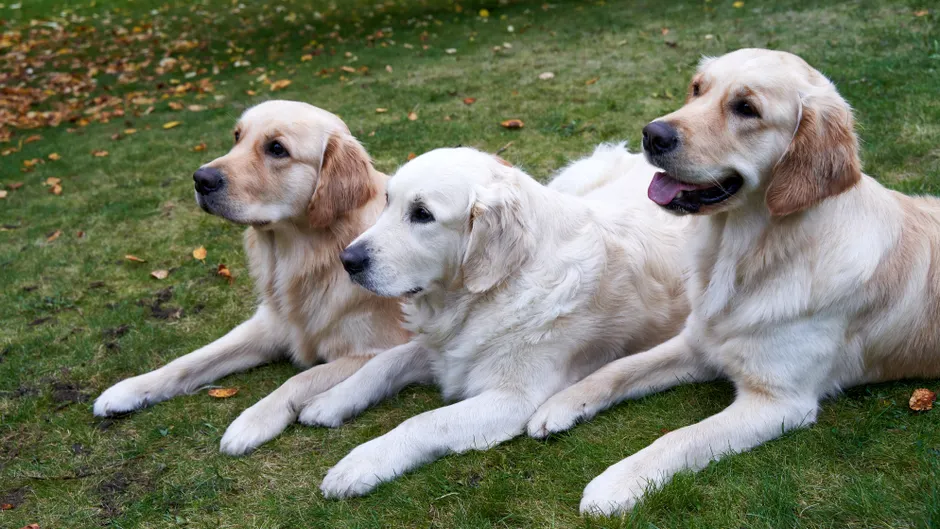
The Adolescence Trap: 5 to 18 Months
If there’s one phase that gets golden retrievers unnecessarily rehomed or written off as “just hyper dogs,” it’s canine adolescence, roughly 5 to 18 months of age. A frequently cited 2020 study published in Biology Letters by Asher and colleagues found that adolescent dogs showed a measurable, temporary decline in trainability and an increase in what researchers termed conflict behaviors, particularly directed at attachment figures, meaning the dogs owners were closest to. This mirrors the well-known human adolescent pattern of increased friction with primary caregivers alongside continued sociability toward less familiar people.
The critical finding for owners: this dip was temporary and resolved with continued maturation. It was not evidence of a training failure or a permanently difficult dog. The behavioral regression owners interpret as “she’s getting worse, not better” is, in most cases, a predictable developmental stage layered on top of fluctuating gonadal hormones and an underdeveloped prefrontal cortex. Don’t count on this phase resolving itself through neglect or isolation; the dogs who come out the other side with the best impulse control are the ones whose owners kept training consistent through the regression rather than pausing it.
The adolescent dip in trainability is a developmental checkpoint, not a character flaw. Owners who mistake it for a permanent trait often make management decisions, rehoming, isolation, punishment escalation, that actively extend the behavioral immaturity they’re trying to solve.
Case-Profile Evaluation: Golden Retriever Maturity Age by Life Stage
Prospective buyers benefit from a structured breakdown rather than a single number. Here’s how I’d profile expected energy output and mental focus at each stage, which is the practical translation of golden retriever maturity age into day-to-day expectations.
| Life Stage | Age Range | Energy Output | Mental Focus / Impulse Control | Owner Demand Level |
|---|---|---|---|---|
| Puppy | 0-6 months | Bursts of high activity, frequent naps | Minimal; short attention span, high distractibility | Very High |
| Adolescent | 6-24 months | Sustained high energy, poor self-regulation | Inconsistent; regression common (Asher et al., 2020) | Very High |
| Young Adult | 2-4 years | Moderate, purposeful, task-oriented | Stable; reliable impulse control emerges | Moderate |
| Senior Approaching | 7+ years | Low to moderate, activity-dependent on joint health | High baseline calm, occasional cognitive slowing | Low to Moderate |
Note that golden retrievers calm down at different rates within each stage depending on individual genetics, training consistency, and reproductive status. This table reflects population averages drawn from behavioral literature, not a guarantee for any single dog. Owners planning ahead should also research downstream health needs; for dogs entering their senior years, understanding options like the 5 Best OTC Arthritis Medicine for Dogs in 2026 can help you prepare for the mobility changes that often follow the calm, settled adult years.

Antecedent Management Protocol: Don’t Wait, Manage
Passive waiting is the single biggest mistake I see. Golden retrievers calm down faster, and with fewer behavioral scars, when owners actively manage the antecedents (the environmental triggers) that produce hyperactive behavior, rather than assuming the dog will simply “grow out of it” on her own.
- Structured decompression walks: Sniffing-focused walks on long leads lower cortisol more effectively than high-arousal fetch sessions, which can actually prime a dog for further reactivity.
- Predictable enrichment scheduling: Puzzle feeders and scent work at consistent times of day reduce the unpredictability that fuels attention-seeking hyperactivity.
- Impulse control reps, not just obedience commands: Short, frequent “wait,” “leave it,” and mat-settling exercises build the same neural pathways the prefrontal cortex is still wiring during adolescence.
- Sufficient physical output before mental work: A physically under-exercised adolescent cannot access the mental focus needed for training; sequence matters.
- Rest scheduling: Adolescent dogs frequently self-sabotage through sleep deprivation, which independently worsens impulsivity and reactivity, mirroring findings in human adolescent sleep research.
Environmental management also includes practical gear choices. Dogs who overheat or feel physically uncomfortable during exercise sessions are far more likely to disengage or become reactive, so something as simple as a properly fitted LovinPet Dog Sun Shirt, Sleeveless High Neck Cooling UV Protection during warm-weather decompression walks can keep an adolescent golden retriever comfortable enough to actually benefit from the structured exercise protocol above, rather than cutting sessions short from heat stress.

- UPF 150+ HIGH-NECK SUN COVERAGE: LovinPet dog sun shirt is made with UPF 150+ rated fabric to help reduce direct sun exp…
- COOLING QUICK-DRY FABRIC: Lightweight cooling fabric feels smooth and breathable for warm-weather walks, beach trips, pa…
- SLEEVELESS CUT FOR EASY MOVEMENT: The no-sleeve design keeps the front legs free for walking, running and playing, while…
Building a Happiness Plan for the Adolescent Stretch
I ask owners going through this phase to build what I call a Happiness Plan: a written, weekly audit of physical exercise minutes, mental enrichment sessions, rest hours, and training reps completed. It sounds clinical, but the objectivity is the point. Owners in the thick of adolescent chaos consistently underestimate how much unstructured downtime their dog is or isn’t getting, and a simple log corrects that blind spot within a week or two.
For low-arousal indoor bonding during recovery days or bad weather, some owners find that quiet co-viewing time, like settling in for a calm family film such as A Magic Christmas [DVD] [2014], works well as a low-stimulation reward paired with a settle-on-mat exercise, reinforcing calm behavior without adding to the day’s physical or mental exercise load.
![A Magic Christmas [DVD] [2014]](https://m.media-amazon.com/images/I/61EHT+xo-UL.jpg)
What This Means for Prospective Buyers
If you’re currently evaluating a breeder litter or a rescue adolescent and trying to predict future temperament, resist the urge to extrapolate from a single visit. According to guidance from the American Kennel Club, behavioral development in retrievers continues well past physical maturity, and early temperament testing has only modest predictive value for adult personality. A golden retriever puppy line, and even a related crossbreed line such as those covered in Goldador Puppies for Sale: What to Look For First, should be evaluated on parental temperament and breeder management practices, not on a single snapshot of an eight-week-old puppy’s energy level.
Golden retrievers calm down reliably, but the timeline depends on genetics, reproductive status, consistency of training through adolescence, and, to a modest degree, sex. Female golden retriever temperament tends toward an earlier settling point on average, but individual variation within any litter is wide enough that this should inform, not replace, a careful evaluation of the specific dog in front of you.
Frequently Asked Questions
At what exact age do female golden retrievers calm down?
Most female golden retrievers reach a stable, calm behavioral baseline between 2 and 3 years of age. Some individuals settle noticeably by 18 months, while others, particularly those with inconsistent training during adolescence, take closer to the 3-year mark. Golden retrievers calm down on a spectrum, not a fixed switch date.
Do female golden retrievers really calm down faster than males?
On average, yes, though the difference is modest. Female golden retriever temperament tends to stabilize a few months earlier than males, largely attributed to differing hormonal maturation timelines. However, individual variation within each sex is often larger than the average difference between sexes.
Why does my golden retriever seem to get more hyper around a year old instead of calming down?
This is classic golden retriever adolescence, typically spanning 5 to 18 months. Research published in Biology Letters found a temporary dip in trainability and increased conflict behavior during this window, which resolves with continued maturation rather than reflecting a permanent personality trait.
Can training speed up how fast a golden retriever calms down?
Training cannot override the underlying neurological timeline, but consistent antecedent management, structured enrichment, adequate physical exercise, and impulse control repetitions, meaningfully reduces the intensity of adolescent hyperactivity and helps the dog reach her calm baseline with fewer reinforced bad habits along the way.