
The best deshedding tools for older Labradors and Golden Retrievers are the ones that pull loose undercoat without dragging on thin, papery senior skin, and honestly, that’s a smaller list than the pet aisle wants you to believe. I’ve spent years brushing out double coats on dogs well into their teens, and I can tell you the right tool matters just as much as the technique. Some brushes are built for a thick, healthy three-year-old coat. Very few are built for the fragile, sparse coat of a dog who’s given you a decade or more.
This one’s personal for me. Grooming time at the sanctuary isn’t just maintenance. It’s some of the quietest, most connected time I get with my old ones. So let’s talk about what actually works, why senior coats behave so differently, and how to keep this daily ritual safe and soothing instead of stressful.
Why Senior Labs and Goldens Shed Differently
If you’ve lived with a Golden Retriever or a Labrador into their golden years, you already know their coat in year twelve is not the coat you remember from year two. The undercoat thins. The texture changes, sometimes going brittle, sometimes going oddly soft and cottony. Skin that used to bounce back from a firm brushing now shows redness if you’re not careful.
This isn’t your dog “getting worse” at being a dog. It’s just aging. Hormonal shifts, slower cell turnover, and reduced skin elasticity all play a part. Add in arthritis or hip weakness, and suddenly the physical act of standing still for a full brushing session becomes its own challenge.
She used to plant her feet and lean into the brush like it was the best part of her day. Now she needs a soft mat under her paws and a few breaks. Same dog. Different needs.
That’s the heart of choosing the right deshedding tools for an aging double-coated breed. You’re not just managing fur. You’re managing comfort, dignity, and trust.

The Science Behind Undercoat Buildup
Here’s something a lot of pet parents don’t realize until a vet tech points it out during a checkup: trapped undercoat isn’t just unsightly. Veterinary dermatologists have noted that a heavy, matted undercoat can actually interfere with a dog’s natural cooling system, trap moisture against the skin, and contribute to hot spots or localized irritation, something the American Kennel Club Canine Health Foundation has highlighted in its work on canine skin and coat health.
For senior dogs, this matters even more. Older skin is thinner and slower to heal. A mild hot spot that a younger dog shrugs off can turn into a lingering sore on a senior. Regular, gentle deshedding keeps airflow moving to the skin and lets you spot problems early, before they become vet visits.
There’s also a quieter, less talked about benefit. A study published in the Journal of Feline and Canine Behavior found that regular, gentle grooming sessions were linked to reduced cortisol spikes in aging pets, meaning consistent brushing doesn’t just clear fur, it can genuinely lower stress in your dog’s body. That tracks with everything I’ve seen at the sanctuary. A slow, predictable brushing routine tells an anxious old dog, *you’re safe, I’m here, nothing bad is happening.*
Top 5 Deshedding Tools for Senior Labradors and Golden Retrievers
Not every tool on the shelf belongs in a senior dog’s grooming kit. I look for rounded tips, adjustable pressure, and a design that lets me control depth instead of just yanking through fur. Below is how the top contenders stack up for older, thin-skinned double coats.
| Tool | Best For | Coat Contact Type | Senior Skin Safety | Price Tier |
|---|---|---|---|---|
| Self-Cleaning Deshedding Brush | Thick, matted double coats | Fine metal bristles, retractable | Good, use light pressure | $$$ |
| Double-Sided Dematting Comb | Tangles behind ears, legs, tail | Rotating stainless teeth | Excellent for spot work | $$ |
| Five Finger Deshedding Glove | Fragile, thin-skinned seniors | Soft rubber nubs | Best overall for sensitive skin | $ |
| Standard Undercoat Rake | Healthy, thick coats | Long metal pins | Use caution, can scratch thin skin | $$ |
| Slicker Brush (Firm Bristle) | Surface tangles only | Fine wire bristles | Not ideal for frail seniors | $ |
Let’s break these down a bit more, because the “best” tool really depends on where your dog is in their aging journey.

1. Self-Cleaning Deshedding Brush for Deep Undercoat
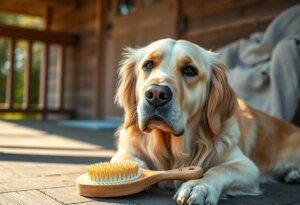
For a Golden or Lab who still carries a fairly dense undercoat despite their age, the Self-Cleaning Deshedding Dog Cat Brush is one I reach for when there’s real volume to clear. The retractable bristle design means less fur clinging to your hands afterward, which matters a lot when you’re grooming multiple senior dogs in a day like I am. Go slow, use short strokes, and never push the bristles flush against bony areas like the hips or spine, where senior dogs have almost no cushioning left.
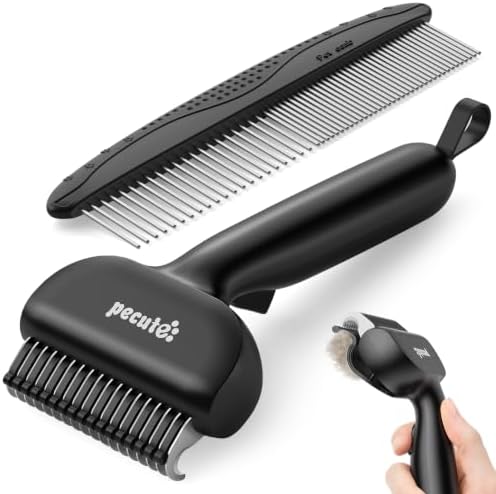
- 1-CLICK SELF-CLEANING — NO MORE MANUAL HAIR PULLING: This undercoat rake solves the grooming frustration. Just press the…
- REMOVES UP TO 95% OF LOOSE FUR — DESIGNED FOR THICK DOUBLE COATS: Engineered specifically for dense undercoats and heavy…
- GENTLE DEMATTING — ROUNDED TEETH GLIDE WITHOUT IRRITATING SKIN: Unlike sharp dematting rakes for dogs, our fine-polished…
2. Double-Sided Dematting Comb for Trouble Spots
Senior dogs tend to mat in predictable places: behind the ears, under the armpits, around the tail. That’s where a targeted tool beats a full-body brush every time. The 2 Pack Double Sided Dematting Comb lets you work small, tangled sections without dragging a whole brush across sore joints or arthritic hips. I keep one of these in my grooming bag specifically for dogs who can’t tolerate a long session but still need those stubborn mats worked loose.
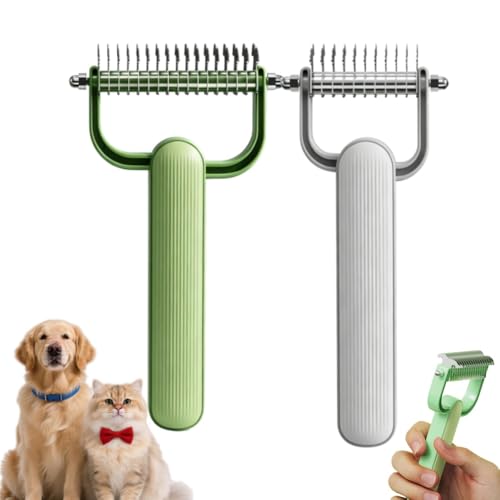
- ✨【Efficient Hair Removal Experience】The V-tooth pet grooming comb features efficient hair removal, designed for both cat…
- 🌀【Upgraded Material】This deshedding comb is crafted from upgraded material, providing durability, suitable for long term…
- 🖐【Ergonomic Handle for Comfort】The ergonomic handle of this pet comb offers comfortable design with a soft, fitted grip,…
3. Five Finger Deshedding Glove for Fragile Skin
This is my honest go-to for the frailest dogs in our care, the ones whose skin bruises if you look at it wrong. The True Touch Five Finger Deshedding Glove feels more like petting than grooming, which is exactly the point. You get the physical closeness of a hands-on massage while still pulling loose fur, and there’s zero risk of catching a metal tooth on loose, wrinkled skin. For dogs who’ve grown wary of brushes after a bad grooming experience somewhere in their past, this glove can rebuild trust one gentle stroke at a time.

- MIMICS REAL HUMAN TOUCH Your pet will enjoy a relaxing massage while the over 180 soft silicone grooming tips reach deep…
- 5 FINGER DESIGN Easily contours to reach all the places hair hides like behind their legs, under their chest, in their t…
- PET THE HAIR AWAY Guaranteed to minimize shedding, keeping you and your house clean. Just think how much happier and hea…
4. Standard Undercoat Rake and 5. Firm Slicker Brush
Both of these belong in the toolkit, but with real caveats. A standard rake works fine for dogs who still carry a healthy, thick coat and haven’t developed thin or sensitive skin yet. A firm slicker brush is fine for quick surface tangles but shouldn’t be your main tool for a senior with reduced fat padding over the ribs and spine. If your dog flinches, that’s your answer. Put it down and reach for the glove instead.
Gentle Grooming Technique for Arthritic or Fragile Seniors
Technique matters as much as the tool itself. Here’s how I approach grooming sessions for our oldest, most fragile residents:
- Keep sessions short. Five to ten minutes is plenty. Watch for restlessness or heavy panting as your cue to stop.
- Groom on a stable, non-slip surface. A wobbly dog is a stressed dog. A yoga mat or rubber-backed rug works well.
- Support weak hips. If your dog has trouble standing long, let them lie on their side for part of the session.
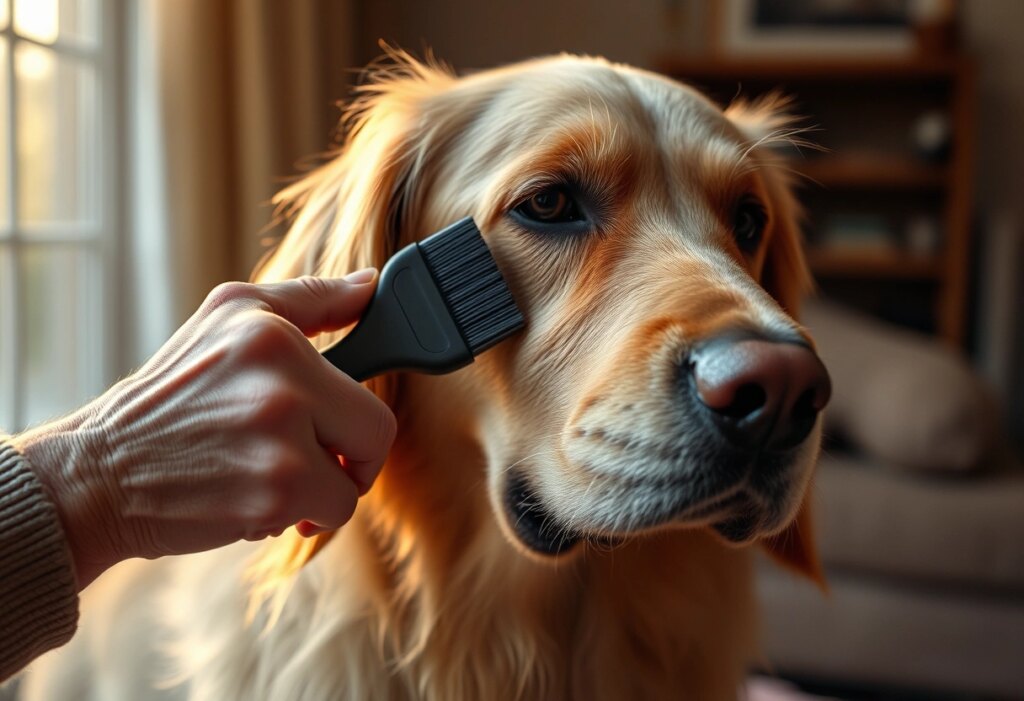
- Use light, sweeping strokes. Never dig in against bone. Follow the direction of hair growth.
- Watch for skin tenting, redness, or flinching. These are signs to ease off immediately.
- End on a good note. A treat, a soft word, a moment of stillness together.
Grooming isn’t just about the fur on the floor. It’s one of the few times a day your hands get to check every inch of your old dog’s body, and that’s a sacred trust most people don’t think about until something’s already wrong.
Choosing the right deshedding tools also matters for dogs who spend a lot of time indoors on hard floors or in crates, where loose fur builds up fast. Speaking of indoor comfort, if incontinence or reduced mobility has become part of your senior’s daily reality, it’s worth pairing your grooming routine with a look at senior-friendly indoor potty solutions, since a clean, dry coat and a clean living space go hand in hand for skin health.
Deshedding as Part of a Bigger Senior Wellness Routine
Here’s the thing nobody tells you when you bring home a wiggly Lab or Golden puppy: grooming eventually becomes your early warning system. Every brushing session is a chance to run your hands over your dog’s body and notice things you’d otherwise miss. A new lump near the ribs. A sore spot on the elbow. Weight loss hiding under a still-fluffy coat. I tell every new sanctuary volunteer the same thing: your hands know your dog’s body better than your eyes do. Use that. Slow down during brushing and actually feel for changes, not just fur. This kind of attentive, hands-on care is worlds away from how some people treat dogs as disposable, picking them up cheap without any plan for their long-term needs. It’s part of why I’m so vocal about places selling Golden Retriever puppies under two hundred dollars without health screenings or honest breeding practices. Honestly, who thinks like that?? A dog is a decade-plus commitment, not an impulse buy, and that commitment includes noticing when their coat and skin start telling a different story as they age. The same goes for mixed breeds like the Golden Shepherd, who often carries a dense double coat from both parent breeds and will need this same kind of careful, senior-adjusted grooming later in life.
A Few Final Thoughts
Picking the right deshedding tools isn’t about chasing the fanciest gadget on the shelf. It’s about matching the tool to the dog in front of you, right now, at this stage of their life. A dog shedding brush that worked beautifully at age four might be too rough at age fourteen. An undercoat rake that felt gentle on thick fur can feel like sandpaper on thin, aging skin. Pay attention. Adjust. Go slower than you think you need to. Your old dog will tell you what they can handle, if you’re willing to listen with your hands and not just your eyes.
Frequently Asked Questions
What are the safest deshedding tools for senior dogs with thin skin?
Soft rubber-nub gloves and rounded dematting combs are generally the safest deshedding tools for senior dogs, since they pull loose undercoat without scraping against thin, fragile skin. Metal rakes and firm slicker brushes should be used cautiously and only on dogs with still-healthy skin.
How often should I use a dog shedding brush on an older Lab or Golden?
Two to three short sessions per week is usually enough for most senior Labradors and Golden Retrievers, though heavy shedders may benefit from daily five-minute sessions during seasonal coat blows. Always shorten sessions if your dog shows signs of fatigue or discomfort.
Can an undercoat rake hurt a senior dog’s skin?
Yes, an undercoat rake can irritate or even scratch thin, aging skin if used with too much pressure or on bony areas like the hips and spine. It’s best reserved for seniors who still have a fairly thick, resilient coat, and should always be used with light, controlled strokes.
Does regular grooming actually reduce stress in aging dogs?
Research published in the Journal of Feline and Canine Behavior found that consistent, gentle grooming sessions were associated with reduced cortisol spikes in aging pets, suggesting that regular deshedding tools use can genuinely lower stress alongside its physical coat benefits.
Give your old pup a slow brush-out this week and really feel for anything new under that coat. It’s such a small act of love, but it adds up to a whole lot of trust over the years. Tell your pup I said Hi! — Dawn