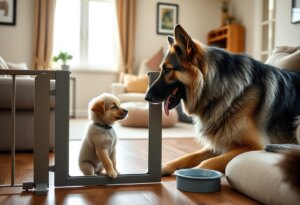
To introduce puppy to senior dog relationships successfully, you need to manage the process as a controlled behavioral protocol, not a spontaneous meet-and-greet. Most conflict between an aging Golden Retriever and an incoming puppy doesn’t happen because the dogs “don’t like each other.” It happens because owners skip the antecedent groundwork and let two nervous systems collide in an unstructured space. As a behaviorist, I look at this transition the same way I’d look at any introduction of novel stimuli to an animal with reduced sensory tolerance and slower recovery from arousal. The good news is that this is a highly predictable process once you understand the biology driving it.
Why Senior Dogs Process New Puppies Differently (The Ethology Behind It)
Golden Retrievers in their geriatric years are not just “slower” versions of their younger selves. Their sensory processing has changed at a physiological level. Vision and hearing acuity decline, olfactory discrimination often becomes their primary way of assessing the world, and their stress recovery window (the time it takes cortisol to return to baseline after arousal) lengthens considerably. This is well documented in shelter intake research reviewed by the ASPCA, which found that dogs with reduced coping capacity show prolonged cortisol elevation following novel social exposure compared to younger animals.
This matters enormously when you introduce puppy to senior dog dynamics. A puppy’s behavioral repertoire is almost entirely appetitive and high-energy: bouncing, pawing, vocalizing, and attempting body contact. To a senior dog with arthritis or diminished vision, an unpredictable moving object approaching fast is not read as “playful.” It’s read as a potential threat. This isn’t sentimentality, it’s basic threat-assessment biology. Senior dogs rely heavily on scent as a pre-exposure tool precisely because it allows them to gather information about a novel individual without the destabilizing effect of sudden visual or tactile contact.
Pre-Introduction Protocol: Scent-Swapping and Parallel Exposure
Before the two dogs are ever in the same room, you want to front-load information through the senior dog’s dominant sensory channel: smell. This is standard practice in shelter behavior departments and it transfers directly to home introductions.
- Scent-swap for 3 to 5 days. Rotate a blanket or towel between the puppy’s sleeping area and the senior dog’s resting spot. Do not force proximity to the object, simply leave it in the environment and let the senior dog investigate on their own schedule.
- Parallel walks on neutral territory. Have two handlers walk both dogs on a loose leash, at a distance, moving in the same direction on unfamiliar ground (a park, not the home yard). Proximity is decreased gradually over multiple sessions, never forced.
- Antecedent management of resources. Before any face-to-face contact happens, remove high-value items: food bowls, favorite chew items, and preferred resting spots. Resource guarding in senior dogs is frequently a pain-avoidance behavior rather than a dominance display. A dog who is protecting a bed because getting up and repositioning is physically uncomfortable will guard that bed more intensely than a healthy adult would.
If your senior Golden has a documented history of anxiety around novel stimuli, it’s worth reviewing strategies similar to those used for senior dog separation anxiety, since the same stress physiology and desensitization principles apply here.
Reading Body Language Before It Escalates
Conflict between an adult dog and a puppy rarely happens without warning. The warning signals are simply subtle enough that most owners miss them until the escalation stage, which is the growl, snap, or retreat. Your job is to intervene two or three steps earlier.

Watch for these early appeasement and stress markers in the senior dog:
- Lip-licking with no food present, often paired with a closed mouth
- Freezing or going statue-still when the puppy approaches
- Whale eye (visible white of the eye without turning the head)
- Turning the head or body away repeatedly (an appeasement signal requesting distance)
- Ears pinned back combined with a lowered tail carriage
Any one of these is a request for space, not aggression. If you see two or more stacked together, end the session immediately and increase distance for the next attempt. This is functionally identical to how we teach clients to read arousal thresholds in reactive dog casework: you’re not waiting for the bite, you’re reading the data points that precede it.
Structured Step-by-Step Introduction Sequence
The American Veterinary Society of Animal Behavior notes that successful introductions between an adult dog and a puppy tend to happen in short, low-arousal sessions, generally under 10 to 15 minutes. Overstimulation, not hostility, is the most common reason first introductions fail.
- Session 1 (Day 1): Leashed, parallel walking at a distance of 10+ feet. No direct greeting. End after 10 minutes regardless of how well it’s going.
- Session 2 (Day 2 to 3): Leashed, shortened distance to 5 feet, both dogs moving. Reinforce calm behavior in both with low-value treats delivered separately.
- Session 3 (Day 3 to 5): Stationary greeting, both leashed, brief nose touch permitted (3 to 5 seconds max), then handlers call dogs away before arousal builds.
- Session 4 onward: Off-leash contact only in a confined, neutral space with an exit route for the senior dog. A puppy pen is genuinely useful here since it lets the puppy explore, sniff, and observe the senior dog through the barrier without the physical pressure of direct contact. The EVERFRONT Dog Playpen Indoor works well for this exact purpose, giving your senior dog a buffer zone while the puppy’s energy is contained.
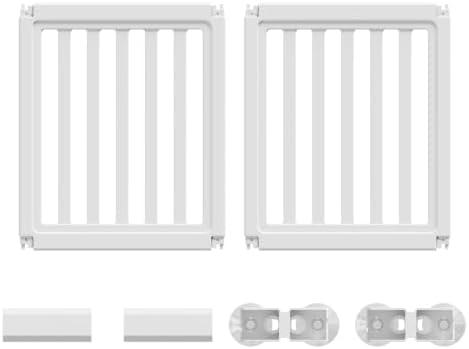
- Ultimate Flexibility with Customizable Shapes – Everfront plastic dog playpen easily transform the playpen into square, …
- Tool-Free, Hassle-Free Setup in Minutes – Panels with secure snap-on connectors eliminate the need for tools. No complic…
- Food-Grade Material & Ultra-Durable Build – Crafted from food-grade, BPA-free plastic and reinforced frames, this plaype…
Do not rush past a stage because “it looks fine.” Dogs that appear tolerant on day one sometimes show delayed stress responses by day three as the novelty wears off and territorial concerns emerge. Extend any stage that shows even mild appeasement signaling.
The data is contradictory on whether adult dogs “instinctively” tolerate puppies. Some studies show adult dogs display more patience toward juvenile-shaped stimuli (the so-called puppy license), while others show senior dogs with chronic pain conditions have significantly reduced tolerance regardless of the puppy’s age. Don’t count on generalized “dog nature” to smooth this over. Manage the introduction based on your specific dog’s mobility, pain level, and individual history, not on breed reputation.
Comparing Management Tools for the Introduction Period
Physical management tools reduce the likelihood of an uncontrolled interaction while both dogs are still learning to read each other. Below is a comparison of options relevant to this transition period.
| Product | Best Use Case | Key Feature | Price Tier |
|---|---|---|---|
| EVERFRONT Dog Playpen Indoor | Containing puppy energy while senior dog observes from a distance | 30-inch height, expandable panel configuration | $$ |
| Dog Cat Playpen Enclosure (43.3×43.3×23.6in) | Larger neutral-territory sessions or multi-pet households | Expanded floor space, mesh visibility panels for scent and sight exposure | $$$ |
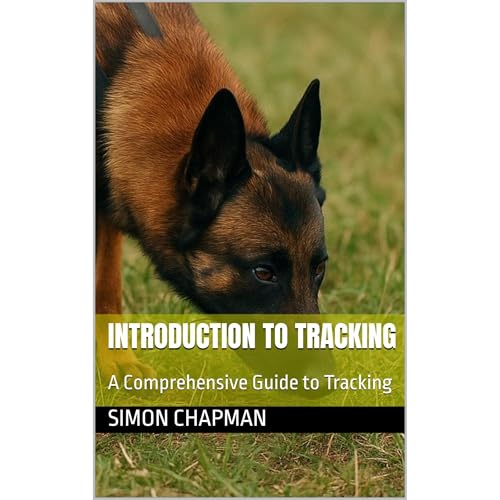
| Introduction to Tracking: A Comprehensive Guide | Redirecting puppy energy into structured scent work instead of direct pestering | Step-by-step tracking exercises to build independent focus | $ |
The playpen options are not about isolating either dog punitively. They function as antecedent management: a way to prevent an unwanted interaction before it starts, rather than correcting it after arousal has already spiked. The Dog Cat Playpen Enclosure is a solid mid-tier option if you have a larger home and want a bigger neutral zone for longer sessions.
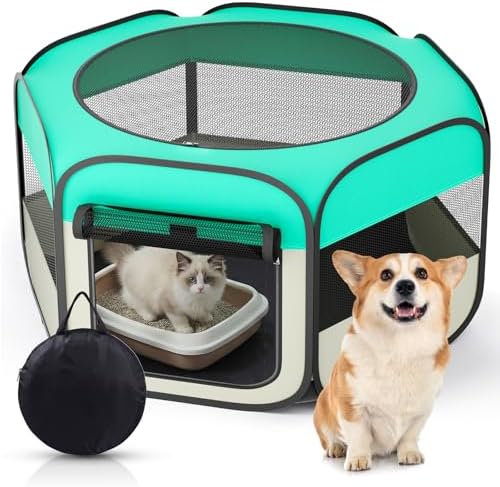
- Safe Transition Space For New Cats: Designed as a secure enclosed area for newly adopted cats, this pet playpen helps re…
- Comfortable Recovery Area With See-Through Mesh: The breathable mesh design helps pets feel more at ease during recovery…
- Ideal Nursery For Mom Cats Or Dogs: A practical whelping and nursing space for mother pets and their babies. The black m…
Building a Long-Term Happiness Plan for Both Dogs
A successful first meeting is not the finish line. What determines whether this relationship stabilizes over the following months is whether you build a Happiness Plan that respects your senior dog’s declining sensory tolerance and physical limits while still meeting the puppy’s developmental needs.

A functional Happiness Plan for this household typically includes:
- Separate resource stations. Food, water, and beds in different rooms or at a distance, permanently, not just during the introduction phase.
- A decompression zone for the senior dog. A gated-off room or elevated orthopedic bed the puppy cannot access, where the older dog can fully disengage from stimulation.
- Independent enrichment for the puppy. Puppies that get their activity needs met through structured outlets, such as a tracking or scent work introduction like the Introduction to Tracking guide, are measurably less likely to pester an older housemate for attention.
Reinforcement schedules matter here too. Reward calm coexistence generously in the first few weeks, low-key acknowledgment such as a quiet “good” plus a treat when both dogs settle in the same room without arousal. This builds a positive association with the puppy’s presence rather than a tolerance built purely on avoidance. If mobility issues are part of your senior dog’s profile, house-training regressions sometimes appear during this stressful transition period, which is a separate but related issue covered in our piece on senior dog house-training changes if you notice new accidents starting to happen.
Every time you introduce puppy to senior dog pairs, expect a settling-in period of four to eight weeks before the relationship reaches a stable baseline. Owners who track body language weekly and adjust management (more separation, slower session pacing, additional decompression time) tend to see faster stabilization than owners who assume the dogs will “work it out” unsupervised.
Common Mistakes That Undermine the Introduction
A few patterns show up repeatedly in cases referred to behavior consultants after a failed introduction attempt:
- Introducing the dogs inside the senior dog’s core territory (the living room or yard) on day one, rather than neutral ground first
- Allowing the puppy uncontrolled access to the senior dog’s resting area during the adjustment period
- Punishing the senior dog for growling, which suppresses a legitimate communication signal rather than addressing the underlying discomfort
- Assuming a single successful session means the relationship is fully settled and dropping all management immediately
Each of these errors shares a common thread: they remove the senior dog’s ability to signal discomfort and have that signal respected. Preserving that communication channel, and reinforcing it rather than punishing it, is what allows a workable long-term relationship to form.
How long does it take to introduce puppy to senior dog households successfully?
Most households see a stable, low-conflict routine within four to eight weeks when following a structured protocol. Some senior dogs with chronic pain or a history of limited socialization may need longer, sometimes ten to twelve weeks, before consistently tolerating close proximity to the puppy without stress signaling.
Is it normal for my senior Golden Retriever to growl at the new puppy?
Yes, a growl is a communication signal requesting distance, not necessarily aggression. It should never be punished. Instead, increase space between the dogs and slow the introduction pace. Persistent or escalating growling paired with other stress markers warrants a consultation with a veterinary behaviorist to rule out underlying pain.
Should I let the puppy sleep in the same room as my senior dog right away?
No. Separate sleeping arrangements should remain in place for at least the first several weeks. This protects the senior dog’s decompression zone and prevents nighttime resource guarding or startled reactions during rest, when stress tolerance is already at its lowest.
What if my senior dog never fully accepts the new puppy?
Some senior dogs settle into a coexistence pattern based on managed distance rather than close bonding, and that is a legitimate, humane outcome. The goal of any protocol to introduce puppy to senior dog pairs is a low-stress household, not forced affection. If aggression persists despite consistent management, work with a certified applied animal behaviorist to reassess the plan.