

An arthritic senior dog doesn’t need a lecture on tolerance. What they need, the moment a new puppy bounces through your front door, is a plan. A real one. Because that soft, wiggly bundle of joy your family just fell in love with? To a dog with inflamed, aching joints, that puppy is a potential collision waiting to happen. I’ve watched this play out more times than I can count at the sanctuary, and I want to walk you through it the way I’d walk a friend through it, honestly and with my whole heart.
Let’s start here: this isn’t about whether your old dog “likes” puppies. It’s about physics. A forty-pound puppy launching sideways into a hip with bone-on-bone friction is a real injury risk, not a personality clash. I say this with love, but also with some fire in my chest, because I’ve seen too many families assume the old dog will “just deal with it.” They shouldn’t have to. And with a little structure, they won’t.
Why a Rowdy Puppy Is More Than Just Annoying to an Arthritic Senior Dog
A lot of pet parents picture the worst-case scenario as their senior dog getting grumpy or snapping. That’s not actually the biggest danger. The real risk is physical: sudden jarring movements, a puppy body-slamming into a stiff shoulder, a surprise pounce onto a sore lower back. For an arthritic senior dog, joints are already inflamed and mechanically compromised. They don’t have the shock absorption they used to.
Think about what happens in a joint that’s already dealing with cartilage loss and low-grade inflammation. It doesn’t take much to tip that joint from “managing” into “flare.” A quick twist to avoid a puppy nipping at their tail. An abrupt need to get up fast because a puppy is barreling toward the food bowl. These aren’t dramatic moments to us. To an inflamed hip or elbow, they’re the kind of jolt that can trigger days of pain.
This is why I get a little protective (okay, a lot protective) when people talk about “letting them work it out.” Who thinks like that?? Your senior dog spent years earning a peaceful home. A new puppy shouldn’t come at the cost of their comfort.
The Science Behind Senior Dog Joint Pain (And Why It’s So Common)
Here’s the part that surprises a lot of families: osteoarthritis in dogs isn’t rare or unusual. It’s closer to the norm. Research from Canine Arthritis Management and the AAHA Pain Management Guidelines estimates that arthritis affects up to 40% of dogs of all ages, and more than 80% of dogs over age eight. Read that again. Eight in ten senior dogs are likely already carrying some degree of joint disease before a puppy ever enters the picture.
That statistic changes the whole conversation, doesn’t it? This isn’t about one sensitive old dog who can’t handle a puppy. This is the biological reality for the vast majority of aging dogs. Senior dog joint pain is quiet. It doesn’t always show up as limping or crying out. Sometimes it looks like reluctance to jump on the couch anymore, or a slower walk to the water bowl, or just seeming “tired” more often.
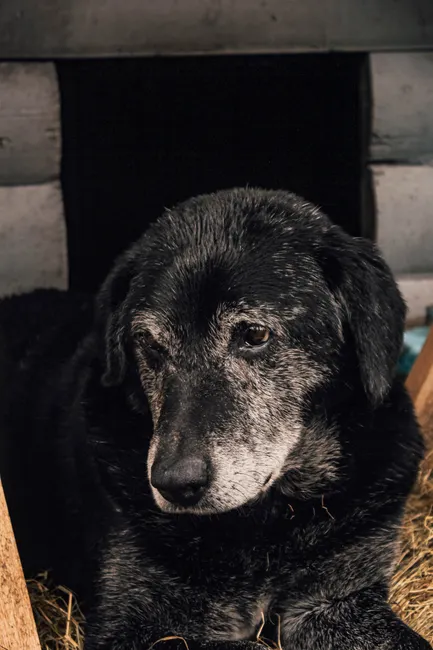
If your dog has been diagnosed with arthritis, or you suspect it based on stiffness after naps or hesitance on stairs, this is worth a real conversation with your vet before the puppy comes home. Some families are also exploring newer arthritis injection treatments like Librela as part of a broader pain management plan, and it’s worth understanding what those options actually offer before deciding what’s right for your dog.
Aging isn’t a flaw to fix. It’s a chapter to honor. When we protect our old dogs’ bodies while welcoming new life into the home, we’re not choosing one over the other. We’re being the steady hand both of them need.
Setting Up Physical Management for an Arthritic Senior Dog
This is where the real work happens, and honestly, it’s the part I care most about. Physical management isn’t optional extra credit. It’s the foundation everything else stands on.
Here’s what I recommend setting up before the puppy even arrives:
- Baby gates to create separate zones, so your senior dog always has an escape route
- A dedicated rest zone that’s puppy-free, quiet, and easy to access
- Raised orthopedic bedding off cold, hard floors (cold floors make joint stiffness noticeably worse)
- Supervised-only interactions for at least the first several weeks, no exceptions
On the bedding front, this matters more than people expect. A thin, flat cushion doesn’t do much for a dog with inflamed hips or elbows. I’ve had real success with beds that actually support joint alignment, like the Persure Orthopedic Dog Bed for Medium Large Dogs, which gives that dense, supportive foam an older body genuinely needs to rest without added pressure on sore joints.

- 【Memory Foam Orthopedic Support】This dog sofa bed is built with high-density memory foam and egg-crate foam that conform…
- 【3-Sided Bolster Sofa Design】The raised sides act as a built-in pillow for your dog’s head and neck, while the lowered f…
- 【Waterproof Liner & Machine Washable】A waterproof inner layer between the fleece surface and base prevents urine, drool,…
An elevated bed adds another layer of protection here too. Getting a bed up off the floor keeps your senior dog out of the direct path of a puppy’s zoomies, and it helps regulate body temperature, which matters for inflamed joints. The Pecute Elevated Dog Bed with Cooling Blanket is a solid mid-tier option for exactly this kind of setup, especially in warmer rooms where an older dog tends to overheat while resting.

- 【Dual-Engine Cooling System For Overheating Prevention】Is your heavy-coated dog panting and miserable during summer days…
- 【 Chew-Proof Heavy-Duty Frame For Active Large Dogs】Tired of constantly replacing shredded, expensive foam beds? Enginee…
- 【Orthopedic Joint Support & Pain Relief】Watch your senior dog stand up with ease and energy. Sleeping on cold, hard floo…
If your household also uses crates for the new puppy (which I strongly recommend for structure), it’s worth thinking through which crate style keeps things calmest for a senior dog who startles easily or has some noise sensitivity. We break that down in this comparison of wire versus soft-sided crates for anxious senior dogs.
Comparing Orthopedic Bed Options for an Arthritic Senior Dog
Not every bed serves the same purpose. Here’s a quick side-by-side to help you decide what fits your specific situation.
| Product | Best For | Key Feature | Price Tier |
|---|---|---|---|
| Persure Orthopedic Dog Bed | Dogs needing firm joint support | Dense memory foam base for hip/elbow relief | $$ |
| Pecute Elevated Dog Bed with Cooling Blanket | Warm rooms, chewers, active households | Elevated frame, chew-resistant, cooling blanket included | $$$ |
| Sanctuary Dog Bed Orthopedic Cooling Memory Foam | Dogs wanting a plush, sink-in recovery zone | Cooling memory foam with bolstered edges | $$$$ |
Structured Introductions and Reading Body Language
This is the piece most families rush, and it’s the piece that matters most. A slow, structured introduction protects both dogs, physically and emotionally.
Start with scent before sight. Let the puppy and senior dog get familiar with each other’s smell through a closed door or gate before any face-to-face meeting. When you do introduce them, keep it short, leashed if needed, and end it before either dog gets overstimulated.

Teach the puppy an “off” cue from day one. This single word, taught early and reinforced constantly, will save your senior dog’s joints more than almost anything else on this list. Puppies don’t know their own strength or momentum yet. It’s our job to teach them boundaries before those boundaries get tested against fragile hips.
And please, learn to read your senior dog’s stress signals. They’re talking to you, even when they’re not barking:
- Lip licking or yawning when nothing’s tired or hungry about the moment
- Stiffening their body or freezing in place
- Turning their head away or moving to another room
- Ears pinned back, tail low or tucked
Never force proximity when you see these signs. Give your old dog the dignity of choosing their own distance. That choice matters more than we sometimes realize.
Long-Term Coexistence for an Arthritic Senior Dog
Once the initial adjustment period passes, the work doesn’t stop. It just changes shape. Scheduled decompression time, where your senior dog gets guaranteed puppy-free hours every single day, should become a permanent household rhythm, not a temporary fix.
Joint supplement support matters here too. A 2020 review in Frontiers in Veterinary Science found modest but genuine benefit from glucosamine, chondroitin, and omega-3 fatty acids in managing canine osteoarthritis. It’s not a miracle cure, and I’ll never pretend supplements replace real veterinary pain management, but as one piece of a broader plan, they help.
For dogs already struggling with stairs or getting into the car, this is also a good moment to reassess your home setup. We cover this in detail in our breakdown of ramps versus stairs for senior dogs, because the wrong choice here can undo a lot of your other joint protection efforts.
A supportive resting space continues to matter as this new normal settles in. Something like the Sanctuary Dog Bed with Orthopedic Cooling Memory Foam gives your senior dog a dedicated recovery spot that feels like their own, away from puppy chaos, which becomes especially important during those daily decompression windows.

- EXCLUSIVE 2-COVER BUNDLE (ZERO DOWNTIME): This Amazon-exclusive set includes the complete Sanctuary Bed plus a bonus rep…
- MODULAR & CUSTOMIZABLE DESIGN: The innovative Quick-Change sleeping surface allows you to refresh your bed’s style insta…
- ORTHOPEDIC FOAM TOPPED WITH A COOLING MEMORY FOAM LAYER: Engineered for superior support, our Orthopedic Foam core has a…
If tension between the two dogs isn’t easing after several weeks, or if your senior dog seems to be hiding more, eating less, or showing signs of chronic stress, please call in a trainer or behaviorist who has real experience with multi-dog, mixed-age households. There’s no shame in asking for help. This is a sacred trust, caring for a dog who’s given you years of loyalty. Protecting their peace in their golden years isn’t a burden. It’s an honor.
Frequently Asked Questions
How long should I keep a new puppy separated from my arthritic senior dog?
Plan for at least two to four weeks of supervised-only interaction, longer if your senior dog shows ongoing stress signals. There’s no rush here. An arthritic senior dog needs time to build trust at their own pace, and forcing a faster timeline usually backfires.
Can a puppy actually make my senior dog’s arthritis worse?
Yes. Sudden jarring movements, being jumped on, or needing to move quickly to avoid a puppy can trigger real inflammation flares in already compromised joints. This is one of the top reasons careful management matters so much for senior dog joint pain.
What are the best signs that my senior dog needs a break from the puppy?
Watch for lip licking, stiffening, moving away, pinned ears, or a low tail. These subtle cues mean your dog is asking for space, and honoring that request is a core part of good canine arthritis care.
Do joint supplements really help an arthritic senior dog cope with a new puppy’s energy?
Glucosamine, chondroitin, and omega-3 supplements offer modest, evidence-backed support for inflammation, according to a 2020 review in Frontiers in Veterinary Science. They work best as one part of a full dog joint protection plan, alongside physical management and vet-guided pain control, not as a standalone fix.
Bringing a puppy home doesn’t have to mean sacrificing your senior dog’s comfort. It just means slowing down enough to protect what’s already fragile, while still making room for new joy. That balance is possible. I’ve watched it happen again and again, and it’s one of the most beautiful things about sharing a home with dogs of every age.
Tell your pup I said Hi! — Dawn