
Low-entry dog crates matter more than most pet parents realize once a dog develops osteoarthritis, because the vertical lip on a standard crate door functions as a load-bearing obstacle every single time the dog enters or exits. This isn’t a comfort preference. It’s a biomechanical problem with a measurable solution, and the data behind it is worth walking through before you buy anything.
The Biomechanics Problem: Why Crate Doors Are a Functional Barrier
Cornell University’s Riney Canine Health Center estimates that osteoarthritis affects up to 80% of dogs over age eight, which means the majority of the senior dogs entering a crate each day are doing so with some degree of joint degeneration in the hips, elbows, or spine. A four-inch raised threshold doesn’t register as an inconvenience to a healthy young dog. To a dog with compromised cartilage and reduced range of motion, that same threshold requires a compensatory lifting motion, usually a partial hop or a lead-leg lunge, that loads the unaffected limb disproportionately while the arthritic limb avoids weight-bearing altogether. Over months, this asymmetric loading pattern can accelerate compensatory strain in the “good” leg, which is why so many arthritic dogs eventually develop bilateral symptoms. Low-entry dog crates remove that repeated stressor by keeping the threshold close to ground level, so the dog can walk in on a flat plane instead of climbing.
I want to be clear about something owners often misunderstand: this isn’t about babying the dog or reducing his independence. Reducing unnecessary joint load is exactly what preserves independence longer. A dog who associates his crate with pain will start avoiding it, and that avoidance behavior gets misread as stubbornness or “not liking the crate anymore,” when the actual driver is nociception, not preference.
Ground Reaction Force Data: What Happens When a Senior Dog Hops
Canine biomechanics research published in The Veterinary Journal has documented that repetitive high-impact movements, including hopping or jumping over raised thresholds, produce a measurable spike in peak vertical ground reaction force on the limb that absorbs the landing. In a healthy joint, this force is distributed and dissipated efficiently through cartilage and synovial fluid. In an arthritic joint, where cartilage has thinned and joint space has narrowed, that same force spike translates directly into nociceptive signaling, meaning pain. This is the physiological reason why low-entry dog crates function as a clinical necessity rather than a design preference. Every time a dog with hip or elbow osteoarthritis clears a raised lip, he’s generating a force spike his joints are poorly equipped to absorb. Multiply that by several entries and exits a day, and you have a chronic pain driver that’s completely avoidable with the right equipment.
This same logic extends to where the dog rests once inside. A crate with a low threshold but a thin, unsupportive floor pad doesn’t solve the whole problem. Owners managing a dog through post-surgical recovery or progressive joint disease often need to pair a low-entry crate with orthopedic support elsewhere in the home, since pressure point relief matters just as much when the dog is lying down as it does when he’s walking through the door.

Evaluation Criteria: What to Actually Measure Before You Buy
Not all crates marketed as “senior-friendly” hold up to scrutiny. Here’s what to physically measure or check before purchase, ideally in this order:
- Threshold height (inches): Measure from the floor to the top of the door lip. Anything above 1.5 inches starts requiring compensatory movement in dogs with moderate to severe arthritis.
- Door swing radius: A door that swings fully flat against the ground, rather than stopping at an angle, gives the dog a continuous ramp-like surface instead of a step.
- Flooring traction: Slick plastic or metal flooring is a fall risk for dogs with reduced proprioception. Look for textured surfaces or plan to add a non-slip mat.
- Interior clearance for orthopedic bedding: Measure interior height and width against the orthopedic bed you intend to use. A crate that’s technically “large” on paper can still leave the dog folding his limbs awkwardly if the bed eats up too much vertical space.
- Structural stability during weight-bearing entry and exit: Push down on the threshold area with your hand. If the frame flexes or the crate shifts on the floor, that instability will make an arthritic dog hesitant to commit to entering, regardless of how low the door sits.
These five criteria are the actual functional test. Marketing copy that says “senior-friendly” without disclosing threshold height in inches should be treated skeptically.
Comparative Product Breakdown: 7 Low-Entry Dog Crates for Senior Dogs with Arthritis
The table below compares threshold height, material durability, and best-use case across seven low-entry dog crates and crate-adjacent enclosures suited to arthritic senior dogs. I’ve included options that function more like open-access shelters alongside traditional crates, since some dogs with severe joint disease do better with a walk-in enclosure that has no door threshold at all.
| Product | Threshold Height | Material Durability | Price Tier | Best-Use Case |
|---|---|---|---|---|
| Outdoor Waterproof Dog Shelter w/Porch | Near-zero (walk-in porch entry) | Weatherproof, reinforced panels | $$$ | Dogs who need a no-threshold outdoor retreat with covered access |
| Low-Profile Soft-Sided Fabric Crate | Under 1 inch | Durable canvas with steel frame | $$ | Daily cognitive decline management, calm dogs |
| Foldable Wire Crate with Ramp Door | 1 to 1.5 inches | Powder-coated steel wire | $$ | Post-surgical recovery requiring visibility and airflow |
| Furniture-Style Low-Entry Crate | Under 1 inch | Solid wood composite | $$$$ | Home integration for dogs with advanced arthritis |
| Heavy-Duty Aluminum Threshold-Free Crate | Near-zero | Aircraft-grade aluminum | $$$$$ | Severe mobility loss, multi-joint osteoarthritis |
| Dog Litter Box with High Walls (adapted low-step entry) | Variable, adjustable panel height | Molded plastic tray | $$ | Dogs with limited mobility who also need close-proximity elimination access |
| Collapsible Travel Crate with Extended Door Flap | 1 inch | Lightweight nylon and mesh | $$ | Travel and vet visits for arthritic dogs needing portability |
A few of these deserve more explanation because the crate itself isn’t the whole solution. For dogs whose arthritis has progressed to the point where nighttime elimination trips become risky (icy porch steps, dark yards, slick tile), the Dog Litter Box with High Walls, Pee Pad Holder Tray for Dog Potty functions as a practical adjunct to a low-entry crate setup rather than a replacement for it. Positioning one near the crate reduces the total distance an arthritic dog needs to travel overnight, which matters more than owners tend to assume, since disrupted sleep from painful nighttime walks compounds daytime behavioral symptoms like irritability and reduced tolerance for handling.
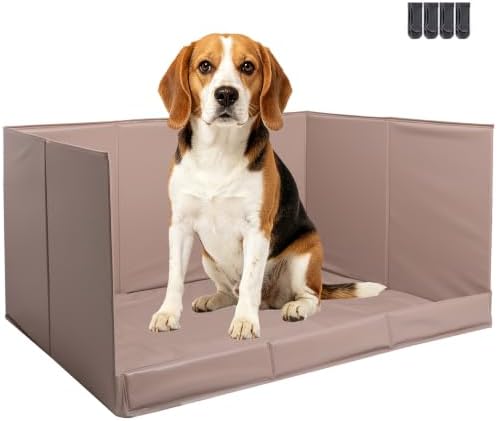
- High-Walled Pee Pad Holder:Our unique pee pad holder features 3 high sides to effectively prevent dog urine from splashi…
- Leak-proof, Sturdy, and Easy to Clean: This dog toilet is made of high-quality waterproof material. Its sturdy design gu…
- No Assembly Required, Foldable and Portable: Simply unfold our pet litter tray to use. Place it in your living room, bat…
For dogs who spend meaningful time outdoors, whether that’s supervised yard time or a covered patio setup, threshold height matters just as much outside the house as it does inside it. The Outdoor Waterproof Dog Shelter w/Porch, Indoor Pet Enclosure is built with a porch-style opening that eliminates the stepped entry most outdoor doghouses require, which makes it a reasonable mid-tier option for owners who want their arthritic dog to have a low-entry retreat outside without hauling a full crate onto the porch.

- Cozy Up In Privacy – For dogs who value their privacy, Pelzin dog bed house can offer a secure place to “get away from i…
- Versatile Dog House – Industrial waterproof fabric that withstands outdoor elements while providing a naturally cooling …
- Support Joint – With 3 inch orthopedic egg-crate foam provides cradling comfort and helps to relieve issues like joint p…
“A low-entry dog crate solves the access problem, but it doesn’t solve the comfort problem once the dog is inside. Threshold height and interior support surface are two separate variables, and owners need to address both if the goal is genuine pain reduction rather than partial pain reduction.” — Dr. Mindy Waite, PhD, CAAB
Pairing Low-Entry Dog Crates with Proper Orthopedic Support
Once you’ve solved the entry problem, the next variable is what the dog is lying on once he’s committed to going inside. This is where a lot of otherwise well-chosen low-entry dog crates fall short, because manufacturers often ship a thin foam pad that compresses within weeks and stops distributing weight evenly across pressure points like the hips, elbows, and sternum. For dogs managing chronic joint disease, an elevated or heavily padded orthopedic surface reduces the contact pressure that triggers pain flare-ups during rest, which is arguably just as important as the entry threshold itself. The Veehoo Chew Proof Elevated Dog Bed, Padded Indestructible Design works well as an interior swap for crates with enough clearance, since the elevated frame keeps the dog off cold flooring while the padding reduces pressure point loading during long rest periods.
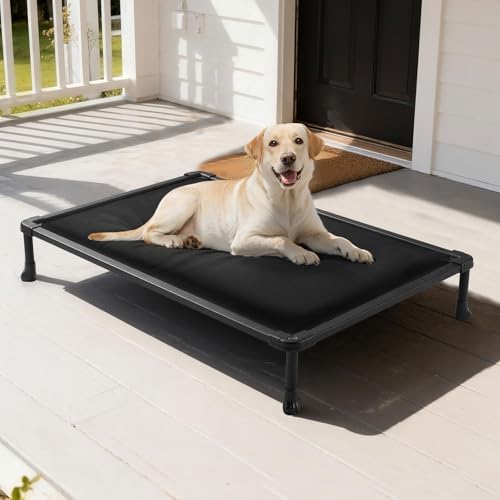
- Size: 41″L x 27″W x 7″H. Upgraded material and structure offer strong stability, Veehoo Raised dog bed can hold a up to …
- Waterproof Padded Dog Bed – Features a soft PP cotton-filled mat with a waterproof, easy-to-clean surface fabric. The pa…
- Indestructible Design: this chew proof dog bed features all edges encased metal frame and anti-digging corners on four c…
Before swapping bedding into any crate, confirm the interior clearance criteria mentioned earlier. An elevated bed frame adds height, and if the crate’s interior ceiling is too low, the dog will be forced to duck or crouch when standing, which reintroduces the same joint strain the low-entry door was designed to eliminate.

Behavioral Transition Protocol: Introducing a New Crate Without Forced Habituation
Swapping a senior dog’s crate isn’t a purely logistical task. Dogs form strong contextual associations with their resting spaces, and an abrupt swap can trigger avoidance behavior that has nothing to do with the new crate’s design and everything to do with the disruption of a familiar routine. The protocol below is built around counterconditioning principles and preserves the dog’s agency to explore at his own pace, which produces more durable behavior change than forced habituation.
- Step 1 (Days 1-2): Passive exposure. Place the new crate in the same room as the old one, door open, with no expectation of use. Let the dog investigate on his own schedule. Do not lure him inside yet.
- Step 2 (Days 3-4): Scent transfer. Move the dog’s existing bedding, and any items that carry his scent, into the new crate. This reduces the perceived novelty of the space, which matters because dogs with any degree of neophobia (a common trait in senior dogs with declining sensory processing) are less likely to voluntarily enter unfamiliar structures.
- Step 3 (Days 5-7): High-value reinforcement at the threshold only. Toss a high-value treat just inside the door, not deep into the crate. The goal here is to reinforce the act of approaching and crossing the low threshold specifically, since that’s the exact motion you’re trying to build positive association around.
- Step 4 (Week 2): Gradual depth reinforcement. Once the dog reliably crosses the threshold for a treat, begin placing reinforcement progressively deeper inside the crate across several sessions, always letting the dog exit freely and never closing the door during this phase.
- Step 5 (Week 3 onward): Optional door introduction. Only if crate confinement is medically necessary (post-surgical rest, for example), begin closing the door for brief intervals while the dog is calmly engaged with a food puzzle or chew, extending duration gradually based on his stress signals, not a fixed schedule.
Throughout this process, watch for displacement behaviors like lip licking, yawning outside of tiredness, or repeated glancing away from the crate. These are early stress indicators, and if you observe them, slow the timeline down rather than pushing forward. The dog’s willingness to enter voluntarily is the actual success metric here, not how quickly you complete the steps.
Additional Considerations for Cognitive Decline and Comorbid Conditions
Dogs managing both arthritis and canine cognitive dysfunction present a compounded challenge, since spatial confusion from cognitive decline can make even a low-entry dog crate feel disorienting regardless of how accessible the threshold is. In these cases, consistent crate placement (never moving it between rooms), consistent lighting, and consistent bedding scent become just as important as the physical entry design. If you’re also noticing increased vocalization or apparent distress unrelated to the crate itself, it’s worth reviewing calming products for senior dogs who bark at nothing, since unaddressed anxiety can undermine even a well-executed crate transition.
Owners occasionally ask whether pharmaceutical intervention should be part of the arthritis management plan alongside equipment changes like low-entry dog crates. That’s a conversation to have directly with your veterinarian, but it’s worth knowing what’s currently available in the emerging anti-aging pharmaceutical space, including what LOY-002 is projected to cost in 2026, as these therapies are increasingly discussed alongside mobility-focused management strategies.
Frequently Asked Questions About Low-Entry Dog Crates
What threshold height is actually safe for a dog with arthritis?
Most veterinary rehabilitation specialists recommend a threshold under 1.5 inches for dogs with moderate to severe osteoarthritis. Dogs with mild joint disease may tolerate slightly higher thresholds, but the safest approach is to observe your dog’s gait as he crosses the door. Any hesitation, hopping motion, or weight shifting away from a specific limb indicates the threshold is too high for his current condition.
Are low-entry dog crates only necessary after surgery?
No. While post-surgical recovery is one common reason owners seek out low-entry dog crates, chronic conditions like progressive osteoarthritis, degenerative myelopathy, and general age-related joint stiffness are far more common long-term reasons. Since osteoarthritis affects a large percentage of dogs over age eight according to Cornell’s Riney Canine Health Center, a low-entry crate is often a permanent equipment upgrade rather than a temporary recovery tool.
Will my senior dog automatically prefer the low-entry crate over his old one?
Not automatically. Preference is learned through positive association, not assumed from design improvements alone. Following a structured desensitization protocol, like the one outlined above, is what builds genuine preference. Dogs introduced to a new crate too abruptly, even a superior one, can develop avoidance behavior simply because the change disrupted a familiar routine.
Do I still need orthopedic bedding if I buy a low-entry dog crate?
Yes. Threshold height and interior bedding solve two different problems. A low-entry dog crate reduces joint strain during movement in and out of the crate, but it does nothing to address pressure point discomfort while the dog is resting inside. Pairing a low-entry crate with supportive orthopedic bedding addresses both the movement phase and the rest phase of the dog’s time in the crate.