


Orthopedic dog beds are not a luxury purchase for an aging Golden Retriever. They are a functional intervention that addresses a measurable physiological problem: degraded joint cartilage combined with a heavy-boned frame that concentrates pressure on hips, elbows, and shoulders during rest. If your senior Golden struggles to settle, shifts positions constantly, or groans when getting up from a flat surface, the bedding under him is very likely part of the problem, and part of the fix.
I look at this issue the way I look at most behavioral and physiological complaints in geriatric dogs: as a systems problem. A Golden Retriever’s sleep architecture changes with age. Older dogs spend less time in deep, restorative sleep phases and wake more frequently due to discomfort, which then compounds pain sensitivity the following day through a well-documented stress-physiology feedback loop. A supportive surface will not reverse osteoarthritis. But it can reduce the mechanical irritation that keeps a dog from reaching restful sternal recumbency, which is the naturally curled, chest-down resting posture healthy dogs default to when they feel secure and comfortable. When that posture disappears in favor of restless side-shifting or refusal to lie down fully, that is behavioral data worth acting on.
The Ethology of Pressure Points in Aging Large Breeds
Large and giant breeds carry more mass per square inch of joint surface than small dogs, which is exactly why hip dysplasia and elbow osteoarthritis show up disproportionately in Goldens as they age. When cartilage thins, the bone-on-bone friction at weight-bearing points like the greater trochanter of the hip or the olecranon of the elbow becomes a source of chronic low-grade nociceptive input. A flat, thin surface does nothing to distribute that load. A structured foam surface, by contrast, redistributes body weight across a wider contact area, reducing localized pressure at those points.
This is not cosmetic comfort. It is applied physics layered onto known veterinary orthopedic principles, and it is the same logic used in human hospital-grade pressure-relief mattresses for patients at risk of pressure sores. The dog does not need to understand any of this to benefit from it. He just needs a surface that lets his joints stop working overtime while he sleeps.
What the Research Actually Shows
A 2022 study published in Frontiers in Veterinary Science found that approximately 20% of dogs over age 8 display radiographic evidence of osteoarthritis, a figure that likely understates true prevalence given how often early-stage joint disease goes undiagnosed until clinical signs are already advanced. Clinical observation data associated with orthopedic support surfaces has shown reduced pain-related resting disruption, meaning fewer position changes per hour and longer stretches of uninterrupted sleep.
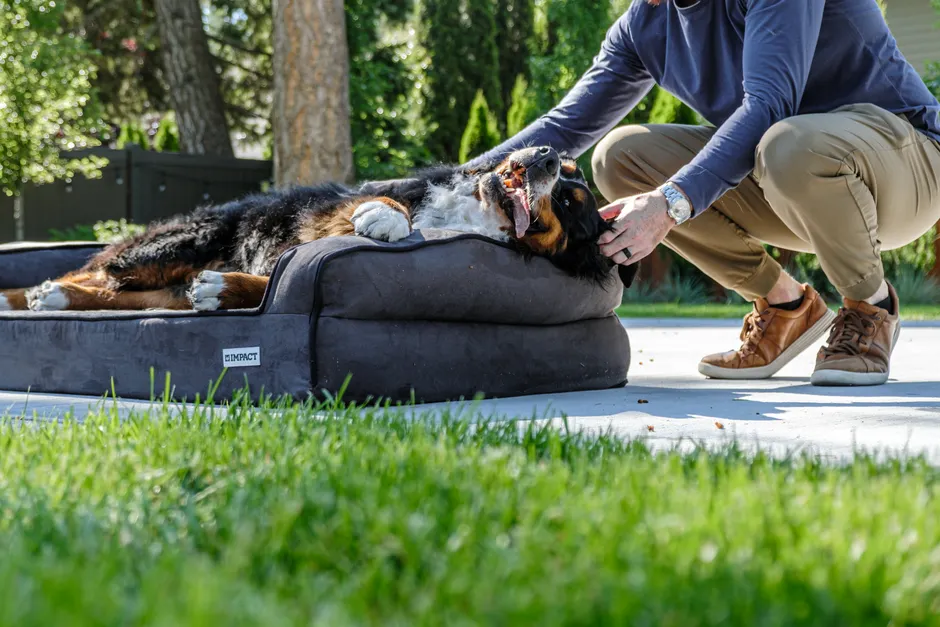
The data is contradictory when it comes to which product category delivers this benefit reliably. Not every bed marketed as “orthopedic” meets a real support threshold, and I want to be direct about that before recommending anything. For readers weighing bedding decisions against other comfort-related purchases, our comparison of calming beds versus orthopedic beds for seniors covers the functional distinction in more depth, since anxiety-reducing bolster beds and true orthopedic support beds solve different problems.
Don’t count on a bed labeled “memory foam” to automatically deliver therapeutic support. Foam density, not the marketing term, determines whether a surface actually redistributes joint pressure or simply compresses flat within a few months of use.
Comparative Breakdown of the Top 5 Orthopedic Dog Beds
I evaluated these picks against four functional criteria that matter for a geriatric Golden: foam density (which governs how long the support lasts under sustained weight), bolster structure (which assists dogs who prop their heads or backs against an edge for joint relief), cooling properties (relevant since Goldens run a thick double coat and older dogs regulate body temperature less efficiently), and waterproof liner quality (a practical necessity given the incidence of age-related incontinence). Below is the comparative breakdown.
| Product | Foam Type | Bolster Support | Cooling / Waterproof | Best For | Price Tier |
|---|---|---|---|---|---|
| Orthopedic Dog Beds Large Sized Dog, XL Dog Couch Bed | High-density foam base | Full 2-sided bolster (couch-style) | Removable, washable cover | Goldens who prop against edges to rise | $$$ |
| Bedsure ComfyFleece Memory Foam Orthopedic Dog Bed | Memory foam layer over support base | Low-profile side bolster | Fleece top, water-resistant liner | Dogs who prefer flat sternal recumbency | $$ |
| INVENHO Fluffy Orthopedic Dog Bed, XL Egg-Crate Style | Egg-crate contour foam | No bolster (flat design) | Breathable, machine washable cover | Warm climates or dogs prone to overheating | $$ |
| Clinical-Grade Rehabilitation Foam Bed (vet rehab clinics) | 5-6 lb/cu ft ILD-rated foam | Optional bolster add-on | Medical-grade waterproof liner | Advanced osteoarthritis or post-surgical recovery | $$$$$ |
| Budget Big-Box Memory Foam Bed (generic retail) | Low-density foam, unlisted ILD rating | Thin decorative bolster | Basic cover, minimal water resistance | Short-term or backup use only | $ |
Among the tested options, the Orthopedic Dog Beds Large Sized Dog, XL Dog Couch Bed stood out for Goldens who use a raised edge to leverage themselves upright, a common compensatory behavior in dogs with hip weakness. The two-sided bolster gives a stable anchor point without requiring the dog to twist the spine, which is a meaningful detail for a breed already prone to lumbosacral stiffness.
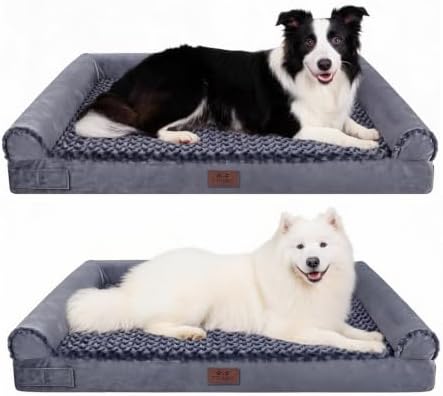
- This large dog bed measures 42″ x 28″ x 7″ (4″ bolstered side) and is ideal for large dogs up to 90 lbs. It comes as a s…
- Crafted for Comfort: Our high-density egg crate foam orthopedic dog bed helps distribute weight evenly, supporting your …
- Soft Velvet and Waterproof Protection: The plush velvet surface features a stylish rose pattern, offering a calming, ant…
For dogs who prefer to lie flat rather than curl into a bolster corner, the Bedsure ComfyFleece Memory Foam Orthopedic Dog Bed is a reasonable mid-tier option. The memory foam layer sits above a firmer support base rather than being the sole structural element, which matters because pure memory foam without a base layer tends to bottom out under a 60 to 80 pound dog within weeks. This construction approach helps the bed hold its supportive shape longer under sustained Golden Retriever body weight.
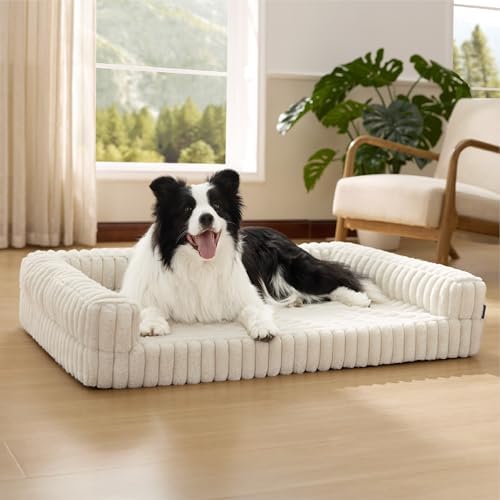
- Orthopedic Memory Foam Support: Experience a perfect combination of two of our signature fabrics. High-density memory fo…
- Enhanced Function & Comfort:Our orthopedic dog sofa is thoughtfully designed with a three-sided bolster providing unmatc…
- Supremely Soft Textures Embodied in Versatile Minimalism:Our spacious and cozy dog bed, crafted with supremely soft faux…
Dogs that run hot, particularly Goldens in warmer climates or those on joint medications that affect thermoregulation, tend to do better on egg-crate contour foam rather than solid memory foam blocks, since the surface allows airflow underneath the dog’s body. The INVENHO Fluffy Orthopedic Dog Beds Large Sized Dog, XL Egg-Crate Style addresses this without sacrificing joint support, making it a sensible budget-friendly option for owners managing a dog with both arthritis and heat sensitivity.

- ORTHOPEDIC SUPPORT: Give your pet the true comfort with this fluffy orthopedic dog bed. Featuring an ultra-soft fluffy f…
- COMFORT AS PRIORITY: Three-sided bolster providing unmatched cushioning for ultimate comfort and security and providing …
- SUPERIOR SOFTNESS SLEEP SURFACE: This calming long plush orthopedic dog bed surrounding your pet in soft, supportive com…
Behavioral Observation Exercise: Scoring Rest Quality Change
Rather than relying on subjective impressions of whether a new bed “seems to help,” I recommend a structured two-week owner scoring log. This removes confirmation bias and gives you actual behavioral data to bring to your veterinarian if joint disease is progressing. Track these four metrics nightly:
- Sternal recumbency frequency: Count how many times per evening your dog settles into the full chest-down curled position versus a stiff side-lying sprawl. An increase in sternal resting is a strong positive indicator.
- Sleep latency: Time from lying down to visible stillness (eyes closed, breathing slowed). Shorter latency suggests reduced discomfort-driven restlessness.
- Position changes per hour: Frequent shifting overnight often reflects pressure point discomfort rather than normal sleep cycling.
- Reluctance to rise: Score on a 1 to 5 scale how much vocalization, hesitation, or stiffness accompanies standing up after rest.
Log these for one week on the old bedding, then one week after switching to a properly rated orthopedic surface. A meaningful improvement (reduced position changes, quicker sleep latency, easier rising) is objective evidence the bed is doing its job, not just a placebo effect on the owner’s part.
The Foam Density Myth: Why “Memory Foam” Alone Means Nothing
This is the point where I need to push back on marketing language directly. The label “memory foam” on a product listing tells you almost nothing about whether that bed will actually support an aging joint. What matters is the indentation load deflection (ILD) rating and the density of the foam, measured in pounds per cubic foot. Veterinary rehabilitation guidance generally points to a density range of 5 to 6 pounds per cubic foot as the threshold where foam reliably resists compression under a large breed’s sustained body weight without collapsing flat.

Most budget bedding sold under the “orthopedic” label does not disclose this figure at all, which should be treated as a red flag rather than an oversight. A bed that compresses to a thin pancake within two months was never providing meaningful joint support, regardless of what the packaging claimed. This is precisely the situation many owners misdiagnose as their senior dog “just liking the floor better,” when in fact the dog has correctly identified that the collapsed bed offers no advantage over hardwood.
If your Golden Retriever is showing broader signs of age-related decline beyond joint stiffness, it is worth reviewing the fuller picture of what ownership at this life stage involves. Our breakdown of senior Golden Retriever disadvantages and the real costs pet parents should expect covers this in practical financial and care terms, since bedding is one piece of a larger geriatric care budget.
According to the American Veterinary Medical Association, regular monitoring of mobility and comfort at home is one of the most reliable ways owners can catch early signs of joint disease before it becomes severe, which reinforces why a structured observation log matters more than assumptions.
Choosing Between Orthopedic Dog Beds With Confidence
When you are comparing orthopedic dog beds for a senior Golden, prioritize disclosed foam density over brand reputation or review count. A mid-tier product with a published ILD rating and a firm support base will outperform a premium-priced bed that relies on vague comfort language. Bolster style should match your dog’s actual resting behavior rather than what looks appealing in product photos. And always factor in a washable, water-resistant liner, since incontinence and joint mobility issues frequently co-occur in geriatric dogs.
Owners considering additional low-impact activity for arthritic Goldens sometimes ask about swimming as a joint-friendly exercise option. If that applies to your situation, our guide on how cold is too cold for senior dogs to swim is a useful companion resource, since temperature regulation matters just as much in water as it does on a bed surface.
How do I know if my senior Golden Retriever actually needs orthopedic dog beds instead of a regular bed?
Watch for reduced sternal recumbency, frequent overnight position shifts, stiffness or vocalization when rising, and reluctance to lie down fully on hard flooring. These behavioral signs, combined with a veterinary exam, are stronger indicators than age alone. Orthopedic dog beds are most beneficial once these compensatory behaviors appear, since they signal existing joint discomfort rather than preventive need.
Is a memory foam dog bed always better than a standard cushioned bed for joint pain?
Not automatically. A memory foam dog bed only provides therapeutic pressure relief if the foam density falls within a clinically supported range, generally 5 to 6 pounds per cubic foot. Low-density memory foam sold at budget price points often compresses within weeks and stops distributing weight effectively, which negates the intended orthopedic benefit.
How often should a senior dog bed be replaced?
Most quality orthopedic dog beds maintain adequate support for 12 to 18 months under a large breed’s regular use before foam compression reduces their effectiveness. Check the bed periodically by pressing your palm into the center; if it bottoms out and touches the floor easily, it has lost its supportive function regardless of how new it looks on the surface.
Can a good bed alone manage arthritis symptoms in senior dogs?
No. Orthopedic dog beds are one component of a broader management plan that should include veterinary-guided pain management, appropriate exercise modification, weight control, and in many cases joint supplements. Bedding reduces mechanical pressure during rest, but it does not address the underlying degenerative joint changes driving the discomfort.