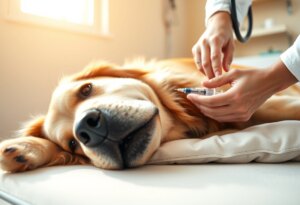


Pet cancer insurance only pays out the way you expect if you understand the actuarial math behind it, and for Golden Retrievers, that math is unusually unforgiving. This breed carries one of the highest lifetime cancer risks of any dog studied, which means the policy you pick in year two or three functionally determines whether you have real financial cover when the diagnosis actually arrives. Most owners shop on premium price. That is the wrong variable. The right variable is risk-adjusted coverage design, and that requires reading the contract like a behavioral scientist reads a data set: looking past the marketing copy to what the exclusions actually do.
The Actuarial Reality: Why Goldens Are a Different Risk Category
The Morris Animal Foundation’s Golden Retriever Lifetime Study, one of the largest prospective canine health cohorts ever assembled, found that cancer accounts for approximately 61% of deaths in the breed. That figure is not a scare statistic. It is a baseline probability that should shape how you evaluate pet cancer insurance from day one, rather than something you think about only after a lump shows up on a routine exam. Compare that number to the general canine population, where cancer mortality runs closer to 25-30% depending on the study population, and the gap tells you something important: insurance underwriters know this too. Premiums for Golden Retrievers, especially past age six, are priced with that 61% figure baked in, whether the insurer says so explicitly or not.
From a behavioral and physiological standpoint, this risk profile is tied to the breed’s genetic predisposition toward hemangiosarcoma, lymphoma, and mast cell tumors, conditions with variable early presentation. Some dogs show subtle appetite changes or lethargy weeks before a diagnostic workup confirms anything. Owners frequently misread these as normal aging behavior, which delays the vet visit and, in an unfortunate number of cases, delays it past the point where a new insurance policy would have covered the condition as anything other than pre-existing. This is why risk assessment, not premium cost, has to be the primary variable in plan selection for this breed. A cheaper plan that excludes your dog’s actual risk category is not a bargain. It is a placebo.
Decoding the Fine Print: Where Coverage Quietly Disappears
Every accident-illness policy contains a waiting period, typically running 14 to 30 days after enrollment before illness coverage activates. That window exists to prevent owners from purchasing a policy the week after finding a mass. It also means that a dog enrolled reactively, after a symptom is already noticed, has almost no functional chance of getting that specific condition covered. The claim gets filed, the adjuster pulls vet records, and the diagnosis date falls inside the exclusion window. Denied.
Bilateral exclusion clauses are the second trap, and they are poorly understood by most owners. If a dog is diagnosed with a mast cell tumor on one leg before or shortly after enrollment, some insurers will retroactively exclude any future tumor on the contralateral limb, treating it as the “same condition” rather than a new occurrence. This clause exists because certain cancers, along with orthopedic conditions like cruciate tears, have a documented tendency to recur bilaterally. The data supporting this pattern is real, but the practical effect is that owners believe they have cancer coverage when they actually have a single-incident payout with permanent related exclusions layered on top.

Pre-existing condition riders compound this. Any clinical sign documented before enrollment, even a vague “monitor this lymph node” note in a chart, can be enough for an insurer to classify a subsequent lymphoma diagnosis as pre-existing. This is precisely why timing matters more than most owners assume. If you are also weighing whether coverage makes sense at all for an aging dog, our breakdown on whether pet insurance is worth it for a senior dog walks through the cost-benefit math in more detail. And if the breed’s higher lifetime costs are giving you pause before you even get to insurance, it is worth reading through the costly truths about Golden Retriever ownership that vets see repeatedly in practice.
Comparative Breakdown: Accident-Illness, Wellness Add-Ons, and Cancer Riders
Not all coverage structures function the same way once a cancer diagnosis is on the table. The table below breaks down the three common structural types by reimbursement percentage, annual caps, and deductible design, the three levers that determine your actual out-of-pocket exposure during oncology treatment.
| Plan Type | Reimbursement % | Annual Cap | Deductible Structure | Cancer Coverage Reliability | Price Tier |
|---|---|---|---|---|---|
| Accident-Illness Base Plan | 70-90% | Unlimited to moderate ($10K-$20K equivalent tiers) | Annual, per-policy | High, if enrolled before symptoms appear | $$ |
| Wellness Add-On Rider | Flat-fee schedule, not %-based | Low, fixed per-item caps | None (scheduled benefit) | Low, covers screening only, not treatment | $ |
| Dedicated Cancer/Illness Rider | 80-100% | High or unlimited | Per-condition or annual | Highest, but premium scales sharply with age | $$$$ |
| Self-Funded Health Savings Protocol | 100% (self-paid) | Whatever is saved | None | Depends entirely on savings discipline and timeline | $$$ |
The wellness add-on is the piece most owners misunderstand. It reimburses scheduled preventive items like bloodwork panels and vaccines at a fixed dollar amount regardless of your actual bill. It is not designed to fund chemotherapy, and treating it as a backup cancer plan is a common and costly miscalculation. If your goal is genuine pet cancer insurance protection, the dedicated illness or cancer rider stacked on an accident-illness base is the structure that actually functions that way.
What Claims Data Actually Shows
NAPHIA’s State of the Industry Report places average chemotherapy and oncology claims in the range of $3,000 to $10,000 per treatment course, with hemangiosarcoma and osteosarcoma cases frequently running toward the higher end once surgery, imaging, and follow-up rounds are included. This is the number that should anchor your decision-making, not the monthly premium quote you see on a comparison site.

Here is why reimbursement percentage matters more than premium: a policy advertised at a lower monthly cost but reimbursing at 70% after a high deductible will leave you responsible for a substantially larger share of a $7,000 oncology bill than a slightly pricier plan reimbursing at 90% with a low deductible. Run the math on the actual claim size, not the sticker price of the policy, and the “cheap” plan often turns out to be the more expensive one at the moment you need it.
Owners consistently overweight monthly premium and underweight reimbursement percentage. That is a behavioral bias, not a financial strategy. The policy that costs less per month but reimburses less per claim is a bet you are making against your dog’s own breed statistics, and for a Golden Retriever, that is not a bet the data supports.
For owners actively comparing quotes, our guide to the cheapest senior dog insurance plans with strong low-cost coverage lays out which budget-tier policies still hold up reimbursement-wise for older dogs. Worth reading before you commit to whatever plan a search ad surfaces first.
A Decision Framework: Insurance vs. a Self-Funded Health Savings Protocol
Treat this the way you would treat any structured behavioral assessment: gather the data on your specific dog before choosing a protocol. Here is a case-profile exercise to run for your own aging Golden.
- Step 1: Establish current risk profile. Age, most recent bloodwork, any palpable masses, lymph node status, and breed-specific screening history (splenic ultrasound, for instance, given hemangiosarcoma risk).
- Step 2: Calculate insurability window. If your dog is under age seven with a clean recent exam, enrollment in a dedicated illness or cancer rider now locks in coverage before any exclusionary event occurs. Past age eight, many insurers cap new enrollment or apply steep premium increases, making the math shift toward self-funding.
- Step 3: Model the self-funded alternative. A disciplined pet health savings account, funded monthly at roughly what a premium would cost, only outperforms insurance if the dog does not develop cancer early and the fund has years to accumulate. Given the breed’s 61% cancer mortality rate, this is a genuinely risky bet to make on a Golden.
- Step 4: Reassess annually, not reactively. Don’t wait for a symptom to trigger your insurance shopping. By then, the pre-existing condition clause has already closed that door.
For dogs already carrying a diagnosis, and for owners trying to make sense of treatment pathways after the fact, Everyone’s Guide to Cancer Therapy is a genuinely useful reference for translating oncologist language into decisions you can actually act on, including questions worth asking about treatment costs versus expected quality-of-life gains.

Owners managing a dog through active treatment also end up accumulating a lot of paperwork fast: insurance claim forms, vet invoices, lab results, and treatment logs. Keeping that organized in a dedicated binder with Juvale Clear Vinyl Binder Spine Label Pockets sounds like a small thing, but when you are filing multiple reimbursement claims against annual caps and deductibles, having your documentation labeled and retrievable saves real time during an already stressful stretch.

- Juvale Binder Organization: Effortlessly organize your office documents with Juvale’s binder labels spine and blank whit…
- Versatile Application: Perfectly suited for home offices, small businesses, and students, these binder labels enhance co…
- Durable Vinyl Construction: Crafted from high-quality vinyl, each binder label holder with adhesive backing adheres to v…
Separately, mast cell tumors and certain skin-adjacent growths in senior Goldens sometimes come with secondary skin irritation or mild secondary parasitic involvement that a vet may address topically alongside primary treatment. Products like Ivermectin 1% Cream occasionally come up in these secondary-care conversations, though this should only ever be used under direct veterinary direction, never as a self-directed response to a new mass or lesion. Any new skin growth on a senior dog warrants a vet visit first, not a home remedy.
There is an issue displaying Amazon products. Please contact the administrator to check that.Key Takeaways
- Golden Retrievers face a documented 61% cancer mortality rate, per the Morris Animal Foundation’s Lifetime Study, making early enrollment the single biggest lever an owner controls.
- Waiting periods, bilateral exclusions, and pre-existing condition riders can functionally void coverage for symptoms that were noticed even informally before enrollment.
- Reimbursement percentage and deductible structure matter more to your actual payout than the advertised monthly premium.
- Average oncology claims run $3,000 to $10,000, according to NAPHIA data, a range every plan comparison should be measured against.
- A self-funded savings protocol can work, but only for owners who enroll early and accept the real risk that cancer arrives before the fund matures.
According to the ASPCA’s senior dog care guidelines, regular veterinary screening becomes increasingly critical as dogs age, particularly for breeds with elevated cancer predisposition, reinforcing that early detection and early insurance enrollment work as a pair, not separately.
Frequently Asked Questions
Does pet cancer insurance cover chemotherapy for Golden Retrievers?
Most accident-illness policies with an illness rider do cover chemotherapy, provided the diagnosis occurs after the waiting period and was not documented as a pre-existing condition. Coverage details vary by insurer, so confirming the specific oncology benefit before enrolling matters more than assuming standard coverage applies.
Why does pet cancer insurance deny claims for lymphoma or mast cell tumors?
Denials typically happen when clinical signs, even vague ones noted in a chart, were documented before the policy’s effective date or during the waiting period. Insurers classify these as pre-existing conditions regardless of when the formal diagnosis was confirmed, which is why early enrollment matters so much for this breed.
Is a dedicated cancer rider worth the extra cost over a standard plan?
For a breed with a 61% cancer mortality rate, a dedicated rider is generally worth the added premium if enrolled before age seven. The higher reimbursement percentage and higher annual cap typically offset the additional monthly cost within a single oncology treatment course.
Should I self-fund instead of buying pet cancer insurance?
Self-funding can work if you start early and your dog remains healthy long enough for the account to grow past the $3,000 to $10,000 range typical oncology claims fall into. Given the breed’s documented risk, most behaviorists and financial advisors recommend pairing a modest savings buffer with insurance rather than relying on savings alone.