
A puppy companion sounds like the perfect gift for an aging dog until you actually watch it play out in real life. I’ve had people call me at Woody’s Place convinced that a bouncy new puppy is exactly what their gray-muzzled dog needs to “perk back up.” And sometimes, yes, it works beautifully. But more often, that puppy companion idea is really about us. It’s about our guilt over long work hours, or our fear of the quiet house that’s coming. So before you bring home a second dog, ask yourself honestly: is this for your senior dog, or is this for you?
That’s not a dig. It’s just the truth, and truth is where good decisions start.
Does a Companion Dog Actually Make an Aging Dog Happier?
Here’s what the science actually says, and it’s more nuanced than the “dogs need a friend” myth suggests. Dogs are, without question, a social species. The ASPCA has documented that appropriate social contact with other dogs can measurably lower a dog’s cortisol, the stress hormone that builds up when a dog is anxious, isolated, or under-stimulated. Lower cortisol generally means a calmer, more settled dog. That’s real, and it matters, especially for senior dogs who spend more hours alone while we’re at work or running errands.
A 2020 study published in Scientific Reports went even further, finding that dogs display attachment behaviors toward companion dogs that closely resemble how they attach to their human caregivers. Dogs seek proximity to their canine companions, show distress when separated from them, and settle when reunited. In other words, the bond between two dogs in the same household isn’t just tolerance. It can be a genuine, regulating relationship.
So yes, a companion dog can be a real source of joy and stability for a senior dog. But “can be” is doing a lot of work in that sentence. It depends entirely on the dog in front of you, not the dog in the study.
Every senior dog who’s come through our gates has taught me the same lesson: you cannot love a dog into being okay with something their body or spirit isn’t ready for. You have to actually look at *this* dog, not the idea of what a dog “should” want.
Why a Rowdy Puppy Can Backfire on an Older Dog
This is where I get direct, because I’ve seen this go sideways too many times. A young, exuberant puppy is a lot. Puppies pounce, they nip, they zoom around the living room at 6 a.m., and they have zero concept of personal space. For a healthy adult dog, that chaos might be fun. For a senior dog with arthritis, mobility issues, or early dog sibling friction from cognitive decline, that same chaos is exhausting at best and frightening at worst.
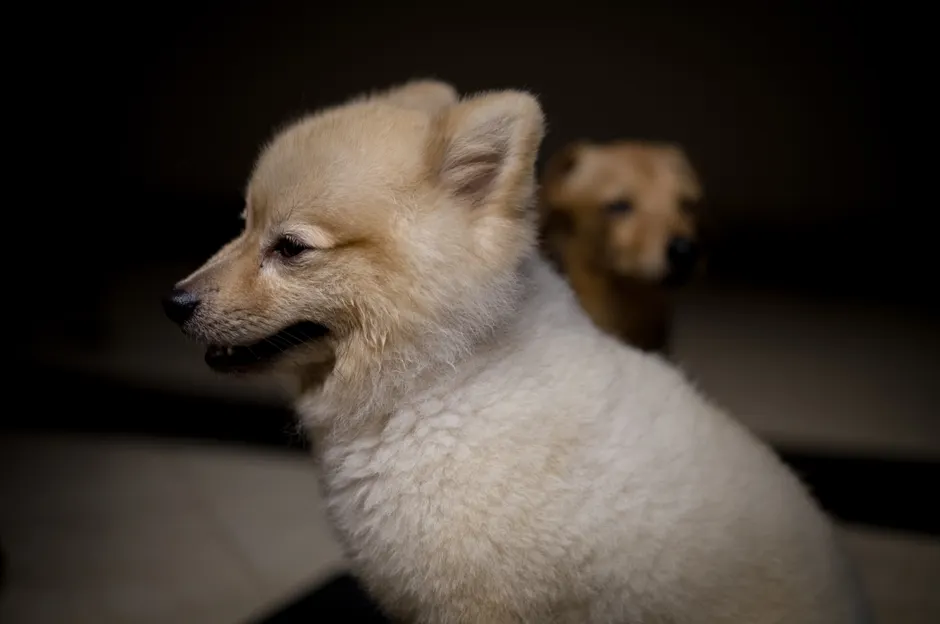
Think about it from your old dog’s body. Joints that ache when they stand up. Eyesight that’s dimmer than it used to be. A startle reflex that’s a little slower, which means a puppy barreling toward them can genuinely catch them off guard. Honestly, who thinks a senior dog with declining hips needs a 10-week-old puppy climbing on their back? Nobody does that on purpose. But it happens because we imagine the companionship without imagining the logistics.
Temperament matters just as much as age. A senior dog who was always a little reserved, a little independent, isn’t going to suddenly become a social butterfly because a puppy companion moves in. If anything, forcing that dynamic can create chronic low-grade stress, the kind that doesn’t show up as growling or snapping, just as a quiet dog who stops relaxing fully, who hovers near the door, who stops sleeping as deeply. That’s not enrichment. That’s a burden dressed up as a gift.
If you’re already juggling other big financial decisions around your aging dog’s care, like whether pet insurance still makes sense at this stage, it’s worth reading through our breakdown of ASPCA vs Pumpkin vs Spot: Senior Dog Insurance Compared before adding a second dog’s expenses into the mix.
Setting the Stage: Comfort Tools That Ease the Transition
One thing that genuinely helps during this adjustment period, whether you decide on a live puppy or not, is giving your senior dog something soft and steady nearby while routines are in flux. Some sanctuary dogs at Woody’s Place have taken real comfort from a plush companion tucked into their bed during a transition. The Auswella 18-Inch Plush Beagle Dog is the kind of soft, realistic stuffed companion that can sit quietly in a senior dog’s bed without demanding anything back. No noise, no chasing, no competition over the food bowl. Just a warm presence.

- 18 inch soft plush Beagle. Expertly designed with authentic beagle markings, floppy ears, sweet expressive eyes, and lif…
- Perfect as a cuddle companion, nursery decoration, bedroom décor accent, collectible plush, or comforting emotional supp…
- Lifelike Beagle with a Cute Curved Tail and Tri Colored. Prodominently Black and White on His Body. Modeled after our be…
It sounds small, but small things matter enormously to an old dog whose world has gotten quieter. *That’s* the depth over noise I keep coming back to.
How to Introduce a Puppy Companion the Right Way
If you’ve weighed all of this honestly and you still believe a puppy companion is right for your senior dog, then do it slowly and with real structure. This isn’t a decision to rush into over a weekend.

- Get vet clearance for your senior dog first. Arthritis, vision loss, hearing decline, and cognitive dysfunction all change how much stimulation and unpredictability a dog can safely tolerate. Your vet needs to weigh in before a puppy comes home.
- Introduce on neutral territory. A shared yard or a quiet park, never straight into your senior dog’s home turf where they may feel the need to defend their space.
- Keep the first meetings short. Ten to fifteen minutes, leashed, calm voices, no forced interaction.
- Give your senior dog a separate resting space. A room, a crate, or simply their own bed in a quiet corner where the puppy isn’t allowed to follow. Every dog needs an escape hatch.
- Manage resources deliberately. Separate food bowls, separate toys at first, and never leave high-value items like bones unsupervised between them.
- Watch body language, not just behavior. Stiffness, lip licking, whale eye, or a senior dog who won’t come out of their room are all signs to slow down further.
Redirecting a puppy’s boundless energy away from your senior dog is honestly half the battle. A Fuzzwoof Remote Controlled Heartbeat Dog Toy with its 8 sounds can genuinely absorb a puppy’s attention and burn off that early chaos without your older dog ever needing to be the one entertaining them.

- WIRELESS REMOTE CONTROL – Easily control the heartbeat simulation and cycle through all 8 sounds. Perfect for adapting t…
- PUPPY SLEEP AID & ANXIETY SOLUTION – This puppy heartbeat toy sleep aid uses multi-sensory technology to ease crate trai…
- RECHARGEABLE, DURABLE & SAFE FOR DAILY USE – Features a long-lasting rechargeable polymer lithium battery (3.7V, Model: …
If your household includes small children who are also excited about a new puppy, it helps enormously to give the kids their own outlet too, so the actual puppy isn’t being overhandled by little hands while your senior dog watches from the sidelines feeling displaced. A set like the Muiteiur 7-Piece Plush Puppy Toy Set gives kids something soft and appropriate to nurture and cuddle, which keeps the real, living dogs from getting overwhelmed by well-meaning enthusiasm.
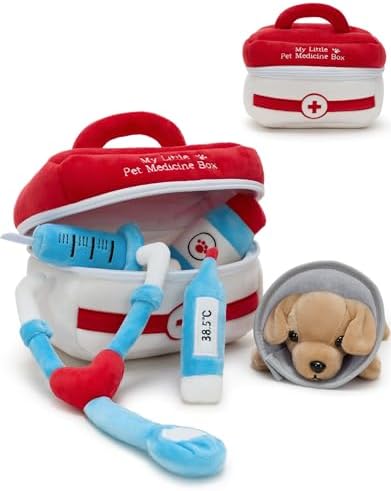
- 7-Piece Plush Puppy Toy Set – Includes a puppy plush, zippered plush pet care bag, toy stethoscope, pretend syringe, plu…
- Soft Stuffed Animal Play for Little Hands – Made with soft plush fabric and lightweight pieces sized for toddlers. The p…
- Pretend Pet Care Role Play – Children can check the puppy, use the toy stethoscope, pretend to give care with the soft s…
Comparing Comfort and Companion Options for the Transition
| Product | Best For | Key Feature | Price Tier |
|---|---|---|---|
| Auswella 18-Inch Plush Beagle Dog | Senior dogs adjusting to household changes | Soft, realistic, no-demand presence for bedtime comfort | $$ |
| Fuzzwoof Remote Controlled Heartbeat Dog Toy | Redirecting a new puppy’s energy | 8 sounds, remote control, keeps puppies engaged independently | $$$ |
| Muiteiur 7-Piece Plush Puppy Toy Set | Households with young kids and a new puppy | 7-piece set gives children their own nurturing outlet | $$ |
When the Honest Answer Is No
I want to say this plainly, because I don’t think enough people do: sometimes the kindest answer is no. Some senior dogs are simply happiest as the only dog in the house. That’s not a failure of love. That’s not you being selfish or “giving up” on enrichment. That’s you actually knowing your dog, which is the whole point of loving one this long. An only dog who gets your full attention, your slow evening walks, your quiet couch time, and your undivided presence is not missing out on anything. A puppy companion isn’t a requirement for a good life. It’s one option among many, and it’s only the right one when the dog in front of you actually wants it too.
If you’re weighing this decision because you’re also thinking ahead to future dogs down the road, maybe even a purebred puppy someday, it’s worth getting familiar with what responsible breeding actually looks like. Our guide on 5 Health Tests to Demand From a Golden Retriever Breeder is a good place to start, and if you’re drawn to a specific coat type, our piece on the English Cream Golden Retriever: Worth the Price? lays out what to expect before you commit.
Some of the calmest, most content dogs I’ve cared for at the sanctuary have been solo dogs who simply got to be *seen*, fully, by one devoted human. That kind of quiet, intentional connection can outweigh almost anything a second dog could offer. A second dog isn’t a cure for loneliness if the loneliness is actually coming from somewhere else, like not enough one-on-one time, not enough mental stimulation, or grief over a dog who passed. Figure out what’s really underneath the impulse before you act on it.
Key Takeaways
- Dogs are social animals, and appropriate companionship can lower stress hormones and provide real emotional attachment benefits.
- A puppy companion can exhaust or overwhelm a senior dog dealing with arthritis, vision loss, or cognitive decline.
- Vet clearance, neutral-territory introductions, and separate resting spaces are non-negotiable steps before bringing home a new dog.
- Sometimes the most loving choice is keeping your senior dog as an only dog, and that decision deserves just as much respect as choosing a companion dog.
Frequently Asked Questions
Will a puppy companion make my senior dog happier?
It depends heavily on your individual dog’s temperament, health, and energy level. Some senior dogs genuinely thrive with a puppy companion nearby, while others find the added chaos stressful rather than enriching. Watching your dog’s actual behavior matters far more than general advice.
What’s the best age gap between a senior dog and a new puppy?
There’s no universal rule, but a large age gap often means a large energy gap too. A calmer, slightly older puppy or a mellow adolescent dog is frequently easier on a senior dog’s joints and nerves than a highly energetic young puppy.
How do I know if my senior dog is stressed by a new dog sibling?
Watch for subtle signs like lip licking, whale eye, pacing, hiding, appetite changes, or reluctance to come out of their resting space. These quiet signals often show up before any growling or snapping does.
Is it wrong to keep my senior dog as an only dog?
Not at all. Many senior dogs live full, joyful lives as the only dog in the household, especially when they receive consistent one-on-one attention. A companion dog is one option among many, not a requirement for a happy life.
Whatever you decide, decide it for your dog, not around them. That’s the whole job, really. Tell your pup I said Hi! — Dawn