
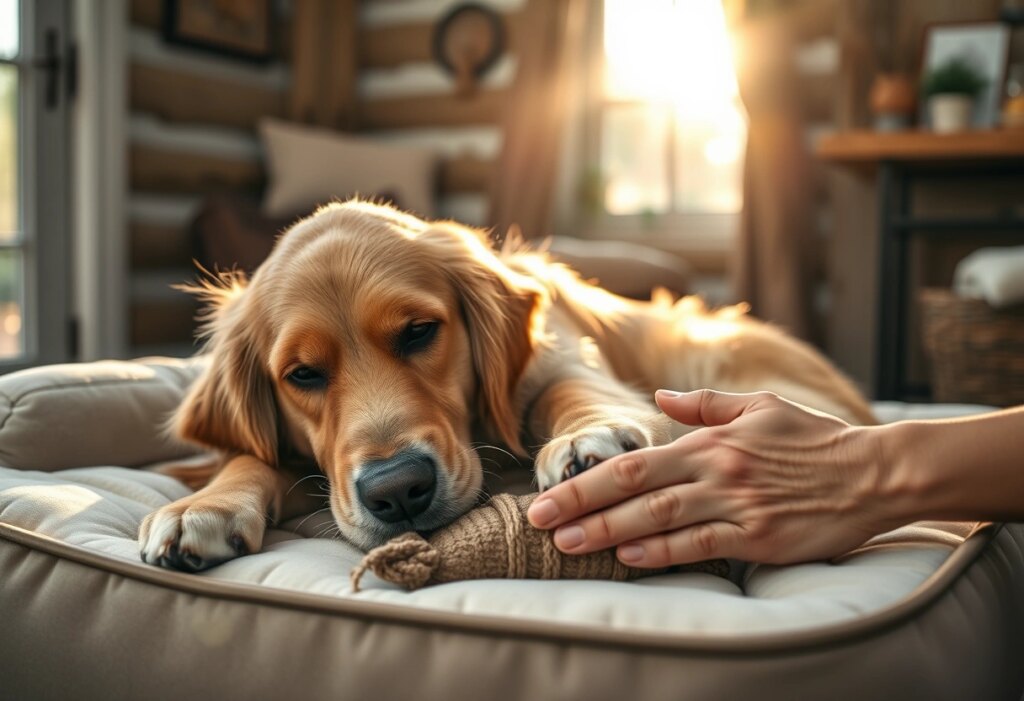

Enrichment toys for senior dogs aren’t a luxury you add once the walks get shorter and the naps get longer. They’re one of the last, best ways left to say “I see you, and you still matter” to an old dog whose body is slowing down but whose heart hasn’t gone anywhere. I’ve sat on the floor of the sanctuary more evenings than I can count, watching a gray-muzzled old soul nose through a snuffle mat like it’s the most important job in the world, and honestly, it kind of is.
Here’s what I’ve learned after years of caring for aging dogs who couldn’t chase a ball anymore but still lit up at the right kind of play: enrichment doesn’t stop mattering when the joints get creaky. It changes shape. And if you’re willing to change with it, the bond you build in these years can be some of the deepest you’ll ever have with your dog.
Why Enrichment Matters More, Not Less, When Your Golden Retriever Gets Older
There’s this myth floating around that once a dog hits their senior years, they just want to sleep and be left alone. Some days, sure. But most of the old dogs I’ve loved still wanted a reason to get up. They still wanted a job, a puzzle, a little bit of purpose in their day. Their body slowed down. Their mind didn’t stop asking for connection.
That’s the heart of why enrichment toys for senior dogs deserve a real spot in your Golden’s daily routine, not just an afterthought. A tired old body still has a curious brain living inside it. When you ignore that, you’re not protecting your dog from overstimulation, you’re quietly starving a part of them that still wants to engage with the world.
I think about the Goldens who come through senior placement and rescue situations after their people decided they were “too much work” once the gray started showing. Honestly, who thinks like that?? A slower dog isn’t a burden. A slower dog is asking you to meet them where they are. If you’re weighing what the later years of this breed actually look like day to day, our piece on senior Golden Retriever disadvantages and the real costs to expect lays it out honestly, because going in with clear eyes is part of loving them well.
The Science Behind the Bond: What Happens When You Play With Your Old Dog
This isn’t just a feeling I have from years of sanctuary life, though the feeling is real too. Researchers at the Center for Canine Cognition at Duke University have studied how interactive engagement between dogs and their people triggers oxytocin release in both species. That’s the same hormone that floods a mother’s system when she’s bonding with her newborn. When you and your dog play together with intention, you’re both getting a hit of the chemical that says “this being is safe, this being is mine to love.”
What gets me is that this effect doesn’t fade with age. A senior dog’s brain can still light up with that same oxytocin response during a slow, gentle scent game or a soft tug session. The body ages. The capacity for connection doesn’t. That’s worth sitting with for a second.
Play in the senior years isn’t about performance anymore. It’s not about how fast, how far, how impressive. It’s about presence. It’s two creatures choosing to be fully with each other for ten quiet minutes, and that choice is enough.
According to the American Kennel Club, scent-based enrichment activities have also been shown to lower cortisol and reduce anxiety behaviors in aging dogs, which lines up with everything I’ve watched happen on our sanctuary floors. A nervous old dog settles the second their nose finds a job to do.
Toy Pick #1: Snuffle Mats for Gentle, Joint-Safe Scent Work
If I had to recommend one single enrichment tool for a graying Golden with stiff hips, it would be a snuffle mat. No jumping. No running. Just nose-down, tail-slow investigation of hidden kibble tucked into fleece strips. It’s mentally rich and physically gentle, which is exactly the combination an aging body needs.
Watching an old dog work a snuffle mat is watching a dog fully absorbed in the present moment. No worry about the stairs later, no ache in the shoulders, just scent and curiosity and the quiet satisfaction of finding the treat. I’ve used these with dogs who’d lost most of their mobility and still had that spark come alive in their eyes.
Toy Pick #2: Slow-Release Puzzle Feeders
Mealtime can become one of the richest enrichment opportunities of the day if you let it. A slow-release puzzle feeder turns “eating” into “problem solving,” and for a senior dog, that mental workout is every bit as valuable as physical exercise used to be.
Pair a puzzle feeder with a properly angled bowl setup and you’re also supporting their neck and spine during meals, which matters a lot more once arthritis sets in. This tilted feeding stand designed for raised, angled bowls is a small, budget-friendly addition that makes a real difference for dogs who struggle to lower their heads comfortably to a flat dish on the floor.

- 【package includes】This elevated dog bowl set includes a three-height adjustable dog stand, an 8.5 x 16.5-inch non-slip m…
- 【15° Tilted Elevated Bowls】Veterinary-designed dog bowls elevated feature a 15° tilted feeding platform that aligns with…
- 【3-Height Adjustable Stand】Customize your raised dog bowl to 3 exact heights (4.9″/8.7″/12.4″)! This adjustable elevated…
The AKC Canine Health Foundation has noted that this kind of low-impact scent and food-based enrichment can meaningfully reduce anxiety-related cortisol levels in aging dogs, and I believe it, because I’ve watched restless old dogs settle into a calm, focused rhythm the second there’s a puzzle in front of them.
Toy Pick #3: Soft Plush Tug Toys for Low-Impact Bonding Play
Tug doesn’t have to mean a wrestling match. With a senior Golden, it can be the gentlest version of that game, a soft plush toy, a light back-and-forth, your hand steady and slow. It’s less about winning and more about the rhythm of it, the shared motion, the eye contact.
I’ve had old dogs who couldn’t walk more than a few yards still perk up for a slow tug session on the bed. It’s low impact on the joints and high impact on the heart. That’s the trade you’re always looking for in these years.
Toy Pick #4: Textured Lick Mats for Calming Sensory Engagement
Licking is a naturally soothing behavior for dogs, and a textured lick mat spread with a thin layer of something safe and vet-approved can turn anxious energy into calm focus in minutes. I keep a few of these around the sanctuary for dogs who struggle with sundowning or restlessness in the evening hours, and they work more often than not.
This is also a lovely option for dogs going through a specialized diet for cancer-prone Golden Retrievers, since you can adapt what goes on the mat to fit whatever nutritional plan your vet has recommended. It keeps the ritual of enrichment intact even when the ingredients have to change.

Toy Pick #5: Adaptive Interactive Toys for Reduced Mobility
Not every enrichment toy needs to be quiet and slow. Some of the sweetest moments I’ve witnessed came from old dogs reacting to a toy that moved or made sound on its own, no chasing required. A toy like the Fuzzwoof remote controlled heartbeat toy with multiple sound settings can trigger that old prey-drive curiosity without asking a stiff body to sprint across the yard.

- 【Interactive Lick & Slow Feeding】 This dog bowl slow feeder combines a rolling ball and textured surface to turn wet mea…
- 【Dog Enrichment Toys for Mealtime】 Designed for dogs that need focused indoor activities, this bowl functions as enrichm…
- 【Splash-Resistant Dog Food Bowl】 The ball-and-grid structure helps contain wet food and liquid toppings while limiting s…
For dogs who still have decent mobility but tire quickly, a long-lasting frozen or treat-filled toy gives them something to work at on their own timeline. The WOOF Party Pupsicle interactive long-lasting toy lets a dog set their own pace entirely, which is exactly the kind of self-directed enrichment that respects an aging body.

- Every Dog Deserves to Party: Celebrate with the Party Pupsicle, the perfect dog gift for long-lasting fun. Every Pupsicl…
- Easy to Fill and Clean: Filling dog enrichment toys doesn’t need to be messy! The Party Pupsicle opens easily for spill-…
- Durable and Safe Dog Toy: Crafted from natural rubber, the Party Pupsicle dog puzzle toy is built to withstand even the …
Comparing the 5 Best Enrichment Toys for Senior Golden Retrievers
Here’s a quick side-by-side of the picks above, so you can decide what fits your dog’s mobility level and your household’s budget. Every one of these qualifies as one of the more thoughtful interactive dog toys you can bring into a senior dog’s routine, and several double as excellent senior dog puzzle toys or low impact dog toys depending on how you use them.
| Enrichment Toy | Best For | Mobility Impact | Price Tier |
|---|---|---|---|
| Snuffle Mat | Anxious or arthritic dogs needing calm scent work | Very Low | $$ |
| Slow-Release Puzzle Feeder | Mealtime enrichment, slower eaters | Low | $$ |
| Tilted Feeding Stand | Dogs with neck or spine discomfort at mealtime | Low | $ |
| Soft Plush Tug Toy | Gentle bonding play, one-on-one connection | Low to Moderate | $ |
| Textured Lick Mat | Evening restlessness, calming sensory play | Very Low | $ |
| Fuzzwoof Heartbeat Toy | Dogs who still enjoy chase instinct without running | Moderate | $$$ |
| WOOF Party Pupsicle | Self-paced independent enrichment | Low | $$ |
Turning Playtime Into a Sacred Ritual, Not a Task on the List
I want to say something plainly: the toy is never really the point. The toy is just the door. What matters is what happens once you walk through it together.
Reading your senior dog’s energy is a skill you build over time, not something you’re born knowing. Some days, your Golden wants ten minutes of gentle tug. Other days, they just want to lie next to the snuffle mat and watch you fill it, content just to be near you while you work. Both of those are connection. Neither one is failure.
Here’s how I try to hold this ritual with the old souls in my care:
- Start every session by simply sitting near your dog first, before introducing any toy at all
- Watch their ears, their tail, their breathing rate before deciding what kind of play fits the moment
- Let sessions be short. Five honest minutes beats twenty forced ones every time
- Never push a game your dog visibly isn’t in the mood for that day
- End with stillness. A hand resting on their side. No agenda
Enrichment toys for senior dogs work best when they’re treated as an invitation, not an obligation. You’re not trying to tire your dog out anymore. You’re trying to be with them, fully, in whatever capacity that day allows.
If you’re still building out your household and thinking about how a slower senior Golden fits alongside other pets or a smaller living space, our guide to the best medium-sized family dogs for small spaces might help you think through what balance looks like for your family as a whole.
Presence Over Performance: The Real Reward of Senior Enrichment
I think what I’ve learned most clearly from years of sanctuary life is this: an old dog doesn’t need you to entertain them. They need you to *show up*. The enrichment toys for senior dogs that matter most aren’t the flashiest ones on the shelf, they’re the ones that create a reason for you to sit on the floor together, unhurried, for however long that lasts.
Your Golden isn’t measuring these years by how many toys they went through. They’re measuring them by how often you chose to be near. That’s the whole thing. That’s always been the whole thing.
Frequently Asked Questions
Are enrichment toys for senior dogs actually necessary, or just nice to have?
They’re closer to necessary than optional. Mental stimulation helps keep an aging brain engaged and can support cognitive health, while gentle physical engagement helps maintain circulation and mood. Enrichment toys for senior dogs give your Golden a low-impact way to keep participating in life, which matters for their emotional wellbeing just as much as their physical health.
How do I know if a toy is too physically demanding for my aging Golden Retriever?
Watch for hesitation, limping, or your dog quitting a game early after previously enjoying it. Any toy requiring jumping, twisting, or sudden sprinting should generally be avoided for dogs with arthritis or joint disease. Stick to low impact dog toys like snuffle mats, lick mats, and slow puzzle feeders, and always check with your veterinarian if you’re unsure about your dog’s current mobility limits.
What are the best interactive dog toys for a Golden Retriever with cognitive decline?
Simple, predictable interactive dog toys tend to work best for dogs showing signs of cognitive dysfunction. Snuffle mats and slow-release puzzle feeders offer familiar, repeatable challenges without overwhelming a confused dog. Keep sessions short, in a quiet space, and always supervised, since dogs with cognitive decline may lose track of a toy or become disoriented mid-play.
How often should I use senior dog puzzle toys with my aging Golden?
Most senior dog puzzle toys can be worked into daily routines, especially around mealtimes, since that naturally limits the session length and ties enrichment to something your dog already anticipates. A few short sessions a day, five to ten minutes each, tend to be more sustainable and enjoyable than one long session that risks tiring out an older body.
Thank you for sitting with me in these words the way you sit with your old dog on the floor. Every gentle minute you give them counts for more than you know. Tell your pup I said Hi! — Dawn