
Thinking about bringing home a puppy with older dog already settled in your home? I get why. There’s something about watching a creaky old soul light up around a bouncing baby dog that makes your heart swell. But I’ve sat with this question more times than I can count at the sanctuary, and honestly, the answer is rarely a simple yes or no. It depends entirely on the dog looking back at you right now, the one who’s earned rest, not chaos.
Let me say this gently but firmly: your senior dog’s comfort has to come first. Not the puppy’s cuteness, not your timeline, not what worked for your neighbor’s dogs. This is a decision that deserves real thought, not impulse.
Why Pet Parents Consider Adding a Puppy to a Senior Dog’s Home
I understand the pull. Maybe you’re grieving the thought of losing your old dog someday and want a puppy “in the wings” so the transition doesn’t feel so empty. Maybe you think your senior needs a friend to keep him young. Maybe you just fell in love with a litter at the shelter.
Here’s what I’ve learned after years of sanctuary life: a puppy is not a cure for grief, and it’s not a substitute for the individual attention your senior dog deserves right now. Adding a puppy to senior dog households can absolutely work, but it has to be done with eyes wide open to what your old dog is physically and emotionally carrying.
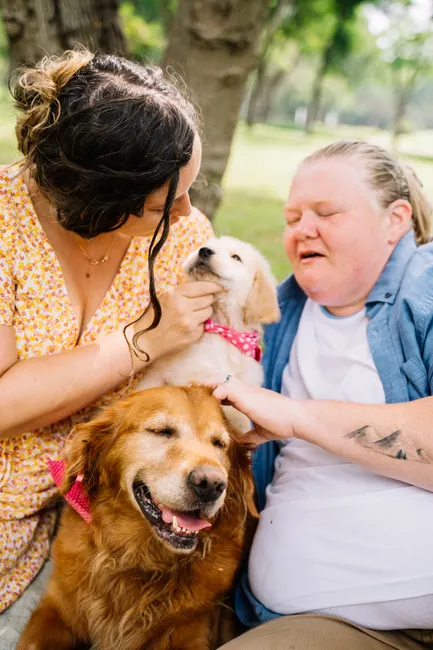
Ask yourself honestly: is my senior dog mobile enough to escape unwanted attention? Does he have chronic pain that flares under stress? Is she already showing signs of cognitive decline? These aren’t reasons to automatically say no. They’re the starting point for a real conversation with yourself about timing.
Bringing a puppy into a senior dog’s world isn’t about whether you *can* do it. It’s about whether your old dog has the reserves, physically and emotionally, to handle it with dignity. That’s the only question that matters.
The Case FOR a New Puppy Senior Dog Introduction
I won’t pretend there’s no upside here, because there genuinely can be one. Research from the AKC Canine Health Foundation on canine cognitive dysfunction suggests that mental stimulation and social engagement can help slow cognitive decline in aging dogs. A well-managed AKC Canine Health Foundation study on cognitive aging points to enrichment, novelty, and social interaction as protective factors for the brain. A gentle, appropriately paced new puppy senior dog introduction can give an older dog a reason to engage with the world again. I’ve watched it happen at the sanctuary. A dog who’d stopped playing years ago suddenly perks up watching a puppy tumble across the yard. Something old in them remembers joy. Some real potential benefits:
- Mental stimulation from novel social interaction, which may support cognitive health
- Motivation to move more, which can gently support joint mobility (with vet guidance)
- A sense of purpose or renewed playfulness in some senior dogs
- Companionship that can ease anxiety in social, pack-oriented breeds
But notice I keep saying “can” and “some.” This isn’t universal. It depends entirely on your individual dog’s temperament, health status, and history.
The Case AGAINST a Multi-Dog Household Senior Care Situation
Now here’s where I have to be honest with you, even if it’s not what you want to hear. Veterinary behaviorists and organizations like the ASPCA note that multi-dog household senior care situations can create real physiological stress for older dogs, especially those already managing arthritis or canine cognitive dysfunction (CCD). A puppy’s relentless energy, the nipping, the invading of personal space, the constant motion, can elevate cortisol levels in a senior dog who’s used to quiet and predictability. According to ASPCA behavioral guidance on multi-pet households, stress from an incompatible new addition can manifest as:

- Increased irritability or snapping, even in previously easygoing dogs
- Withdrawal, hiding, or refusal to eat
- Flare-ups in arthritis pain from overexertion trying to avoid a puppy
- Disrupted sleep cycles, which is especially hard on dogs with CCD
- Resource guarding behaviors that weren’t present before
This is the part nobody wants to talk about at the shelter counter when they’re falling in love with a litter. A senior dog who spends his golden years tense, exhausted, and hiding from a puppy isn’t living a better life. He’s just enduring one. And if you’re already noticing behavioral shifts like nighttime barking or restlessness in your older dog, adding more stimulation to the household could make things measurably harder before it gets better. Honestly, who thinks a stressed, arthritic fourteen-year-old needs a toddler-energy roommate without a real plan in place?? This is a sacred trust you have with the dog who’s been by your side. Don’t take it lightly.
What to Buy First: Setting Up for Success
If you’ve weighed all of this and decided to move forward, please, please set up the environment before the puppy comes home. Preparation is everything here. It’s the difference between chaos and a household where both dogs can decompress.
Decompression Zones and Separate Resting Spaces
Every senior dog needs a place that is entirely theirs. No exceptions, no puppy access. Baby gates sectioning off a quiet room work wonders here, giving your older dog somewhere to retreat when the puppy energy gets to be too much. Inside that space, invest in a truly supportive bed. Something like the Veehoo Orthopedic Memory Foam Dog Bed for Senior Dogs gives arthritic joints real cushioning and helps your old dog sleep deeply, away from the chaos, even when a puppy is bouncing around the house. This isn’t a luxury. It’s a mid-tier investment in your dog’s physical recovery time.

- 7″ Orthopedic Relief for Aching Joints: Give your senior companion or large breed the pain-free rest they deserve. Our t…
- Sprawled-Out Freedom for Large Breeds & Seniors: Our generously sized large dog bed 52″L x 36″W x 7″Th offers ample spac…
- Luxurious Plush Fur for Deep Healing Sleep: Imagine your cherished dog sinking into cloud-like comfort. The ultra-soft f…
Elevated and Separate Feeding Stations
Resource guarding stress is one of the most common issues I see in puppy with older dog households, and it’s almost entirely preventable with the right setup. Feed them in separate rooms or with real physical distance between bowls. If your senior struggles to bend for meals due to arthritis, an elevated feeding station takes pressure off the neck and joints while also creating a clear physical boundary the puppy learns to respect. This one change, feeding separately, has saved more sanctuary relationships than almost anything else I’ve implemented. It removes the single biggest trigger for tension between an old dog and a young one.
A Second Orthopedic Bed for a Larger Dog
If your senior dog is a bigger breed, like a Shepherd or a Lab mix, one bed often isn’t enough once a puppy starts sharing space in common rooms. Having a second supportive surface, such as the EHEYCIGA Orthopedic Extra Large Dog Bed, Waterproof, gives your old dog a safe landing spot in the living room too, not just the back bedroom. Waterproof covers are also a genuine blessing for senior dogs managing incontinence, which becomes more common with age.

- MEMORY FOAM: The EHEYCIGA orthopedic dog bed features memory foam and egg crate foam to provide even support and pressur…
- SOFA BED DESIGN: This bolster dog bed is designed with 3-sided bolsters to offer additional support for your pet’s neck …
- WATERPROOF COVER: A waterproof film is positioned between the fleece surface and the bottom fabric, ensuring the dog bed…
Tracking and Supervision Tools
Puppies wander. Puppies get underfoot. And a senior dog trying to navigate around a fast-moving puppy in a busy yard can take a bad fall. A budget-friendly tool like a Smart Pet Tracker for Collar can help you keep tabs on the puppy specifically, especially during that chaotic early phase when recall training hasn’t stuck yet, so your attention stays where it’s needed most: on your senior dog’s safety and comfort.

- Smart Pet Tracker for Collar -ASX
- Precise Tracking: With our state-of-the-art dog tracking collar, you’ll receive instant location updates wherever your p…
Comparison Table: Must-Have Gear for a New Puppy Senior Dog Introduction
| Product | Best For | Key Feature | Price Tier |
|---|---|---|---|
| Veehoo Orthopedic Memory Foam Dog Bed | Senior dogs needing a private decompression zone | Memory foam joint support, easy-entry design | $$$ |
| EHEYCIGA Orthopedic Extra Large Dog Bed | Larger senior breeds sharing common living spaces | Waterproof cover, extra-large orthopedic support | $$$ |
| Smart Pet Tracker for Collar | Monitoring a new puppy’s location and activity | Real-time tracking, lightweight collar attachment | $$ |
Reading Your Senior Dog’s Body Language Before You Commit
Before you bring home a puppy with older dog already in residence, spend real time watching your old dog’s body language around other animals. Take him to visit a friend’s calm puppy first, if you can. Watch his ears, his tail, whether he moves away or leans in. Does he stiffen and hold his breath? Does he try to leave the room? Or does he soften, maybe even wag, showing curiosity instead of dread? Your dog is telling you everything you need to know. You just have to be quiet enough, and humble enough, to listen. I always tell folks at the sanctuary: your old dog doesn’t owe the household a puppy playmate. He’s already given you decades of loyalty. If his body is saying “I’m tired, I hurt, I need peace,” then that’s the answer, full stop. There will be other times, other seasons, when a puppy might fit. But it has never once been the senior dog’s job to accommodate our timeline for getting a new dog. If you do move forward, go slow. Separate spaces for the first several weeks. Supervised, short interactions only. And please, talk to your vet about your senior’s specific health status, especially regarding nutrition changes during this stressful transition. A well-fed, well-supported senior handles change so much better, and resources like our senior dog food guide for older dogs can help you make sure his diet is supporting his body through this adjustment, not working against it.
Frequently Asked Questions
Is it a good idea to get a puppy with an older dog?
It depends entirely on your senior dog’s health, temperament, and stress tolerance. A calm, mobile, socially confident senior may adjust well to a puppy with a slow, structured introduction. A senior dog with arthritis, cognitive dysfunction, or a history of anxiety may struggle significantly. There’s no universal right answer, only what’s right for the individual dog in front of you.
How do I introduce a new puppy to my senior dog safely?
Start with neutral territory, short supervised sessions, and plenty of separate space for your senior dog to retreat to. Use baby gates to create decompression zones, feed the dogs separately, and never force interaction. Watch your senior’s body language closely and end sessions before either dog becomes overwhelmed.
Can a puppy help an older dog’s cognitive decline?
Some research, including work referenced by the AKC Canine Health Foundation, suggests that social engagement and mental stimulation may help slow cognitive decline in aging dogs. However, this benefit only applies when the interaction is low-stress and appropriately paced. A puppy that overwhelms a senior dog can increase stress hormones and potentially worsen symptoms rather than help them.
What supplies do I need before bringing home a puppy with an older dog?
Prioritize baby gates for separate spaces, individual orthopedic beds so your senior dog has an undisturbed resting area, elevated or separated feeding stations to prevent resource guarding, and a way to monitor the puppy’s movement and activity. Setting up the environment before the puppy arrives makes the transition significantly smoother for everyone.
At the end of it all, this decision comes back to one quiet truth: your senior dog has already given you so much. Whatever you choose, choose it with his comfort, his dignity, and his golden years held sacred above all else. Trust what his eyes are telling you. Tell your pup I said Hi! — Dawn