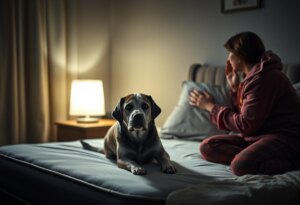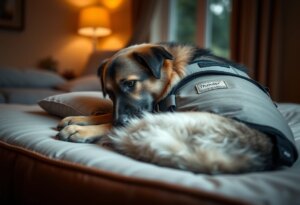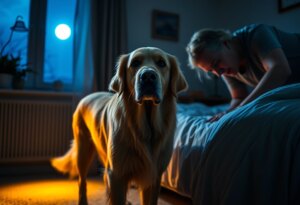

If your senior dog nightlight isn’t part of your nighttime routine yet, this is your sign. That 2am barking at a corner of the room that looks completely empty to you? It’s not nothing to her. Her world after dark has changed, and honestly, most of us don’t realize how much until we’ve sat up at 2am ourselves, watching an old dog stare at a shadow like it’s a stranger in the house.
I’ve spent years at the sanctuary sitting on hallway floors at 3am with dogs who were barking at nothing I could see. It’s unsettling the first time. It happens again and again once your dog’s vision starts to fade, once cognitive changes creep in, once the dark itself becomes something confusing instead of something familiar. This isn’t bad behavior. It’s disorientation, and it deserves compassion, not correction.
Why Senior Dogs Bark at Seemingly Nothing After Dark
Let’s talk about what’s actually happening in that aging brain and those aging eyes, because it’s not “nothing” to them, even when it looks like nothing to us.
A lot of what we call random nighttime barking is tied to declining vision paired with something called Sundowner’s Syndrome, a pattern of increased confusion, restlessness, and anxiety that shows up in the evening and overnight hours. It’s borrowed language from human dementia care, and honestly, the parallels are heartbreaking and useful in equal measure.
Canine Cognitive Dysfunction (CCD) plays a huge role here too. Research published in the Journal of Veterinary Behavior estimates that CCD affects somewhere between 14 and 35 percent of dogs over age 8. That’s not a small number. That’s a whole lot of gray-muzzled dogs standing in hallways at night, unsure of where they are or who’s home.
When you combine failing eyesight with a brain that’s struggling to process what little visual information is coming in, a dark room stops being restful. It becomes a place full of question marks. Shadows shift. Shapes blur. A coat rack becomes a threat. And your dog does the only thing she knows how to do: she barks.
Old dogs aren’t losing their minds. They’re losing their landmarks. Our job is to put new ones back within reach, gently, patiently, and without a single ounce of frustration in our voice.
How Senior Dog Vision Actually Works in Low Light
Here’s something that surprised me early on in sanctuary life: dogs already see differently than we do in low light, even when they’re young and healthy. Their eyes have more rod cells than ours, which helps with motion detection in dim conditions, but they rely more heavily on contrast and movement than fine detail. Add cataracts, nuclear sclerosis (that cloudy blue haze you see in a lot of senior dogs’ eyes), or retinal degeneration, and that already-different visual system starts breaking down further.
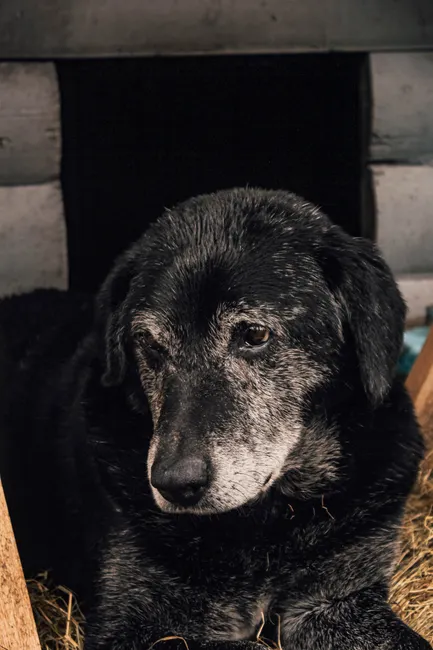
So a dim room that’s merely cozy for us can be borderline disorienting for an aging dog. There’s not enough contrast for her clouded eyes to make sense of furniture edges, doorframes, or where the floor ends and a step begins. She’s not choosing to be anxious. Her eyes simply aren’t giving her enough information to feel safe.
This is exactly why a well-placed senior dog nightlight isn’t some cute accessory. It’s a functional tool that gives a struggling visual system just enough contrast to work with. Without it, dogs are left guessing, and guessing in the dark is exhausting for an anxious old heart.
What to Actually Look for in a Senior Dog Nightlight
Not all nightlights are created equal, and some can genuinely make things worse. Here’s what I’ve learned works, sanctuary-tested, dog by dog:
- Warm amber tones, never harsh blue-white LED. Veterinary ophthalmology sources note that blue-spectrum light disrupts circadian rhythm far more than warm-toned light. That matters enormously for a dog whose sleep-wake cycle is already fragile from cognitive decline.
- Motion-sensor triggers so the light activates when your dog actually gets up, rather than staying on all night and further confusing her internal clock.
- Low, steady glow, not flickering or color-changing. Aging eyes need consistency, not stimulation.
- Strategic placement near water bowls, doorways, hallway turns, and the foot of the bed, everywhere your dog needs a visual anchor point during a nighttime wander.
A senior dog nightlight with these features gives your dog something reliable to orient around. It’s a small thing that makes an enormous emotional difference, and honestly, once you see the change in your dog’s nighttime confidence, you’ll wonder why you waited so long.
Best Nightlight Setups and Sanctuary-Tested Placement
I’ve rearranged nightlights more times than I can count trying to find what actually reduces confusion instead of adding to it. A few placements have made a real, visible difference:
- Hallway junctions: Any spot where a dog has to choose a direction is a spot where confusion peaks. A soft amber glow there acts like a signpost.
- Top and bottom of stairs: This one’s non-negotiable in my house. A dog with failing depth perception and a staircase in the dark is a recipe for a fall.
- Beside the water bowl: Dogs with CCD often forget where resources are. A little light nearby helps them relocate it without panic.
- Near the bed or crate: This gives your dog a clear “home base” to return to when she’s unsettled.
If your dog sleeps in an enclosed space, pairing a nightlight with the right setup matters even more. We’ve got a full breakdown in our senior dog crate guide for easing anxiety-driven barking if nighttime crate anxiety is part of your picture too.
For dogs who also deal with joint stiffness that makes nighttime movement painful and slow (which absolutely adds to disorientation, because pain and confusion feed each other), a little extra physical comfort goes a long way. Something like the Red Light Infrared Pet Hip Support Pad can ease the ache that makes an old dog reluctant to settle back down after a nighttime wander.

- 🎯 Targeted Support for Hips, Knees & Back This wrap is ergonomically designed to provide gentle, soothing action precise…
- 💡 Dual-Wavelength Red & Infrared Light (660nm & 850nm) This pet wrap features an optimized dual-chip light layout that d…
- 🔋 Wireless & Rechargeable with 3 Power Levels The cord-free design lets your pet move, rest, or play comfortably during …
I’ve watched dogs who used to pace and bark settle into a slower, calmer rhythm once the pain and the disorientation were both being addressed at the same time. It’s rarely just one fix. It’s usually two or three small ones working together.

Comparing Senior Dog Nightlight Options
Here’s a quick side-by-side of what to weigh when you’re choosing a senior dog nightlight setup for your own home. I built this table based on what actually held up during real overnight use, not marketing claims.
| Nightlight Type | Best For | Light Tone | Motion Sensor | Price Tier |
|---|---|---|---|---|
| Plug-in amber LED nightlight | Hallways, stairs, doorways | Warm amber | Optional | $ |
| Motion-activated floor light | Bedroom-to-water bowl paths | Warm amber/soft white | Yes | $$ |
| Rechargeable puck lights | Flexible placement, crate area | Adjustable warm tones | Yes | $$ |
| Smart app-controlled nightlight | Multi-room setups, remote scheduling | Fully adjustable | Yes | $$$ |
| Whole-home dimmable lighting system | Larger senior-dog households | Fully customizable | Yes | $$$$ |
None of these need to be a premium investment to work well. Most of the dogs I’ve helped settle at night did fine with budget-friendly plug-in options placed thoughtfully. The placement matters more than the price tag, every time.
Pairing a Senior Dog Nightlight With a Full Nighttime Comfort Plan
A senior dog nightlight is one piece of a bigger picture, not a stand-alone fix. I’ve seen the best results when it’s paired with a few other sensory anchors:
- Scent markers, like a dab of the same calming balm near the bed each night, so smell reinforces what dimming vision can’t confirm.
- Textured mats at key transition points (top of stairs, bedroom threshold) so paws can “read” the floor even when eyes can’t.
- A rock-solid consistent routine. Same bedtime, same lights-out sequence, same words spoken softly. Predictability is its own kind of medicine for a confused old mind.
If your dog’s nighttime unease shows up as pacing during walks too, not just barking indoors, a supportive harness can help her feel more secure and less likely to pull toward shadows or sounds she’s misjudging. The Dogline Quest No-Pull Dog Harness with 3D Rubber Blind gives you steadier control on evening walks when a vision-impaired dog might startle at something ordinary.

- Patented Easy Control Harness distributes pressure evenly across your dog’s torso to prevent pulling and choking. Fully …
- No-Pull Design includes a centralized back dog leash attachment as well as a chest leash O-ring that can also hold a dog…
- Quick-Drying Neoprene is weather-resistant and breathable, perfect for water dogs in training or for working dogs who br…
And if barking at “nothing” has become a pattern that’s wearing on the whole household, not just at night but throughout the day, working on foundational calm-and-confidence training can help. It’s not about obedience for obedience’s sake. It’s about giving your dog tools to feel steadier in her own body. A resource like the Australian Cattle Dog Training Book: How to Stop Pulling covers foundational calm-leadership techniques that translate well beyond one breed, and I’ve leaned on similar principles with plenty of senior dogs at the sanctuary who needed a little more structure to feel secure.

If the barking is specifically tied to being crated at night, it’s worth comparing your options rather than guessing. We put together a detailed look at crate covers versus calming sprays for nighttime crate barking that pairs really well with a good senior dog nightlight setup.
When It’s More Than Just Vision
Sometimes what looks like vision-related confusion is actually layered with other stuff, anxiety around another pet in the house, or resource guarding that gets worse after dark when everyone’s more on edge. If you’ve got multiple dogs and you’re noticing tension, not just confusion, it might be worth exploring our comparison of pheromone diffusers versus calming chews for dog jealousy alongside your nightlight plan.
According to the American Kennel Club, cognitive changes in aging dogs often show up gradually, which means the signs are easy to miss until they’re significant. That’s exactly why I encourage every senior dog parent to start layering in tools like a senior dog nightlight before things feel urgent. Early support is so much gentler than crisis management.
Frequently Asked Questions
Why does my senior dog bark at nothing specifically at night?
It’s usually a combination of declining vision and cognitive changes that intensify after dark, sometimes called Sundowner’s Syndrome. A senior dog nightlight can help by giving her eyes enough contrast to recognize her surroundings again, which often reduces the confusion behind the barking.
What color nightlight is best for a vision-impaired senior dog?
Warm amber tones are best. Harsh blue-white LED light disrupts circadian rhythm more than warm-spectrum light, which can make nighttime confusion worse instead of better in an already fragile sleep-wake cycle.
Where should I place a senior dog nightlight in my home?
Focus on hallway junctions, the top and bottom of stairs, near the water bowl, and beside your dog’s bed or crate. These are the spots where a confused senior dog most needs a visual anchor point.
Can a nightlight alone stop nighttime barking in older dogs?
A senior dog nightlight helps significantly, but it works best paired with scent markers, textured mats at transition points, and a consistent bedtime routine. Together, these give a dog with fading vision several ways to orient herself safely through the night.
Watching an old dog struggle in the dark isn’t easy. It pulls at something deep in you, that instinct to fix it immediately, to make the fear stop right now. But this is slow work. It’s a lamp here, a mat there, a little more patience at 3am than you thought you had left in you. That’s what it means to age alongside a dog who trusts you to keep the world steady for her, even when her own eyes can’t anymore. Tell your pup I said Hi! — Dawn