
Washable crate pads solve a problem that catches a lot of pet parents off guard: the dog who was reliably house-trained for a decade suddenly starts waking up in a wet bed. If you’re managing this with an aging dog, you’re not dealing with a training failure. You’re dealing with a physiological shift, and the right bedding is a functional tool, not just a comfort upgrade.
Age-related urinary incontinence affects an estimated 20% of dogs over the age of 10, and the mechanism behind it is usually not behavioral defiance. In intact and spayed females especially, Urethral Sphincter Mechanism Incompetence (USMI) causes the urethral sphincter to relax involuntarily during sleep, when muscle tone is lowest. Add cognitive dysfunction disorientation into the mix (the canine analog to human dementia), and you get dogs who genuinely lose track of where they are relative to their den space. The ASPCA notes that senior dogs require adjusted care protocols precisely because these overlapping conditions compound each other. This isn’t a dog choosing to ignore training. It’s a dog whose sphincter control and spatial cognition are both degrading at once.
Why Senior Dogs Have Accidents in the Crate
From a functional analysis standpoint, we need to separate three distinct etiologies before assuming the cause: USMI (a hormonal and neuromuscular issue, typically responsive to medication like phenylpropanolamine), cognitive dysfunction syndrome (a neurodegenerative process affecting orientation and sleep-wake cycles), and mobility-limited “can’t get there in time” accidents from arthritis or spinal issues that slow a dog’s ability to signal or reach the door. Each of these has a different intervention pathway, and a veterinary workup should always precede assuming bedding alone will fix things. That said, regardless of the underlying cause, washable crate pads are the frontline management tool while you and your vet sort out the medical picture.
The Behavioral Cost of Soiled Bedding
Here’s where the behaviorist lens matters, and where I see a lot of owners miss the bigger picture. A crate only works as a management tool if the dog perceives it as a safe resting space, a den-analog. Repeated exposure to a wet or ammonia-scented substrate degrades that perception over time. Dogs have an innate aversion to soiling their own resting area (it’s one of the core drivers behind house-training success in the first place), so a dog who wakes up in a soiled crate repeatedly starts to associate the crate itself with an aversive stimulus.
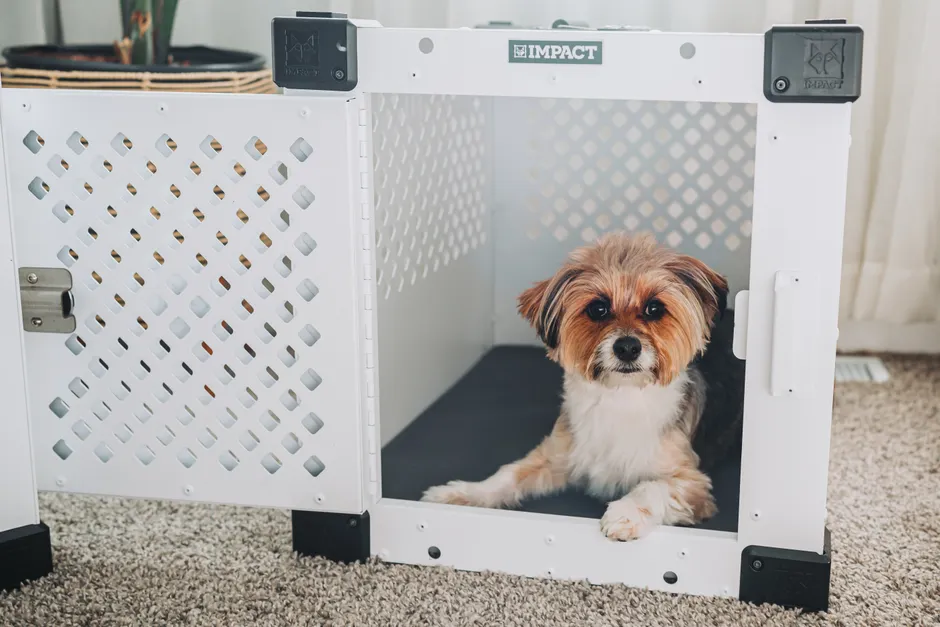
This can manifest as increased cortisol reactivity at bedtime, resistance to crate entry, or displacement behaviors like excessive lip licking and pacing before confinement. The data on this is fairly consistent across stress physiology research: chronic low-grade stressors, even ones that seem minor to us, accumulate and shape avoidance behavior. Using a fast-drying, absorbent crate pad instead of a belly band alone addresses both the hygiene problem and the conditioning problem simultaneously, because it keeps the dog’s direct contact surface dry even if an accident occurs underneath.
Functional Criteria: What Actually Makes a Crate Pad Work
Not all “washable” pads are created equal. When I evaluate bedding for incontinent or cognitively declining senior dogs, I’m looking at four functional layers:
- Absorbency capacity: A single-layer fleece pad wicks nothing. Look for multi-layer construction with a fast-absorbing top layer that pulls moisture away from the skin, reducing urine scald and hot spot risk in dogs with already-compromised skin barrier function from aging.
- Waterproof barrier backing: This is non-negotiable. Without it, urine soaks into the crate tray or floor beneath, and you’re back to daily deep-cleaning instead of a five-minute pad swap.
- Machine-washability at scale: A pad that degrades after ten wash cycles isn’t sustainable for a dog who may need nightly laundering. Reinforced stitching and washer-dryer safe materials matter more here than they would for a healthy adult dog’s bed.
- Chew-resistant seams: Senior dogs with cognitive dysfunction sometimes develop increased oral fixation or anxiety-driven chewing. A pad with exposed foam or loose stitching becomes a hazard, not just a laundry problem.
Comparing the 6 Best Washable Crate Pads for Senior Dogs
Below is a functional comparison of top-performing options, evaluated on the criteria above rather than marketing claims alone.
| Product | Absorbency Level | Waterproof Backing | Machine Washable | Best For | Price Tier |
|---|---|---|---|---|---|
| Mora Pets Ultra Soft Crate Pad | Moderate | Yes (lined) | Yes, gentle cycle | Mild incontinence, mobility-limited dogs | $ |
| FURTIME Chew Proof Indestructible Bed | Moderate to High | Yes, reinforced | Yes, durable stitching | Dogs with anxiety-driven chewing or CDS | $$$ |
| Orthopedic Memory Foam Crate Pad (X-Large) | Moderate (with liner) | Yes | Yes, removable cover | Arthritic dogs needing joint support plus absorbency | $$$$ |
| Quilted Waterproof Fleece Mat (generic mid-tier) | Moderate | Yes | Yes | Budget-conscious multi-pad rotation | $$ |
| Heavy-Duty Whelping/Incontinence Pad | High | Yes, sealed edges | Yes, industrial stitching | Severe USMI or nighttime accidents | $$$ |
| Premium Cooling Gel Orthopedic Crate Pad | Moderate | Yes | Yes | Dogs needing joint plus temperature support | $$$$$ |
For dogs in early-stage incontinence management, or those who are still fairly mobile but occasionally miss a signal, the Mora Pets Ultra Soft Crate Pad is a reasonable entry point. It’s lightweight enough to cycle through a wash rotation quickly, which matters if you’re laundering daily. It’s not built for heavy-duty absorbency, so I’d reserve it for dogs with mild, infrequent accidents rather than dogs with diagnosed USMI requiring nightly management.
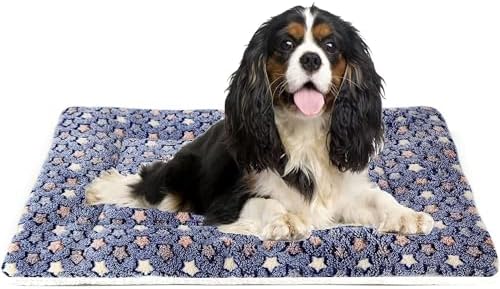
- No More Boring Colors – Our cute pet bed mat comes in pink, blue and brown. You also have the reversible side to match d…
- Beauty Sleep Is Real – Soft and flat pet bed mat for dogs and cats, made with high quality fleece and padded with cotton…
- Makes Travel More Convenient – This dog bed or cat bed is designed for crates, carriers, vehicles and within your home. …
Managing Cognitive Dysfunction and Chewing Behavior
Dogs experiencing cognitive dysfunction syndrome sometimes develop repetitive oral behaviors, including chewing at bedding, especially during nighttime disorientation episodes when anxiety spikes. If your dog falls into this profile, durability of the pad’s outer shell matters as much as absorbency. The FURTIME Chew Proof Indestructible Dog Bed is built with reinforced stitching designed to withstand exactly this kind of repetitive mechanical stress, which reduces the risk of a dog ingesting foam or fabric fragments during an anxious chewing episode. I’d flag this as a mid-tier investment worth making for any senior dog showing early signs of disorientation-driven chewing, rather than waiting until the behavior escalates.

- Built for Heavy Chewers:Constructed with high-grade 600D ultra-dense canvas and reinforced corners, this heavy-duty inde…
- Heavy-Duty Wear Resistance Defeats Sharp Claws:Our robust 420GSM canvas features a balanced 6:4 protective structure: 60…
- 8:2 Balanced Orthopedic Support for Better Sleep:We use an ideal 8:2 comfort blend consisting of 80% high-resilience sup…
When Joint Pain Compounds the Accident Problem
Mobility-limited dogs present a compounding problem: arthritis slows the dog down just enough that they can’t reach the door in time, and then they’re forced to lie in soiled bedding because standing back up is painful. In these cases, I recommend prioritizing orthopedic support alongside absorbency rather than treating them as separate purchases. The Orthopedic Memory Foam Dog Bed X-Large Crate Pad addresses both needs at once: the memory foam base reduces pressure on aging joints, while the removable cover allows for the frequent washing that incontinence management demands. This is a premium investment relative to a basic mat, but for a dog managing both arthritis and bladder control loss, the dual function tends to justify the cost.

- ORTHOPEDIC DUAL-FOAM SUPPORT: A 2.7-inch egg-crate layer distributes weight and promotes airflow while the 0.8-inch high…
- REMOVABLE WASHABLE PLUSH COVER: Soft faux fur creates a warm cozy surface. Remove the foam insert and unzip the cover fo…
- WATERPROOF LINER & TPU BACKING: TPU backing helps resist everyday spills while a separate liner shields the foam top and…
“Don’t count on bedding alone to work miracles. Washable crate pads manage the hygiene and comfort side of the equation, but persistent nighttime accidents in a senior dog always warrant a veterinary workup to rule out urinary tract infection, USMI, kidney disease, or cognitive dysfunction syndrome before you assume it’s purely an aging quirk.” — Behavioral case note on geriatric incontinence management
Transitioning Your Dog to a New Pad Without Creating Aversion
Swapping bedding abruptly can backfire, particularly with dogs who already have some anxiety sensitivity from cognitive decline. Novel textures and unfamiliar scents can trigger a mild neophobic response, even when the change is objectively an improvement. Here’s the protocol I use with clients:

- Scent-transfer first. Place the new washable crate pad near (not replacing) the old bedding for 24 to 48 hours so your dog’s scent transfers onto it before full introduction.
- Layer, don’t swap. Introduce the new pad on top of or beside the familiar one initially, rather than removing the old bedding cold. This avoids an abrupt antecedent change that could trigger crate avoidance.
- Pair with high-value reinforcement. Deliver a favorite treat or chew item on the new pad specifically, building a positive association through classical conditioning rather than assuming the dog will accept it neutrally.
- Monitor sleep latency. Track how quickly your dog settles on the new pad compared to baseline. A significant increase in time-to-settle over three or more nights suggests you should slow the transition further.
- Full removal only after acceptance. Once your dog voluntarily chooses the new pad without hesitation, remove the old bedding entirely.
This kind of antecedent management matters more with senior dogs than it does with younger, more behaviorally flexible animals. Cognitive rigidity increases with age in most mammals, dogs included, so gradual exposure protocols consistently outperform abrupt changes when you’re trying to preserve the crate as a genuinely safe space.
Building a Complete Nighttime Management Plan
Washable crate pads are one piece of a broader management system, not a standalone fix. I generally recommend pairing bedding changes with a consistent pre-bed potty routine, a vet-confirmed medical diagnosis, and, in apartment settings, a structured indoor option like an older dog potty training kit designed for small apartments as a backup for dogs who can’t always make it outside in time. Keeping a rotation of two or three washable crate pads on hand also means you’re never forced to reuse a damp pad before it’s fully dry, which matters for skin health in thin-coated senior dogs.
Consistency is the underlying theme across all of this. Dogs, especially aging dogs with declining sensory processing, rely heavily on environmental predictability to feel secure. A clean, dry, familiar-smelling crate pad supports that predictability even as other aspects of their physiology become less predictable.
Frequently Asked Questions
How often should I wash a senior dog’s crate pad?
For dogs with diagnosed incontinence, daily washing is typically necessary to prevent urine scald and bacterial buildup against aging, thinner skin. This is exactly why owners managing nighttime accidents benefit from having two or three washable crate pads in rotation, so a clean, fully dry pad is always available while another cycles through the laundry.
Are washable crate pads better than disposable puppy pads for senior dogs?
For most senior dogs, washable crate pads offer better long-term comfort and cost efficiency, and the plush surface tends to feel more like a genuine bed rather than a clinical pad, which supports the crate-as-safe-space association. Disposable pads still have a role for travel or short-term use, but they generally lack the orthopedic support that arthritic senior dogs need.
Can a crate pad alone stop nighttime accidents?
No. A crate pad manages the hygiene and comfort side of nighttime accidents, but it does not address the underlying medical cause. Persistent accidents warrant a veterinary evaluation for USMI, urinary tract infection, kidney function decline, or cognitive dysfunction syndrome, since each has a different treatment pathway.
Will switching to a new crate pad upset my senior dog?
It can, particularly in dogs with existing anxiety sensitivity or cognitive decline, since novel textures and scents may trigger a mild aversive response initially. Using a gradual transition protocol, scent-transferring the new pad first and layering it alongside familiar bedding, minimizes this risk and helps preserve positive crate associations.