
Dog arthritis relief doesn’t start with a prescription pad. It starts at home, in the quiet moments you probably already notice but maybe haven’t named yet: the hesitation before she jumps on the couch, the stiff little shuffle to the water bowl at 6 a.m., the way he used to bound down the porch steps and now just… stands there, thinking about it. I’ve watched this exact scene play out with dozens of dogs at the sanctuary. It never gets easier to witness, and it never stops being fixable in some meaningful way.
This isn’t a article about giving up on your senior dog’s comfort. It’s the opposite. It’s about the tools, the small daily choices, and the honest conversations with your vet that actually change how your dog moves through her golden years. Let’s get into it.
What Arthritis Really Looks Like Day-to-Day in a Senior Dog
Here’s something that stops most new sanctuary volunteers cold: according to the American Animal Hospital Association, roughly 20% of dogs over age one and up to 80% of dogs over age eight show signs of osteoarthritis. Eighty percent. That’s not a rare diagnosis. That’s just what happens to joints over a long life, and most of it goes unnoticed until it’s already significant.
Arthritis rarely announces itself with a limp on day one. It creeps in through the morning stiffness that “works itself out” after ten minutes of walking. The slower pace on the second half of the walk. The dog who used to greet you at the door and now waits for you to come to him instead. The quiet withdrawal from play, from stairs, from jumping onto the bed where he’s slept for twelve years.
I always tell new fosters: your dog isn’t being lazy, and he isn’t “just getting old and slowing down” like that’s some acceptable shrug of an explanation. Pain has a posture. Learn to see it.
Watch for the small stuff. Does she circle a few times before lying down, like she’s negotiating with her own hips? Does he lick at a knee or hock more than usual? Is there muscle loss along the back legs that wasn’t there last year? These are the tells. Catching them early means you can start dog arthritis relief strategies before your dog is in crisis, not after.
Why Orthopedic Beds Matter More Than Pet Parents Realize
I used to think a bed was a bed. Then I spent years watching arthritic seniors at Woody’s Place sink into thin, flattened cushions that offered about as much support as a folded towel. It matters. A dog with sore hips and shoulders spends 16 to 18 hours a day lying down, and every one of those hours is either working against the joints or working with them.

Standard fluffy beds compress fast and let bony pressure points (hips, elbows, shoulders) press right into hard flooring underneath. That constant pressure keeps inflamed joints irritated even during rest, which means your dog never truly gets a break from the ache. Memory foam distributes weight evenly across the whole body instead of concentrating it at a few points, and that directly affects sleep quality, which directly affects how much pain a dog perceives the next day. It’s a cycle, and you can choose which direction it spins.
This is why I point families toward something like the NANDOG Orthopedic Memory Foam Dog Bed. It’s built with genuine pressure-relieving foam rather than the shredded filler that flattens out in a few months, and the raised bolster edges give an arthritic dog something to lean against when getting up, which is a bigger deal than most people expect until they watch a stiff senior try to push up off a flat surface.

- Orthopedic Memory Foam: Provides superior support and comfort, ideal for dogs with joint pain and arthritis, promoting b…
- Removable, Washable Cover: Easily maintain hygiene and freshness with a convenient cover that can be removed and machine…
- Premium Micro-plush Fabric: Crafted from high-quality micro-plush fabric for a luxurious feel, offering a cozy and invit…
Some dogs, especially the chewers and the diggers who never outgrow that habit even in their senior years, need something tougher. For those, an elevated design like the Veehoo Chew Proof Elevated Dog Bed keeps the body off cold or hot flooring entirely, which helps with joint stiffness in dogs sensitive to temperature changes, and the raised frame actually makes standing up easier than a ground-level cushion would.
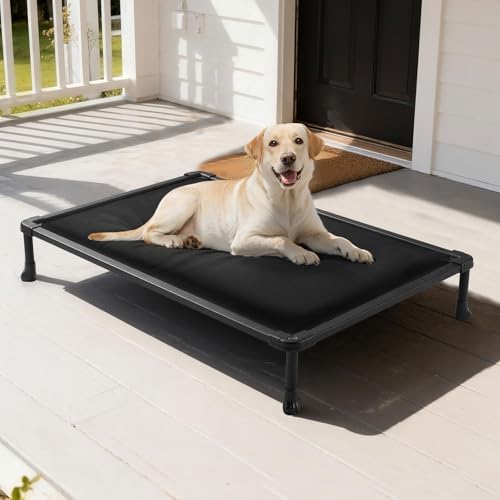
- Size: 41″L x 27″W x 7″H. Upgraded material and structure offer strong stability, Veehoo Raised dog bed can hold a up to …
- Waterproof Padded Dog Bed – Features a soft PP cotton-filled mat with a waterproof, easy-to-clean surface fabric. The pa…
- Indestructible Design: this chew proof dog bed features all edges encased metal frame and anti-digging corners on four c…
Ramps and Traction Aids: Dignity Tools, Not Luxuries
I need to say this plainly: a ramp is not spoiling your dog. A ramp is not a sign that you’ve “given in” to old age. Honestly, who thinks like that?? I’ve heard people say their dog “should still be able to jump in the car, he’s not that old,” while watching that exact dog wince through the landing. That’s not toughness. That’s neglect dressed up as tradition.
Every uncontrolled jump onto or off furniture, into the car, up the porch steps, is a small joint injury waiting to happen in a dog with existing arthritis. Repeated jarring impacts on already-inflamed cartilage can trigger flare-ups that take days to settle. A ramp removes that risk entirely, and most dogs learn to use one within a week of patient encouragement and a few treats scattered along the way.
Traction matters just as much indoors. Hardwood and tile floors are genuinely dangerous for arthritic dogs. Their legs slide out from under them, they overcorrect, and that overcorrection strains already weakened muscles and joints. Runner rugs in hallways, yoga mats by the food bowl, and toenail grips can prevent falls that might otherwise send you to the emergency vet. This is a sacred trust we hold with these dogs who gave us their whole lives. The least we can do is make the floor safe under their feet.
Joint Supplements Worth Discussing With Your Vet
I am not a veterinarian, and I will never pretend to be one from behind a keyboard. But I’ve fostered enough arthritic seniors, and talked to enough vets at 2 a.m. about a dog who won’t settle, to know that senior dog joint supplements deserve a real conversation at your next appointment, not a random pick off a shelf.
Glucosamine and chondroitin are the most studied combination, working to support cartilage structure and cushion joint movement over time. They’re not a fast fix. Most dogs need six to eight weeks of consistent dosing before you notice a real shift in mobility, and that’s the part people give up on too soon.
Omega-3 fatty acids deserve more attention than they usually get. A 2020 study published in the Journal of Veterinary Internal Medicine found that dogs supplemented with omega-3s showed measurably improved mobility scores compared to those who weren’t, likely due to their anti-inflammatory effect on joint tissue. That’s not folklore. That’s peer-reviewed data pointing at something your dog’s dinner bowl could actually influence.

If you’re weighing prescription options alongside supplements, it helps to understand how the major players stack up. Our breakdown of Galliprant, Rimadyl, and Meloxicam for dog arthritis medication walks through the differences in a way that’s worth bringing to your next vet visit. And if you’d rather explore gentler options first, this list of natural arthritis remedies for dogs covers approaches that pair well with the gear-based strategies in this article.
For dogs with moderate arthritis who still need firm, supportive rest surfaces but at a more accessible price point, the Persure Orthopedic Dog Bed is a solid mid-tier choice. It uses egg-crate style foam that’s firmer than plush memory foam, which some arthritic dogs actually prefer because it offers more resistance when pushing up to stand.

- 【Memory Foam Orthopedic Support】This dog sofa bed is built with high-density memory foam and egg-crate foam that conform…
- 【3-Sided Bolster Sofa Design】The raised sides act as a built-in pillow for your dog’s head and neck, while the lowered f…
- 【Waterproof Liner & Machine Washable】A waterproof inner layer between the fleece surface and base prevents urine, drool,…
Comparing the Gear: A Quick Reference
I know the options can feel overwhelming when you’re standing in the aisle at midnight, phone in hand, trying to decide what’s worth the investment. Here’s how these three beds compare, side by side, for dog arthritis relief at home.
| Product | Best For | Key Feature | Price Tier |
|---|---|---|---|
| NANDOG Orthopedic Memory Foam Bed | Dogs needing deep pressure relief | Dense memory foam with bolstered edges | $$$ |
| Veehoo Chew Proof Elevated Bed | Chewers and dogs sensitive to floor temperature | Elevated frame, indestructible fabric | $$ |
| Persure Orthopedic Bed | Dogs who prefer firmer support | Egg-crate foam base for easier standing | $$ |
Building a Full Home Comfort Plan
Gear alone won’t get the job done. I’ve seen families spend a small fortune on the fanciest bed on the market and still miss the bigger picture. Real dog arthritis relief comes from combining several quiet, consistent habits, not from one purchase that solves everything overnight.
- Gentle, consistent movement. Short, frequent walks keep joints lubricated and muscles engaged without overloading them. Skipping days and then doing one long hike is one of the worst patterns for an arthritic dog.
- Weight management. Every extra pound adds measurable strain to already compromised joints. This is often the single biggest lever a pet parent can pull, and it costs nothing but consistency.
- Vet-guided pain control. Supplements support long-term joint health, but they’re rarely enough alone for moderate to severe arthritis. If you haven’t already, ask your vet about the right medication for your dog’s specific case, and read up on vet-reviewed OTC arthritis medicine for dogs before your appointment so you walk in with informed questions.
- Environmental adjustments. Ramps, traction rugs, raised food bowls, and supportive beds all work together, not in isolation.
- Patience. Supplements take weeks. Muscle rebuilding takes months. Give the plan time before deciding it isn’t working.
This is the work. It’s not glamorous, and nobody’s going to give you an award for it. But the dog curled up on that orthopedic bed, breathing easy for the first time in weeks, that’s the reward. Every senior dog owner I’ve ever worked with who committed to this kind of layered dog arthritis relief plan has told me the same thing: their dog seemed lighter. Not physically. Just… lighter.
Frequently Asked Questions
How quickly will I see results from an orthopedic bed?
Some dogs settle in and sleep more soundly within the first few nights, but the real payoff, reduced morning stiffness, usually becomes noticeable over one to two weeks of consistent use. Give the bed time before judging whether it’s helping.
Are joint supplements safe to combine with prescription arthritis medication?
Generally yes, and many vets recommend combining them, but always confirm with your veterinarian first. Supplements like glucosamine and omega-3s work through different mechanisms than NSAIDs, so they often complement each other rather than conflict.
My dog refuses to use a ramp. What should I do?
Introduce it slowly with treats and praise, keeping the ramp at a low angle to start. Some dogs need a week or two of short, positive sessions before they trust it. Never force a dog onto a ramp, that fear will only make the resistance worse.
How do I know if my senior dog’s arthritis pain is getting worse?
Watch for increased reluctance to move, panting or restlessness at night, changes in appetite, or new irritability when touched. These shifts warrant a vet visit to reassess the current dog arthritis relief plan, since pain levels can change even on a stable medication routine.
Your dog gave you years of easy mornings and joyful, thoughtless movement. Now it’s your turn to make the movement easy again, one supportive bed, one steady ramp, one patient supplement routine at a time. That’s not a small thing. That’s everything.
Tell your pup I said Hi! — Dawn