

A senior dog age chart isn’t nearly as simple as most people want it to be, and honestly, that’s the first thing I need you to understand before we go any further. There’s no magic birthday candle that turns your pup into a “senior dog” overnight. Size matters. Breed matters. Genetics matter. I’ve watched dozens of dogs move through their golden years here at the sanctuary, and I can tell you with total certainty that a seven-year-old Great Dane and a seven-year-old Shih Tzu are living in completely different chapters of life.
That’s the heart of what we’re covering today. This isn’t just trivia. Knowing where your dog actually falls on the aging curve changes how you feed them, how you exercise them, and how closely you watch for the quiet signs of trouble. Getting this wrong means missing early warning signs of arthritis, cognitive decline, or organ changes until they’re already advanced. Getting it right means you’re ahead of the curve, ready to support your dog before things get hard.
Why “Senior” Isn’t One Size Fits All
I get asked constantly, “How do I know if my dog is a senior yet?” And my honest answer is always: it depends entirely on who your dog is. A generic senior dog age chart that says “seven years old equals senior” for every breed is doing pet parents a disservice. Big dogs age like they’re on fast forward. Small dogs get the gift of a much longer runway.
Here’s the pattern I’ve seen play out again and again in rescue work: giant breeds hit physical decline shockingly early, sometimes while they’re still considered “young” by human standards. Meanwhile a scrappy little terrier or a Shih Tzu might still be bouncing around the yard at eleven years old like nothing’s wrong. Size is the single biggest predictor of how fast a dog’s body clock ticks. It’s counterintuitive, I know. We tend to think bigger means stronger and longer-lived. With dogs, it’s almost the opposite.
This matters practically, not just academically. Diet needs shift. Joint support becomes non-negotiable. Even the way you talk to your dog and read their body language needs to adjust. If you’re already navigating joint pain in an aging dog, our guide on what not to feed a dog with arthritis is worth reading alongside this one, because diet and aging timeline are deeply connected.
What the Data Actually Says
According to the American Veterinary Medical Association, giant breed dogs like Great Danes, Mastiffs, and Newfoundlands are frequently considered geriatric by around age 6. Six. Let that sink in for a moment. Meanwhile, small breed dogs like Shih Tzus, Chihuahuas, and Yorkies often aren’t considered seniors until they’re 10 or 11 years old.
That’s nearly double the timeline. It’s not a small discrepancy, it’s a completely different life stage math problem depending on what breed is sleeping at the foot of your bed. A senior dog age chart has to account for this or it’s basically useless.
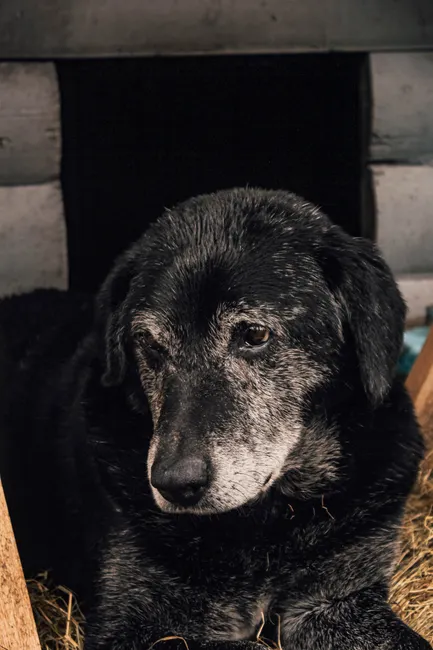
Age is not a diagnosis, and a number on a calendar will never tell you the whole story. Watch the dog in front of you, not the birthday on the vet chart.
I say that a lot around here, because I’ve had young dogs come through the sanctuary gates acting geriatric, and I’ve had “senior” dogs who could still outrun the barn cats. The chart gives you a starting point. Your eyes and your gut give you the rest.
Senior Dog Age Chart by Breed: Labradors, Shih Tzus, Shepherds, and More
Let’s get into the specifics, because this is what you actually came here for. Below is a breed-by-breed breakdown of when dogs typically shift into their senior years. This is where the senior dog age chart becomes genuinely useful instead of just a vague talking point.
| Breed / Size Category | Typical Senior Age | Average Lifespan | Common Age-Related Concerns |
|---|---|---|---|
| Great Dane / Giant Breeds | 5-6 years | 7-10 years | Bloat, cardiomyopathy, early joint decline |
| German Shepherd | 7 years | 10-13 years | Hip dysplasia, degenerative myelopathy, arthritis |
| Labrador Retriever | 7-8 years | 10-14 years | Weight gain, joint stiffness, cataracts |
| Beagle / Medium Breeds | 9-10 years | 12-15 years | Obesity, dental disease, slowed metabolism |
| Shih Tzu | 10-11 years | 13-16 years | Dental disease, tracheal issues, slower onset arthritis |
| Toy Breeds (Chihuahua, Yorkie) | 10+ years | 14-17 years | Dental disease, luxating patella, cognitive decline late in life |
Notice how wide that gap actually is. A Great Dane and a toy breed can have nearly a decade of difference in when they cross into “senior” territory. If you own a big dog, please don’t wait for gray fur to start treating them like a senior. By the time you see the visible signs, the internal aging process has usually been underway for a while already.
For Labradors especially, since they’re one of the most popular breeds in American households, that 7-8 year mark is when I start recommending owners transition food formulas. A quality senior-formulated kibble like IAMS PROACTIVE HEALTH Mature Adult Dry Dog Food is built specifically around the calorie and joint-support needs of an aging Lab, rather than the higher-energy formula they needed as a younger, more active dog.

- Veterinarians Recommend IAMS: This IAMS Senior Dog Food Recipe is made with real chicken as the #1 ingredient and contai…
- Mental & Visual Sharpness: This IAMS dog food for senior dogs contains DHA Gold to promote mental and visual sharpness i…
- Supports Vital Organs: IAMS Proactive Health Healthy Aging Senior Dog Food supports vital organs with essential nutrient…
The Science Behind Why Big Dogs Age Faster
This isn’t just something us sanctuary folks noticed anecdotally. A 2019 study published in the Journal of the American Veterinary Medical Association found that large-breed dogs age significantly faster metabolically than their small-breed counterparts. Their cells, their organs, their joints, all of it is working overtime from a younger age.
Researchers believe it comes down to growth rate. Giant and large breed puppies grow at an almost alarming pace in their first year or two, and that rapid cellular division seems to come with a tradeoff later in life. Smaller dogs grow slower and steadier, and that gentler start seems to translate into a longer, slower aging curve overall.
It’s a strange kind of biological irony, honestly. The dogs who look the strongest, the biggest, the most physically capable, are often the ones whose bodies wear out first. I think about this every single time I watch a giant breed dog struggle to get up off the porch at what should be considered “middle age” by human standards.
Mobility Support Becomes Critical Earlier Than You’d Think
Once a dog crosses into their senior window on this senior dog age chart, mobility issues tend to show up fast, especially in larger breeds carrying more body weight on aging joints. Front leg weakness and instability are incredibly common, particularly in dogs recovering from soft tissue injuries or early arthritis.

If you’ve noticed your dog favoring a front leg, slipping on hard floors, or hesitating before stairs, a supportive option like the Labra Dog Front Leg Brace Compression Wrap can offer real stabilization while you work with your vet on a long-term plan. I’ve recommended compression support to more than one foster family here, and it genuinely changes how confidently a dog moves through the day.
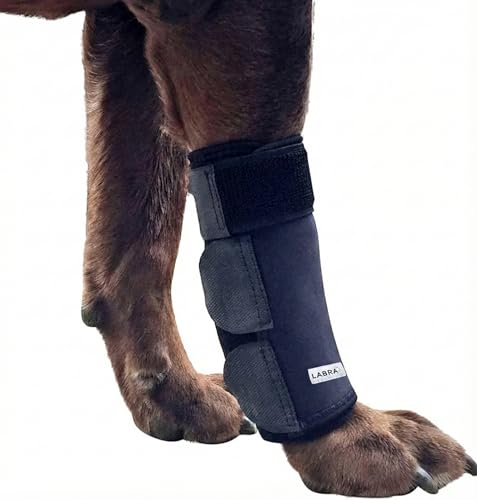
- Protects Against Hot Spots, Lick Granulomas, and Pressure Sores: Provides targeted relief for painful hot spots, lick gr…
- Premium Materials – Made from 3mm neoprene, our brace wrap is breathable, elastic, and enjoyable, ensuring your dog’s co…
- Joint Health – Our brace provides extra support on your dog’s front legs, allowing them to stay healthy and support thei…
What to Actually Watch For, Beyond the Number on the Chart
Here’s where I need you to lean in close, because this is the part that matters more than any chart ever could. A senior dog age chart gives you a rough map, but your dog’s actual body and behavior are the real territory. Numbers don’t tell you everything.
Watch for these signs regardless of what age your dog technically “should” be:
- Mobility shifts: hesitation on stairs, slower to rise, reluctance to jump onto furniture they used to love
- Sleep changes: sleeping more overall, but also restless or pacing at night, which can signal discomfort or early cognitive changes
- Cognitive signs: staring at walls, getting “stuck” in corners, forgetting familiar routines, increased confusion or anxiety
- Appetite or weight changes: sudden weight loss or gain, picky eating, difficulty chewing
- Behavioral withdrawal: less interest in play, seeking more solitude, or conversely, becoming more clingy and anxious
These signs matter more than any calendar ever will. I’ve had seven-year-old dogs come through the sanctuary showing every classic sign of advanced aging, and I’ve had twelve-year-olds who still greet me at the gate like puppies. Your job isn’t to memorize a chart and move on. Your job is to actually look at your dog, every single day, and notice what’s changing.
This is also where multi-dog households need extra thought and care. If you’re bringing a new puppy into a home with an aging, possibly dominant senior dog, the introduction process needs to be handled with real intention. Our guide on introducing a puppy to a dominant older dog safely walks through exactly how to protect both dogs’ wellbeing during that transition. Senior dogs deserve peace in their golden years, not chaos they didn’t ask for.
Nutrition Needs Shift Right Alongside the Aging Timeline
Once you’ve identified where your dog sits on the senior dog age chart, nutrition should be one of the very first things you revisit. Aging bodies process protein differently, need fewer calories if activity has slowed, and often benefit from added joint-supportive ingredients like glucosamine and chondroitin.
I know this article focuses on dogs, but for households managing multiple aging pets under one roof, senior-specific formulas matter across species too. Something like Purina Pro Plan AdvantEDGE Senior Support Dry Cat Food reflects the same underlying philosophy we apply to senior dogs: aging bodies need targeted nutritional support, not just a smaller portion of what they always ate.

- Purina Pro Plan Dry Cat Food: Purina Pro Plan AdvantEDGE Senior Support Plus delivers Pro Plan’s most advanced nutrition…
- Highly Digestible: Dry cat food for senior cats features a highly digestible formula with probiotics to support digestiv…
- Senior Support: This high protein dry cat food supports immune health with a formula that also supports healthy senior y…
A Quick Note on Mixed Breeds and Designer Dogs
If your dog is a mixed breed or one of the increasingly popular designer mixes, the senior dog age chart gets a little more like educated guesswork. You’ll want to lean toward the size-based estimate rather than trying to average two breed timelines together. A large, active mix like a Goberian or Shepsky, for example, will likely age closer to their larger parent breed’s timeline. If you’re curious how these popular mixes compare in temperament and lifespan, our breakdown of Goberian versus Shepsky for families covers a lot of that ground.
Size is still your best predictor even when breed is uncertain. A sixty-pound mixed breed dog is going to age more like a Labrador than a Shih Tzu, regardless of what’s actually in the DNA.
Frequently Asked Questions
What is the most accurate senior dog age chart to use?
The most accurate senior dog age chart accounts for both breed and size category rather than using a flat number for every dog. Giant breeds like Great Danes are often senior by age 5 to 6, large breeds like Labradors around 7 to 8, and small or toy breeds like Shih Tzus not until 10 or 11. Always pair the chart with real observation of your individual dog’s mobility, appetite, and behavior.
Why do small dogs live longer than large dogs?
Researchers believe it relates to growth rate. Large and giant breed puppies grow extremely fast in their first one to two years, and that rapid cellular growth appears linked to faster aging and shorter lifespans later on. Small breeds grow more slowly and steadily, which seems to translate into a longer, gentler aging timeline overall.
At what age is a Labrador considered a senior dog?
Labradors are typically considered senior dogs around age 7 to 8. This is when many owners should start transitioning to a senior-formulated diet, watching more closely for joint stiffness, and scheduling more frequent veterinary wellness checks to catch early signs of arthritis or weight changes.
Should I change my dog’s food as soon as they hit senior age?
Generally yes, though the timing should follow the senior dog age chart appropriate for your dog’s breed and size rather than a fixed age. Senior formulas typically offer adjusted calorie counts, added joint support, and easier-to-digest proteins. Always discuss the transition with your veterinarian, especially if your dog has existing health conditions.
However old the calendar says your dog is, what actually matters is how you show up for them right now, today, in whatever chapter they’re in. The senior dog age chart is a compass, not a countdown clock. Use it to get ahead of your dog’s needs, not to dread a number.
Every gray hair on that muzzle was earned. Every slower walk to the water bowl is still a walk worth celebrating. Pay attention, adjust as you go, and give your dog the dignity of being seen for who they are right now, not just what age they’ve reached.
Tell your pup I said Hi! — Dawn