
Leash reactivity is not a training failure or a sign of a “bad dog.” It’s a fear or frustration-based stress response, and understanding that distinction changes everything about how we choose equipment. When an older dog lunges and barks at another dog or a jogger, we’re watching a distance-increasing signal fire off the sympathetic nervous system, the same fight-or-flight cascade that spikes cortisol and adrenaline in any mammal facing a perceived threat. For senior dogs specifically, whose joints ache, whose vision and hearing may be declining, and whose stress recovery time slows with age, leash reactivity often intensifies rather than resolves on its own. So the question pet parents ask me constantly, front-clip harness or head halter, deserves an answer grounded in biomechanics and behavioral data, not gear marketing.
The Ethology of the Bark: Why Reactivity Isn’t Disobedience
Barking during leash reactivity functions as what ethologists call a distance-increasing display. The dog perceives an approaching stimulus (another dog, a stranger, a bicycle) as a threat it cannot flee from because it’s tethered. Flight is off the table, so the nervous system defaults to an exaggerated version of fight: lunging, barking, sometimes air-snapping. This is textbook sympathetic arousal, not defiance. Cortisol and norepinephrine flood the bloodstream, heart rate spikes, and the dog’s cognitive access to learned cues (sit, look at me, leave it) drops sharply because the prefrontal-analogous processing regions are essentially offline during high arousal. Owners often misread this as the dog “ignoring” them, when physiologically the dog has limited capacity to process cues at all in that moment.
For senior dogs, this matters even more. Chronic pain lowers the threshold for defensive aggression, and cognitive decline can blunt a dog’s ability to accurately assess whether a stimulus is actually dangerous. A dog that tolerated other dogs comfortably at age four may become reactive at age eleven purely because arthritis pain has narrowed its bite-threshold and its tolerance for unpredictability. Equipment choice, then, isn’t cosmetic. It’s a management layer that either supports or undermines the nervous system’s ability to settle.
Front-Clip Harness Mechanics: What the Data Actually Shows
A front-clip harness attaches the leash at the sternum rather than the back, which changes the physics of a pull. When a dog lunges forward, the leash tension rotates the dog’s body sideways rather than allowing it to drive forward into the collar or back-clip point. This reduces the opposition reflex, the well-documented tendency of dogs (and most quadrupeds) to push harder against pressure rather than yield to it. Ogburn and colleagues’ early harness research, along with later gait-analysis studies, confirmed that front-clip attachment meaningfully reduces pulling force and gives handlers more physical leverage during a lunge.
Here’s the caveat I give every client: reduced pulling force is not the same as reduced arousal. The dog can still be at full sympathetic activation, heart rate elevated, cortisol climbing, while simply being unable to physically reach the target. A front-clip harness is a management tool for the body, not an intervention for the nervous system. It stops the behavior’s physical expression more effectively than it interrupts the underlying fixate-stare-lunge sequence. For senior dogs with reduced upper body strength or spinal arthritis, this matters practically too, since a harness distributes force across the chest and shoulders rather than concentrating strain on a neck already compromised by disc degeneration or cervical spondylosis. If you’re managing a dog with both mobility limitations and reactivity, a well-fitted option like the BARKBAY No Pull Dog Harness Front Clip Heavy Duty gives you that physical redirection without loading pressure onto the trachea, which is a real consideration for older dogs with collapsing trachea risk or laryngeal weakness.
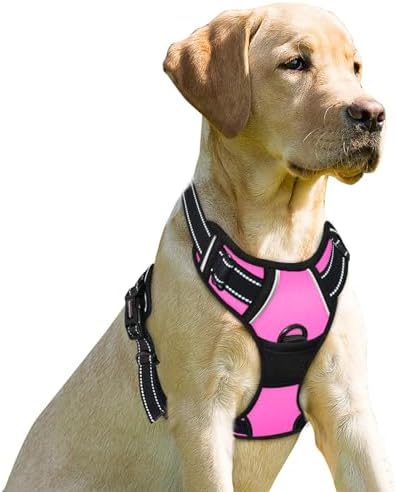
- Easy to Put on and Off with HASSLE-FREE and Comfortable
- 2 Sturdy Metal Leash Attachment Points on the Back and on the Chest
- Ultra Reflective Strips to keep your dog visible even at night
Head Halter Mechanics: Faster Interruption, Slower Acceptance
Head halters (Halti, Gentle Leader, and similar designs) work on a different principle entirely, borrowed largely from equine tack. The strap crosses behind the neck and over the muzzle, so gentle pressure on the leash redirects the dog’s head, and where the head goes, the body generally follows. Behavior consultants who track intervention data consistently report that head halters interrupt the fixate-stare-lunge sequence faster than harnesses because they intervene at the point of visual fixation itself. If you can turn the head before the stare locks onto the trigger, you often prevent the arousal spiral from ever fully launching. This is meaningfully different from a front-clip harness, which manages the lunge after fixation has already occurred.

The data is contradictory on tolerance, though, and I won’t pretend otherwise. Studies and field reports estimate that somewhere between 30 and 60 percent of dogs show initial escape behavior, face-rubbing, freezing, or head-shaking distress when a head halter is introduced without a proper desensitization period. That’s a wide range, and it reflects real variability in individual dogs’ sensory sensitivity around the muzzle and ears. Senior dogs with age-related touch sensitivity, dental pain, or a history of muzzle handling trauma (vet visits, grooming) tend to fall on the higher end of that distress range. Skipping the desensitization protocol and expecting a head halter to work immediately is one of the most common mistakes I see, and it can create a negative association with the walk itself, which compounds the reactivity problem rather than solving it.
Comparative Breakdown: Front-Clip Harness vs Head Halter
Neither tool is universally superior. The right choice depends on the dog’s arousal pattern, physical health, and the handler’s skill level. Here is how the two compare across the variables that actually predict success in reactive dog cases.
| Factor | Front-Clip Harness | Head Halter |
|---|---|---|
| Onset speed of behavior interruption | Moderate; intervenes after lunge begins | Fast; intervenes at the fixation stage |
| Owner handling skill required | Low to moderate | Moderate to high; requires precise, gentle timing |
| Risk of aversive fallout | Lower | Higher without a desensitization protocol |
| Impact on trust and agency | Generally neutral to positive | Can be negative if introduced abruptly |
| Best fit for senior dogs with joint/neck issues | Strong fit; distributes force off the neck | Requires caution with facial/dental sensitivity |
| Price Tier | $$ | $$ |
Equipment interrupts behavior. It does not treat the underlying emotional response. A dog wearing a head halter or front-clip harness can still be flooded with cortisol; you’ve simply changed what that flooding looks like from the outside.
Building a Protocol Around Whichever Tool You Choose
Leash reactivity barking responds best to a layered approach where equipment supports training rather than replacing it. I recommend pairing either tool with threshold management and counter-conditioning, following a BAT 2.0-style framework (Behavior Adjustment Training), which prioritizes giving the dog functional control over increasing or decreasing distance from a trigger. The steps below apply regardless of which harness or halter you choose:
- Identify the dog’s threshold distance. This is the closest distance to a trigger where the dog can still notice it without escalating into barking or lunging. Most owners underestimate this distance significantly.
- Practice engagement exercises below threshold. Reward calm glances toward the trigger and voluntary re-engagement with the handler, using high-value food rewards delivered at the dog’s mouth level, not tossed or delayed.
- Increase exposure gradually. Only shrink the distance to a trigger once the dog shows consistent calm responses at the current distance across multiple sessions, not just one good day.
- Give the dog agency. Allow it to choose to retreat, sniff, or disengage rather than forcing prolonged exposure. Dogs that learn they have a say in the interaction show faster stress recovery in follow-up sessions.
- Track patterns, not incidents. A single bad walk is data, not a verdict. Log triggers, distances, and recovery time to identify real trends.
Head Halter Desensitization: A Step-by-Step Introduction Exercise
Because head halters carry a real risk of aversive fallout if introduced carelessly, I ask clients to run this exercise across several short sessions before ever attaching a leash:
- Let the dog sniff the halter freely, pairing its presence with treats scattered nearby. No handling yet.
- Touch the dog’s muzzle briefly with a treat in hand, rewarding calm acceptance of contact near the nose and cheeks.
- Drape the nose loop over the muzzle for one to two seconds, immediately followed by a treat and removal. Repeat until the dog offers its nose voluntarily.
- Fasten the halter fully for short indoor intervals (30 to 60 seconds), paired with a favorite activity like a slow sniff around the living room.
- Attach the leash indoors first, practicing gentle direction changes with treats, before ever stepping outside.
Skipping steps here is the single biggest predictor of a dog developing an aversion to the walk itself. If you’re also working on management tools for a household transitioning a senior dog around new triggers, our related piece on calming aids versus training tools for senior dog barking breaks down how to sequence equipment with behavioral support rather than relying on either alone.

Structured Skill-Building Beyond the Leash
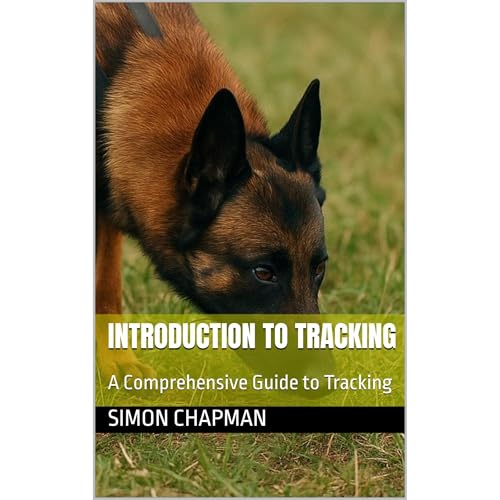
Reactive dogs, especially seniors adjusting to sensory decline, benefit from structured mental engagement that builds confidence independent of the walk itself. Scent work and tracking exercises give dogs a job that channels arousal productively rather than defensively. Resources like Introduction to Tracking: A Comprehensive Guide to Tracking can be adapted for older dogs at a slower pace, and the confidence built through nose work often generalizes to calmer leash behavior because the dog practices sustained, low-arousal focus in a controlled setting.
Foundational obedience work also supports leash reactivity protocols, since a dog with a reliable recall and engagement cue has more tools available during a stressful encounter. Even for dogs well past their puppy years, structured guides like the Puppy Training Guide for High-Energy Dogs contain engagement and impulse control exercises that translate directly to reactive dog work, since the underlying learning principles (reinforcement timing, threshold management) don’t change with age even though the training pace should slow considerably for senior joints and senior attention spans.

What Neither Tool Can Do
Don’t count on either the front-clip harness or the head halter to work miracles on their own. Equipment changes physical outcomes; it does not rewire the emotional appraisal a dog makes when it sees a trigger. Dogs that reach a high level of arousal will still experience the same internal stress response even if their body can’t physically reach the target. Long-term resolution of leash reactivity barking requires the counter-conditioning work described above, and in cases involving bite history, redirected aggression, or significant cognitive decline, a veterinary behaviorist consult should happen alongside equipment changes, not instead of them. According to the American Veterinary Medical Association, aggression and reactivity cases benefit most from combined behavioral and, when appropriate, medical management, rather than equipment alone.
If your household includes a reactive senior dog and you’re introducing new dogs, visitors, or even a puppy into the mix, our guide on the best puppy gates to safely introduce puppies to senior dogs offers a practical way to manage physical space while the senior dog’s reactivity protocol is still in progress.
Choosing Between the Two for Your Senior Dog
My general clinical recommendation: if your senior dog has neck, spinal, or tracheal sensitivity, or if you as the handler are not confident in gentle, well-timed leash pressure, start with a front-clip harness. It’s more forgiving of imperfect handling and physically safer for a compromised neck. If your dog’s reactivity is primarily driven by fast visual fixation, where you can see the stare lock on before the lunge even starts, a head halter offers a faster interruption point, provided you commit fully to the desensitization steps above. Some of my clients ultimately use both, harness for daily walks and halter for higher-risk environments like dog parks or crowded trails, switching tools based on context rather than treating either as a permanent fix. For a broader comparison of anti-barking equipment options suited to reactive seniors, see our roundup of the best anti-barking tools for reactive senior dogs.
Leash reactivity in aging dogs is manageable, often significantly so, once you separate the equipment question from the training question. Get the mechanics right, respect the dog’s sensory history, and give the behavioral work time to actually take hold.
Is a front-clip harness or head halter better for leash reactivity in senior dogs?
It depends on the dog’s physical health and reactivity pattern. A front-clip harness is generally gentler on aging necks and spines and forgives imperfect handling, making it a safer default for senior dogs with joint or tracheal sensitivity. A head halter interrupts the fixate-stare-lunge sequence faster because it controls head direction before a lunge fully launches, but it requires a proper desensitization period and confident, gentle handling to avoid creating a negative association with walks.
Why does my senior dog bark and lunge on leash when it never used to?
Leash reactivity that develops later in life is often linked to chronic pain, declining vision or hearing, or early cognitive changes that reduce a dog’s ability to accurately assess whether an approaching stimulus is a real threat. Barking functions as a distance-increasing signal driven by sympathetic nervous system arousal, not defiance, so a veterinary checkup to rule out pain or cognitive decline is a reasonable first step before assuming it’s purely a training issue.
How long does it take a head halter to stop causing distress in a reactive dog?
With a structured desensitization protocol, most dogs adjust to a head halter within one to two weeks of short, positive sessions. Dogs with heightened facial or muzzle sensitivity, common in seniors with dental pain or a history of stressful muzzle handling, may need a longer, slower introduction. Skipping desensitization steps significantly increases the odds of persistent rubbing, freezing, or escape behavior.
Can equipment alone fix leash reactivity barking?
No. A front-clip harness or head halter manages the physical expression of leash reactivity but does not address the underlying stress response driving the barking. Long-term improvement requires counter-conditioning and threshold management alongside the equipment, and dogs with a bite history or significant behavioral escalation should be evaluated by a veterinary behaviorist.