
Puppy crate training succeeds or fails on one variable most new owners overlook entirely: the mismatch between crate size and a young dog’s actual physiological capacity to hold urine overnight. I’ve evaluated hundreds of case profiles involving nighttime accidents in Golden Retriever puppies, and the pattern is consistent. It’s rarely a “bad dog” problem. It’s an antecedent management problem, meaning the environment and schedule set the puppy up to fail before the behavior even happens. Get the crate type, size, and bedtime protocol right, and you remove most of the guesswork from potty training puppy routines.
Why Crate Size and Den Instinct Matter for Nighttime Bladder Control
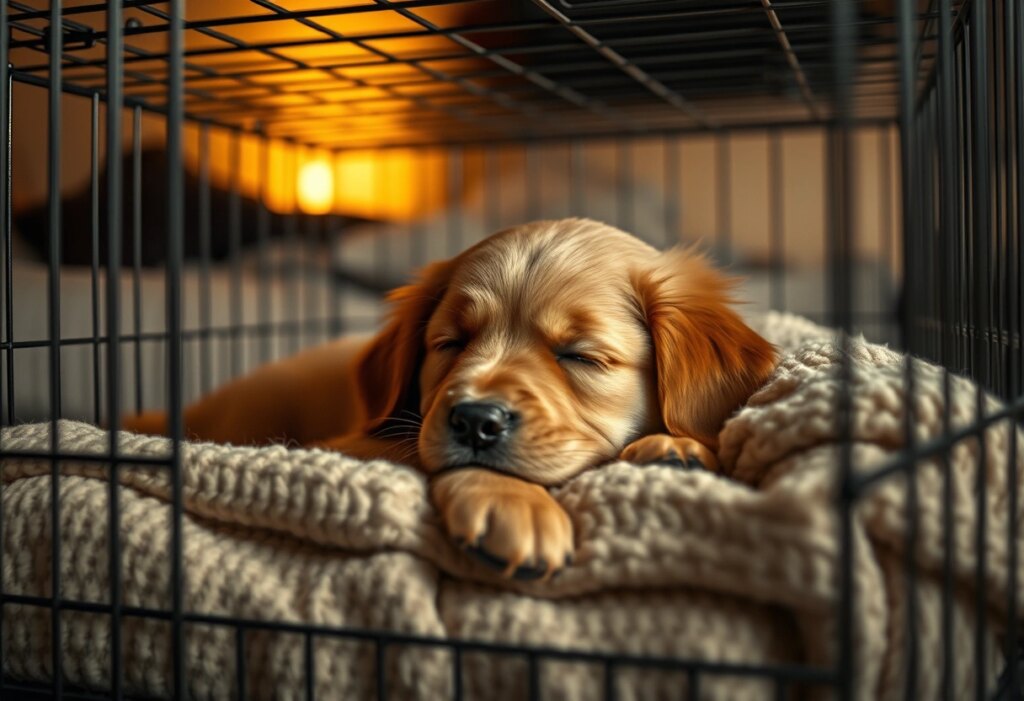
Domestic dogs retain a modified version of the denning behavior seen in wild canid ancestors, who sought small, enclosed spaces to rest and raise young away from predators. This isn’t sentimentality, it’s functional biology. A den-sized space triggers a physiological down-regulation of arousal, and dogs are also instinctively motivated to avoid soiling the small area where they sleep. The American Veterinary Society of Animal Behavior guidelines on confinement training note that appropriately sized enclosures support house training precisely because they exploit this instinct. When a crate is too large, that instinct loses its function. The puppy can eliminate in one corner and sleep comfortably in another, and the “keep my den clean” motivation simply doesn’t engage. This is the single most common reason puppy crate training stalls out around week three or four, when owners assume more room equals more comfort.
The Physiological Limit: Matching Crate Choice to a Realistic Overnight Schedule
Here’s the data every owner needs before setting a bedtime. The ASPCA’s veterinary behavior guidance uses a standard formula: a puppy can typically hold its bladder for roughly one hour per month of age, plus one additional hour. So a three-month-old Golden Retriever puppy tops out around four hours of continuous bladder control, not eight. A five-month-old puppy might stretch to six hours. This isn’t a training failure if your puppy wakes you at 2 a.m., it’s the bladder doing exactly what a bladder of that size and maturity is built to do. Crate training golden retriever puppies successfully means building your nighttime crate schedule around this ceiling rather than around your own sleep preferences. Setting an alarm for a middle-of-the-night bathroom break during the first several weeks isn’t optional, it’s the physiological reality of a growing puppy.

Don’t count on a bigger crate or a later bedtime to solve what is fundamentally a bladder capacity issue. The data on canine urinary physiology doesn’t bend to convenience, and pushing a puppy past its physical limit just teaches it that soiling the crate is sometimes unavoidable, which actively works against the denning instinct you’re trying to leverage.
Comparative Breakdown: Wire, Plastic Travel, and Furniture-Style Crates
Not all crates serve the same function, and the “best” option depends on your specific household constraints. I’ve broken down the three most common styles owners consider for puppy crate training below.
| Crate Type | Best For | Airflow & Visibility | Growth Adjustability | Price Tier |
|---|---|---|---|---|
| Wire Crate (with divider panel) | Golden Retriever puppies growing into adult size | Excellent, open sightlines reduce isolation stress | High, divider panel resizes den space as puppy grows | $$ |
| Plastic Travel Crate | Car travel, vet visits, secondary den option | Moderate, enclosed sides can feel more secure for anxious pups | Low, sized for one life stage only | $$$ |
| Furniture-Style Crate | Living rooms and bedrooms where aesthetics matter | Variable, depends on ventilation design | Low to moderate | $$$$ |
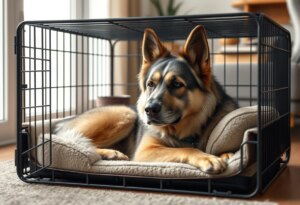
For most Golden Retriever puppies, a wire crate with an adjustable divider panel is the practical choice. It lets you shrink the usable space down to den-sized proportions for a small puppy, then expand it in stages as the dog physically grows, without buying three separate crates over the first year. Plastic travel crates have their place, particularly for car rides or vet visits, but the fully enclosed design can make it harder to gauge distress signals during the settling-in period. Furniture-style crates solve an aesthetic problem, not a behavioral one, so factor that in if budget is a consideration.
Step-by-Step Antecedent Management Protocol for Nighttime Success
Antecedent management means arranging the environment and routine before the behavior occurs, rather than reacting after an accident happens. Here’s the protocol I recommend for the first six to eight weeks of nighttime crate training:

- Cut off water access 90 minutes before bedtime. This isn’t dehydration, it’s timing the digestive process so the bladder isn’t at capacity right as the puppy settles.
- Run a final potty break immediately before crating. Take the puppy outside, wait for full elimination (not just sniffing), and reward calmly the moment it happens.
- Position the crate in or near your bedroom. Isolation distress is a major driver of nighttime vocalization and disrupted sleep. Proximity to you lowers arousal through simple scent and sound familiarity.
- Set an alarm matched to your puppy’s age-based bladder limit. Use the one-hour-per-month-plus-one formula from the ASPCA guidance above as your starting point, then adjust based on observed patterns.
- Keep nighttime bathroom breaks low-stimulation. Dim lights, minimal talking, straight back to the crate. Treating it as a boring, functional trip (not playtime) prevents the puppy from learning that waking you up leads to fun.
If your puppy struggles with the transition to a first night alone, a toy that mimics a calming physiological cue can help bridge the gap. Something like the Fuzzwoof Remote Controlled Heartbeat Dog Toy replicates the rhythmic sensory input of a littermate, which some behaviorists use as a short-term aid for reducing separation-related arousal during the first several nights in a new den space.

- WIRELESS REMOTE CONTROL – Easily control the heartbeat simulation and cycle through all 8 sounds. Perfect for adapting t…
- PUPPY SLEEP AID & ANXIETY SOLUTION – This puppy heartbeat toy sleep aid uses multi-sensory technology to ease crate trai…
- RECHARGEABLE, DURABLE & SAFE FOR DAILY USE – Features a long-lasting rechargeable polymer lithium battery (3.7V, Model: …
For owners who want a structured reference alongside their crate training golden retriever routine, a foundational resource like Dog Training for Beginners: The Complete Guide to Puppy Training can help clarify the broader house training timeline so nighttime routines fit into a consistent, whole-day framework rather than existing in isolation.

Common Owner Misconceptions About Puppy Crate Training
The most persistent myth I encounter is that a bigger crate is inherently kinder. It isn’t. AKC crate training research indicates that oversized crates can actually undermine the cleanliness instinct that makes den-based house training work in the first place, because the puppy gains enough room to separate its sleeping area from its elimination area. That defeats the entire mechanism. The correct sizing standard is simple: your Golden Retriever puppy should be able to stand up, turn around, and lie down comfortably, with a few inches to spare, nothing more.
A second misconception involves punishment after the fact. If you discover an accident in the crate after the puppy has already moved on, there is no behavioral value in scolding. The dog cannot retroactively connect the correction to an action from twenty minutes earlier. This just adds unnecessary stress to the crate environment, which works against the calm, low-arousal state you’re trying to build. If overnight accidents are happening consistently despite following the protocol above, placing a washable pad inside the crate, such as the Bedsure Pee Pads for Small Dogs, can protect bedding while you reassess the schedule rather than the dog’s behavior.

- Superior Absorption & Liquid Lock Technology: Our puppy pads are engineered with high-performance Super Absorbent Polyme…
- Advanced Odor Neutralization with Activated Carbon: Remove unpleasant smells with our built-in activated carbon layer. T…
- Scent-Based Attractant for Potty Training: Potty training made easier with our built-in scent attractant. These puppy pa…
A third misconception is assuming that if you’re already researching how to source a well-adjusted puppy, house training will simply follow along naturally. It doesn’t happen automatically, though starting with a puppy that has some foundational habits already in place does make the process easier. If you’re still in the sourcing phase, our guide on where to find potty trained Golden Retriever puppies covers what to look for in breeders who prioritize early house training exposure. And if you’re weighing a mixed-breed option with similar coat and temperament traits, our breakdown of what to look for first in Goldador puppies addresses comparable nighttime crate schedule considerations for that cross.
Building a Realistic Nighttime Crate Schedule
By week eight to ten, most puppies following a consistent protocol start stretching overnight intervals without prompting. The nighttime crate schedule should shift gradually, adding roughly 30 minutes between bathroom breaks every one to two weeks as the puppy demonstrates dry crates on waking. Rushing this progression to match your own sleep goals rather than the puppy’s demonstrated capacity is the most common way owners derail weeks of progress. Track dry nights on a simple log for two weeks before extending the interval again. This data-driven approach removes guesswork and replaces it with an evidence-based schedule tailored to your individual dog.
Frequently Asked Questions
What size crate should I buy for a Golden Retriever puppy who will grow larger?
Choose a wire crate sized for the adult dog, then use the included divider panel to shrink the usable space to den-sized proportions while the puppy is small. Expand the space in stages as the puppy grows, keeping just enough room to stand, turn, and lie down comfortably at each stage.
How long can a puppy actually hold its bladder overnight?
A commonly used guideline from ASPCA veterinary behavior resources estimates roughly one hour per month of age plus one additional hour. A three-month-old puppy typically tops out around four hours, which should directly shape your nighttime crate schedule rather than your own preferred sleep duration.
Is it better to ignore whining at night during crate training?
Not automatically. Whining can signal a genuine need to eliminate, especially in young puppies with limited bladder capacity. Distinguish between anxious, attention-seeking vocalization and urgent, escalating signals by observing timing against your established nighttime crate schedule before deciding whether to respond.
Does crate location in the house affect potty training puppy success?
Yes. Placing the crate in or near the bedroom during the early weeks of puppy crate training reduces isolation-driven stress and arousal, which in turn supports the calm physiological state needed for consistent bladder control overnight.