Separate feeding stations aren’t a luxury when you bring a puppy into a home with an aging dog. They’re a mealtime necessity. If your senior pup has started eating faster, hovering by their bowl, or giving side-eye to the new furball bouncing around the kitchen, that’s not attitude. That’s stress. And stress at mealtime, over weeks and months, wears on a body that’s already working hard just to be old.
I’ve watched this play out more times than I can count at the sanctuary. A new pup arrives, full of that clumsy, joyful chaos only baby dogs have, and the old-timers who’ve spent years eating in peace suddenly start guarding their bowls, or worse, walking away from food altogether. That breaks my heart every time. Because it’s so avoidable. This is a sacred trust we take on when we bring more dogs into a senior’s world, and part of that trust is making sure nobody has to compete for their dinner.
Why Multi-Dog Households Need Separate Feeding Stations
Here’s the thing about older dogs: they eat differently than they used to, and they need to. A senior dog with arthritis or dental disease often eats slower, chews more carefully, and needs a calm, unhurried environment to actually finish a meal without discomfort. Now put a bouncy, food-motivated puppy in the mix, one who eats like the bowl might disappear any second, and you’ve got a recipe for rushed eating, swallowed kibble, and a whole lot of tension.
Separate feeding stations give your senior dog back what they need most at mealtime: quiet, space, and time. It’s not about keeping the dogs apart forever. It’s about protecting one of the few daily rituals that should feel safe and predictable, especially for a dog whose body is already asking a lot of them just to get through the day.
If you’re still in the early days of the introduction process, it helps to slow everything down. I always point new sanctuary families toward guidance on introducing a puppy to a dominant older dog safely, because feeding tension is often just one symptom of an introduction that moved too fast.
The Health Risk Hiding in Food-Guarding Stress
This part isn’t just sanctuary intuition. It’s backed by research. A 2021 study published in the Journal of Veterinary Behavior identified resource guarding as one of the top triggers of inter-dog aggression in households with dogs of mixed ages. Food is one of the most commonly guarded resources there is, right up there with toys and resting spots.
Resource guarding rarely starts as aggression. It starts as anxiety, a dog trying to protect something they’re not sure will be there for them again. Give them certainty, and most of that tension disappears.
Honestly, who thinks a senior dog and a puppy should just “figure it out” over a shared food bowl?? That’s how bites happen. That’s how an old dog with dental disease ends up choking because they’re trying to eat too fast, too anxious, guarding every bite. Separate feeding stations remove the guesswork entirely. Nobody has to guard anything if nobody’s competing for it in the first place.
What AAHA Senior Care Guidelines Say About Elevated Feeding
The American Animal Hospital Association’s senior care guidelines are clear on this: dogs over the age of seven, particularly those with arthritis or dental disease, do better with elevated, quiet feeding spots. Elevating the bowl reduces strain on the neck and hips during eating, which matters a lot for a dog who’s already stiff getting up in the morning. Quiet reduces the competition-driven rushed eating that raises choking risk.
This is where the right setup earns its keep. A dedicated feeding station, something sturdy, elevated, and away from foot traffic, gives your senior dog a spot that’s theirs. Some families repurpose part of a kitchen island or built-in bench for this exact reason, since a raised surface with a stable base does double duty as a calm little feeding nook tucked out of the puppy’s flight path. The DynJest Kitchen Island with Storage and Seating works well for this if you want a piece of furniture that also carves out a defined, elevated feeding corner in an open kitchen layout.

- Wood
- Spacious & Durable Worktop: This kitchen island features a 47.3″W x 29.9″D solid rubberwood top that’s built to sturdy. …
- Hidden Trash Storage for a Cleaner Kitchen: Keep your kitchen organized and clutter-free with a tilt-out trash cabinet. …
You don’t need to overhaul your kitchen to get this right, though. Even a low platform, a folded towel under a raised bowl stand, or a quiet corner behind furniture can function as a legitimate senior feeding zone. The point of a separate feeding stations setup isn’t fancy, it’s consistent.
Best Station Types for Senior Dogs and Puppies Sharing a Home
There’s no single right answer here. It depends on your dogs, your space, and how much supervision you can realistically give at mealtime. Here’s what I’ve seen work at the sanctuary and in the homes I coach through this transition:
- Elevated platforms: Raised feeders ease strain on aging joints and slow down dogs who tend to gulp their food. Great for a senior dog feeding station in a fixed spot.
- Baby-gated zones: A simple gate creates a visual and physical barrier so both dogs can see each other (reducing anxiety about “missing out”) without any access to each other’s bowls.
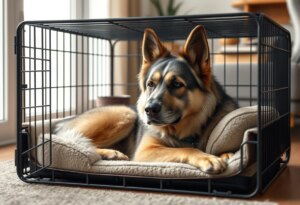
- Crate feeding: If your puppy is already crate trained, feeding them inside the crate while your senior eats freely nearby is one of the calmest options going. No negotiation needed.
- Separate rooms with non-slip mats: For dogs who need total quiet, a separate room with a textured mat under the bowl prevents sliding, which matters a lot for a senior dog with weak hips trying to stand still and eat.
Whatever you choose, this is really a multi-dog feeding setup problem, and it deserves the same intentionality you’d give any other part of senior care. If mobility issues are part of the picture, pairing an elevated dog feeder with supportive routines like the ones in our piece on dog arthritis home remedies that actually work can make a real difference in how comfortably your old dog eats and moves through the day.
Comparing Feeding Station Options for Mixed-Age Households
Here’s a quick side-by-side to help you decide what fits your home and your dogs’ needs. I’ve included the practical strengths and tradeoffs of each, since what works for a sanctuary full of shepherds might not fit a two-dog apartment.

| Station Type | Best For | Joint Relief | Setup Effort | Price Tier |
|---|---|---|---|---|
| Elevated Platform Feeder | Seniors with arthritis or neck stiffness | High | Low | $$ |
| Baby-Gated Feeding Zone | Households needing visual separation | Low | Medium | $ |
| Crate Feeding Setup | Crate-trained puppies | Low | Low | $$ |
| Dedicated Room + Non-Slip Mat | Dogs needing full quiet and privacy | Medium | Medium | $ |
| Furniture-Integrated Feeding Nook | Open-concept kitchens, style-conscious homes | High | High | $$$$ |
Setting Up Outdoor or Multi-Zone Feeding for Bigger Properties
If you’ve got a yard, a covered porch, or a sanctuary-style property like ours, feeding stations don’t have to be confined to the kitchen. Some senior dogs actually do better eating outside, away from indoor foot traffic entirely, especially if you’ve got multiple dogs sharing one home. A sturdy, weatherproofed structure can double as a quiet outdoor feeding nook if you place a bowl and mat inside it during meal times. It sounds unconventional, but I’ve used repurposed outdoor shelters, like the K&H Pet Products Two-Story Outdoor Kitty House, as a covered, elevated feeding nook for a senior dog who needed distance from a rowdy foster puppy during meals.

- 2 STORY HEATED: Cozy heated cat house has two stories plus a dining room; the perfect heated home for outdoor cats, comm…
- MULTI-CAT: Keep cats of any size warm and comfortable in this winter-proof, heated insulted cat shelter with dining room
- DINING: Dining room features a lift up roof for easy access to refill water and food; cats have interior access through …
It’s a budget-friendly workaround if you’re waiting on a more permanent indoor setup, and honestly, some senior dogs just prefer the fresh air and distance from a puppy’s chaotic energy. Whatever structure you use, the goal is the same: give your old dog a spot that’s calm, elevated off cold ground, and entirely their own.
Keeping Track of Feeding Schedules and Health Changes
One thing I don’t see enough pet parents talk about: once you separate feeding stations, it gets a lot easier to notice when your senior dog’s appetite or eating habits shift. That’s huge for catching health problems early. If you’re managing supplements, prescription diets, or tracking weight across multiple dogs, some households find it helpful to log feeding data digitally, especially if your vet has you monitoring intake closely. Even something as simple as a barcode scanner setup for tracking food and medication inventory, like the Handsfree Scanning 1D 2D Barcode Scanner, can help busy multi-dog households stay organized when juggling different diets for different life stages.

- [Versatile cordless Technology] Featuring 2.4g and connectivity, this cordless scanner easily connects with smartphones,…
- [Multiple Working Modes] Equipped with upload and storage modes, this scanner can store up to 100,000 barcodes in offlin…
- [Handsfree Scanning] With a foldable stand, this 1d 2d barcode scanner offers handsfree scanning, increasing convenience…
It’s a small, practical tool, but when you’re caring for an aging dog alongside a growing puppy, small systems that reduce mental load matter more than people expect.
Practical Setup Steps That Actually Keep the Peace
Once you’ve picked your station type, the real work is in the routine. This is where I see families either succeed quietly or struggle for months. A few things that make all the difference:
- Feed on a consistent schedule. Same times, same locations, every day. Predictability lowers anxiety for both dogs.
- Give the senior dog first access to their bowl. This preserves the natural hierarchy and reduces the tension that comes from a puppy rushing in first.
- Supervise every transition for at least the first several weeks. Don’t leave bowls out unsupervised until you’re confident both dogs respect the boundaries.
- Pick up bowls promptly after meals so there’s no lingering food to guard between meals.
- Watch body language, stiffening, freezing over the bowl, a hard stare. These are early warning signs, not “just dog stuff.”
According to the ASPCA, consistent routines and clearly defined space are two of the most effective ways to reduce resource-related tension between dogs sharing a household. That lines up exactly with what I’ve seen firsthand, over and over, in senior dogs who finally get to eat without looking over their shoulder.
Why This Matters More Than It Seems
I know feeding setups can feel like a small detail in the grand scheme of bringing home a new puppy. But for a senior dog, mealtime is one of the last remaining pleasures that should stay simple. They’ve earned that. After years of loyalty, of being your good dog through every hard season, the least we owe them is a bowl they can eat from in peace.
Setting up proper separate feeding stations isn’t about babying your old dog or playing favorites. It’s about recognizing that aging bodies and aging nerves need different things than a bouncing eight-week-old puppy does. When you build a senior dog feeding station that respects that, you’re not just avoiding conflict. You’re protecting your senior’s dignity, one meal at a time.
Frequently Asked Questions
How long should I keep separate feeding stations for my senior dog and puppy?
Honestly, many households keep separate feeding stations permanently, and that’s perfectly fine. Some dogs never need to eat side by side to have a great relationship. If you do want to eventually feed them closer together, wait until both dogs show calm, relaxed body language during meals for several consecutive weeks before making any changes.
What’s the best elevated dog feeder for a senior dog with arthritis?
Look for an elevated dog feeder with an adjustable height so the bowl sits roughly level with your dog’s chest, reducing strain on the neck and shoulders. A wide, stable base matters too, since senior dogs with joint pain can be unsteady and need a feeder that won’t shift or tip while they eat.
Is it normal for an older dog to start guarding food after a puppy arrives?
It’s common, but it’s not something to ignore. Food guarding after a new puppy joins the home usually signals anxiety about resource competition, not aggression for its own sake. Setting up separate feeding stations right away typically resolves the behavior before it has a chance to become a bigger issue.
Can I use crate feeding for a puppy while my senior dog eats freely nearby?
Yes, and it’s one of the calmest multi-dog feeding setup options available if your puppy is already comfortable in a crate. It removes any chance of bowl competition entirely and gives your senior dog full, undisturbed access to their own space during meals.
Tell your pup I said Hi! — Dawn