
A senior puppy mill rescue Golden is one of the hardest dogs in this country to find a home for, and I say that after years of watching good, gentle dogs get passed over again and again at Woody’s Place. She’s spent eight, nine, sometimes eleven years crammed in a wire cage, producing litter after litter, and the day her body finally gives out is the day she becomes worthless to the people who bred her. That’s not hyperbole. That’s the business model.
I want to walk you through what these dogs actually are, why breeders discard them the way they do, and why nobody’s lining up to adopt them. Then I want to make the case, as plainly and honestly as I know how, for why one of these overlooked seniors might be exactly the dog your home is missing.
What a Senior Puppy Mill Rescue Golden Actually Is
When people hear “puppy mill survivor,” they usually picture a puppy. Wobbly legs, matted fur, scared of everything. That image isn’t wrong, but it’s incomplete. The dogs who suffer longest in these operations are the breeding females and studs kept year after year because they’re still producing. A senior puppy mill rescue dog isn’t a puppy at all. She’s a mother who has whelped a dozen litters in a cage barely bigger than her own body, and now that her hips have given out or her uterus is diseased, she’s no longer profitable.
Once a breeding dog stops earning, she’s disposable. That’s the cold math of it. Some are surrendered to shelters. Some are dumped. Some are simply never seen again, and I try not to think too hard about what that means. The ones who do make it to rescue arrive with a body that’s been used hard and a mind that’s never known a soft blanket, a walk, or a name spoken with kindness. Think about that for a second. A dog who is eight or ten years old and has never once heard her name said gently.
This is why reputable Golden Retriever rescue groups that specialize in mill survivors matter so much. These organizations know how to intake a dog who has never worn a collar, never walked on grass, and never trusted a human hand. General shelters, as good as their intentions are, are often not built for this level of trauma.
The Numbers Behind the Suffering
I don’t like reducing these dogs to statistics, because every one of them has a name and a face and a story, but numbers do help people understand the scale of what we’re dealing with. The ASPCA estimates there are still roughly 10,000 puppy mills operating across the United States, and a large share of them are unlicensed, meaning nobody is inspecting their conditions or enforcing even the most basic welfare standards.
The Humane Society reports that breeding dogs in these operations often spend their entire lives in cages barely larger than their own bodies. Not months. Not a rough patch. Their entire lives. No grass under their paws. No sunlight most days. No toys, no walks, no laps to curl into.
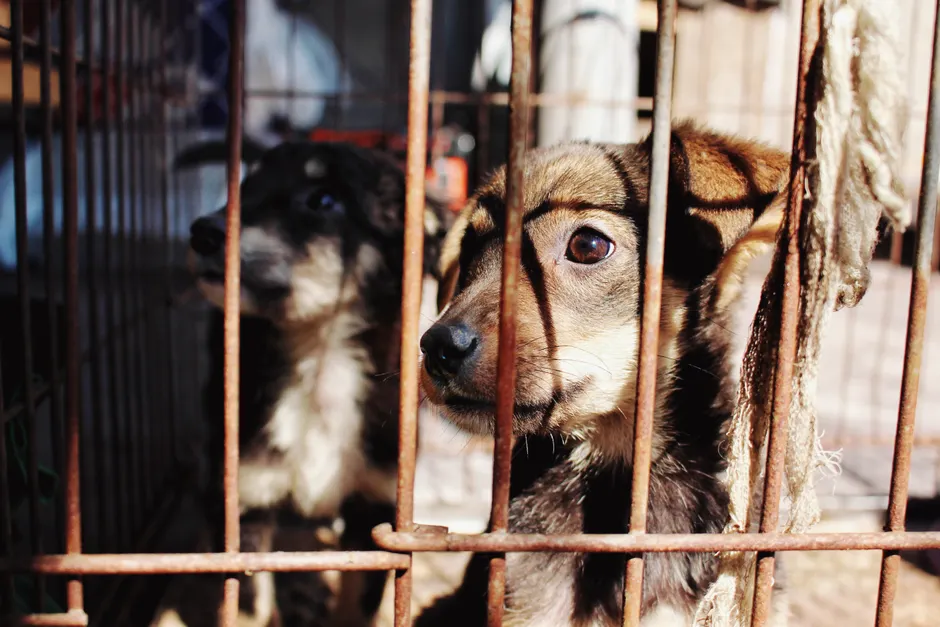
These dogs were never pets. They were inventory. And when the inventory stops producing, it gets removed. Honestly, who thinks like that??
I ask that question in every talk I give about senior dog rescue, and I still don’t have an answer that satisfies me. What I do know is that a mill rescue golden retriever who survives long enough to reach a rescue group has already beaten odds that were never fair to begin with.
Why Senior Mill Survivors Are the Hardest to Place
If you’ve spent any time around rescue, you already know the uncomfortable truth: senior dogs get overlooked, and mill survivors get overlooked even harder. Put those two things together and you have the dogs who wait the longest, if they ever get adopted at all.
A few reasons this happens, over and over:
- Fear-based behavior. These dogs often flinch at raised hands, sudden movement, or even direct eye contact. Adopters mistake this for aggression or “damage” rather than what it really is: trauma.
- Zero socialization. Many have never been inside a home. Stairs, tile floors, televisions, vacuum cleaners… it’s all terrifying and brand new, no matter how old they are.
- Untreated dental and reproductive health issues. Years of poor nutrition and repeated breeding cycles leave many females with rotted teeth, mammary tumors, or uterine infections that require immediate, often costly veterinary care.
- Adopter preference for puppies. This is the plain, hard part. Most people scrolling adoption sites want a young dog with a long runway ahead. A gray-muzzled breeding dog with health issues just doesn’t get the clicks.
A senior rescue dog adoption of this kind requires a different kind of adopter. Someone who isn’t chasing a “fixer-upper” story for the gram, but someone who understands that the last chapter of a dog’s life deserves just as much love as the first.
The Quiet, Profound Transformation
Here’s what almost nobody tells you about these dogs: give them safety and time, and something shifts. Not overnight. Not in a week. But it happens, and when it does, it’s one of the most moving things you’ll ever witness.
I’ve watched dogs who wouldn’t make eye contact for two months start leaning their whole body weight into my leg like they’re trying to disappear into me. I’ve watched a senior girl who spent nine years in a cage discover, for the first time, that grass is something you’re allowed to lie down in. These aren’t small moments. They’re everything.
Depth over noise. That’s what this work is. It’s not flashy. It’s not fast. It’s sitting on the floor at a dog’s level, saying nothing, letting her decide when she’s ready to sniff your hand. A breeding dog rescue case is never a quick fix, and if you go in expecting gratitude on day one, you’ll be disappointed. Go in expecting nothing, and you’ll be amazed by what slowly unfolds.
Practical steps that actually help during this transition:

- Fear-free introduction protocol. Keep the first few weeks boring on purpose. No visitors, no dog parks, no big outings. Let her decompress in one quiet space before expanding her world.
- Comprehensive vet workup, prioritized. Dental extraction, spay if not already done, bloodwork, and a mobility assessment for joint damage from years of cage confinement.
- Realistic timelines. Rescue groups often talk about the “3-3-3 rule,” but mill survivors frequently need closer to three to six months before real trust takes root. Some take longer. That’s not failure, that’s healing.
- Consistent routine. Same feeding time, same walk route, same voice tone. Predictability is medicine for a nervous system that’s never had any.
Enrichment matters here too, in small, low-pressure doses. Something as simple as a slow-release puzzle toy or a comfort object she can carry around gives her a sense of control she’s never had before. A little humor helps everyone survive this process too. I keep a (3 Pcs) Mentally at Home with My Dog Sticker pack on hand for my own sanity some days, because caregiving this kind of dog is a full-time emotional job, and you’re allowed to laugh at yourself a little along the way.

- 1️⃣ Perfect for Personalizing: These stickers are a great way to add a bold and expressive touch to your belongings. You…
- 2️⃣ Perfect Gift Idea: Stickers make an excellent gift choice for anyone who experiences overthinking or loves humor and…
- 3️⃣ This listing includes 3 Pcs Mentally at Home with My Dog Sticker – Funny Dog Sticker Introvert Dog Lover Emotional S…
Comparing Support Options for a Senior Mill Rescue Golden
Every senior mill survivor needs a different mix of support depending on her health and temperament, but here’s a general look at categories of items and support that come up again and again in this kind of senior rescue dog adoption journey.
| Item / Support Type | Best For | Key Feature | Price Tier |
|---|---|---|---|
| Calming Enrichment Book/Companion Story | New adopters learning gentle dog behavior | Builds empathy and patience through storytelling | $ |
| Humor & Comfort Merchandise | Caregiver morale during long trust-building phases | Lightweight emotional relief for the human side of rescue | $ |
| Enclosed Enrichment Feeder Station | Dogs needing slow, low-stress feeding routines | Reduces mealtime anxiety with a contained, predictable setup | $$$ |
| Orthopedic Recovery Bed (general category) | Seniors with joint damage from cage confinement | Pressure relief for arthritic hips and shoulders | $$$$ |
| Full Veterinary Rehabilitation Workup | Every incoming mill survivor | Dental, spay/neuter, mobility, and bloodwork combined | $$$$$ |
The Mr. Darcy the Fastidious Beagle storybook has become something I actually recommend to families bringing home a nervous senior for the first time. It’s a gentle way to open a conversation with kids in the house about why the new dog might flinch, hide, or need extra quiet. Understanding starts somewhere, and sometimes it starts with a story.

Creating a Low-Stress Enrichment World Indoors
Something people don’t expect: a lot of these dogs respond beautifully to slow, contained sensory activities before they’re ready for the wider world. It’s not about entertainment for entertainment’s sake. It’s about giving a traumatized nervous system something predictable and calm to focus on.
I’ve used enclosed feeder stations, originally designed for birds, repurposed in quiet corners of the sanctuary as a low-key visual and auditory distraction for dogs who need something gentle happening in the room without any direct pressure on them. Something like the Hamiledyi Automatic Bird Feeder No Mess Bird Cage set up near a window can give a shy dog something soothing to observe from a safe distance, a small piece of “normal life” happening nearby without asking anything of her.

It’s a small thing. But small things add up to a life that finally has texture in it, instead of four bare walls of a cage.
Why This Kind of Adoption Is a Sacred Trust
I don’t use the word “sacred” often, and I don’t use it lightly here either. When you adopt a senior puppy mill rescue dog, you’re not getting a blank slate. You’re getting a whole, complicated, wounded life, and you’re being asked to hold it gently for however many months or years remain.
This is a sacred trust. It means showing up on the hard days when she won’t eat because a truck backfired outside. It means being patient when housetraining takes far longer than it “should,” because she’s never lived indoors before. It means understanding that her love, when it finally comes, will be some of the most loyal, quietly devoted love you’ll ever receive from another creature.
People sometimes ask me if it’s “worth it” to take on a dog like this instead of adopting a younger, easier dog, or even choosing between a rescued Golden Retriever and a breeder puppy. My answer is always the same. Worth isn’t measured in convenience. It’s measured in the quiet look on her face the first time she realizes she’s safe. That look changes you.
Frequently Asked Questions
What is a senior puppy mill rescue dog exactly?
A senior puppy mill rescue dog is typically a former breeding dog, male or female, who spent years in a commercial breeding operation and is now considered too old or unproductive to keep. She’s usually surrendered or abandoned once she stops generating litters, often arriving in rescue with untreated medical issues and little to no socialization.
Why do senior mill rescue Goldens get overlooked so often?
Most adopters searching for a new dog gravitate toward puppies or younger adults, assuming they’ll bond faster and live longer. Add in fear-based behaviors and health issues common to mill survivors, and these seniors end up waiting in rescue far longer than almost any other category of dog.
How long does it take a mill rescue Golden to trust a new home?
There’s no fixed timeline, but many rescue professionals see meaningful trust begin to form somewhere between three and six months of calm, predictable routine. Some dogs open up sooner, others take a year or more. Patience matters more than speed in this process.
What health issues are common in senior breeding dog rescues?
Common issues include severe dental disease, mammary tumors, untreated uterine infections, joint damage from years of cage confinement, and malnutrition-related coat and skin problems. A full veterinary workup shortly after intake is essential for any senior puppy mill rescue dog.
If you’re weighing whether a dog like this belongs in your home, I’d gently ask you to sit with one question: who else is going to give her this chance? Rescue groups are stretched thin, and every senior mill survivor who finds a real home frees up space and resources for the next one still waiting in a cage somewhere. That’s not pressure, that’s just the truth of where we are right now.
Give her the soft bed. Give her the slow mornings. Give her the dignity she was denied for years. She’ll give you back more than you know what to do with.
Tell your pup I said Hi! — Dawn