

The best wet dog food for a senior Golden Retriever with dental pain or a dwindling appetite isn’t just about flavor. It’s about solving two separate biological problems that happen to overlap: a mouth that hurts when it works, and a nose and gut that have quietly changed how they respond to food. If your old boy or girl is leaving kibble untouched or eating half a bowl and walking away, you’re not dealing with stubbornness. You’re dealing with a behavior pattern that has a physiological trigger, and the fix starts with understanding why it’s happening before you start swapping diets.
Why Aging Golden Retrievers Stop Eating the Way They Used To
Owners often describe their senior dog as “getting picky,” but that framing misses what’s actually going on. Periodontal disease reduces mastication efficiency, meaning the mechanical act of chewing kibble becomes painful before it becomes impossible. A dog doesn’t need to lose all its teeth to start avoiding food. It just needs enough inflamed gum tissue or exposed dentin to associate the bowl with discomfort. That association builds fast. Within a few meals, you get a learned food-avoidance behavior that looks identical to loss of appetite but has a completely different root cause. This distinction matters clinically, because true anorexia (a systemic drop in hunger drive) requires a different intervention than pain-avoidance eating, which is fundamentally a conditioned response to an antecedent stimulus, in this case, the sensation of hard food hitting a sore tooth.
The practical upshot: before you assume you’re managing a nutrition problem, you’re often managing a pain-conditioning problem that happens to present at the food bowl. The best wet dog food choice will only help if it also removes the mechanical trigger causing the avoidance in the first place.
The Physiology of Geriatric Hyporexia
Hyporexia, a partial reduction in appetite rather than a total absence of it, is extremely common in aging dogs and it’s rarely caused by one single factor. A 2011 study published in the Journal of Veterinary Internal Medicine found that up to 87% of senior dogs show some degree of periodontal disease by age 8, and that this correlates directly with reduced caloric intake over time. That’s not a coincidence. Chronic oral inflammation changes how a dog approaches feeding behavior long before an owner notices bad breath or visible tartar.
There’s also a sensory piece that gets overlooked. Olfactory bulb sensitivity declines measurably with age, a finding supported by work from Hoffman and colleagues on canine sensory aging. Since dogs rely heavily on smell to trigger the appetitive phase of feeding (the interest and approach behavior before the first bite), a dulled sense of smell means less pre-feeding excitement, less saliva production, and a weaker overall drive to eat. Combine a sore mouth with a nose that isn’t sending strong “this is good” signals anymore, and you get a dog who approaches the bowl, sniffs, and walks away. That’s not defiance. That’s two overlapping physiological systems both operating below baseline.

The data is contradictory on how much diet texture alone can resolve appetite decline in senior dogs. Texture change helps in cases rooted in oral pain. It does very little in cases rooted in nausea or systemic illness. Knowing which one you’re facing changes the entire feeding protocol.
Wet Food vs. Rehydrated Kibble vs. Therapeutic Dental Formulas: A Comparative Breakdown
Not all “soft” food solutions are equal, and owners frequently default to the first option that seems easiest without checking whether it matches their dog’s actual clinical picture. Below is a breakdown of the three primary categories you’ll encounter, evaluated on protein density, moisture content, and chewing demand.
| Food Type | Moisture Content | Chewing Demand | Best For | Price Tier |
|---|---|---|---|---|
| Fresh/Human-Grade Wet Diet | Very High (70-78%) | Minimal | Severe dental pain, low appetite, picky senior dogs | $$$$ |
| Canned Grain-Free Stew | High (75-82%) | Minimal to None | Dogs needing high palatability and easy mastication | $$ |
| Rehydrated Kibble | Moderate (varies with water added) | Low to Moderate | Budget-conscious owners transitioning off dry food | $ |
| Therapeutic Hydrolyzed Formula | Low (dry) unless canned version used | Moderate | Dogs with concurrent GI disease, food sensitivities, or IBD | $$$ |
Fresh, human-grade wet diets sit at the top of this list for a reason. They deliver the highest moisture content, require essentially no mastication effort, and tend to score highest on palatability trials because the ingredients read as recognizable food rather than processed meal. The Farmer’s Dog Human-Grade Dog Food Plan, Turkey is a strong example of this category. It’s formulated with a soft, stew-like texture that a dog with inflamed gums can eat without triggering a pain response, and the turkey base tends to test well with dogs experiencing sensory decline because of its aromatic intensity.

- HUMAN-GRADE DOG FOOD: The Farmer’s Dog real, human-grade dog food is made with the same quality and standards as human f…
- A PERSONALIZED PLAN FOR YOUR DOG: Click ‘Customize Now” to take our quick 2-minute quiz and get a custom plan tailored t…
- GREAT FOR ALL AGES AND BREEDS: Great for all dog breeds and ages, our recipes have essential vitamins and minerals that …
Canned grain-free stews occupy a similarly useful middle ground, and they’re often more budget-friendly than fresh subscription models while still solving the core mechanical problem. Open Farm Wet Stews, Grain Free Wet Dog Food, Chicken falls into this category. The stew format has enough liquid content to make swallowing easy for dogs avoiding chew-heavy textures, and the ingredient sourcing tends to appeal to owners looking for a mid-tier option without the premium cost of a fully fresh subscription plan. If your dog’s appetite decline is driven mainly by oral pain rather than a diagnosed GI condition, this is a reasonable starting point before escalating to a therapeutic formula.

- Made with Animal Welfare Certified and Humanely Raised Chicken & Grass-Fed Beef as the first ingredients.
- Grain-free wet dog food with tender meaty chunks in savory gravy for a nutritious, crave-worthy meal or dog food topper.
- Complete and balanced wet dog food for adult dogs of all breeds; great for picky eaters and dogs with sensitive stomachs…
Rehydrated kibble is the most economical route, and it can work for dogs whose appetite decline is mild and whose dental disease is early-stage. But owners should treat it as a transitional strategy, not a long-term fix, since the base kibble still requires some mastication once softened, and dogs with more advanced periodontal disease will often sort through it and reject the firmer pieces. For dogs specifically dealing with joint pain alongside dental issues, it’s also worth reviewing this breakdown of the best dog food for Golden Retrievers with joint pain, since concurrent orthopedic and oral conditions often call for a combined nutritional strategy rather than treating each issue in isolation.
Therapeutic hydrolyzed diets serve a narrower but important role. These aren’t primarily texture solutions, they’re formulated for dogs with diagnosed gastrointestinal disease, food allergies, or malabsorption issues, where protein hydrolysis reduces the immune reactivity of the diet. Blue Buffalo Natural Veterinary Diet Hydrolyzed Salmon Dry Dog Food is one example, and it’s worth noting this one is a prescription-style veterinary diet, meaning it should be used under veterinary guidance rather than as a default swap. If your dog’s low appetite has a GI or dermatologic component alongside dental pain, this category deserves a conversation with your vet before you commit to it long-term.
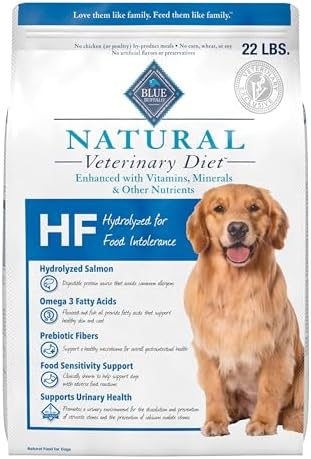
- REAL SALMON FIRST: This Blue Buffalo dry dog food is made with hydrolyzed salmon as the #1 ingredient
- VETERINARY-PRESCRIBED FORMULA: Formulated for dogs with special dietary needs, this dry dog food is packed with nutritio…
- FOOD INTOLERANCE SUPPORT: Prescription dog food formulated with hydrolyzed salmon, a readily digestible protein source, …
A Practical Feeding Protocol for Low Appetite and Dental Pain
Once you’ve selected a candidate for the best wet dog food for your dog’s situation, the introduction protocol matters almost as much as the food itself. Here’s the sequence I recommend to clients working through hyporexia in senior dogs:
- Warm the food to just above room temperature. This releases more volatile aromatic compounds, which partially compensates for the decline in olfactory bulb sensitivity noted in aging dogs. A bowl warmed to roughly body temperature will consistently outperform a cold bowl in palatability trials.
- Run a short hand-feeding trial. Offer a few small amounts by hand before placing the bowl down. This isolates whether the refusal is about the food itself or about the posture and mechanics of bowl-feeding, which can be uncomfortable for dogs with neck or spinal arthritis in addition to dental pain.
- Separate meals into smaller, more frequent portions. Four small meals a day place less cumulative strain on inflamed gum tissue than two large ones, and reduce the likelihood of a single negative feeding experience souring the dog on the whole bowl.
- Track intake in writing, not from memory. A simple log of grams consumed per meal over two weeks will tell you far more about the trend than daily impressions, which are prone to recall bias when a dog eats well one day and poorly the next.
- Rule out nausea-driven refusal before assuming pain is the sole cause. Dogs that approach food, sniff, then turn away with lip licking or excessive swallowing are often signaling nausea rather than pain avoidance.
If appetite is inconsistent even after switching textures, and especially if you’re also seeing weight loss, it’s worth reviewing this list of wet dog foods for senior Golden Retrievers losing appetite for additional formulation options tailored specifically to that pattern.

Red Flags: When It’s Not Just a Picky Eater
Golden Retrievers carry a breed-specific risk profile that owners should not overlook. Epidemiological data from Purdue’s Veterinary Medical Database has flagged this breed for elevated rates of hepatic and splenic masses in the senior years, both of which can produce low-grade nausea and appetite suppression that looks, on the surface, exactly like a texture-driven food refusal. Don’t count on a diet switch alone to resolve appetite loss if any of the following are present:
- Weight loss exceeding 5% of body weight over one to two months
- Lethargy or reduced activity accompanying the appetite change
- Vomiting, even infrequent or mild
- Pale or tacky gums, which can indicate anemia tied to internal masses
- Abdominal distension or a palpable mass
- Appetite refusal that persists even with warmed, high-palatability wet food
If any of these show up, the appropriate next step is veterinary bloodwork and imaging, not a third or fourth food trial. Cognitive changes can also complicate the picture in dogs over 10, since dogs with dementia sometimes forget feeding routines entirely rather than actively refusing food. If you’re noticing disorientation or altered sleep-wake cycles alongside the appetite change, this guide on cognitive decline signs and support in Golden Retrievers walks through how to tell the two apart.
For general reference on periodontal disease progression and its systemic effects in dogs, the American Veterinary Medical Association provides a solid overview of how oral disease connects to broader health outcomes in aging pets.
Putting It Together
The best wet dog food for a senior Golden Retriever dealing with dental pain or a fading appetite isn’t a single product, it’s a match between the dog’s specific clinical picture and the texture, moisture, and formulation that removes the barrier causing the refusal. A dog avoiding food because of periodontal pain needs a fundamentally different intervention than one avoiding food because of nausea from an underlying mass, and conflating the two leads owners to cycle through diet after diet without addressing the actual cause. Start with a careful behavioral read of how your dog approaches the bowl, apply the feeding protocol above, and treat persistent refusal as a medical question rather than a preference question.
Frequently Asked Questions
Why has my senior Golden Retriever suddenly stopped eating dry kibble?
A sudden refusal of dry kibble in an older dog is frequently tied to periodontal pain, since the mechanical force of chewing hard food can trigger discomfort in inflamed or receding gums. This often looks like pickiness but is actually a learned avoidance response. Switching to a softer, high-moisture diet and scheduling a dental exam is the recommended first step before assuming it’s purely behavioral.
Is wet food actually better than kibble for dogs with dental disease?
For dogs with active periodontal pain, wet food generally reduces the mechanical strain that triggers discomfort during chewing. It does not treat the underlying dental disease itself, so it should be paired with a veterinary dental evaluation rather than used as a standalone fix.
How do I know if my dog’s low appetite is due to pain versus illness?
Pain-driven refusal typically shows a dog approaching the bowl with interest, then pulling back once chewing begins, often favoring one side of the mouth. Illness-driven refusal, especially nausea, tends to show disinterest before the dog even begins eating, sometimes with lip licking or excessive swallowing. If refusal persists despite switching to soft, high-palatability wet food, a veterinary workup is warranted.
Can warming wet food really make a difference in appetite?
Yes. Warming food to roughly body temperature increases the release of aromatic compounds, which helps compensate for the natural decline in olfactory sensitivity seen in aging dogs. This small step often improves initial interest in the bowl even when the food formulation itself hasn’t changed.