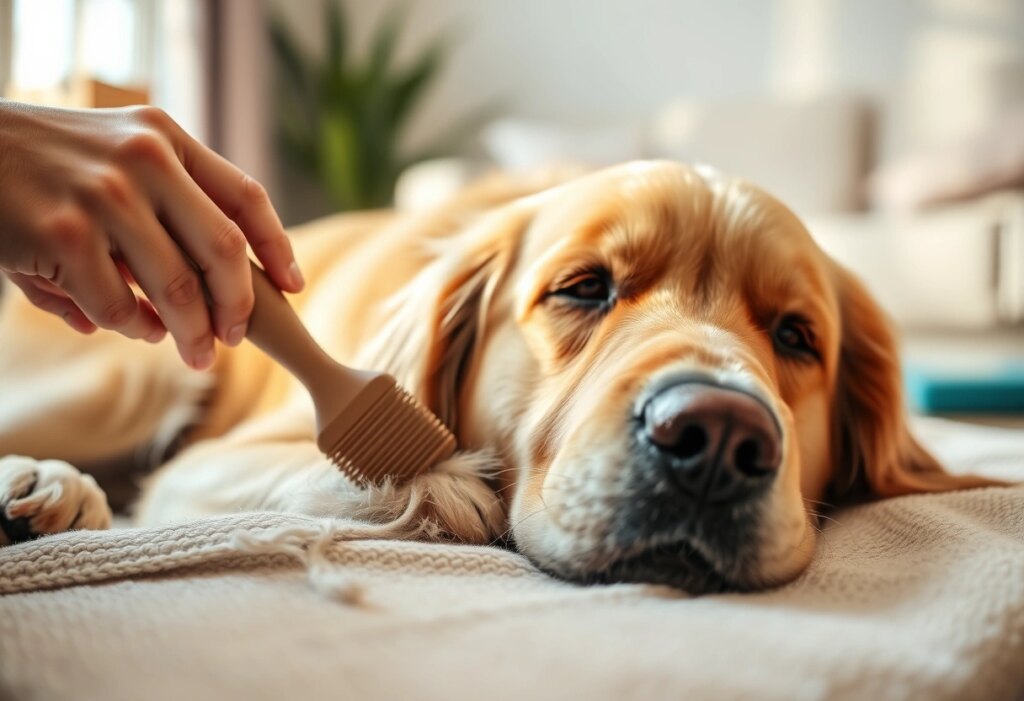

Deshedding tools for senior dogs are not a luxury purchase. They’re a comfort tool, plain and simple, and if you’ve ever sat on the floor with an old dog whose coat is coming out in clumps, you already know that. I’ve spent years at the sanctuary running my hands through fur that used to be thick and glossy and is now thin, dull, and shedding like it’s trying to disappear. That’s aging. That’s also fixable, at least the discomfort part.
Let’s talk honestly about why this happens, what actually works on old, sensitive skin, and which tools I trust enough to use on my own dogs. No fluff. No filler. Just what I’ve learned from years of hands-on care.
Why Senior Dogs Shed Differently
A young dog’s coat is a finely tuned machine. The undercoat regulates temperature, the guard hairs protect the skin, and everything cycles on a predictable schedule. Age throws a wrench into that whole system.
As dogs get older, the skin thins. Oil production drops. The hair follicles slow down and become less efficient at holding onto hair, which is part of why you’ll see more shedding, not less, in a lot of senior dogs. VCA Hospitals notes that hormonal shifts, including thyroid decline, are a real driver of increased shedding and coat changes in older dogs. If your senior’s coat has gone from thick and shiny to patchy and brittle, a vet visit to rule out thyroid or other hormonal issues is worth doing before you assume it’s “just old age.”
On top of the hormonal piece, arthritis and reduced mobility mean a lot of senior dogs aren’t self-grooming the way they used to. A younger dog rolls around, scratches, shakes off loose fur. An old dog with sore hips just… doesn’t. That undercoat builds up. It mats. It traps moisture against the skin. And that’s when you start seeing hot spots and irritation on top of the shedding itself.

I always tell people, an old dog’s coat tells you a story about what’s happening underneath it. You just have to slow down enough to read it.
What to Look for in Deshedding Tools for Senior Dogs
This is where I get a little protective, honestly. Not every tool marketed for “heavy shedders” was designed with an 11-year-old dog’s paper-thin skin in mind. Most of them were built for a healthy adult Lab. Big difference.
When you’re choosing deshedding tools for senior dogs, here’s what actually matters:
- Rounded, blunt tips. Sharp pins on thin, loose senior skin is a recipe for nicks and scratches.
- Adjustable pressure or spacing. You want control, not a one-size-fits-all rake that digs in the same way on every dog.
- Lightweight, ergonomic handles. Your wrist matters too, especially if you’re grooming multiple dogs or doing it daily.
- Quiet operation if it’s a vacuum-style tool. Old dogs, especially ones with cognitive decline, can startle easily.
- Easy self-cleaning mechanism. Shorter sessions mean less fumbling with fur stuck in the blades while your dog waits.
If your senior is also dealing with nighttime restlessness or confusion on top of the physical changes, that’s often connected to something deeper than the coat. I’ve written more about that over in Old Dog Barking at Night? Cognitive Decline Solutions, because the two often show up around the same time in a dog’s life.
Top-Rated Picks for Heavy-Shedding Senior Dogs
I’ve tested a lot of grooming tools on the pack at the sanctuary. German Shepherds, in particular, are relentless shedders, and adding age and arthritis into the mix means I’ve had plenty of trial and error to learn what actually works gently.

A self-cleaning brush is one of the easiest entry points for a senior dog’s grooming routine because it removes loose undercoat without a lot of dragging or pulling. The Self-Cleaning Deshedding Dog Cat Brush is one I reach for often on dogs with thick double coats because the retractable bristles pull fur out in one motion instead of the repeated scraping some rakes require. Fewer strokes means less time asking an achy old dog to hold still.
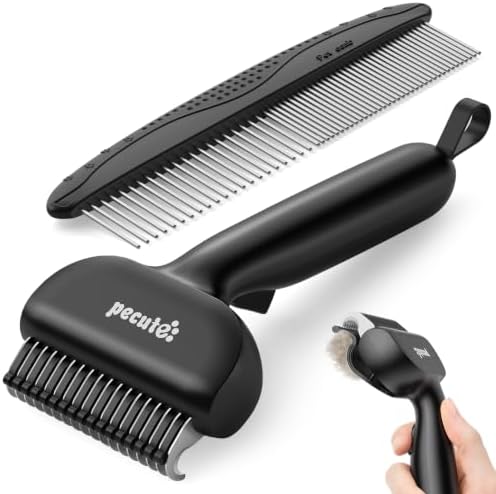
- 1-CLICK SELF-CLEANING — NO MORE MANUAL HAIR PULLING: This undercoat rake solves the grooming frustration. Just press the…
- REMOVES UP TO 95% OF LOOSE FUR — DESIGNED FOR THICK DOUBLE COATS: Engineered specifically for dense undercoats and heavy…
- GENTLE DEMATTING — ROUNDED TEETH GLIDE WITHOUT IRRITATING SKIN: Unlike sharp dematting rakes for dogs, our fine-polished…
For dogs who’ve developed small mats behind the ears or around the hips (very common when an old dog can’t twist around to groom those spots anymore), a dematting comb earns its place in the routine. The Histotree Purple Yellow 2-in-1 Pet Dematting and Deshedding tool works two ways, loosening tangles on one side and thinning undercoat on the other, without needing to switch tools mid-session. I like that it’s gentler on tender skin than a straight-blade mat splitter.

- 2-in-1 Dematting&Deshedding Dog Brush:Our Histotree purple-yellow dog grooming brush perfectly combines a dematting comb…
- Sharp Stainless Steel Blades:Crafted with premium stainless steel,the detangling comb teeth are precision-cut to glide t…
- Ergonomic Non-Slip Handle:Designed with a TPR overmolded handle,this dog dematting comb offers a comfortable,secure grip…
An undercoat rake is still, in my opinion, the workhorse of any serious shedding routine, especially heading into spring and fall coat blows. The 2 Pack Double Sided Dematting Comb for Dogs and Cats gives you two tooth spacings in one tool, which is genuinely useful because a senior dog’s coat often has thin patches right next to dense ones. You can adjust your approach spot by spot instead of running the same tool across the whole body.
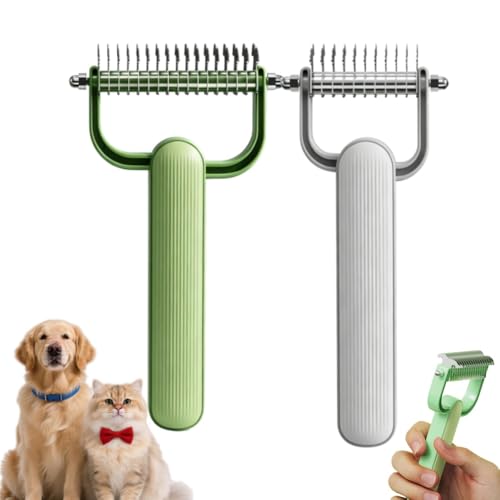
- ✨【Efficient Hair Removal Experience】The V-tooth pet grooming comb features efficient hair removal, designed for both cat…
- 🌀【Upgraded Material】This deshedding comb is crafted from upgraded material, providing durability, suitable for long term…
- 🖐【Ergonomic Handle for Comfort】The ergonomic handle of this pet comb offers comfortable design with a soft, fitted grip,…
Here’s a quick side-by-side so you can see how these compare at a glance:
| Tool | Best For | Skin Sensitivity Rating | Price Tier |
|---|---|---|---|
| Self-Cleaning Deshedding Brush | Thick double coats, quick daily sessions | Gentle | $$$ |
| Histotree 2-in-1 Dematting Tool | Mats behind ears, hips, tail | Gentle to Moderate | $$ |
| Double Sided Dematting Comb (2 Pack) | Mixed density coats, seasonal shedding | Moderate | $$ |
| Deshedding Glove (generic) | Anxious or touch-sensitive dogs | Very Gentle | $ |
| Vacuum-Style Groomer | Heavy shedders, hands-free cleanup | Moderate | $$$$ |
Grooming Frequency: How Often Is Enough?
People ask me this constantly. The honest answer depends on the dog, but there’s solid general guidance to work from. The American Kennel Club recommends brushing heavy shedders two to three times a week to cut down on mats and reduce skin irritation, and I’d say that goes double for senior dogs who aren’t self-grooming as much on their own. If your senior has a dense double coat (German Shepherds, Huskies, Golden Retrievers), I’d lean toward the higher end of that range, maybe even short daily sessions during a seasonal blow. Shorter and more frequent beats one long, exhausting Saturday session every time. An old dog’s patience runs out fast, and so does yours if you’re wrestling with a mat that’s been building for two weeks. Nutrition plays into coat health too, more than people realize. A dog who’s underweight or losing muscle often has a dull, brittle coat on top of everything else, and that’s a conversation worth having with your vet. If weight loss has crept up alongside the shedding, it’s worth looking at 5 Best Senior Dog Foods for Weight Gain in 2026 to make sure the diet is supporting both body condition and coat quality.
Making Grooming a Bonding Ritual, Not a Battle
This is the part I care about most, honestly. Grooming shouldn’t be something you *do to* your dog. It should be something you do *with* them. I’ve had dogs come to the sanctuary who flinch at the sight of a brush because somewhere along the way, grooming meant pain, or rushing, or being pinned down. That breaks my heart every single time. It doesn’t have to be that way. A few things I’ve learned, the hard way, over years of sanctuary life:
- Start with your hands, not the tool. A few minutes of slow petting tells you where the sore spots are before a brush ever touches the coat.
- Watch the body language. Ears pinned back, tail tucking, a stiff freeze. Those are your dog telling you to slow down or stop, not push through.
- Break it into short sessions. Five minutes twice a day beats thirty minutes once a week for a dog with arthritis or anxiety.
- Let them lie down comfortably. Standing for long grooming sessions is genuinely hard on old joints.
- Talk to them the whole time. A soft voice regulates an old dog’s nervous system more than people give it credit for.
The right deshedding tools for senior dogs make this so much easier, but the tool is only half the equation. The other half is patience, and reading your dog like the whole language it is. When you get that rhythm right, grooming becomes one of the quietest, most connected moments of your day together. I promise you that.
Choosing the Right Tool for Your Dog’s Coat and Comfort
There’s no single “best” answer here, and I get a little wary of anyone who tells you otherwise. A short-coated senior Beagle has completely different needs than a double-coated Shepherd mix with thinning fur and sore hips. What I’d suggest: start gentle. A deshedding glove or a soft self-cleaning brush is a low-risk way to see how your dog tolerates grooming tools before you introduce anything with metal teeth. If your dog handles that well and you’re still seeing heavy shedding or mats, work your way up to an undercoat rake or dematting comb. And if you notice bald patches, redness, or your senior seems newly pain-sensitive to brushing in areas that used to be fine, that’s a vet conversation, not a “try a different brush” situation. Sudden changes in coat or skin sensitivity in an older dog deserve real attention. Deshedding tools for senior dogs are meant to support comfort, not mask something that needs medical eyes on it.
Frequently Asked Questions
Why is my senior dog shedding more than they used to?
Increased shedding in older dogs is often tied to hormonal changes, including thyroid decline, along with thinner skin and reduced self-grooming due to arthritis or joint pain. If the shedding is sudden or severe, a vet check is worth scheduling to rule out an underlying medical cause.
What is the best undercoat rake for dogs with sensitive skin?
Look for an undercoat rake for dogs with rounded, blunt-tipped teeth and adjustable spacing so you can control pressure across thin or uneven patches of coat. Double-sided combs that offer two tooth densities in one tool tend to work well for senior dogs with mixed coat texture.
Are deshedding gloves better than brushes for older dogs?
Deshedding gloves are often a gentler starting point because they mimic petting, which can feel less invasive to a nervous or touch-sensitive senior dog. Brushes and rakes tend to remove more undercoat overall, so many pet parents use gloves for daily maintenance and a brush or comb for deeper sessions once or twice a week.
How often should I groom a heavy-shedding senior dog?
The American Kennel Club recommends brushing heavy shedders two to three times a week, and senior dogs with double coats or reduced mobility often benefit from short daily sessions instead of one long weekly grooming marathon. Shorter, more frequent sessions are typically easier on aging joints and patience.
Grooming an old dog isn’t just about keeping fur off your couch, even though we all know that struggle. It’s one more quiet way of saying I see you, and I’ve got you, in a language your dog understands completely. Take it slow. Let the tool do the work, not your grip. And give yourself grace on the days it doesn’t go perfectly, because it won’t always, and that’s okay too. Tell your pup I said Hi! — Dawn