


Dog beds for arthritis aren’t a luxury purchase. They’re a daily quality-of-life decision, and I’ve watched enough old dogs struggle to get up off a thin, flattened cushion to know exactly how much this matters. If your senior pup groans before standing, circles three times before settling, or just can’t seem to get comfortable anymore, the surface they’re sleeping on is probably part of the problem.
I run a sanctuary for senior German Shepherds. Most of my residents come to me already stiff, already sore, already carrying years of wear in their hips and elbows. One of the very first things I check when a new dog arrives isn’t their diet or their meds. It’s what they’re sleeping on. Because a bed that doesn’t support failing joints is actively making pain worse, every single night.
Why Orthopedic Support Matters More Than People Realize
Here’s a number that should stop you in your tracks: osteoarthritis affects up to 40% of dogs of all ages, and roughly 80% of dogs over age 8, according to research cited by the American College of Veterinary Surgeons. Read that again. Eighty percent. That’s not a rare condition affecting unlucky dogs. That’s most of our seniors, most of the time, quietly hurting in ways they can’t tell us about with words.
Dogs don’t complain the way we do. They adapt. They compensate. They get quieter. And a lot of pet parents mistake that quiet for “he’s just getting old and mellow” when really, he’s in pain and has learned that moving less hurts less. This is exactly why dog beds for arthritis deserve real attention instead of an afterthought grab at the pet store checkout line.
A dog lying on a hard floor or a cheap, flattened cushion is putting direct pressure on inflamed joints for hours at a time. No wonder they wake up stiffer than when they laid down. The right surface distributes weight evenly, keeps joints aligned, and takes pressure off the exact spots that hurt the most.
Comfort isn’t indulgence when you’re old and hurting. It’s medicine. A good bed won’t cure arthritis, but it can be the difference between a dog who dreads getting up and one who still greets the morning with a wag.
What Actually Separates a True Orthopedic Bed From Marketing Fluff
I’ve been burned by “orthopedic” labels before. Slapping that word on a package doesn’t make a bed therapeutic. Here’s what I actually look for:
- High-density memory foam, minimum 3 to 4 inches thick, ideally with an ILD (Indentation Load Deflection) rating that tells you it will resist compression over time
- No cheap poly-fill base. Poly-fill flattens within weeks under a dog’s body weight and offers zero real joint support once it’s compressed
- A supportive base layer underneath the foam, not just foam floating loose in a cover
- Washable, removable covers, because senior dogs have accidents and messes happen
- Low entry height for dogs who can no longer lift their legs high over a bolstered rim
Cheap poly-fill beds look plush in the store photo and then go flat as a pancake within a month of real use. Your dog ends up sleeping on essentially the floor again, just with a layer of fabric on top. That’s the marketing fluff I mentioned. It photographs well. It doesn’t hold up.
The 5 Best Dog Beds for Arthritis and Joint Pain
I’ve broken this down by the actual situations senior dogs face, because “best” depends heavily on your dog’s specific needs. A dog who likes to lean against something while resting needs a different shape than one who just needs a low, easy entry point.
1. Egg-Crate Memory Foam for Full-Body Pressure Relief
Egg-crate style memory foam contours to a dog’s body shape, which spreads weight across a larger surface area instead of concentrating it on hips, elbows, and shoulders. This matters enormously for dogs with hip dysplasia or elbow arthritis, where those pressure points are exactly where the pain lives.
The INVENHO Fluffy Orthopedic Dog Beds Large Sized Dog, XL Egg-Crate uses this contouring design paired with a fluffy top layer, which gives you both structural support underneath and a soft, inviting surface on top. For a dog who has trouble finding a comfortable position no matter how they shift, that contoured egg-crate foam does a lot of the work for them.

- ORTHOPEDIC SUPPORT: Give your pet the true comfort with this fluffy orthopedic dog bed. Featuring an ultra-soft fluffy f…
- COMFORT AS PRIORITY: Three-sided bolster providing unmatched cushioning for ultimate comfort and security and providing …
- SUPERIOR SOFTNESS SLEEP SURFACE: This calming long plush orthopedic dog bed surrounding your pet in soft, supportive com…
2. Bolstered Orthopedic Beds for Dogs Who Like to Lean
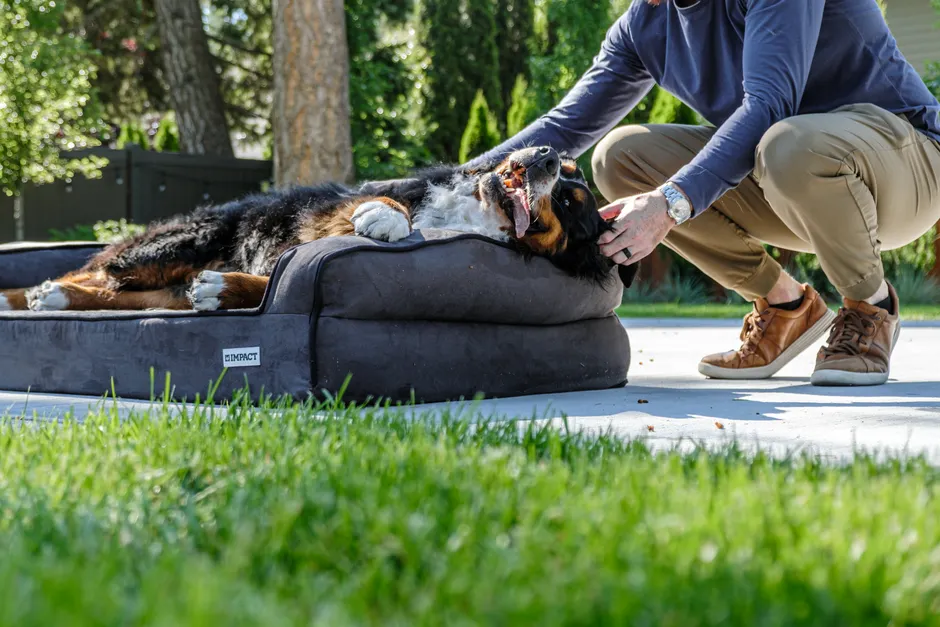
Some old dogs love a raised edge to rest their head on. Others use the bolster to brace themselves while lowering into a lying position, which takes real strain off wobbly back legs. If your senior leans on furniture or door frames for stability, a bolstered bed is worth trying.
The Comfort Expression Orthopedic Dog Bed for Extra Large Dogs gives that raised bolster edge while still keeping a thick supportive base underneath, so you’re not sacrificing joint support for the sake of that leaning comfort. For bigger senior breeds especially, that extra surface area and the raised rim combination tends to get used constantly once dogs discover it.

- 3-SIDED DESIGN FOR SECURITY & COMFORT Our dog bed features a snug, 34-sided bolster design that wraps around your pet, p…
- EASY-CLEAN & WATERPROOF PROTECTION Equipped with a waterproof inner liner that guards against accidents, this bed keeps …
- LONG-LASTING CONSTRUCTION Designed for everyday use, our dog bed is made to withstand the test of time. According to act…
3. Low-Rise Entry Beds for Mobility-Limited Seniors
If your dog can no longer step high or has started to hesitate before lying down, height matters more than plushness. A low profile bed means less effort to get in and out, which reduces the risk of a slip or an awkward fall that can turn into a much bigger injury on top of the existing arthritis.
This is where a straightforward flat memory foam design earns its keep. The NANDOG Orthopedic Memory Foam Dog Bed keeps a low, easy entry profile while still delivering real memory foam density underneath, so your dog isn’t trading joint support for accessibility. That combination is honestly harder to find than it should be.

- Orthopedic Memory Foam: Provides superior support and comfort, ideal for dogs with joint pain and arthritis, promoting b…
- Removable, Washable Cover: Easily maintain hygiene and freshness with a convenient cover that can be removed and machine…
- Premium Micro-plush Fabric: Crafted from high-quality micro-plush fabric for a luxurious feel, offering a cozy and invit…
4. Waterproof, Washable Covers for Incontinence
Let’s be honest about something a lot of articles gloss over: senior dogs have accidents. Incontinence is common with age, and a bed that can’t handle that reality is going to end up smelling awful, growing bacteria, and eventually getting tossed out entirely. Look for a fully removable, machine-washable cover with a waterproof liner underneath the foam layer, not just water resistant fabric on top.
This is a feature, not an afterthought. A dog who’s had an accident and then gets shamed off their own bed for it, or left to lie in a soggy mess because the cover can’t be washed, is being failed by their own gear. Dignity in aging includes managing the messy parts without drama.
5. Heating-Element Beds for Stiff Mornings
Cold mornings are brutal on arthritic joints. If you’ve ever woken up with a stiff back on a chilly day, you already understand what your dog feels every single morning during colder months. Low-voltage heating beds add gentle, consistent warmth that helps loosen stiff joints before your dog even attempts to stand.
These work especially well paired with an already supportive foam base, since the heat helps with circulation while the foam handles the mechanical pressure relief. If you’re setting up a rest space near a drafty door or a cold tile floor, this category deserves serious consideration.

HTML Comparison Table: 5 Best Dog Beds for Arthritis and Joint Pain
| Bed Type | Best For | Foam Thickness | Washable Cover | Price Tier |
|---|---|---|---|---|
| Egg-Crate Memory Foam (INVENHO) | Full-body pressure relief, hip/elbow arthritis | 3-4 inch contoured | Yes | $$ |
| Bolstered Orthopedic (Comfort Expression) | Dogs who lean or brace while lying down | 4 inch supportive base | Yes | $$$ |
| Low-Rise Entry (NANDOG) | Mobility-limited seniors, fall risk reduction | 3-4 inch dense foam | Yes | $$ |
| Waterproof/Washable Cover Style | Incontinent seniors, easy cleanup | Varies (3+ inch recommended) | Fully removable, waterproof liner | $$$ |
| Heating-Element Bed | Stiff mornings, cold climates | Varies, often paired with foam | Usually yes | $$$$ |
Sizing and Placement: Getting the Setup Right
A great orthopedic dog bed placed wrong or sized wrong loses most of its benefit. The AAHA Senior Care Guidelines, developed through veterinary consensus, recommend sizing a bed so your dog can fully stretch out with roughly 6 extra inches of room beyond their full-body length. A dog curled into a ball because their bed is too small isn’t getting proper joint alignment, no matter how good that foam is.
Placement matters just as much as sizing. Put the bed on non-slip flooring. A dog with arthritis pushing off a slick hardwood or tile floor to stand up is one bad slip away from a much more serious injury. If your floors are slippery, a rug or grippy mat underneath the bed itself solves this cheaply and effectively.
Think about traffic flow too. If your senior dog shares space with other pets, you’ll want to consider how beds interact with the rest of the household layout. Families managing a mixed-age household often benefit from baby gates for separating puppies and senior dogs, especially if a younger dog tends to bulldoze through a senior’s rest space without meaning any harm. An arthritic dog needs a rest area that’s actually protected from collision, not just comfortable.
And if nighttime restlessness or disorientation is part of your dog’s picture on top of the joint pain, it’s worth pairing the right bed setup with strategies from our guide on calming products for dog sundowning at night. Physical comfort and emotional regulation work together more than people expect.
Sanctuary-Tested Caregiving Tips
After years of caring for dogs whose bodies were failing them in one way or another, I’ve picked up habits that go beyond just buying the right bed. These are the small, quiet things that actually make a difference:
- Rotate beds if you have more than one, so foam doesn’t compress unevenly in the same spots day after day
- Check for pressure sores regularly, especially on bony areas like hips and elbows, particularly in thin or very senior dogs
- Watch body language, not just behavior. A dog who hesitates before lying down, circles excessively, or sighs heavily while settling is telling you something about comfort levels
- Replace foam that’s gone flat. If you can feel the floor through the bed when you press your hand down, your dog can feel it too
- Don’t assume price equals quality. I’ve seen budget beds outperform expensive ones because the foam density was simply better matched to the dog’s weight and needs
Honestly, the price tag tells you almost nothing on its own. What tells you everything is watching your dog actually use the bed. Do they choose it over the couch or the cold floor? Do they seem to settle faster, sleep longer, wake up moving a little easier? That’s your real answer, every time.
Choosing among the dog beds for arthritis available right now isn’t about finding one magic product. It’s about matching the bed to your specific dog’s body, their habits, and the particular way arthritis shows up for them. Some dogs need the leaning support of a bolster. Others just need something low enough to get into without wincing. There’s no universal answer, and honestly, who thinks there should be one? Every old dog is different, and their comfort deserves that same individual attention.
Frequently Asked Questions
How thick should an orthopedic dog bed be for arthritis?
Look for a minimum of 3 to 4 inches of high-density memory foam. Thinner foam compresses quickly under a dog’s weight and stops providing real joint support within weeks. For larger senior breeds, thicker foam in the 4 to 5 inch range holds up better over time and continues distributing pressure away from hips and elbows.
Can the right dog bed actually reduce arthritis pain?
A supportive bed won’t cure arthritis, but it can meaningfully reduce daily discomfort by relieving pressure on inflamed joints and improving sleep quality. Dogs resting on proper orthopedic surfaces often show less morning stiffness and more willingness to move once they’re up, since they aren’t compounding existing joint pain with hours of pressure against a hard or flattened surface.
How do I know if my dog’s current bed is too flat or worn out?
Press your hand firmly into the center of the bed where your dog usually lies. If you feel the floor or the bed’s base through the foam, it has compressed past the point of providing real support. Visible dents that don’t spring back after your dog gets up are another clear sign it’s time to replace it.
Should senior dogs with arthritis sleep on heated beds?
Heated beds can genuinely help dogs who get stiff overnight or live in colder climates, since gentle warmth supports circulation and can ease morning stiffness. They work best when combined with a supportive foam base rather than used alone, and it’s a good idea to check with your veterinarian first if your dog has any skin sensitivities or circulation issues.
If you take one thing from all of this, let it be this: your old dog’s comfort isn’t a small detail tucked away in a corner of their care. It’s central to it. Watching a dog who once dreaded standing up start greeting mornings with a little more ease, that’s worth every bit of attention we put into getting their rest space right. Tell your pup I said Hi! — Dawn