A dog raincoat only works if the dog underneath it will actually tolerate wearing one, and for Golden Retrievers that’s a bigger behavioral question than most buying guides let on. Because Goldens carry a dense double coat with a water-resistant outer layer already built in, their response to wearable gear is more variable than you’d see in a short-coated breed, and picking the right dog raincoat means understanding both the material science and the animal wearing it. I’ve spent a good portion of my career studying tactile sensitivity in domestic dogs, and I can tell you the fit of the product matters almost as much as how you introduce it.
Why Coat Type Changes How a Golden Retriever Experiences a Raincoat
Golden Retrievers are double-coated: a coarse, water-repellent guard coat over a dense insulating undercoat. That structure already provides some natural resistance to light moisture, which is part of why some Goldens seem indifferent to a dog raincoat while others react as though you’ve strapped a foreign object to their spine. The variability isn’t random. Sensory processing research in domestic dogs points to individual differences in tactile threshold, meaning some dogs habituate quickly to novel pressure on the trunk and legs, while others show sustained avoidance behaviors (freezing, low body posture, exaggerated gait) because the sensation registers as a low-grade aversive stimulus rather than background noise. Breed temperament surveys and general canine sensory research, including work compiled by the American Kennel Club, support the idea that coat density and skin sensitivity both influence how readily a dog accepts wearable equipment. Practically, this means you should treat the first raincoat introduction as a behavioral trial, not just a shopping decision.
Fit Criteria for the Best Dog Raincoat for a Golden Retriever
Fit failures are the number one reason a dog raincoat gets rejected, and it’s rarely about the dog being “difficult.” Golden Retrievers, per AKC breed standards, typically stand 21.5 to 24 inches at the withers and weigh 55 to 75 pounds, but chest girth and neck circumference vary enough within that range that a size chart alone won’t guarantee success. Three measurements matter most:
- Chest girth: measured at the widest point behind the front legs. A raincoat that’s snug here without restricting rib expansion during exertion is critical, since panting and heavy breathing in wet, warmer conditions increase thoracic movement.
- Neck circumference: should allow two fingers of slack. Too tight, and you risk irritation at the trachea; too loose, and the coat rides up and creates a flapping sensation that most dogs find aversive.
- Leg strap placement: this is where gait interference shows up. Straps positioned too close to the elbow or hock joint can alter stride length, and a dog compensating for a strap will often adopt a shortened or choppy gait within the first few steps.
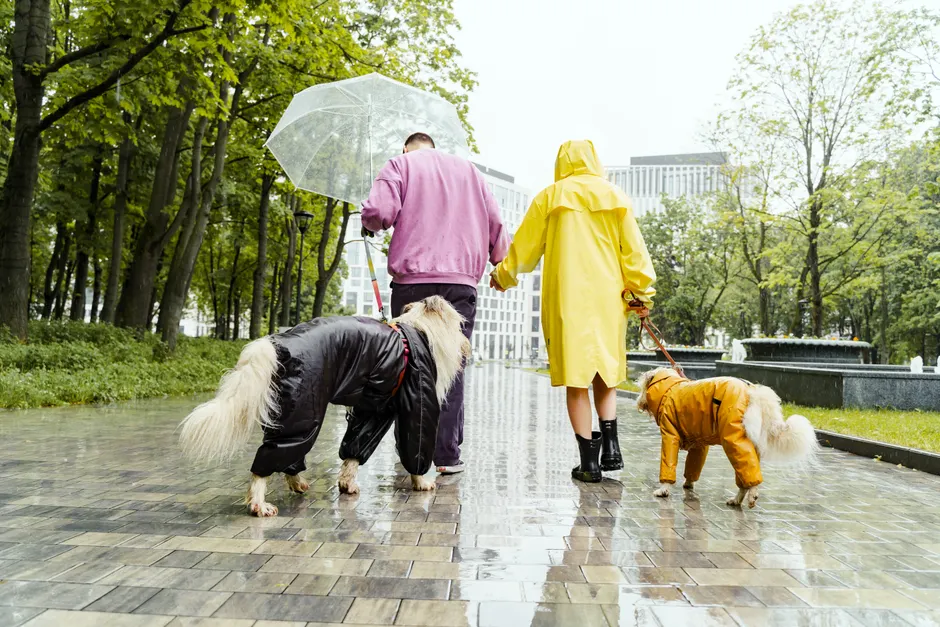
If you’re outfitting an active Golden that needs full coverage in sustained rain, a 4-Leg Full Body Dog Rain Suit with Reflective Strips & Leash covers the belly and legs while keeping reflective visibility for early morning or evening walks, which matters functionally for dogs walked near traffic in low light.

- Full Waterproof Protection – Waterproof and weather-resistant fabric keeps your dog dry in rain, snow, and wet condition…
- Full Body & 4-Leg Design —Full body coverage with a 4-leg design helps protect your dog’s legs, belly, and chest from …
- Comfortable & Flexible Fit — Made for comfort and freedom of movement. Soft inner feel and flexible structure allow you…
Material Tradeoffs: Waterproof Shell vs Breathability
Every dog raincoat on the market is negotiating the same tension: fully waterproof shells block moisture well but trap heat and humidity against the skin, while breathable fabrics ventilate better but sacrifice some water resistance in sustained downpours. For a double-coated breed like the Golden, this tradeoff is more consequential than for a thin-coated dog, because the undercoat already insulates. Layering a non-breathable shell on top can push core temperature up faster than owners expect, even in cool weather, particularly on a brisk walk or during play.
Behavioral data backs up why the introduction process matters as much as material choice. A study in Applied Animal Behaviour Science (2019) examining owner-reported outcomes found that roughly 74% of owners observed reduced anxiety behaviors, including pacing, lip licking, and avoidance, when wearable gear was introduced using a gradual desensitization protocol rather than direct application. That’s a meaningful number. It tells us the aversive reaction many owners attribute to “hating clothes” is often actually a conditioned response to abrupt, forced exposure rather than a fixed trait. This is the same underlying mechanism at play in other wearable-gear categories; if you’ve read our breakdown on what actually stops separation barking, a calming bed or an anxiety wrap, you’ll recognize the pattern: gradual, choice-based exposure outperforms forced compliance almost every time.
The dog raincoat isn’t the variable that determines success. The introduction protocol is. A well-fitted coat applied abruptly will still generate avoidance behavior, while even a mediocre-fitting coat introduced gradually, with reinforcement, tends to be tolerated.
Step-by-Step Counterconditioning Protocol for First-Time Raincoat Introduction
I recommend a structured five-day protocol rather than a single “just put it on” attempt. This mirrors standard desensitization procedures used in clinical behavior modification.
- Day 1: Leave the unworn dog raincoat on the floor near the food bowl or resting area. No handling. Let the dog investigate on its own terms. Pair proximity to the garment with high-value treats.
- Day 2: Drape the coat over your dog’s back for 3 to 5 seconds without fastening any straps. Reinforce immediately with a treat, then remove it. Repeat 3 to 4 times across the day.
- Day 3: Fasten the neck closure only, for a duration of 30 seconds, while your dog is engaged in a calm activity like eating a slow-feeder meal. Remove after the activity ends, not when the dog shows the first sign of discomfort (removing on distress cues reinforces the distress).
- Day 4: Fasten all closures and allow 5 to 10 minutes of free movement indoors. Watch gait, not just facial expression, for signs of strap interference.
- Day 5: Take a short, low-stimulation walk in the raincoat, ideally in dry weather first, before attempting an actual rainy-day walk.
If your Golden shows persistent avoidance past day 5, that’s useful data. It suggests either a fit problem worth re-checking, or a lower tactile threshold that will need a slower timeline, not a failed protocol.
Case-Profile Evaluation: Matching Raincoat Style to the Individual Dog
Not every Golden Retriever needs the same coverage. I evaluate this the way I’d evaluate any Happiness Plan case profile, by cross-referencing mobility status, joint sensitivity, and activity level against garment design.

| Profile | Recommended Style | Why It Fits | Price Tier |
|---|---|---|---|
| Active, younger-adult Golden, no joint issues, walked in varied weather | Full-body dog rain suit with leg coverage | Maximizes coverage and belly protection without limiting stride in a dog with normal joint range | $$$ |
| Senior Golden with mild hip or elbow arthritis | Lightweight hooded raincoat, minimal leg straps | Reduces strap contact near sensitive joints while still shielding the torso and head from rain chill | $$ |
| Golden with sensory sensitivity or first-time wearer | Belly-band or chest-panel style, breathable fabric | Lower total body contact area makes desensitization faster and less overwhelming | $$ |
| Cold-sensitive senior or dog with reduced body fat | Insulated hooded raincoat with fleece lining | Combines water resistance with retained body heat for dogs less able to self-regulate temperature | $$$$ |
For seniors managing joint stiffness, minimizing points of contact near the elbows and hocks is a real functional consideration, not just a comfort preference. A GoTags Personalized Dog Raincoat with Hood, Cold Weather option works well here, since the hood adds coverage without adding strap pressure near the joints, and the personalization feature is a practical bonus for identification during rainy walks when visibility is already reduced.

- Uniquely Tailored for Your Pup – Leave behind the notion of one-size-fits-all. Our raincoat boasts an array of hues and …
- Be Seen, Be Safe – Watch your dog gleam in the darkness with the addition of reflective detailing along the jacket’s tri…
- Swift Dressing and Leash Access – Preparing for your outdoor excursions is a breeze, thanks to the secure and expeditiou…
For dogs still in the early desensitization phase, or Goldens who simply show low tolerance for full-body contact, a reduced-coverage option is the more sensible starting point. A Waterproof Corgi Raincoat, Breathable Dog Belly & Chest style, despite the name, illustrates the belly-and-chest coverage pattern well: less total surface area in contact with the body, which shortens the desensitization timeline considerably for sensitive dogs, though owners of larger Goldens should confirm chest girth sizing carefully before purchase.
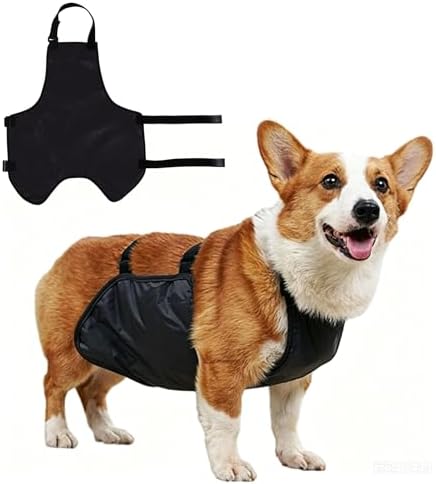
- Waterproof & Breathable Fabric:Crafted from premium waterproof polyester material with good air permeability. It won’t m…
- Targeted Chest & Belly Protection:Specially designed for short-legged dogs like Corgis. It focuses on shielding the ches…
- Convenient for Free Movement & Excretion:The reasonable cut won’t restrict your dog’s daily activities. It features a pr…
What “Best” Actually Means for Golden Retriever Rain Gear
There’s no single best dog raincoat that applies universally to the breed, and I’d push back on any guide that claims otherwise. The best dog raincoat for a Golden Retriever is the one that fits the individual dog’s chest girth and neck circumference without restricting gait, matches the coverage level to that dog’s joint health and activity pattern, and gets introduced through a structured, choice-based protocol rather than forced application. Owners chasing a waterproof dog coat purely on reviews or aesthetics, without factoring in their own dog’s tactile sensitivity, are the ones most likely to end up with an unused product in a drawer. If your dog also shows nighttime restlessness or vocalization independent of weather-related anxiety, it’s worth reading about whether nighttime barking in senior dogs signals cognitive changes rather than a gear-related issue, since the two can sometimes be mistaken for each other.
Common Mistakes That Undermine Even a Well-Fitted Dog Raincoat
A few patterns show up repeatedly in behavior consultations involving wearable gear:
- Removing the coat the instant the dog shows stress signals. This inadvertently reinforces the stress response through negative reinforcement (removal of the aversive stimulus contingent on the behavior).
- Skipping the indoor trial period. Introducing a dog raincoat for the first time during an actual rainstorm compounds two novel stressors (rain sound and sensation, plus garment pressure) simultaneously.
- Assuming size chart weight ranges are sufficient. Golden Retrievers within the same weight bracket can have meaningfully different chest girths depending on build, so always measure directly rather than relying on breed averages alone.
- Ignoring gait changes. A subtle limp or shortened stride in a new dog raincoat is a signal to adjust strap placement immediately, not push through the walk.
If barking or vocal stress shows up specifically during gear introduction, it’s a related but separate behavioral thread worth cross-referencing with our piece on calming chews versus anxiety wraps for managing senior dog barking, since some of the same antecedent-management principles apply.
Frequently Asked Questions
Do Golden Retrievers actually need a dog raincoat given their double coat?
Golden Retrievers have some natural water resistance from their outer guard coat, but that resistance is limited in sustained or heavy rain. A dog raincoat becomes especially useful for senior Goldens, dogs with reduced body fat, or dogs prone to getting chilled after walks, since prolonged dampness against the undercoat can slow drying time and contribute to skin irritation.
How do I know if a dog raincoat fits correctly?
Check chest girth at the widest point behind the front legs, allow two fingers of slack at the neck closure, and watch your dog’s gait immediately after fastening leg straps. If stride length shortens or the dog hesitates to move normally, the straps are likely positioned too close to a joint and need adjusting.
Why does my Golden Retriever freeze or refuse to walk in a raincoat?
Freezing is a common avoidance response to unfamiliar tactile pressure, particularly when the coat was introduced abruptly. This is a conditioned reaction, not a fixed personality trait, and it typically resolves with a gradual, reinforcement-based desensitization protocol introduced over several days rather than a single attempt.
Is a full-body rain suit or a belly-band style better for senior Goldens?
For senior Goldens with joint sensitivity, a lighter belly-band or chest-panel style with fewer straps near the elbows and hocks is generally the more comfortable choice. Full-body coverage offers more protection from rain but requires careful strap placement to avoid interfering with an already compromised gait.