


Hypoallergenic dog breeds are not allergen-free, and if you have spent any time reading marketing copy for Goldendoodles, that sentence probably feels like a betrayal. But the data on this is consistent, and as a behaviorist who spends a fair amount of time correcting well-meaning misinformation, I think pet parents deserve the accurate version rather than the comforting one. The good news is that accurate does not mean discouraging. Several golden-coated crosses genuinely do reduce airborne allergen load compared to a standard double-coated retriever, and for many allergy sufferers that reduction is the difference between daily antihistamines and an occasional sneeze. Let’s look at what the research actually shows, which breeds perform best, and how to build a management plan around realistic biology instead of marketing language.
The “Hypoallergenic” Myth, According to the Research
The term “hypoallergenic dog breeds” gets used constantly in breeder listings and pet store signage, but it originated more from marketing convenience than veterinary allergen science. A frequently cited 2011 study published in the American Journal of Rhinology & Allergy (Nicholas et al.) measured Can f 1, the primary dog allergen protein, in household dust samples across homes with breeds marketed as hypoallergenic versus homes with non-hypoallergenic breeds. The finding surprised a lot of breeders: there was no statistically significant difference in Can f 1 concentration between the two groups. Some “hypoallergenic” breed homes actually tested higher.
This is not a reason to abandon the search for allergy-friendly dogs entirely. It is a reason to be precise about what actually changes when you choose a low-shedding coat type, and what does not. Coat texture affects how allergens travel through your home. It does not affect how much allergen protein a dog’s body produces in the first place. That distinction matters more than any breed label.
The Biology of Canine Allergens: It’s Not the Fur, It’s the Protein
Can f 1 is a lipocalin protein secreted by sebaceous glands in the skin and also present in saliva. It is not manufactured by hair follicles themselves. Fur becomes a delivery vehicle because dogs groom themselves with their tongue, distributing saliva across the coat, and because dander (shed skin cells coated in sebaceous secretions) attaches to loose hairs and becomes airborne when that hair is shed.
This is the mechanism that explains why low shedding dogs cause fewer reactions for many people even though they are not allergen-free. A curly or wavy coat, like you see in Poodle-cross breeds, traps shed hair and dander within the coat structure rather than releasing it into the air the way a double coat does during seasonal blowout. Less airborne dispersal generally means less allergen inhaled per hour of exposure, which for a lot of allergy sufferers is enough to stay below their personal symptom threshold. But the protein is still being produced. It is still on the dog’s skin, saliva, and eventually on your furniture and clothing. Bathing and coat maintenance become functional allergen-load management, not cosmetic upkeep.

Comparative Breakdown: Golden-Coated Breeds Ranked for Allergy Tolerance
If you want the retriever look with a coat structure that behaves more favorably for allergy purposes, Poodle-cross breeds dominate this category for a reason: the Poodle parent contributes the tight, low-shedding curl pattern while the retriever parent contributes the golden coloring and temperament people are drawn to. Below is a comparative look at seven breeds and crosses that deliver that aesthetic with varying grooming demands and reported owner tolerance.
| Breed | Shedding Index (1-10) | Grooming Demand | Reported Owner Allergy Tolerance | Price Tier |
|---|---|---|---|---|
| Goldendoodle | 2 | High (professional grooming every 6-8 weeks) | Good to Very Good | $$$ |
| Golden Mountain Doodle | 3 | High | Moderate to Good | $$$ |
| Irish Doodle | 2 | High | Good | $$$ |
| Golden Irish | 4 | Moderate | Moderate | $$ |
| English Golden Doodle | 2 | High | Good to Very Good | $$$ |
| Golden Cocker Retriever | 5 | Moderate | Low to Moderate | $$ |
| Standard Poodle (solid apricot/gold) | 1 | Very High (frequent professional grooming) | Very Good | $$$$ |
Notice the pattern: shedding index and grooming demand move in opposite directions from convenience, but move in the same direction as allergy tolerance. The coats that trap dander instead of releasing it require more brushing and professional maintenance, which is the trade-off you are actually making when you select one of these hypoallergenic dog breeds over a standard retriever. There is no version of this where you get low shedding dogs with zero grooming commitment. The allergen management is happening during that grooming, not instead of it.
“No dog is truly non-allergenic. What differs between breeds is how efficiently the coat structure disperses the allergen protein into your home’s air, not whether the dog produces it at all.” – consistent with findings published in the American Journal of Rhinology & Allergy, 2011
Antecedent Management: Reducing Allergen Load Before Symptoms Start
In behavior work, antecedent management means changing the environment before a problem behavior has a chance to occur, rather than reacting after the fact. The same logic applies directly to allergen exposure. You are not waiting to see if you react and then treating symptoms. You are structuring the home so allergen concentration stays below your personal threshold in the first place.
- HEPA filtration placement: A true HEPA unit in the bedroom and main living area captures airborne Can f 1 particles that settle out of a moving air stream. Placement matters more than horsepower. A unit tucked in a corner behind furniture is doing measurably less work than one positioned in the room’s main air path.
- Bathing frequency benchmarks: AAHA grooming guidance generally supports bathing every four to six weeks for coat and skin health, and this cadence also reduces surface-level allergen load meaningfully without stripping the skin’s natural oil barrier. Between full baths, wiping down paws, muzzle, and belly with ZOOP XL Pet Wipes for Dogs & Cats after outdoor time removes accumulated dander and saliva residue before it transfers to furniture and bedding.

- FAST GROOMING: Save hours of cleaning your dirty pet! Instead of a bath, a quick wipe with a giant towel-sized pet wipe….
- BETTER THAN SHAMPOO: The gentle oversized pet grooming wipe is water-based and infused with skin-supporting nanosilver. …
- ULTRA BIG AND THICK: Pack of 10 absorbent, very thick, giant pet grooming wipes for easy pet cleaning.
For the full bath itself, a gentle, tear-free formula matters more than most owners assume, since harsh detergents strip the skin’s oil layer and can actually increase dander production as the skin overcompensates. A product like [PETHROOM] Bubble Shampoo for Dogs works well for this cadence because it is formulated to clean thoroughly without the aggressive stripping that leads to a rebound in sebaceous secretion. If you are managing allergy tolerance in the household, the shampoo choice is not a cosmetic decision, it is a functional part of the protocol.
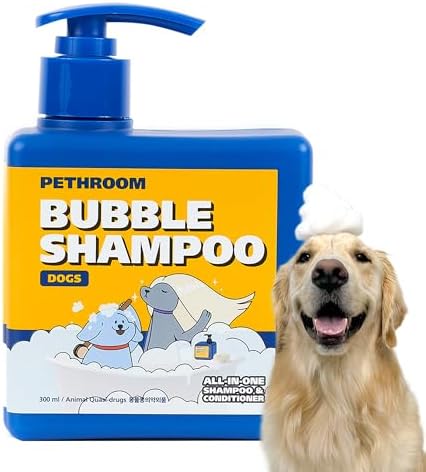
- PREMIUM NATURAL INGREDIENTS: Infused with 55% milk protein extract, this shampoo provides intensive protein care for you…
- HYPOALLERGENIC DOG SHAMPOO: Made with EWG green-grade ingredients, this bubble shampoo is perfect for dogs with sensitiv…
- DEEP CLEANSING FOAM: The rich foam effectively removes dirt and impurities from your dog’s fur while maintaining natural…
Designated dog-free sleep zones round out the protocol. Allergen concentration in a bedroom where a dog has never slept is measurably and consistently lower than in one where the dog has access, even with regular cleaning. This is the single highest-yield change most allergy households can make, and it costs nothing beyond a closed door and a comfortable dog bed elsewhere in the home. If you are also managing a multi-dog household, including introducing a new puppy to an established senior dog, keeping sleep zones separate is worth planning for early using something like the options covered in our guide to the best puppy gates for introducing puppies to senior dogs, which doubles as a useful tool for maintaining allergen-controlled zones.

The Two-Week Allergy Trial: A Realistic Case-Profile Exercise
Before committing to a purchase or adoption of any of these golden retriever mix breeds, I recommend pet owners run a structured trial rather than relying on a single meet-and-greet at a breeder’s home. The American College of Allergy, Asthma & Immunology has been clear that no dog breed is allergen-free, so the goal of this exercise is not to find a zero-reaction dog. It is to determine whether your personal symptom threshold sits below what a specific dog’s coat and grooming routine will produce.
- Days 1-3: Arrange extended exposure, ideally a home stay or repeated multi-hour visits, and log symptom onset time and severity daily.
- Days 4-7: Introduce your intended management protocol (HEPA placement, wipe-downs, restricted sleep zones) and note whether symptoms shift with these controls in place.
- Days 8-10: Test a full bath cycle using a gentle shampoo and observe whether post-bath symptom severity drops, which tells you how much of your reaction is surface-allergen driven versus baseline sensitivity.
- Days 11-14: Reintroduce normal household patterns without the extra controls to confirm the difference is attributable to management rather than random symptom variation.
This kind of structured trial gives you actual behavioral and physiological data instead of a hopeful guess. It also mirrors how I evaluate any Happiness Plan in clinical behavior work: define the baseline, introduce a controlled variable, and measure the change objectively rather than trusting a gut feeling formed in twenty minutes at a breeder’s living room.
One more variable worth controlling for during the trial: treat ingredients. Some allergy sufferers also have concurrent food or contact sensitivities that get incorrectly attributed to the dog’s coat. Using a limited-ingredient option like Canine Cravers Single Ingredient Dog Treats during the trial period removes an unnecessary confounding variable from your symptom log.

- ALL NATURAL DOG TREATS: Your pets deserve the best! Our healthy dog treats are made using 1 simple human grade ingredien…
- TURKEY. ONLY TURKEY: Don’t let your dog eat preservatives, additives and by-products. Our protein rich Turkey strips are…
- DOGS & CATS LOVE IT: Our freshly made treats will leave your pup begging for more! The 100% natural ingredients provide …
What This Means If You Already Have a Senior Golden-Coated Dog at Home
Coat and skin biology shift with age. Older dogs often produce more dander as skin elasticity and sebaceous gland regulation decline, which is worth knowing if you are managing allergy symptoms in a household with an aging retriever or retriever mix already in residence. The same bathing cadence and HEPA-plus-wipe-down protocol described above applies, and in many senior dogs, gentler and more frequent coat maintenance also supports skin comfort as they age, not just allergen control. If your household includes both a senior dog and allergy concerns, it is also worth understanding broader coat differences across breeds, covered in our comparison of high-shedding versus low-shedding dogs, since a senior dog’s shedding pattern can change from what you observed in their younger years.
Choosing among hypoallergenic dog breeds is ultimately a question of matching coat biology to your personal allergen threshold, not chasing a guarantee that does not exist in veterinary science. The American Kennel Club reaches a similar conclusion in its own breed guidance: coat type changes allergen dispersal, not allergen production. Once you accept that framework, the seven breeds above stop looking like a gamble and start looking like a manageable, evidence-based decision.
Frequently Asked Questions
Are any hypoallergenic dog breeds actually allergen-free?
No. According to the American College of Allergy, Asthma & Immunology, no dog breed produces zero allergen protein. Hypoallergenic dog breeds simply disperse less allergen into the air due to coat structure, which can reduce symptom severity for many allergy sufferers without eliminating exposure entirely.
Why do Goldendoodles cause fewer allergic reactions than Golden Retrievers for some people?
The Poodle-derived curly coat traps shed hair and dander within the coat rather than releasing it into the air the way a double coat does during shedding. This lowers airborne allergen concentration, which is why many people report better tolerance around low shedding dogs, even though the dog still produces the same allergen protein.
How often should I bathe an allergy-friendly dog to reduce allergen load?
AAHA grooming guidance generally supports bathing every four to six weeks for most coat types. This cadence reduces surface allergen buildup without over-stripping the skin’s natural oils, which can otherwise trigger a rebound increase in dander production.
Should I do a trial visit before adopting a hypoallergenic dog breed?
Yes. A structured two-week trial with extended exposure, gradual introduction of allergen-management steps, and consistent symptom logging gives far more reliable information than a single short visit. This approach helps confirm whether your personal symptom threshold is compatible with a specific dog before committing to adoption or purchase.