
Pet insurance senior dog decisions require actual math, not gut instinct, and the math changes considerably once your dog crosses the age-7 threshold. As a behaviorist, I spend most of my time analyzing decision-making patterns, and this is one area where owners consistently let emotion override arithmetic. That’s not a criticism. It’s just what the data shows, and it’s fixable with a clearer framework.
The core issue is actuarial, not sentimental. Insurers price risk based on probability of claims, and an 8-year-old Labrador is a statistically different animal than an 8-week-old one. Pre-existing condition exclusions, which apply to nearly every diagnosed issue your vet has already documented, narrow the coverage window substantially. So before you enroll a senior dog in a new policy, you need to understand what you’re actually buying, and whether a savings account might outperform it.
The Actuarial Problem: Why Senior Enrollment Changes the Math
Insurance pricing is a function of expected claims frequency and severity. Puppies and young adult dogs generate low claims volume relative to their premiums, which is why insurers can offer those policies cheaply and still profit. A senior dog flips that ratio. Older dogs develop orthopedic disease, organ dysfunction, and neoplasia at rates that are well documented in veterinary epidemiology, so insurers respond by raising premiums, adding exclusion riders, and in some cases capping payouts for age-related conditions.
This is the actuarial problem in plain terms: pet insurance senior dog policies are priced to reflect elevated risk, and that risk is exactly what most owners are hoping to offset. The result is a paradox. The dogs who need coverage most are the ones insurers charge the most to cover, and simultaneously the ones most likely to have exclusions written into the fine print before the ink dries.
None of this means coverage is a bad idea across the board. It means the decision requires a cost-benefit breakdown specific to your dog’s breed, age, and current health status, not a blanket assumption carried over from when your dog was young and premiums were low.
What the Data Actually Shows on Senior Dog Insurance Cost
Industry claims data, including reporting compiled by the North American Pet Health Insurance Association (NAPHIA), consistently shows a steep age-based premium curve. Annual accident and illness premiums for dogs age 8 and older frequently land in the range of $1,200 to $1,800 per year, depending on breed size and region, compared to roughly $600 per year for dogs under age 3. That’s not a marginal difference. It’s close to triple the annual cost for a policy that, by definition, will not cover anything your dog was already diagnosed with before enrollment.
Large and giant breeds skew toward the higher end of that range because their claims profile includes costlier orthopedic and cardiac conditions. Small breed seniors tend to land lower, though dental disease and endocrine disorders (Cushing’s, diabetes) still push premiums upward compared to younger cohorts of the same breed.
The practical takeaway: senior dog insurance cost isn’t just “a bit higher.” It’s a different pricing tier entirely, and it needs to be evaluated against realistic claims scenarios rather than against what you remember paying when your dog was two years old.
Breaking Down the Real Numbers: Premiums vs. Out-of-Pocket Costs
Here’s where the cost-benefit breakdown gets concrete. Two of the most common geriatric conditions are chronic osteoarthritis management and tumor removal, and both have reasonably well-documented cost ranges.
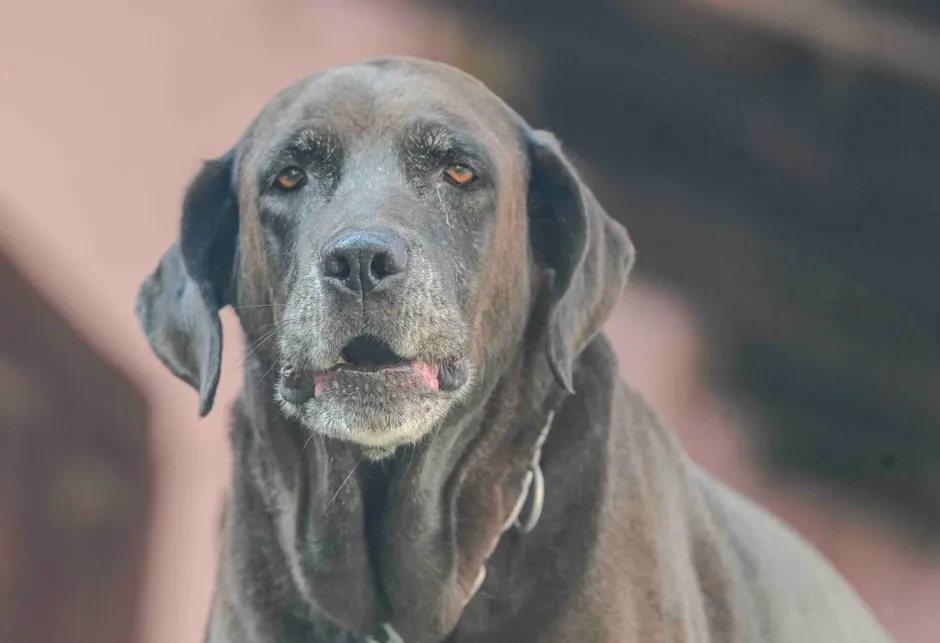
Osteoarthritis management for a senior dog, including anti-inflammatory medication, joint supplements, and periodic rechecks, typically runs a recurring annual cost rather than a single event. Over a multi-year period, this can add up substantially, but it’s rarely a single catastrophic bill. Mast cell tumor removal, by contrast, is a discrete surgical event. ASPCA cost estimates place average removal and histopathology costs in the range of $1,500 to $3,000, depending on tumor grade, margins required, and whether follow-up oncology consultation is needed.
Now compare that to premium payments. If a policy costs $1,500 per year for a senior dog, and your dog needs one tumor removal in year one, you might break even or slightly ahead once the deductible and reimbursement percentage are applied. But most policies reimburse 70 to 90 percent after a deductible, meaning your actual payout on a $2,000 procedure might be $1,400 to $1,800, not the full amount. Meanwhile, if your dog has no major claimable event that year, you’ve paid $1,500 for nothing beyond peace of mind.
Run that same math over three or four years, and the comparison becomes clearer: cumulative premiums often approach or exceed the out-of-pocket cost of managing one or two geriatric conditions directly, especially when you factor in the deductible resetting annually and exam-related exclusions.
Insurance is a hedge against variance, not a guarantee of savings. For a senior dog, the variance in claims is already partially known, which is precisely why insurers price around it so aggressively.
Comparing Coverage Approaches for Aging Dogs
The table below breaks down common approaches owners consider once a dog reaches senior status, alongside relative cost tier and practical fit. This isn’t an endorsement of any single path; it’s a structured comparison to use alongside your own dog’s health profile.
| Approach | Price Tier | Best Fit For | Key Limitation |
|---|---|---|---|
| New accident/illness policy at age 8+ | $$$$ | Dogs with no chronic diagnoses yet | Pre-existing exclusions, waiting periods |
| Accident-only policy | $$ | Active seniors, budget-conscious owners | No coverage for arthritis, cancer, organ disease |
| Self-insured high-yield savings fund | $$ | Owners with existing savings discipline | Requires upfront capital, no instant coverage |
| Wellness/preventive add-on plan | $$$ | Dogs needing frequent monitoring visits | Rarely covers major illness or surgery |
| No coverage, pay-as-you-go | $ | Owners with strong emergency credit access | High risk of delayed care due to cost |
Notice that a self-insured fund and an accident-only policy land in a similar price tier, but they solve different problems. A dedicated savings account gives you full control and no exclusions, while an accident-only policy still leaves chronic disease management, which is the most likely expense category for an aging dog, entirely uncovered.
The Sunk-Cost Bias: Why Owner Decision-Making Gets Distorted Here
I want to address a pattern I see constantly in consultations, because it’s a textbook behavioral economics error, not a moral failing. Owners who enrolled their dog in a policy at age 1 or 2 tend to keep paying premiums into the senior years almost automatically, reasoning that they’ve “already invested” in the coverage. That’s the sunk-cost fallacy applied to insurance, and it’s actually a reasonable strategy in this specific case, because early enrollment avoids the pre-existing condition problem entirely. Continuity has real value here.
The distortion happens differently for new senior enrollees. Some owners assume that because insurance worked well for a friend’s younger dog, it will perform similarly for their own dog enrolled for the first time at age 9. It won’t, statistically. Waiting periods (commonly 14 to 30 days for illness coverage) combined with exam exclusions and bilateral condition clauses mean a newly enrolled senior dog may go through most of the first policy year with limited actual protection for the conditions most likely to appear at that age.
Model this out realistically before enrolling. Ask the insurer directly what percentage of claims from dogs enrolled after age 7 get paid out in the first 12 months, and get that answer in writing if possible. If they hesitate to share loss-ratio data, treat that as informative on its own.
A Decision Protocol: Should You Insure or Self-Insure?
Rather than a gut call, run through this checklist. It mirrors the kind of structured behavioral assessment I’d use for any decision involving uncertain future costs and emotional stakes.
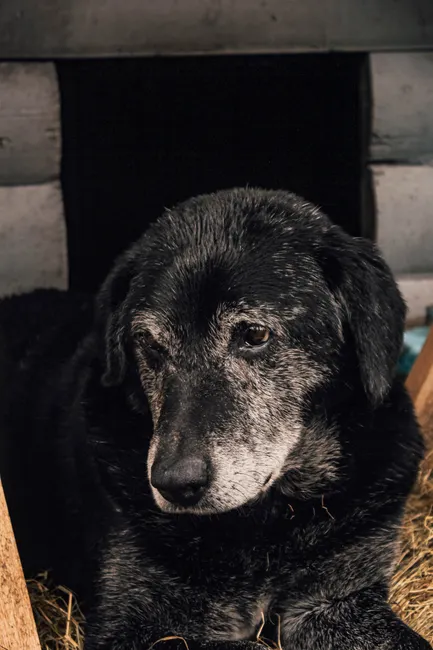
- Pull your dog’s breed predisposition list. Certain breeds carry known elevated risk for specific conditions (hip dysplasia in large breeds, cardiac disease in small breeds, certain cancers in Golden Retrievers and Boxers). This tells you what a policy is actually likely to be tested against.
- Review your dog’s current problem list with your vet. Anything already diagnosed, even mildly, will likely be excluded from a new policy. Get an honest inventory before comparing quotes.
- Calculate your existing savings buffer. If you already have several thousand dollars set aside and accessible without hardship, self-insuring may outperform a policy purchased at senior rates.
- Request the insurer’s exclusion list in writing. Don’t rely on marketing copy. Ask for the specific policy document listing breed-related and age-related exclusions before enrolling.
- Compare cumulative 3-year cost. Multiply the quoted annual premium by three, then compare against a realistic estimate of your dog’s likely claims based on breed and current health, factoring in your deductible and reimbursement percentage.
- Decide based on numbers, not anchoring. If you enrolled young and are already covered, staying enrolled usually makes sense. If you’re starting fresh at age 8 or 9, the self-insurance route deserves serious consideration.
If you’re weighing this alongside other financial planning for an aging dog, it’s worth reading our breakdown of Cheapest Pet Insurance for Older Dogs: 5 Budget Picks, which compares specific providers using this same relative pricing framework.
Supporting Comfort and Vision Health Alongside Financial Planning
Cost planning matters, but day-to-day quality of life still needs active management regardless of which financial path you choose. Many senior dogs develop ocular conditions such as keratoconjunctivitis sicca (dry eye) or glaucoma-related pressure changes, and vets often prescribe targeted drops as part of a management plan. Products like PILOCARPINE 1 % EYE DROPS are sometimes part of that veterinary protocol, though any ophthalmic medication should only be used under direct veterinary guidance, never self-prescribed based on internet research. There is an issue displaying Amazon products. Please contact the administrator to check that.
This is a useful illustration of the cost-benefit conversation in miniature. A recurring prescription cost is predictable and manageable within a household budget, whereas a sudden surgical event is not. Understanding which category your dog’s likely future expenses fall into is exactly the kind of forecasting that should inform your pet insurance senior dog decision, rather than treating all veterinary costs as one undifferentiated risk pool.
Behavioral Considerations While You Weigh Financial Options
Financial stress in the household doesn’t stay contained to spreadsheets. Dogs read tension in routine changes, vocal tone, and handling patterns, and senior dogs with declining sensory processing are often more sensitive to disruption, not less. While you’re working through this decision, keep your dog’s environment predictable. Sudden shifts in walk schedules or handling frequency because of anxiety about upcoming costs can produce stress behaviors that compound whatever health issue you’re already managing.
If your household includes a younger dog alongside your senior, that dynamic adds another layer worth planning for financially and behaviorally. Our guide on Puppy Companion for Your Senior Dog: What to Know First covers how to introduce a younger dog without overtaxing an aging dog’s physical or emotional bandwidth, which indirectly affects your insurance math too, since a stressed senior dog is statistically more prone to secondary health complaints like GI upset or reduced appetite.
For owners doing broader research into breed-specific health patterns as part of this planning process, credible information from the American Kennel Club offers a solid starting point on what conditions to expect at different life stages, which directly informs the breed predisposition step in the checklist above.
Podcasts and Resources Worth Your Downtime
Reviewing exclusion clauses and premium tables is not exactly riveting listening material, but pairing that research with something engaging during a commute or dog walk can make the process less tedious. If you’re looking for something to occupy drive time while you’re gathering insurer quotes, Mackenzie Moore – Evolve EV Podcast is one option worth queuing up between phone calls to insurance providers.
Final Assessment: Is Dog Insurance Worth It for an Aging Dog?
The honest answer is that it depends heavily on when your dog was enrolled and what’s already in the medical record. Pet insurance senior dog policies purchased before age 7, with continuous coverage maintained since, generally retain strong value because the pre-existing exclusion problem never applies. Pet insurance senior dog policies purchased fresh at age 8 or later require a much more skeptical, numbers-first evaluation, because the exclusions likely to apply cover exactly the conditions most probable at that age.
Self-insuring through a dedicated high-yield savings account is not a lesser option. For many owners of dogs enrolled late, it’s the statistically sound choice, provided there’s discipline to actually fund it and leave it untouched. Whatever path you choose, base it on your dog’s actual breed risk profile and documented health history, not on marketing language or anecdotal comparisons to other people’s dogs.
Frequently Asked Questions
Is pet insurance worth it for a senior dog with existing health conditions?
Generally not for those specific conditions, since nearly all insurers exclude pre-existing diagnoses. A new policy may still help with unrelated future issues, but it will not reimburse costs tied to anything already documented in your dog’s medical record before enrollment.
How much does senior dog insurance cost compared to a puppy policy?
Based on NAPHIA industry data, senior dogs age 8 and older often see annual premiums between $1,200 and $1,800, compared to roughly $600 per year for dogs under age 3. The exact senior dog insurance cost varies by breed size and region.
What is the alternative to buying pet insurance for an older dog?
Self-insuring through a dedicated high-yield savings account earmarked exclusively for veterinary costs is the most common alternative. It avoids exclusion clauses entirely and gives you full control, though it requires upfront capital and consistent contributions to be effective.
Does pet insurance for senior dogs cover chronic conditions like arthritis?
Only if the condition was not diagnosed before the policy’s effective date and after any waiting period has passed. Arthritis diagnosed prior to enrollment will almost always be excluded as a pre-existing condition under a pet insurance senior dog policy.