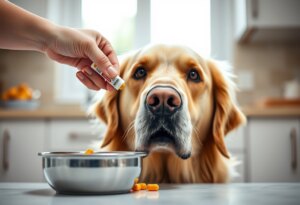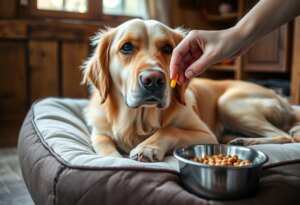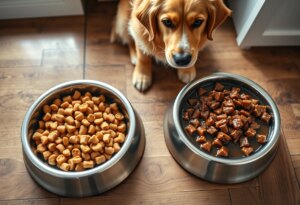
Senior dog food for weight loss is not just about adding more calories to the bowl. It requires matching caloric density to a metabolic reality that has fundamentally changed, and if you are watching your old dog’s ribs become more visible each month, you are dealing with a physiological process, not a simple appetite problem. Roughly 30% of dogs over age 8 develop clinically relevant muscle loss according to data referenced in the Journal of Veterinary Internal Medicine, and that number should reframe how you think about the thin senior dog in front of you. This is not laziness or fussiness. It is often sarcopenia, a progressive loss of skeletal muscle that happens independently of fat stores, and it responds differently to intervention than ordinary weight loss does.
Why Senior Dogs Lose Weight: Sarcopenia, Reduced Absorption, and Disease
Three distinct mechanisms drive weight loss in aging dogs, and distinguishing between them changes what you do about it. The first is sarcopenia, an age-related decline in muscle protein synthesis that occurs even in dogs with no diagnosed illness. Muscle tissue is metabolically expensive to maintain, and as inflammatory markers rise with age (a process researchers call “inflammaging”), the body shifts toward a catabolic state where it breaks down muscle faster than it rebuilds it. The second mechanism is reduced caloric absorption. Aging guts show measurable declines in pancreatic enzyme output and intestinal villus efficiency, meaning a dog can eat the same volume of food as it did at age five and extract fewer usable calories from it. The third mechanism is underlying disease. Chronic kidney disease, early-stage cardiac disease, dental pathology, and neoplastic processes all produce weight loss as a downstream symptom, sometimes before any other clinical sign appears.
Choosing a senior dog food for weight loss without first ruling out disease is a common owner error. Weight loss in an aging dog is a symptom that deserves investigation, and food is a tool you deploy after that investigation, not instead of it.
Behavioral vs. Medical Causes of Appetite Decline
As a behaviorist, I get asked constantly whether a picky senior is being “difficult.” The honest answer is that appetite decline in old dogs is almost always rooted in sensory or physical change, not preference. Olfaction deteriorates with age, and since dogs rely heavily on smell to trigger the appetitive phase of feeding behavior (the drive to approach and consume food), a food that smelled irresistible at age three may register as bland or unremarkable at age eleven. This is a sensory processing problem, not a behavioral one.
Pain-avoidance feeding is a separate and frequently missed pattern. A dog with dental disease, cervical arthritis, or GI discomfort will often approach the bowl, take a bite or two, and walk away, which owners misread as disinterest. Watch the behavior sequence closely: does the dog approach eagerly and then stop abruptly mid-meal? That pattern points toward physical discomfort, not palate fatigue. Dogs with hip or spine involvement may also show reluctance to lower their head into a standard bowl, a mechanical issue worth ruling out before you change diets. If your dog also seems more vocal or restless in the evening, it is worth reading about senior dog barking at night and its underlying causes, since sleep disruption and appetite changes often share the same root drivers in aging dogs.
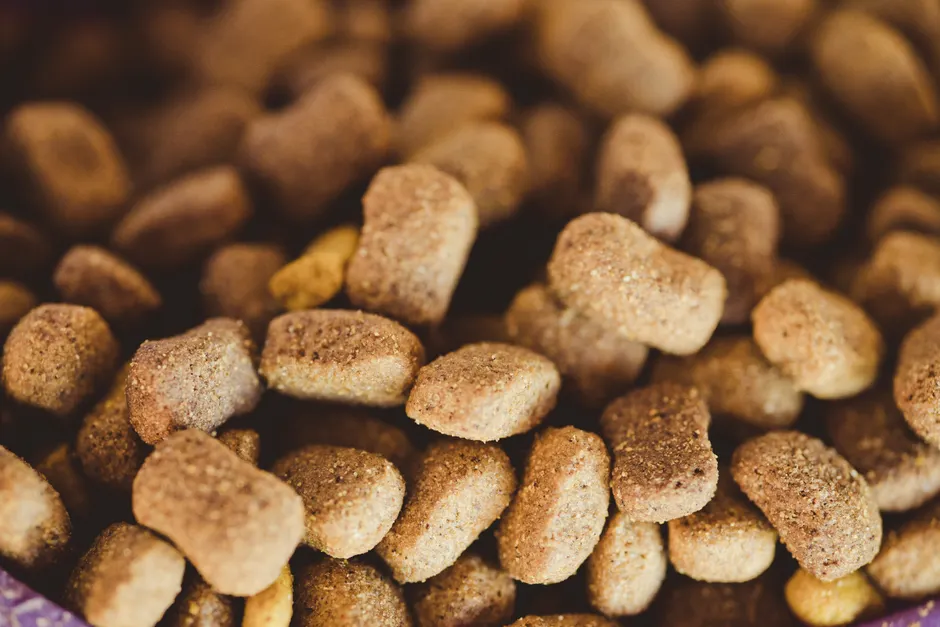
Don’t count on food alone to work miracles. A calorie-dense diet addresses the energy deficit, but if the underlying driver is pain, dental disease, or organ dysfunction, no formula on the shelf will resolve the weight loss on its own. Diagnosis has to come first.
Nutritional Criteria: What Actually Matters on the Label
When evaluating a senior dog food for weight loss, three data points matter more than marketing language on the bag. First is protein density on a dry matter basis. AAFCO senior guidelines recommend 25-32% protein (dry matter basis) specifically to counter sarcopenia and preserve lean mass, since underfed protein accelerates the muscle-wasting process described earlier. Second is kcal/cup or kcal/can, because a thin senior often cannot physically consume enough volume of a low-density food to close the caloric gap. Third is digestibility, which is harder to find on a label but is reflected indirectly in ingredient quality and processing method; highly digestible formulas produce firmer, smaller stools and less post-meal lethargy.
A useful secondary consideration is a high calorie dog food for seniors approach that pairs energy density with easily chewed texture, since dental compromise is common in geriatric dogs and a food that requires excessive mastication effort will simply go uneaten regardless of its nutritional profile.
Comparative Breakdown of the 7 Selected Formulas
Below is a side-by-side comparison focused on the metrics that actually predict success for weight gain dog food strategies in geriatric patients: protein-to-calorie ratio, energy density, and palatability features. Price Tier reflects relative market position rather than a fixed dollar figure, since exact pricing fluctuates and Amazon policy prohibits static price listings.
| Formula Type | Protein (Dry Matter Basis) | Approx. kcal Density | Palatability Feature | Best For | Price Tier |
|---|---|---|---|---|---|
| High-calorie kibble, senior formula | 28-30% | High | Fat-coated kibble surface | Dogs with intact dentition | $$ |
| Wet food, pate texture | 30-32% | Moderate-High | Strong aromatic release when warmed | Reduced olfaction, dental pain | $$$ |
| Lickable purée topper | Varies (topper, not complete diet) | Low per serving, high frequency | Extreme aroma and texture novelty | Appetite priming, hand-feeding | $ |
| Freeze-dried raw rehydratable | 32%+ | High | Rehydrates to soft texture | Dogs needing soft, protein-dense food | $$$$ |
| Prescription caloric-support diet | 26-29% | Very High | Vet-formulated for malabsorption | Diagnosed GI or renal-adjacent cases | $$$$$ |
| Gravy-based wet food | 25-28% | Moderate | Liquid base eases swallowing | Dogs with dysphagia or dental loss | $$$ |
| Fortified senior soft chew topper | N/A (supplement-style) | Low, additive | Meat-flavored coating | Layering onto existing diet | $$ |
Appetite Priming with Lickable Toppers
One functional technique I recommend often in clinical practice is appetite priming: presenting a small, high-aroma sample before the actual meal to trigger the appetitive behavioral sequence (approach, sniff, engage) rather than expecting a fatigued olfactory system to do the triggering work on its own. A product like Temptations Creamy Puree Lickable Treats works well for this purpose because the texture requires minimal jaw effort and the aroma profile is intense enough to cut through diminished olfaction in most geriatric dogs. This is not a meal replacement, but as a five-minute pre-meal ritual, it can meaningfully increase subsequent intake at the actual bowl.

- Cats Can’t Resist: Temptations Creamy Puree Wet Cat Treats for indoor cats deliver irresistible salmon or chicken flavor…
- Versatile Feeding Experience: Feed these Temptations Puree Cat Treats by hand for an interactive bonding experience, tre…
- Fewer Than 15 Calories Per Pouch: Feel good treating your cat because each pouch of these cat snacks contain fewer than …
Practical Feeding Protocol: Transition, Enrichment, and Timing
Switching a senior dog food for weight loss plan into practice requires a structured transition, not an abrupt swap, since a compromised aging gut is more sensitive to sudden dietary shifts than a younger one.
- Days 1-3: Mix 25% new food with 75% current food.
- Days 4-6: Move to a 50/50 split, monitoring stool consistency closely.
- Days 7-9: Shift to 75% new food, 25% old.
- Day 10 onward: Full transition, assuming no GI upset was observed.
Food-motivated enrichment feeding is worth building into this protocol, not as an afterthought but as a legitimate behavioral intervention. Puzzle feeders slow consumption, increase engagement time with food, and stimulate the appetitive drive through problem-solving rather than passive bowl access. For dogs whose mobility limits floor-based puzzle use, an elevated or slow-feed bowl accomplishes a similar goal without demanding joint flexion that a stiff, arthritic senior may not have. If your dog also struggles getting into a crate at night, addressing that physical friction point matters just as much as the food itself, and our review of low-entry dog crates for senior dogs with arthritis covers accessible options that reduce pain-avoidance behavior around rest and feeding areas.

Reading Between the Behavioral Lines: Downtime and Recovery
Weight-focused feeding protocols work best when paired with predictable calm periods, since chronic low-grade stress elevates cortisol and can suppress appetite independent of any GI or dental issue. I often recommend owners build a wind-down window into the evening, sometimes literally sitting with a book such as My Person by Téa Mutonji nearby while the dog rests post-meal, since consistent, quiet human presence after eating supports parasympathetic recovery and reduces the likelihood of stress-related regurgitation or food avoidance at the next meal.

Passive Enrichment During Recovery Periods
On days when mobility or appetite is particularly low, low-stimulation background enrichment (soft ambient audio or visual content playing nearby, such as through a streaming app like HBO Max on Amazon Appstore) can keep a resting senior dog’s arousal state mild and steady rather than either understimulated or anxious, which indirectly supports a more relaxed feeding environment later in the day. This is a minor environmental variable, but in dogs with anxiety-linked appetite suppression, small consistency measures add up.
There is an issue displaying Amazon products. Please contact the administrator to check that.When Unexplained Weight Loss Warrants a Veterinary Workup
A diet change is not an appropriate first response if weight loss is rapid, exceeds 10% of body weight over a month, or is accompanied by vomiting, diarrhea, lethargy, or increased thirst. These signs point toward organ involvement, and per guidance from the ASPCA’s senior pet care resources, any unexplained weight change in a dog over age seven warrants bloodwork before dietary intervention. A good rule for owners: if switching to a calorie-dense diet has not stabilized weight within two to three weeks, that is your signal to escalate to diagnostics rather than trying a third or fourth food.
It is also worth ruling out breed-specific predispositions during a veterinary workup, since some lines carry elevated risk for conditions that mimic simple appetite decline. For owners of smaller-statured golden lines, our piece on the mini golden retriever’s long-term health risks outlines several genetic considerations that can influence metabolic function later in life.
Building a Sustainable Senior Nutrition Plan
Long-term success with senior dog nutrition depends less on finding one perfect product and more on establishing a repeatable system: a caloric-dense base diet, a priming ritual before meals, an enrichment-based delivery method, and a monitoring schedule that catches regression early. Weigh your dog every two weeks using the same scale at the same time of day, and keep a simple log. Trends matter more than any single data point, and a consistent downward trend despite dietary intervention is the clearest signal that this has moved from a nutritional issue into a medical one.
The right senior dog food for weight loss is the one your individual dog will actually eat consistently, tolerates well digestively, and that fits into a feeding routine you can sustain without stress on either end of the leash.
What is the best senior dog food for weight loss when my dog also has dental problems?
Wet food or gravy-based formulas with a soft, pate-style texture are usually the best fit, since they require minimal chewing effort while still delivering a calorie-dense meal. Freeze-dried raw formulas rehydrated to a soft consistency are another strong option if your dog tolerates higher fat content well.
How much weight loss in a senior dog is considered a medical concern?
Losing more than 10% of body weight within a single month, or any unexplained loss accompanied by vomiting, diarrhea, or lethargy, should prompt an immediate veterinary visit rather than a dietary change alone. Gradual loss should still be logged and discussed at the next wellness exam.
Can a high calorie dog food for seniors cause digestive upset?
Yes, if introduced too quickly. Aging digestive systems are more sensitive to abrupt changes, so a gradual 10-day transition schedule that slowly increases the new food’s proportion is the safest way to avoid loose stool or vomiting.
Is weight gain dog food safe for dogs with kidney or heart disease?
Not automatically. Dogs with diagnosed renal or cardiac disease often need a prescription caloric-support diet formulated with controlled phosphorus, sodium, or protein levels, so any weight gain strategy for these dogs should be selected in direct consultation with a veterinarian rather than an over-the-counter product alone.