


Senior dog food large breeds require differs fundamentally from what a Chihuahua or Shih Tzu needs at the same chronological age, and the reason comes down to basic allometric scaling: bigger bodies age faster at the cellular level. If you share your life with a Labrador, Golden, Shepherd, or any dog that tips the scale past 50 pounds, the transition to a senior formula needs to happen well before you’d expect it to for a small-breed dog. This isn’t a marketing distinction. It’s a physiological one, rooted in growth rate, oxidative stress accumulation, and joint load that starts compounding from puppyhood onward.
Why Age 7 Is the Behavioral and Metabolic Inflection Point for Large Breeds
From a functional standpoint, aging is not a single event, it’s a cascade of small metabolic shifts that eventually produce visible behavioral change. Large-breed dogs grow faster and reach skeletal maturity sooner than small breeds, which means their cells have been dividing and their joints have been under load for a longer relative proportion of their lives by the time they hit age 7. This is why I tell clients not to wait for obvious signs like stiffness or gray muzzle hair before making dietary changes. By the time those signs appear, the underlying decline in mitochondrial efficiency and lean muscle retention has already been underway for a while. Choosing the right senior dog food large breeds can tolerate well is one of the few interventions we have solid data on, and it works best when started proactively rather than reactively.
Behaviorally, what owners often misinterpret as “slowing down” or a personality shift toward laziness is frequently a pain-avoidance strategy or a response to reduced caloric efficiency. A dog that used to chase the flirt pole for twenty minutes and now taps out after five isn’t necessarily bored. The data suggests it’s more likely a combination of joint discomfort and a body that’s burning fuel less efficiently. Adjusting the diet at this stage isn’t just about weight management, it’s about preserving the behavioral repertoire your dog still has the physical capacity to perform.
Key Nutritional Markers That Actually Matter
Not all “senior” labeling on a bag means much. The WSAVA Global Nutrition Guidelines give us a useful framework for evaluating what actually matters on a nutrition label, and I recommend clients use it rather than relying on front-of-bag marketing claims. Here’s what to check, in order of priority:

- Protein-to-calorie ratio: Senior large-breed dogs need moderate-to-high quality protein per calorie to slow sarcopenia (age-related muscle wasting), but not so much total caloric density that weight creeps up on a less active dog. Look for lean protein sources listed in the first three ingredients.
- Glucosamine and chondroitin inclusion: These won’t reverse existing joint damage, but consistent daily intake has reasonable supporting evidence for slowing cartilage breakdown in weight-bearing joints, which large breeds rely on disproportionately.
- Controlled phosphorus levels: Renal function tends to decline gradually with age, and lower phosphorus content reduces the workload on aging kidneys before clinical kidney disease is even a diagnosis on the table.
- Omega-3 fatty acid content (EPA/DHA): Useful for both joint inflammation and, increasingly, cognitive support, which matters for dogs showing early signs of canine cognitive dysfunction.
If you’re also managing a dog with diagnosed joint issues rather than just preventive concerns, it’s worth cross-referencing our breakdown of the best joint supplements for senior dogs, since food-based glucosamine levels alone are often too low to produce a clinically meaningful effect once arthritis is already present.
The data is fairly consistent on one point: large-breed dogs show measurable age-related metabolic decline beginning as early as 6 to 7 years, compared to 10 to 12 years in small breeds. A 2013 study published in the Journal of Veterinary Internal Medicine documented this accelerated timeline directly, which is part of why breed-specific feeding recommendations exist in the first place rather than a single “senior” cutoff applying to all dogs equally.
This is also why breed-specific research matters when you’re planning ahead. If you’re curious how a working breed like the Husky compares metabolically, our guide on Husky senior age and nutrition needs covers a useful comparison case, since sled-type breeds show a somewhat different fat metabolism pattern than retrievers or mastiffs.
Choosing a Formula: Practical Options Worth Evaluating
One formula that consistently checks the right boxes for protein quality and joint support additives is Wellness CORE Adult Dry Dog Food, Grain Free Kibble. It’s built around a high animal-protein base without excessive filler carbohydrates, which matters for large-breed dogs trying to retain lean muscle mass without gaining unnecessary weight. It sits in the mid-to-premium price bracket, but the protein density per calorie makes it a reasonable investment for dogs still fairly active for their age.

- GRAIN-FREE ADULT DRY DOG FOOD: Premium protein from responsibly sourced lamb is expertly balanced with nutrient rich sup…
- LEANER BODY MASS AND MUSCLE TONE: Based on the nutritional philosophy that dogs thrive on a natural diet mainly comprise…
- SUPPORTS HEALTHY COAT & HEART: Guaranteed levels of omega fatty acids from ingredients such as flaxseed and salmon oil s…
For owners managing a tighter budget, IAMS PROACTIVE HEALTH Mature Adult Dry Dog Food offers a solid balance of controlled phosphorus and added antioxidants without the premium price tag of boutique brands. It’s not going to have the same protein concentration as a grain-free premium formula, but for a dog without diagnosed kidney or joint pathology, it functions as a reasonably affordable maintenance option that still respects the core nutritional markers we look for in a large-breed senior diet.

- Veterinarians Recommend IAMS: This IAMS Senior Dog Food Recipe is made with real chicken as the #1 ingredient and contai…
- Mental & Visual Sharpness: This IAMS dog food for senior dogs contains DHA Gold to promote mental and visual sharpness i…
- Supports Vital Organs: IAMS Proactive Health Healthy Aging Senior Dog Food supports vital organs with essential nutrient…
Palatability and Sensory Decline: The Overlooked Variable
Something owners rarely account for is that olfactory drive diminishes with age, and dogs rely heavily on scent to trigger appetite. A dog that “goes off” dry kibble in later years isn’t necessarily being finicky out of preference. It’s often a genuine sensory processing change where the food simply doesn’t smell as compelling as it once did. This is where wet food or food toppers can serve a functional purpose beyond simple hydration benefits.
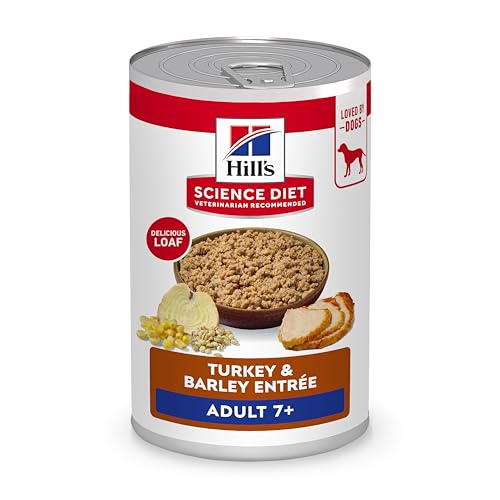
Hill’s Science Diet Adult 7+ Wet Dog Food works well for dogs showing reduced interest in dry kibble, since the stronger aroma profile of wet food tends to trigger appetite more reliably in dogs with diminished scent sensitivity. It also adds moisture content, which supports kidney function indirectly by reducing overall dehydration risk, something that matters more than most owners realize once a dog is eating less water-rich food overall.
Comparative Breakdown: Top Large-Breed Senior Formulas
| Product | Caloric Density | Joint-Support Additives | Palatability for Reduced Scent Drive | Price Tier |
|---|---|---|---|---|
| Wellness CORE Adult Dry Dog Food, Grain Free | Moderate-high (protein-dense) | Glucosamine, chondroitin included | Moderate (dry kibble, mild aroma) | $$$ |
| IAMS PROACTIVE HEALTH Mature Adult | Moderate | Glucosamine included, lower concentration | Moderate | $$ |
| Hill’s Science Diet Adult 7+ Wet Food | Lower (higher moisture content) | Omega-3s, moderate joint support | High (strong aroma profile) | $$$ |
None of these three formulas is objectively “best” in isolation. The right choice for geriatric large breed nutrition depends on your dog’s current activity level, whether joint disease has already been diagnosed, and whether appetite decline is already a factor. A highly active 7-year-old Lab mix with no mobility issues has very different needs than a 9-year-old Mastiff already managing hip dysplasia.

Feeding Transition Protocol: A 7 to 10 Day Schedule
Switching a senior dog’s food abruptly is one of the more common mistakes I see, and it’s almost always well-intentioned. Owners get excited about a new formula and want to see benefits right away, but a sudden diet change is one of the most reliable ways to trigger GI upset in an older dog whose digestive system has less resilience than it did at age 2. The AAHA Senior Care Guidelines recommend a gradual transition, and I follow a version of this protocol with every case I evaluate:
- Days 1-2: Mix 75% current food with 25% new senior formula.
- Days 3-4: Move to a 50/50 split between old and new food.
- Days 5-6: Shift to 25% old food and 75% new senior formula.
- Days 7-10: Feed 100% new formula, while continuing to monitor stool quality daily.
Throughout this window, keep a simple observational log. It doesn’t need to be complicated, just a daily note on the following:
- Stool consistency (firm, loose, or watery)
- Appetite enthusiasm at mealtime (eager, neutral, or reluctant)
- Body weight, checked weekly if you have access to a scale, or via rib and waist palpation if not
- Energy level during the usual activity window (walks, play sessions)
If loose stool persists past day 4 of any given ratio, hold at that ratio for an extra two to three days before advancing further. Rushing the schedule to hit an arbitrary 10-day deadline defeats the purpose of the gradual approach in the first place.
What This Means for Long-Term Quality of Life
The behavioral payoff of getting nutrition right at this stage isn’t dramatic or immediate. It shows up gradually, as sustained energy through a full walk, steadier weight over months rather than years, and a joint system that degrades more slowly than it would on an inappropriate diet. None of this replaces veterinary monitoring for kidney values, joint imaging, or bloodwork, but senior dog food large breeds are fed daily is one of the few variables owners have direct, consistent control over. Combined with appropriate joint supplementation and a stable feeding routine, it’s a meaningful piece of a broader care plan rather than a standalone fix.
At what age should large breed dogs switch to senior dog food?
Most large-breed dogs benefit from transitioning to a senior formula starting around age 6 to 7, well earlier than the 10 to 12 year mark typical for small breeds. This is because larger dogs experience accelerated metabolic and joint decline relative to their body size, according to research published in the Journal of Veterinary Internal Medicine.
Does senior dog food actually help with joint pain?
Senior formulas with glucosamine and chondroitin can help slow further cartilage breakdown, but the concentrations in most commercial kibble are generally too low to meaningfully treat existing arthritis on their own. Dogs with diagnosed joint disease typically need a dedicated joint supplement in addition to a quality diet.
Why has my senior large breed dog stopped eating as enthusiastically?
Reduced appetite enthusiasm in senior dogs is often linked to diminished olfactory sensitivity rather than pickiness. Since dogs rely heavily on smell to trigger appetite, switching to a food with a stronger aroma profile, such as a wet formula, or adding a warm water topper can often restore mealtime interest.
How long should the food transition period take for a senior dog?
A gradual 7 to 10 day transition schedule, following AAHA senior care guidelines, is recommended to avoid gastrointestinal upset. If loose stool occurs at any stage, hold the current ratio for a few extra days before increasing the proportion of new food.