
The question of German shepherd vs Labrador senior age isn’t just academic trivia for breed enthusiasts. It has direct clinical implications for when you introduce mobility interventions, and waiting for lameness before acting is a mistake I see repeated in exam rooms constantly. German shepherds, as a larger, more orthopedically vulnerable breed, typically cross into senior classification around 6 to 7 years, while Labradors generally reach that threshold closer to 7 to 8 years. That twelve-month window matters more than owners assume, because it changes the timeline for antecedent management, not just reactive treatment.
Breed-Specific Aging Trajectories: Why Size Predicts Timing
Body mass and aging rate are inversely correlated in domestic dogs, a pattern well documented across veterinary gerontology literature. Larger breeds accumulate cellular and orthopedic wear faster relative to chronological age than smaller or medium breeds do. This is the biological basis behind the german shepherd vs labrador senior age distinction. German shepherds, sitting in the 50 to 90 pound range depending on line, tend to show measurable senior-related changes (joint stiffness, reduced stamina, altered sleep architecture) starting around year 6. Labradors, often slightly heavier on average but built with a different skeletal loading pattern, tend to hold functional youth a bit longer, with senior markers emerging closer to year 7 or 8.
If you’re unsure where your own dog falls on this curve, the senior dog age chart by breed is a useful reference point before you start adjusting a care plan. Age alone is a poor proxy for physiological status. What matters clinically is functional aging, which is why I encourage owners to track observable markers rather than relying on a birthday.
Orthopedic Predisposition: Divergent Failure Points
The german shepherd vs labrador senior age gap becomes more meaningful once you factor in breed-specific orthopedic vulnerability. These two breeds don’t just age at different rates, they tend to fail differently.
- German Shepherds: Consistently rank among the top breeds for hip dysplasia incidence in OFA (Orthopedic Foundation for Animals) registry data. They also show disproportionately high rates of degenerative myelopathy, a progressive spinal cord disease that mimics hind-limb weakness and is frequently mistaken for simple arthritis in early stages.
- Labradors: Present more commonly with cranial cruciate ligament (CCL) degeneration, often bilateral over time, along with obesity-linked osteoarthritis. Labradors have a well-documented breed tendency toward weight gain, partly behavioral (food motivation, slower satiety signaling) and partly metabolic.
Don’t count on surgery to work miracles in either case. CCL repair in Labradors can restore function, but outcomes are significantly worse when the dog is already carrying excess weight at the time of surgery. Similarly, degenerative myelopathy in German shepherds has no surgical fix at all, only management of secondary complications and functional support. This is a case where owner expectations need calibration early, not after a diagnosis lands.
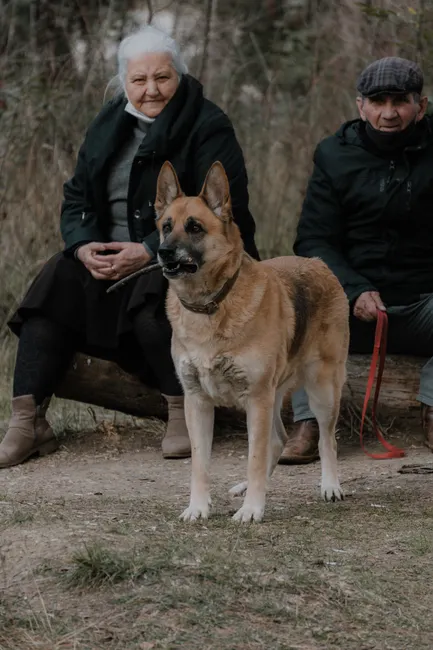
Comparative Gait and Mobility Decline Timeline
Gait change is a more reliable early indicator than pain vocalization, since dogs are notoriously stoic about discomfort. Track these specific behavioral markers rather than waiting for obvious limping:
- Stair reluctance: Hesitation, pausing at the top or bottom, or taking stairs one at a time rather than fluidly. In German shepherds, this often appears by 6 to 7 years. In Labradors, typically 7 to 9 years, unless obesity accelerates the timeline.
- Sit-to-stand latency: Time the transition from lying to standing. An increase of even 1 to 2 seconds compared to baseline six months prior is clinically meaningful. This tends to show up earlier in German shepherds due to hip involvement.
- Hind-limb knuckling: Toes dragging or knuckling under while walking is a hallmark early sign of degenerative myelopathy in German shepherds specifically. This finding warrants a neurological workup, not just a joint supplement.
- Reduced play duration: A drop in spontaneous play initiation or shortened play sessions, often the first sign owners notice but the last one they report to a veterinarian.
I recommend owners keep a simple weekly log of these four markers starting at year 5 for German shepherds and year 6 for Labradors. Data collected before decline gives you and your veterinarian a real baseline for comparison, rather than relying on memory, which is notoriously unreliable for gradual change.
Evidence-Based Mobility Support Protocol: Act Before Clinical Lameness
The behavioral and rehabilitation literature is fairly consistent on this point: antecedent management, meaning environmental and physiological adjustments made before a problem is fully expressed, produces better long-term functional outcomes than reactive treatment started after lameness is visible. This applies directly to the german shepherd vs labrador senior age question, because the “sooner” breed should also be the “sooner intervention” breed.
Practical antecedent steps include:
- Installing ramps at entry points and for vehicle access before the dog struggles, not after a fall or refusal
- Adding traction flooring (rubber-backed runners, yoga mat strips) on hardwood or tile surfaces where slipping accelerates joint strain
- Weight management protocols started at senior onset, not after osteoarthritis is diagnosed, since excess load on compromised joints compounds degeneration nonlinearly
- Low-impact conditioning (short frequent walks over long infrequent ones) to maintain muscle mass supporting joint stability
Nutrition plays a supporting role here too. Maintaining lean body condition through senior-specific formulation matters more for Labradors given their obesity predisposition, though both breeds benefit from joint-supportive nutrients like glucosamine, chondroitin, and omega-3 fatty acids. Supplementation such as Furrever Young Soft Chews Senior Dog Healthy Aging Support is often introduced at this proactive stage, before lameness is clinically apparent, as part of a broader joint-support routine rather than a treatment for existing pain.

- Healthy Aging Hip & Joint Support – Formulated with DHA (from algae), antioxidants, and essential nutrients to help supp…
- Cognitive & Eye Health Support – Powered by Astaxanthin (AstaZine) and Lutein (Lutemax 2020) to help support brain funct…
- Skin & Coat Nourishment – Includes Omega fatty acids, Vitamin E, and Zinc to help maintain healthy skin and a soft, shin…
For dogs already showing arthritis-related discomfort alongside mobility decline, a veterinarian may also discuss pharmaceutical options. Owners researching this path often find the vet-ranked arthritis medication guide for senior dogs helpful for understanding what’s available before that conversation happens.

The data is contradictory on exactly how much earlier German shepherds need mobility intervention compared to Labradors, but the direction of the effect is consistent across orthopedic and rehabilitation studies: larger, hip-dysplasia-prone breeds benefit measurably from support introduced before clinical signs peak, not after.
Case-Profile Comparison: Matched German Shepherd and Labrador at Ages 7, 9, and 11
To make the german shepherd vs labrador senior age difference concrete, here’s a hypothetical matched comparison based on typical presentations documented in veterinary rehabilitation literature. These are illustrative profiles, not diagnostic predictions for any individual dog.
| Age | German Shepherd Profile | Labrador Profile | Recommended Support Tier | Price Tier |
|---|---|---|---|---|
| 7 years | Mild hip stiffness after rest, occasional stair hesitation, early senior classification | Still largely active, minimal gait change, borderline senior classification | Ramps, traction rugs, joint supplement introduction | $$ |
| 9 years | Noticeable sit-to-stand latency, possible early hind-limb knuckling, weight-bearing asymmetry | Mild stair reluctance, early CCL sensitivity, weight monitoring critical | Orthopedic bed, structured low-impact exercise, vet-guided weight plan | $$$ |
| 11 years | Advanced hind-limb weakness likely, possible degenerative myelopathy signs, full mobility gear needed | Moderate osteoarthritis, reduced stamina, CCL-related lameness possible | Full ramp/harness system, mobility harness, veterinary rehabilitation referral | $$$$ |
Notice the divergence widens with age. At 7, the two breeds look fairly similar functionally. By 11, the German shepherd’s profile typically shows more advanced neurological and orthopedic compounding, reflecting both the earlier senior onset and higher hip dysplasia prevalence. This is the practical takeaway behind the german shepherd vs labrador senior age comparison: same intervention toolkit, different starting gun.
Nutrition and Supplementation Across the Aging Timeline
Diet quality earlier in life shapes joint and muscle resilience later, which is part of why I encourage owners to think about senior support as a continuum rather than a switch flipped at a birthday. Puppies raised on well-formulated diets, such as Redbarn Whole Grain Puppy Dry Dog Food Beef and Lamb, build the muscular and skeletal foundation that later determines how well a dog compensates for joint degeneration in the senior years. It’s not a guarantee against hip dysplasia or CCL issues, both of which have strong genetic components, but foundational nutrition does influence resilience.

- First 5 Ingredients are Animal Proteins
- Enriched with DHA and EPA, essential nutrients for optimal brain and vision development
- Probiotics and prebiotic fiber support digestive health
Once a dog reaches senior status, whichever breed and whichever timeline applies, a daily multivitamin formulated for aging physiology can help address the metabolic shifts that accompany reduced activity and slower nutrient absorption. Products like Vita-Tabs Silver for Senior Dogs Daily Vitamin-Mineral Supplement are often used alongside joint-specific chews rather than as a replacement for them, since they target different physiological systems.

- Comprehensive Nutrition: Vita-Tabs provide a balanced blend of essential vitamins and minerals to support your dog’s ove…
- Immune System Support: Packed with antioxidants, these tabs help strengthen your dog’s immune system, promoting a robust…
- Healthy Coat and Skin: The inclusion of Omega-3 fatty acids contributes to a lustrous coat and healthy skin, ensuring yo…
Portion control matters as much as formulation, particularly for Labradors given their documented obesity predisposition. Owners comparing feeding strategies across breed sizes may find the senior dog food guide for small vs large breeds useful for calibrating portions correctly rather than guessing from bag labels, which are notoriously generic.
What This Means for Your Household Protocol
If you’re managing a German shepherd, the practical instruction is to start mobility antecedents (ramps, traction, weight control, joint support) around year 5 to 6, ahead of the typical senior threshold, because hip dysplasia and degenerative myelopathy risk means waiting for symptoms costs you valuable rehabilitation time. If you’re managing a Labrador, year 6 to 7 is a reasonable start point, with particular attention to weight trajectory as the single most modifiable risk factor for accelerating CCL and osteoarthritis onset.
Neither timeline is fixed. Individual variation, spay/neuter status, genetics, and activity history all shift the curve. According to the American Veterinary Medical Association, senior classification itself is best treated as a guideline for increased monitoring frequency, not a diagnosis. The german shepherd vs labrador senior age framework is a planning tool, not a prognosis.
Frequently Asked Questions
At what age is a German shepherd considered senior compared to a Labrador?
German shepherds are typically classified as senior around 6 to 7 years old, while Labradors generally reach that classification closer to 7 to 8 years. This german shepherd vs labrador senior age gap reflects differences in body size, orthopedic predisposition, and breed-specific aging rates documented in veterinary lifespan data.
Why do German shepherds seem to need mobility support earlier than Labradors?
German shepherds carry a higher documented prevalence of hip dysplasia and degenerative myelopathy, both of which affect hind-limb function earlier in the aging timeline. Labradors tend to experience mobility decline more gradually, though obesity can accelerate onset of cranial cruciate ligament issues and osteoarthritis considerably.
What are the earliest signs of mobility decline I should watch for?
Watch for stair reluctance, increased latency in sit-to-stand transitions, hind-limb knuckling, and shortened play duration. These four markers are more reliable early indicators than limping or vocalized pain, since dogs are typically stoic about discomfort until decline is fairly advanced.
Should I start mobility gear before my dog shows any lameness?
Yes. Antecedent management, introducing ramps, traction flooring, and joint supplements before clinical lameness appears, produces measurably better long-term functional outcomes than waiting for visible symptoms. This is especially important for German shepherds given their earlier senior onset and higher orthopedic risk profile.